In This Guide
So you're sitting there, watching those epic ski films, and the question pops into your head. Is backcountry skiing hard? The short, honest answer is yes. But also, not in the way you might think. It's not just about being a superhuman skier who can carve down 50-degree faces. The difficulty is layered, more like an onion. There's the physical grind, the technical puzzle, the mental chess game, and the ever-present safety calculation. It's hard in a way that's deeply rewarding, but ignoring the challenges is a one-way ticket to a bad day, or worse.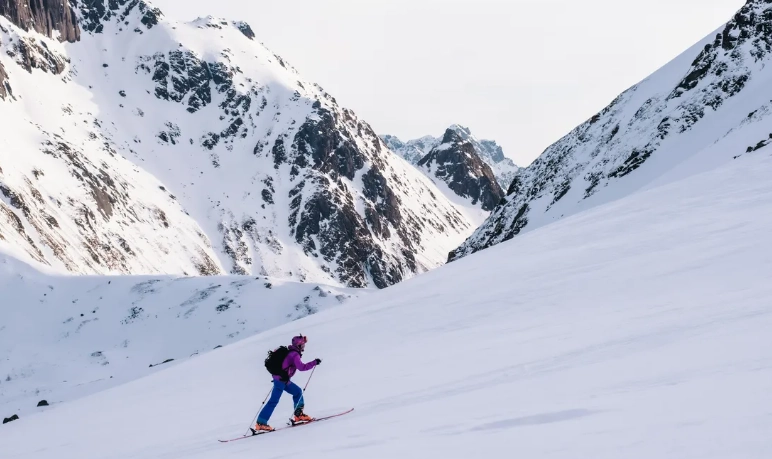
I remember my first real tour. I was a confident resort skier, figured how hard could it be? I borrowed some gear, followed a friend, and spent about six hours. Three of those were pure, lung-burning misery on the ascent. My feet were screaming in rental boots. I was so focused on not falling over on the skin track that I barely looked at the snowpack. When we finally got to the top, I was too exhausted to properly enjoy the run down. I learned more about humility and preparation in that one day than in a season of lift-served skiing. That's the kind of "hard" we need to talk about.
Let's be clear from the start: if your only goal is to find out if backcountry skiing is hard, the answer is a resounding yes. But the real question you should be asking is: what kind of hard is it, and am I prepared for that specific type of challenge?
Breaking Down the "Hard": A Realistic Difficulty Ranking
Instead of a vague "yeah it's tough," let's dissect it. What makes people ask, "Is backcountry skiing hard?" Here’s my personal ranking of the major challenges, from most demanding to the manageable ones.
| Challenge | Why It's Hard | How to Mitigate It |
|---|---|---|
| Avalanche Safety & Decision-Making | This is non-negotiable, complex, and the stakes are life and death. It's a constant analysis of snow science, terrain, weather, and human factors. | Take an AIARE 1 course. Practice with your beacon, probe, and shovel relentlessly. Never stop learning. |
| Physical Endurance & Uphill Fitness | You are the lift. Tours often involve 2-4 hours of uphill travel for 10-30 minutes of descent. It's a full-body endurance sport. | Off-season training (hiking, running, strength). Start with short, low-angle tours. Focus on efficient skinning technique. |
| Technical Uphill Skills (Skinning, Transitions) | Skinning on steep, icy, or variable terrain requires balance and technique. Efficient transitions save energy and time. | Practice in a safe, mellow area. Watch tutorials. A guided day can fast-track this learning. |
| Route Finding & Navigation | No trail maps or signs. Requires map/compass/GPS skills, understanding of terrain traps, and the ability to read the mountain. | Formal navigation course. Use apps like CalTopo or Gaia GPS for planning. Always carry a paper map and compass as backup. |
| Skiing Variable, Un-groomed Snow | You'll encounter breakable crust, heavy powder, wind slab, and everything in between. Resort skiing doesn't fully prepare you for this. | Seek out off-piste, ungroomed snow in-bounds to practice. Start with low-consequence slopes in the backcountry. |
| Gear Management & Complexity | The gear list is long and specific (skins, beacon, probe, shovel, pack, layers). Knowing how to use and maintain it all is a skill in itself. | Rent before you buy. Get gear clinics at your local shop. Organize your pack the same way every time. |
See that top row? That's the core of the difficulty. The skiing part is almost secondary.
The Fitness Question: Are You Your Own Lift?
This is where many people get a brutal wake-up call. Backcountry skiing is first and foremost an endurance sport. You need legs and lungs built for sustained effort, often at high altitude. It's not about explosive power for short mogul runs; it's about a steady, grinding engine that can go for hours.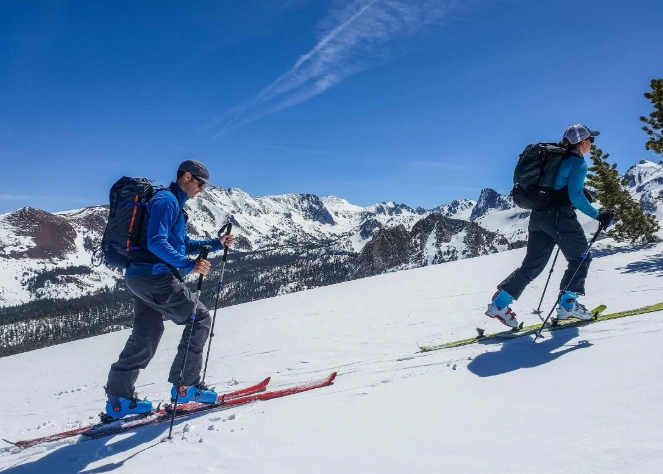
I made the mistake of thinking my weekend warrior cardio was enough. It wasn't. The first big climb had me stopping every ten switchbacks, heart pounding in my ears, while my more experienced partners kept a steady, slow pace. They weren't faster; they were more efficient. They knew how to pace, how to use their ski poles, how to set a skin track that wasn't too steep.
Fitness Tip: The best training for backcountry skiing is hiking uphill with weight on your back. Stair climbers, hill repeats, and leg strength circuits (think lunges, step-ups) are golden. Don't just run on flat ground.
So, is backcountry skiing hard on the body? Absolutely. But it's a manageable hard if you train for the specific demand. You don't need to be an Olympian, but you can't be a couch potato either.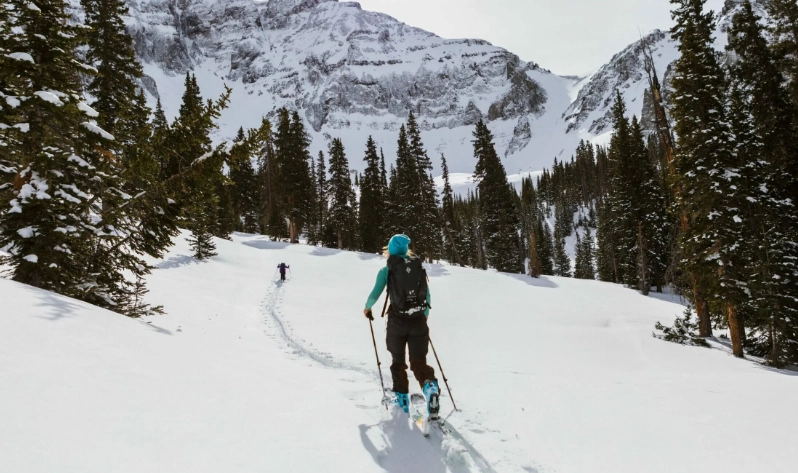
The Gear Maze: What You Really Need vs. What's Nice to Have
Gear can be a barrier. It's expensive and confusing. But having the right stuff—and knowing how to use it—is what makes a hard day manageable and a dangerous day survivable. Let's separate the life-saving essentials from the comfort items.
The Non-Negotiable Safety Core (Never leave the trailhead without these):
- Avalanche Transceiver (Beacon): Digital, three-antenna. Practice, practice, practice.
- Avalanche Probe: At least 240cm long. Don't get the cheap, flimsy one.
- Avalanche Shovel: Metal blade, extendable handle. A plastic shovel is useless in hard avalanche debris.
- Navigation: Physical topo map, compass, and/or a GPS device (phone with offline maps can work, but have a backup).
- First Aid Kit & Repair Kit: Tailored for wilderness and ski gear (ski straps, duct tape, multi-tool).
The Core Touring System:
- Backcountry Skis/Bindings/Boots: This is your engine. Tech bindings and boots are lighter and more efficient for uphill but have a learning curve. Frame bindings are heavier but more familiar. It's a trade-off.
- Skins: Properly trimmed for your skis. Glue maintenance is key.
- Appropriate Clothing System: Layers! Avoid cotton. Think moisture-wicking base, insulating mid, waterproof/breathable shell. Extra warm layer in the pack.
- Backpack (25-35L): With dedicated ski carry and avy tool pockets.
My gear mistake: I skimped on my first backpack. It had no dedicated avy tool pockets, so I was always fumbling to get my shovel out. It also rode horribly with skis attached. Buying a proper pack designed for the purpose was a game-changer for comfort and organization. Sometimes, the right gear just makes everything less... hard.
The Mental Game: The Hardest Part Isn't Physical
This might be the most overlooked answer to "Is backcountry skiing hard?" The mental load is immense. In the resort, your biggest decision might be which run to take. Out there, you're constantly processing.
You're assessing the snowpack. Is that a whumpfing sound? Is the wind loading that slope? You're watching your partners. Are they tired? Making poor decisions? You're managing your own fear and ego. That line looks amazing, but does the snowpit justify it? The ability to say "no" and turn around, even after hours of climbing, is a critical and difficult skill.
It's humbling.
You have to be a student of the mountain, forever. The learning never stops. I've taken an AIARE 1 course, and it only made me realize how much I don't know. The resources from organizations like the US Forest Service and the Utah Avalanche Center are invaluable for ongoing education. You need a mindset of cautious curiosity, not conquest.
Red Flag Mindset: If you find yourself thinking, "It's probably fine," or "Let's just go for it," that's a major warning sign. The backcountry rewards conservative, evidence-based decisions, not gut feelings or summit fever.
So, Is Backcountry Skiing Hard for a Beginner?
Let's be blunt: yes, it's exceptionally hard for a complete beginner who tries to go it alone or with equally inexperienced friends. It's a perfect storm of new physical demands, unfamiliar equipment, and high-consequence decision-making.
But that doesn't mean you can't start. It means you need to start smart. The progression is not linear from green circle to double black diamond. It's a separate sport with its own learning ladder.
A Smarter Progression Path:
- Master Resort Off-Piste: Become very comfortable skiing all types of ungroomed snow in-bounds. If you can't handle chopped-up powder or crud next to the run, you're not ready for the backcountry.
- Get the Education FIRST: Before you buy fancy skis, invest in an AIARE 1 or equivalent avalanche course. This is the single most important step.
- Find Mentors or Hire a Guide: Go with experienced, cautious people who are willing to teach. Or, invest in a day with a certified ski guide. They'll teach you more about efficient travel and decision-making in one day than a year of stumbling around.
- Start Small & Simple: Your first objective should be a low-angle, low-consequence slope with a simple approach. Think a 20-degree slope in the trees, not a dramatic alpine bowl. The goal is learning, not epic descents.
- Practice Skills in a Safe Zone: Go to a gentle, safe slope (even a snow-covered golf course) and practice putting on skins, transitioning, using your beacon, and digging a snow pit.
Following this path transforms an impossibly hard endeavor into a series of manageable, learned skills. The question "is backcountry skiing hard" becomes "which part am I working on today?"
Your First Backcountry Day: A Realistic Picture
Let's walk through what a responsible first day might look like, so you can gauge the difficulty for yourself.
Pre-Dawn: You're not sleeping in. You're checking the avalanche forecast from your local center, looking at the weather, and finalizing your plan with your partners. You're packing your bag methodically, checking your beacon batteries.
At the Trailhead (2 hours after you woke up): You do a full beacon check with your partners. You discuss the plan, the turn-around time, and the concerns. You're putting on skins in a parking lot, maybe in the dark, fumbling a bit because it's new.
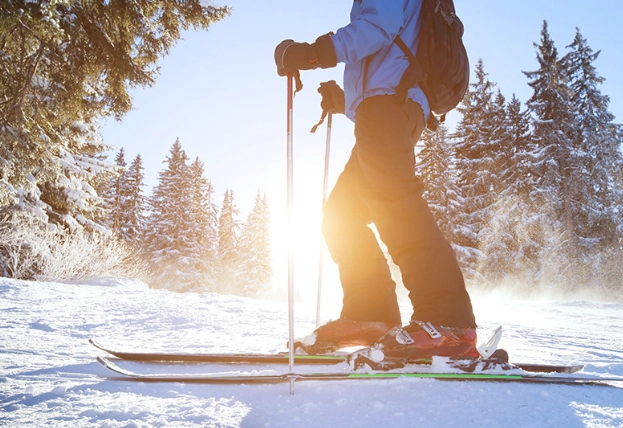
The Ascent (2-3 hours): You start skinning. It feels weird. You might slip. You get hot, so you stop to de-layer. You find a rhythm, but it's slow. You're breathing hard. You stop to look at the map, drink water, eat a snack. You're not talking much.
At Your Turn-Around Point (Not necessarily the summit): You pick a safe spot well below any suspect slopes. You dig a quick snow pit to see what the layers are doing, comparing it to the forecast. You have a snack, hydrate, and add layers for the descent.
The Transition (10-15 minutes): You take off your skis, peel off the skins, stow them, switch your bindings to downhill mode, and secure everything in your pack. It feels clumsy. You double-check your partner's gear.
The Descent (10-30 minutes of skiing): The snow might be amazing. It might be tricky. You ski cautiously, one at a time, through safe zones. The run is shorter than you're used to.
The Return: You might have to skate or walk out. You get back to the car tired but buzzing. You debrief. What did you see? What did you learn?
That's the reality. Hours of effort for a short run. And it's one of the most satisfying feelings in the world. The difficulty creates the reward.
Common Questions (The Stuff You're Actually Searching For)
Ultimately, the question "Is backcountry skiing hard?" is the right one to ask. It shows you're thinking critically. The difficulty is real, but it's not a mystery. It's a series of concrete skills and mindsets that can be learned, practiced, and respected. The challenge is the entire point—it's what makes the untouched powder, the quiet mountains, and the self-reliance so profoundly rewarding. Start with education, progress with humility, and the mountains will open up to you in the hardest, and best, way possible.
It's a lifelong journey. Some days are brutally hard. Others flow perfectly. But you never stop asking questions, checking the forecast, and looking at the snow. That's the culture. That's how you stay safe. And that's how you find out that yes, backcountry skiing is hard, but it's a kind of hard that's worth every single step.