Quick Guide: What You’ll Discover
- Why the T-Bar Lift is a Snowboarder's Nemesis (And How to Befriend It)
- The Ultimate T-Bar Lift Snowboard Setup: Your Gear Matters More Than You Think
- The Step-by-Step: How to Actually Ride a T-Bar Lift on a Snowboard Without Falling
- Gear Deep Dive: What Really Helps on a T-Bar?
- Riding Solo vs. With a Partner: The Dynamics Change
- Frequently Asked Questions (The Stuff You're Actually Searching For)
- Beyond the Basics: When You're Comfortable and Want to Look Pro
- Final Reality Check and Your Next Steps
You’re standing at the bottom of the slope, staring up at this weird metal T-shaped thing dragging people up the hill. Your snowboard feels huge and clumsy. Maybe you’ve already had that classic, embarrassing moment where the T-bar yanked you off your feet and left you in a heap while everyone glides past. I’ve been there. My first attempt at a T-bar lift on a snowboard ended with me tangled around the pole like a confused octopus, my board pointing in three wrong directions.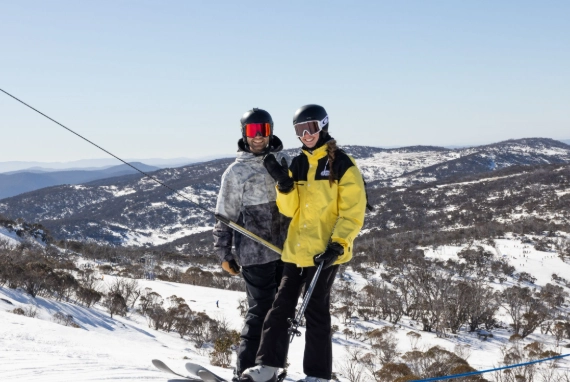
It’s okay. T-bar lifts and snowboards are not natural friends. They were designed for skiers, with their two separate planks and forward-facing stance. We’re on one big plank, sideways. It’s a recipe for a core workout and a mild panic attack. But here’s the thing – mastering the T-bar lift on your snowboard is a total game-changer. It opens up access to incredible terrain that chairlifts don’t reach, especially in Europe and on glaciers. It’s a right of passage. And once you get it, it feels like a secret superpower.
This isn’t about theory. This is about the gritty, practical details of getting up the hill without falling over, looking cool (or at least not ridiculous), and actually enjoying the ride. We’ll talk about the gear that makes a difference, the technique that actually works, and the mindset you need. Forget the overly polished tutorials. Let’s get into it.
Why the T-Bar Lift is a Snowboarder's Nemesis (And How to Befriend It)
Before we fix the problem, let's understand it. A T-bar lift is a surface lift. A moving cable overhead pulls a T-shaped bar along the snow. You place the horizontal bar behind your rear, and it tows you up while you stand on your skis or board. Simple, right? For skiers, yeah. Their weight is centered between two independent edges. They can adjust easily.
For us? Our weight is distributed along a single edge. The pull from the T-bar is directly behind us, trying to twist our upper body while our feet are locked in place. This creates a rotational force that wants to spin us out. That’s why you see snowboarders fishtailing wildly or just face-planting. The mechanics are working against us.
But they don’t have to.
The key is managing that rotational force. It’s about stance, balance, and where you put your weight. It’s less about brute strength and more about smart positioning. A good T-bar lift snowboard technique feels almost relaxed when you nail it. You’re not fighting the lift; you’re working with it.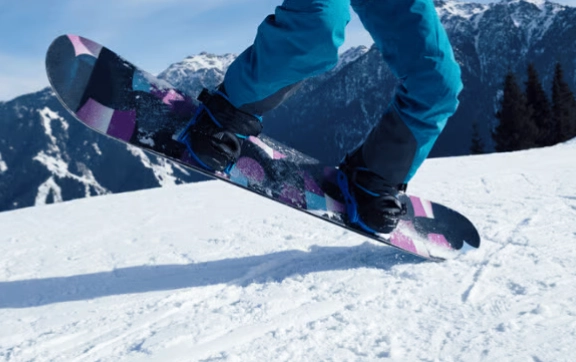
The Ultimate T-Bar Lift Snowboard Setup: Your Gear Matters More Than You Think
Listen, you can struggle through on any board. But why make it harder? Certain setups genuinely make riding a T-bar lift on a snowboard less of a chore. It’s not about buying a whole new rig, but knowing what features help.
Snowboard Profile and Flex
A stiffer snowboard is generally more stable for T-bar lifts. It torsionally resists that twisting force better than a super soft, playful park board. A medium-stiff flex is the sweet spot for most riders. As for profile, camber underfoot is your friend. It gives you a solid, predictable edge contact point. Rocker boards can feel a bit vague and hooky when you’re trying to hold a subtle edge on the tow path.
True twin shapes are fine, but a directional twin or directional board can actually be a bit easier. Having a slightly longer effective edge and a stiffer tail gives you a more stable platform at the back, which is where the T-bar’s force is applied.
Bindings and Stance
This is huge. For the T-bar lift, a slightly wider, more balanced stance can help. Don’t go crazy, but if you ride a very narrow park stance, consider widening it by a centimeter or two. It lowers your center of gravity and gives you a broader base of support.
Binding highbacks that can be set forward are a secret weapon. Leaning your highbacks forward a few degrees puts your knees in a more athletic, ready position. It engages your edge control without you having to think about it. It makes that subtle heel-edge pressure much easier to maintain.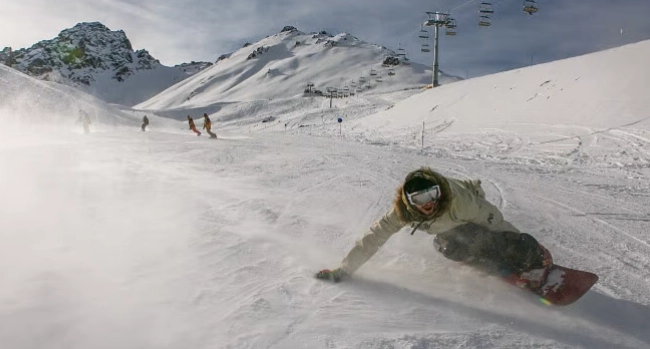
The Boot Question
Stiffer boots offer more support and precise control, which is great for holding an edge. But if you’re a beginner, super stiff boots might feel unforgiving. A medium-flex boot is probably the best all-rounder. The most important thing is that they fit well and are comfortable. You don’t want foot pain distracting you while you’re concentrating on not falling over.
The Step-by-Step: How to Actually Ride a T-Bar Lift on a Snowboard Without Falling
Okay, theory and gear are done. Let’s walk up to the thing and do it. Here’s the process, broken down into the moments that usually go wrong.
1. The Approach and Getting On
Wait in the line. Watch how the attendant handles the bar. When it’s your turn, move smoothly into position. Don’t rush. If you’re riding solo, you’ll usually be paired with another skier or boarder. Make eye contact, a quick nod. “Ready?”
Position your snowboard pointing straight up the fall line. Not across the hill. Straight up. This is the first critical mistake people make. As the T-bar comes around, grab it with one hand (your front hand is easiest), and guide the horizontal bar behind you. It should sit snugly across the back of your upper thighs, below your butt. Don’t try to sit on it! It’s not a seat.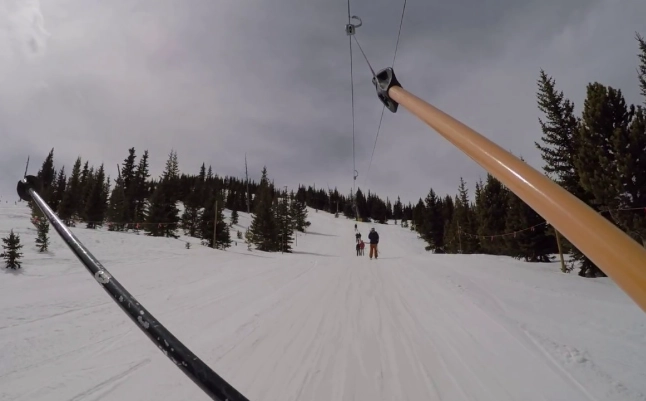
The bar engages. You feel the pull.
2. The Initial Pull and Stance
This is the moment of truth. As the pull starts, let the bar do the work. Don’t lean back into it. Instead, stand upright, or even ever-so-slightly forward. Keep your knees deeply bent – think athletic squat. Your weight should be 60% on your front foot, 40% on your back foot. This front-weighting helps prevent the bar from pulling your tail out.
Your board should be flat-based initially, just gliding. Look up the hill where you’re going, not down at your binding. Your partner’s movements will affect you, so stay relaxed and absorb any little tugs.
3. Holding the Line and Edge Control
After a few feet, you’ll need to engage an edge. The tow path is usually a narrow, packed track. You want to be on your heel edge. Just a little. Not a hard carve, just enough to keep you tracking straight and prevent the board from sliding sideways.
Apply gentle, consistent pressure on your heels. Imagine you’re trying to press your heels down through the soles of your boots. Keep your shoulders roughly in line with your board. Don’t let your upper body twist to face forward – this is what causes the spin-out. It feels weird to ride sideways while being pulled forward, but you must maintain that snowboarder’s alignment.
4. Dealing with Bumps, Slopes, and Getting Off
The path won’t be perfectly smooth. For small bumps, bend your knees more to absorb them. For a steeper section, you might need to shift a bit more weight to your back foot and increase heel pressure slightly to avoid catching your front edge.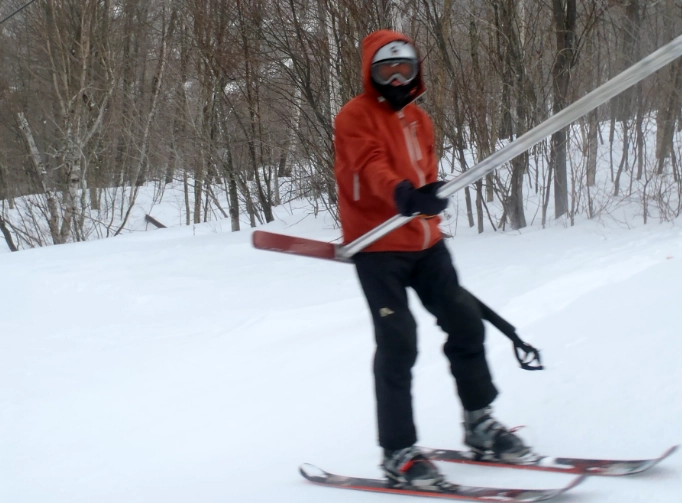
Getting off is about timing. As you approach the top, look for the dismount area. Plan your exit path. The attendant will usually release the bar. As the pull stops, let the bar slide out from behind you. Immediately turn your board (a gentle heel-side skid is easiest) and clear the track quickly. Don’t just stop in the landing zone! Skate or slide away to make room for the people behind you.
Gear Deep Dive: What Really Helps on a T-Bar?
Let’s get more specific. If you’re shopping or optimizing your current setup, here’s what to look for. I’ve even thrown in a few specific models (not as recommendations, just as examples of the type) to make it concrete.
| Gear Component | Ideal Feature for T-Bar Lifts | Why It Helps | Example (Type, Not Endorsement) |
|---|---|---|---|
| Snowboard Profile | Camber or Camber-Dominant Hybrid | Provides predictable, solid edge hold on the packed tow path. Less hooky than pure rocker. | An all-mountain camber board |
| Snowboard Flex | Medium-Stiff (6-8/10) | Better torsional rigidity fights the twisting force from the T-bar pull. | Many freeride-oriented boards |
| Binding Highbacks | Adjustable Forward Lean | Pre-angles your knees for better heel-edge response without conscious effort. | Most mid-to-high-end bindings |
| Stance Width | Wider than Shoulder Width | Lowers center of gravity, increases stability against lateral tipping. | Set to the board's reference stance |
| Stance Angle | +15° Front / -6° to -12° Back (Duck Stance) | Allows natural knee bend and easy pressure on both heel and toe edges as needed. | The most common freestyle stance |
See, it’s not magic. It’s physics. A board with camber and a stiffer tail just handles the unique forces of a T-bar lift better. It’s like choosing hiking boots over running shoes for a rocky trail – the right tool helps a ton.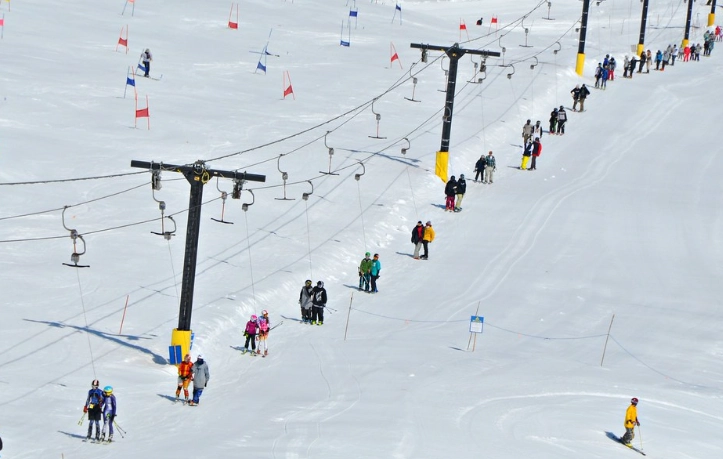
Riding Solo vs. With a Partner: The Dynamics Change
Most T-bar lifts are built for two. Riding with a skier is the classic pairing. It can be easier or harder, depending on the skier. A confident, experienced skier who understands the challenge you face can make it smooth. They’ll match your pace and not make sudden moves.
Riding with another snowboarder is a mixed bag. If you’re both competent, it can be great – you’re in sync. If you’re both beginners, it can be a disaster, with each of you amplifying the other’s wobbles. My advice? If you’re new, try to pair with a calm-looking skier or a very confident boarder. Don’t be shy to tell the attendant you’re new to T-bars; they might help pair you up.
Riding a T-bar lift solo on a snowboard is sometimes possible on smaller or older lifts. The technique is largely the same, but you have the entire pulling force to yourself. You need to be centered and balanced, as there’s no partner to subtly lean on. It can feel more direct, which I actually prefer now.
Frequently Asked Questions (The Stuff You're Actually Searching For)
Should I be on my toe edge or heel edge on a T-bar lift?
Heel edge. Almost always. It’s the most natural and stable position. You’re facing sideways, and leaning back onto your heels lets you see where you’re going and control the board with your stronger leg muscles (calves and hamstrings). Trying to ride a T-bar on your toe edge is an advanced move and usually ends in a faceplant because you’re craning your neck to see.
What's the biggest mistake beginners make?
Leaning back into the bar like it’s a chair. This takes all your weight off your front foot, the nose of your board lifts, and you lose all steering control. The bar then whips your tail around, and you’re down. Stand tall, weight forward.
Are some T-bar lifts easier than others for snowboarders?
Absolutely. A long, slow, gentle T-bar on a wide, smooth path is a dream. A short, steep, jerky one that goes over bumps is a nightmare. Resort maps sometimes don’t differentiate, but you can often tell by looking. Ask the lifties or other riders. The International Ski Federation (FIS) even has guidelines for slope and lift preparation, which sometimes trickles down to tow path maintenance, but it varies wildly by resort.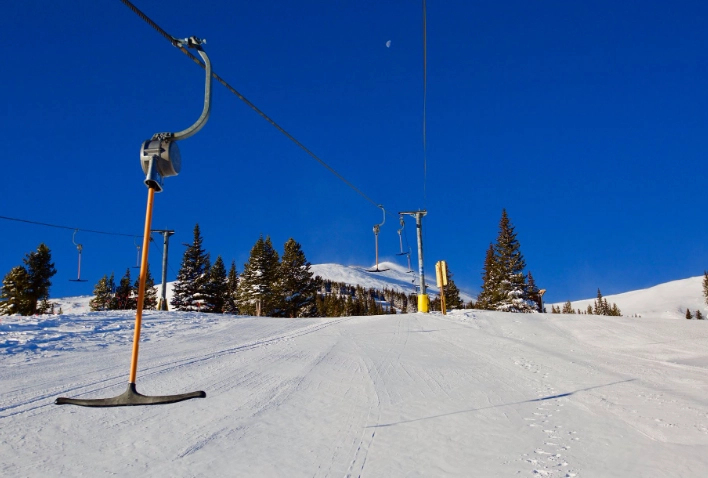
My legs burn out so fast! Is that normal?
Yes, at first. You’re holding a sustained, low-level isometric squat while balancing. It’s a killer workout. It gets easier as your technique improves (less fighting, more efficient posture) and your leg muscles adapt. Think of it as free gym time.
Can I practice this somewhere easier?
If your resort has a “magic carpet” or a very gentle rope tow (like a “Poma” lift for beginners), that’s a great place to get the feel of being pulled while on your board. The principles are similar, just slower and less intimidating.
Beyond the Basics: When You're Comfortable and Want to Look Pro
Once you’ve stopped falling, you can start refining. Instead of just surviving the T-bar lift on your snowboard, you can make it look effortless.
- No-Hands Riding: The ultimate sign of balance. Once you’re stable, try letting go of the vertical bar entirely. Put your hands in your pockets or on your hips. This forces you to find perfect balance through your feet and core.
- Managing Steep Sections: On a steep pitch, you might need to momentarily shift to a more aggressive heel-edge set. Sink down lower, drive your heels down harder, and keep your gaze up. Don’t panic and sit back.
- Riding Switch on a T-Bar: This is a fun challenge for advanced riders. It feels completely alien at first. You’ll likely default to your toe edge this time. It’s a fantastic way to build switch stance confidence.
Final Reality Check and Your Next Steps
Mastering the T-bar lift on a snowboard isn’t about being the best rider on the mountain. It’s about unlocking terrain and gaining independence. It’s a practical skill that pays dividends all season long.
Start with your gear. Check your stance width and highback angle. Maybe tweak them before you go out. Then, find the smallest, gentlest T-bar you can (often in the beginner area) and just try it. Don’t be afraid to fall. Everyone watching has done it too.
Focus on one thing at a time: first, just getting on without falling over. Then, holding the line for 10 seconds. Then, making it halfway up. Celebrate the small wins. For more nuanced technical breakdowns of skiing and snowboarding mechanics, organizations like PSIA-AASI (Professional Ski Instructors of America & American Association of Snowboard Instructors) publish detailed teaching manuals and resources that dive into the biomechanics of movements like this.
The fear is worse than the reality.
Once you conquer that first smooth ride to the top, you’ll look back down and realize it wasn’t so bad. You’ve added a crucial tool to your snowboarding toolkit. Now go find that epic, T-bar-access-only powder stash. You’ve earned it.