Your Reading Guide
- Where It All Started: The Historical Roots of the Exclusion
- The Current Landscape: It's Not *All* Men-Only Anymore
- Debunking the Arguments: Physiology, Risk, and Interest
- Side-by-Side: Men's vs. Women's Nordic Combined Development
- What's Next? The Road to Inclusion
- Common Questions People Are Asking
If you've ever watched the Winter Olympics and found yourself wondering about that grueling event where athletes soar off a ski jump and then race across kilometers of snowy trails, you're thinking of Nordic combined. It's a spectacular test of two completely different skill sets. But here's the thing that stops many casual viewers and even sports fans in their tracks: why is Nordic combined male only at the Olympics? It stands out like a sore thumb in the modern Games. You see women competing in ski jumping now (a huge battle was won there in 2014), you see them in cross-country skiing, but the combination of the two? Still men-only on the biggest stage.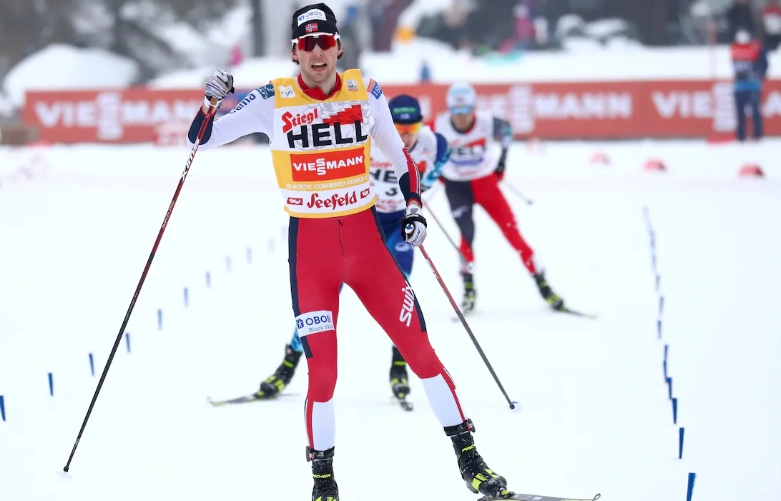
It's a question that pops up every four years without fail. I remember watching the Beijing 2022 coverage and a friend texted me, "Wait, where are the women?" I had to give the same old explanation. It's frustrating. So let's not just skim the surface. Let's really dig into the roots of this, the current state of play, and whether that 'Men Only' sign is finally coming down.
At its core, the question "Why is Nordic combined male only?" is a mix of history, sport politics, development pathways, and a long-held (but increasingly challenged) mindset about women in endurance sports. The short, unsatisfying answer is tradition and slow institutional change. The long answer is what we're here for.
Where It All Started: The Historical Roots of the Exclusion
To understand the present, you have to look at the past. Nordic combined isn't some new-fangled sport; it was on the program at the very first Winter Olympics in Chamonix in 1924. Back then, the Olympic movement and society at large viewed winter sports through a very specific, masculine lens. These events were seen as tests of raw strength, courage, and endurance that were, according to the prevailing attitudes of the era, the sole domain of men.
Ski jumping, in particular, was wrapped in a cloak of danger that was used to justify excluding women for decades. The idea was that the physical demands and risks were too great. Cross-country skiing allowed women in earlier, but combining it with the jump? That was a bridge too far. For most of the 20th century, the International Olympic Committee (IOC) and the International Ski Federation (FIS) simply didn't consider women's Nordic combined a possibility. No development, no competitions, no pathway. It became a self-fulfilling prophecy: you can't have a women's event because there are no women competing, and there are no women competing because there's no event to aim for.
It's a pattern we've seen in so many sports. I think sometimes institutions just get stuck in a "this is how it's always been" loop. Changing that requires a huge push from the outside.
"The exclusion wasn't based on a lack of interest from women athletes. It was based on a systemic lack of opportunity created and maintained by the governing bodies. For generations, talented female skiers who might have excelled in the combined were simply steered towards other disciplines."
This historical inertia created a massive developmental gap. While boys' clubs and national programs funneled talent into Nordic combined from a young age, girls had zero equivalent structure. This is arguably the biggest reason why the question "why is Nordic combined male only?" persisted for so long. The pipeline was empty.
The Current Landscape: It's Not *All* Men-Only Anymore
This is a crucial point that often gets missed in the headlines. To say Nordic combined is completely male-only in 2024 isn't entirely accurate anymore. The dam has started to break, just not at the Olympic level yet.
The real game-changer was the inclusion of women's ski jumping in the 2014 Sochi Olympics. That victory shattered the primary argument that women couldn't or shouldn't jump. Once that barrier fell, the logic for excluding them from Nordic combined, which is half jumping, became even shakier. Pressure began to build.
In response, FIS finally started to sanction women's Nordic combined events. We now have a FIS Women's Nordic Combined World Cup circuit. The first season was 2020/21. Think about that. It only started a few years ago. Athletes like Norway's Gyda Westvold Hansen (a dominant force) and the USA's Annika Malacinski are pioneering the sport at the elite level. They're proving, beyond any doubt, that women can not only compete but excel in this demanding discipline.
There's also a World Championships for women. It debuted in 2021. So the competitive framework is being built, brick by brick. But the Olympics are the ultimate prize, the global spotlight. And that door remains shut for now.
Key Milestone: The first women's Nordic combined Olympic medal event is tentatively scheduled for the 2026 Milano-Cortina Winter Games. This was a decision pushed by the IOC to force the pace of inclusion. It's not 100% guaranteed until the official program is finalized, but it's the strongest signal yet.
The Olympic Hurdle: Why the Wait?
So if there's a World Cup and World Championships, why the delay for the Olympics? The official reasons usually boil down to two things: depth of field and universality.
The IOC wants to see that an event has enough top-level competitors from a wide range of nations to ensure a truly competitive and global Olympic contest. They worry that if only two or three countries can win medals, it undermines the event's Olympic stature. FIS has been working frantically to develop the sport in more countries to meet this criteria.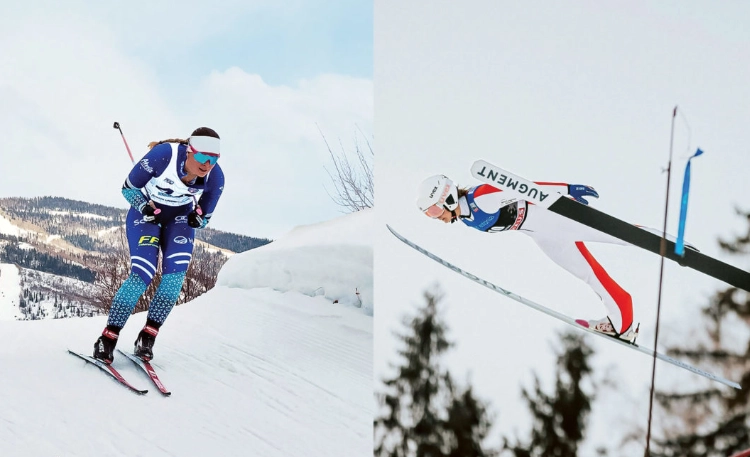
Frankly, this feels a bit like a catch-22. How do you develop depth without the inspirational power of the Olympics? How do you get more nations to invest without the promise of the Games? It's a chicken-and-egg problem that plagues new events. Personally, I think sometimes you just have to take the plunge and let the Olympic platform do its work. That's what happened with women's ski jumping, and the field deepened remarkably fast once the goal existed.
The other side is simple logistics and politics. The Olympic program is packed. Adding events often means cutting others, which creates fierce resistance. There's only so much airtime, so many athlete quotas. Getting a new event in is a brutal fight.
Debunking the Arguments: Physiology, Risk, and Interest
Whenever the question of why is Nordic combined male only comes up, a few old arguments tend to resurface. Let's tackle them head-on.
"It's too physically demanding for women." This is the classic, and it's largely nonsense in the modern context of sports science. Yes, Nordic combined is brutally tough. The cross-country leg is a maximal endurance effort after the intense, explosive, and technical challenge of the jump. But to claim women as a group cannot handle this is to ignore the reality of women's marathon running, Ironman triathlons, cross-country skiing itself, and countless other ultra-endurance sports. Women's bodies are incredibly capable of adaptation and endurance. The current female athletes are already competing over significant distances (typically starting with 5km races), dispelling this myth daily.
"Ski jumping is too dangerous." This was the wall that kept women out of jumping for almost a century. But data and experience have shown that the risk profile is not gender-specific. Proper technique, training, and equipment are what manage risk. The women jumping today are just as skilled and safety-conscious as the men. The danger argument has been thoroughly debunked and retired.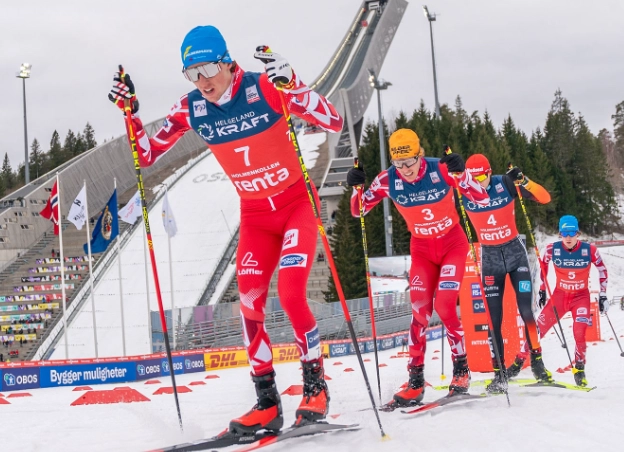
"There isn't enough interest." This is the most frustrating one because it's a feedback loop. How can you gauge interest if you never provide the opportunity? The rapid growth of the women's World Cup, the coverage it's starting to get, and the sheer determination of the pioneer athletes show there is plenty of interest. It's growing organically now that a pathway exists. The interest follows the opportunity, not the other way around.
Looking at the trajectory of similar debates in other sports is telling. People said the same things about women's marathon, women's pole vault, women's ice hockey. The pattern is always the same: exclusion, then a fight for inclusion, then normalization. Nordic combined is just later in the cycle.
Side-by-Side: Men's vs. Women's Nordic Combined Development
It's helpful to see the disparity in black and white. This table lays out the key differences in the competitive structures and history, which is the practical answer to "why is Nordic combined male only?" for so long.
| Aspect | Men's Nordic Combined | Women's Nordic Combined |
|---|---|---|
| First Olympic Appearance | 1924 Chamonix Games | Earliest possible: 2026 Milano-Cortina |
| World Cup Inception | 1983/84 Season (over 40 years of history) | 2020/21 Season (just a few years old) |
| World Championships | Contested since 1925 | Debuted in 2021 (Oberstdorf) |
| Typical Race Distances | Mass Start, 10km, Team Events | Currently focused on 5km, expanding to 7.5km/10km |
| Global Federations with Programs | Over 20 nations with established systems | Growing, but currently ~10-15 nations developing talent |
| Youth Development Pipeline | Long-established junior & youth circuits globally | Very new, still being built in most countries |
That table tells a stark story. The men's sport has had a century to build its house. The women are literally just laying the foundation. The gap isn't about ability; it's about time, investment, and a century-long head start.
What's Next? The Road to Inclusion
The momentum is now undeniably towards inclusion. The 2026 Olympics are the next big benchmark. The inclusion of women's Nordic combined events there would be the final answer to the persistent question of why is Nordic combined male only. It would shift the conversation from "if" to "how."
But it's not just about slapping an Olympic label on it. For the sport to thrive, a few things need to keep happening:
- Grassroots Investment: More national federations need to create girls' programs. This is the only way to build the depth and universality the IOC wants to see. It means coaches, funding, and competition opportunities for teenagers.
- Media Coverage: The women's World Cup needs more visibility. Fans can't support what they can't see. Broadcasters and sports networks have a role to play in normalizing the women's event.
- Sponsorship: With visibility comes sponsorship money. This is vital for athlete support, allowing them to train full-time and raising the overall level of competition.
The athletes themselves are the best ambassadors. Watching them compete, you see the same combination of grace, power, and grit as the men. The sport is identical in its essence and its challenge. The difference is purely historical.
The "men-only" era is ending. It's just ending slowly, and for many, not slowly enough.
Common Questions People Are Asking
Let's wrap up with some direct Q&A, hitting the specific things people type into Google.
1. The FIS website often streams World Cup events.
2. Olympic Channel platforms sometimes broadcast highlights and events.
3. Sports networks in countries with strong teams (like Norway, Germany, USA) may show events. Checking the schedules of broadcasters like Eurosport or Peacock is a good idea during the winter season.
It's getting easier to find, but you still have to look a bit harder than for the men's events. That's the legacy of being the new kid on the block.
So, the next time someone asks you, "Why is Nordic combined male only?" you can tell them it's a question with a past-tense answer. It *was* male only because of history, outdated attitudes, and institutional inertia. The present is a period of rapid catch-up and growth. And the future, starting very soon, looks mixed-gender at last. The combined effort of brave athletes, pushing federations, and a changing world view is finally closing one of the Winter Olympics' last gender gaps. And honestly, it's about time.