Quick Guide to This Article
Let's cut straight to the chase. Avalanche safety isn't about memorizing a few tips or buying the most expensive jacket. It's a mindset, a system, and frankly, a responsibility you take on the moment you decide to leave the groomed trails. I've seen too many people—experienced skiers, hikers, snowmobilers—treat the backcountry with a casualness that makes my stomach turn. The mountains don't care about your fitness level or your brand-new gear.
This guide isn't here to scare you off. Far from it. The goal is to empower you with the knowledge that transforms fear into respect, and uncertainty into a clear plan. We'll walk through the gear that's non-negotiable, the training that's worth every penny, and the decision-making frameworks that separate a good day from a tragic one. Think of this as the conversation you'd have with a brutally honest, experienced friend who's been there.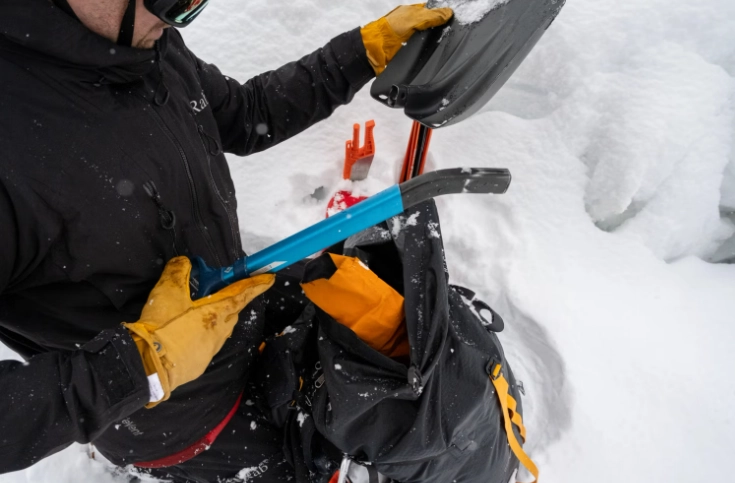
The Absolute Must-Have Gear: Your Lifeline in a Whiteout
You can't talk about avalanche safety without starting with the tools. This is the physical layer of your defense. And no, having a beacon buried at the bottom of your pack doesn't count.
The Holy Trinity: Beacon, Probe, Shovel
This trio is non-negotiable. Full stop. If anyone in your group doesn't have all three, properly maintained and on their person (not on their sled or in the car), you have no business being in avalanche terrain. It's that simple.
- Transceiver (Beacon): This is for finding you. Modern digital beacons are incredible, but they're not magic. You must practice with yours—regularly. I'm a fan of models with multiple-antenna designs and clear visual displays. A common mistake? Forgetting to switch from transmit to search mode. That renders it useless for your partners.
- Probe: This is for pinpointing you. Once a beacon gets you close, the probe confirms the location and depth. Don't skimp on length; 240cm or longer is standard. Aluminum is light and strong. Fumbling with a probe that won't assemble quickly is a nightmare scenario.
- Shovel: This is for digging you out. And you need to dig fast. A metal-bladed, extendable-shovel is the only choice. Plastic breaks. A small blade is inefficient. Your shovel is also a vital tool for snowpit tests. Keep it accessible, not buried under your lunch.
I remember a practice session where a friend's brand-new, fancy beacon had a weird glitch in search mode. We spent 20 confused minutes before realizing it was a software bug. It was a powerful, cheap lesson: know your gear intimately, and always have a backup plan (like practicing a coarse search without the beacon).
Beyond the Basics: What Else Deserves a Spot in Your Pack?
The trinity gets the headlines, but your avalanche safety kit is more than that. Here's a breakdown of other critical items, because sometimes survival means waiting for help.
| Item | Purpose & Why It's Critical | My Personal Take / Pitfall |
|---|---|---|
| Airbag Backpack | Designed to keep you near the surface of an avalanche via displacement (the principle that larger objects rise). Can drastically increase survival odds. | A game-changer, but NOT a force field. It's a last-resort safety net. People get overconfident. Also, you must service the canister/cylinder. |
| Avalung or AVALUNG™ System | A device that redirects your exhaled breath, preventing an ice mask from forming and allowing you to breathe snow-dusty air. | Useful technology, but it requires you to get the mouthpiece in place during the chaos of a slide. Practice that motion. |
| First Aid Kit | Trauma from the avalanche itself is common. A tourniquet, hemostatic gauze, and chest seals are as important as bandages. | Most store-bought kits are useless for trauma. Build your own. Take a wilderness first aid course. Seriously. |
| Communication Device | Two-way satellite communicator (e.g., Garmin inReach, SPOT) or a PLB. Your phone will have no signal. | This is how you call the cavalry. Subscription fees are annoying, but they're the cost of admission for remote travel. |
| Bivy Sack or Emergency Shelter | Hypothermia kills survivors. A compact, reflective bivy can retain vital heat if you're injured or waiting. | The lightweight, foil-type ones are better than nothing, but a more robust, breathable sack is worth the slight weight penalty. |
Knowledge is Your Best Layer: Avalanche Safety Training
Gear is useless without the know-how to use it. And I'm not talking about watching a 10-minute YouTube video. Formal avalanche safety training is the single best investment you can make in your own survival and the safety of your friends.
What Do You Actually Learn in a Course?
A good Level 1 course (like those from AIARE or the Canadian Avalanche Association) is hands-on, exhausting, and eye-opening. It's not just lecture hall theory.
You'll spend your days:
- Reading the Terrain: Learning to identify avalanche paths, start zones, terrain traps (like gullies or cliffs below a slope), and safe travel routes. This is where you learn to see the mountain's hidden anatomy.
- Understanding the Snowpack: Digging snow pits, performing stability tests (like the Extended Column Test or Compression Test), and interpreting the results. You learn that the danger isn't always on the surface; it's often a weak layer buried weeks ago.
- Making Group Decisions: This is huge. You practice frameworks like the Avalanche Forecast integration and the Observe, Plan, Decide, Act loop. How do you respectfully voice concern? How does the group choose a conservative plan?
- Rescue Drills: Timed, stressful, full-scale rescue scenarios with multiple burials. This is where you learn that your beacon practice at home was too slow, and that organizing a probe line is harder than it looks.
AIARE vs. Others: Does It Matter?
AIARE (American Institute for Avalanche Research and Education) is the most widely recognized curriculum in the US. Their structured, process-based approach is excellent. Other providers, including many guide services and mountain clubs, offer fantastic courses too. The key is the instructor. Look for a course taught by a certified, experienced guide or avalanche professional.
Don't just shop for the cheapest or closest course. Read reviews. Ask about the instructor-to-student ratio. A course with 20 students and one instructor is far less valuable than one with 6 students and two instructors.
The Human Factor: Decision-Making When the Stakes Are High
This is where avalanche safety truly lives or dies. You can have all the gear and training, but if you can't make good decisions under pressure, in a group, and when you're tired and excited, you're vulnerable.
Heuristic Traps: The Mental Shortcuts That Kill
These are unconscious biases that lead us astray. Knowing them by name helps you spot them in yourself and your partners.
- Familiarity: "I've skied this slope a dozen times." The mountain doesn't remember you. The snowpack is different every day.
- Social Proof: "Look, there are tracks on it already." Those other people might be ignorant, lucky, or heading to a different zone.
- Commitment/Summit Fever: "We drove five hours and hiked this far, we have to ski something." This is a huge one. The ability to say "This isn't good, let's turn around" is a mark of strength, not weakness.
- Expert Halo: Deferring uncritically to the most experienced person in the group. Even experts have bad days and blind spots. Everyone should be part of the discussion.
I've fallen for the "commitment" trap myself. A few years back, on a marginal day, we pushed a little further into questionable terrain because we'd put in so much effort. The snow felt wrong, the pit results were ambiguous, but we went for it anyway. We got down safely, but the gut-churning feeling of knowing we'd ignored our own protocols was a powerful lesson. It felt stupid, and it was.
The Daily Ritual: Planning and the Forecast
Your day starts at home, not at the trailhead. Checking the regional avalanche forecast is your daily bible. Don't just look at the danger rating (Low, Moderate, Considerable, High, Extreme). Read the discussion. What aspects are problematic? What layer is the concern? What is the avalanche problem (e.g., Persistent Slab, Wind Slab)?
Then, make a plan. Which aspect will we avoid? What's our escape route? Where are our safe zones? Communicate this plan to someone not on the trip. The Trip Plan concept is vital.
If the Worst Happens: Survival and Rescue Protocol
Let's walk through it, step by grim step. Speed and organization are everything.
Immediate Action: The First 10 Minutes Are Everything
- Look, Listen, Note Last Seen Point: The moment the slide starts, don't look away. Watch the victim(s). Point to the spot where you last saw them and yell "LAST SEEN HERE!" This is your primary search area.
- Call for Help? Maybe Not Yet. This is counterintuitive. If you are the only group there, your first priority is a companion rescue. You are the victim's only hope for the first 15-30 minutes. If there are other groups nearby, one person can be designated to call for help while others start the search.
- Switch Beacons to SEARCH. Do it immediately. Yell "SWITCH!" to your partners. Scan the debris pile visually for any clues (a hand, a piece of gear).
The Search: Organized Chaos
Follow your beacon's instructions. The general pattern is a coarse search (find the signal), a fine search (pinpoint the strongest signal), and then the probe strike. The first searcher to get a signal should keep their beacon in search mode and stand still, acting as a marker for others to converge on.
Once the probe confirms location and depth, the clock starts on the most physically demanding part: digging.
The Dig: It's a Sprint, Not a Marathon
You need to get to the victim's airway fast. The standard technique is the V-Shaped or Conveyor Belt method. One person starts digging downhill from the probe, throwing snow laterally, not uphill. The next person stands behind them, moving that snow further back. You create a fast, efficient assembly line.
As you get close, slow down and use your hands to avoid injuring the victim. The first goal is to clear the airway and check for breathing.
Common Questions (The Stuff People Are Afraid to Ask)
Wrapping It All Together
Avalanche safety isn't a checkbox. It's a continuous cycle: Educate, Equip, Plan, Observe, Communicate, Decide, Travel Safely. Then do it again the next time. It requires humility. It requires you to sometimes have boring, conservative days. It requires you to speak up in your group.
The resources are out there. The training is available. The gear is better than ever. There's no excuse for going in blind. Your passion for the mountains deserves the respect of proper preparation. Make the commitment to avalanche safety not because a guide told you to, but because the people waiting for you at home are counting on you to come back.
Start today. Check a forecast, even if you're not going out. Watch an old snowpit video. Handle your beacon. This knowledge isn't a burden—it's the key that unlocks a lifetime of deeper, safer, and more rewarding adventures in the winter wilderness.