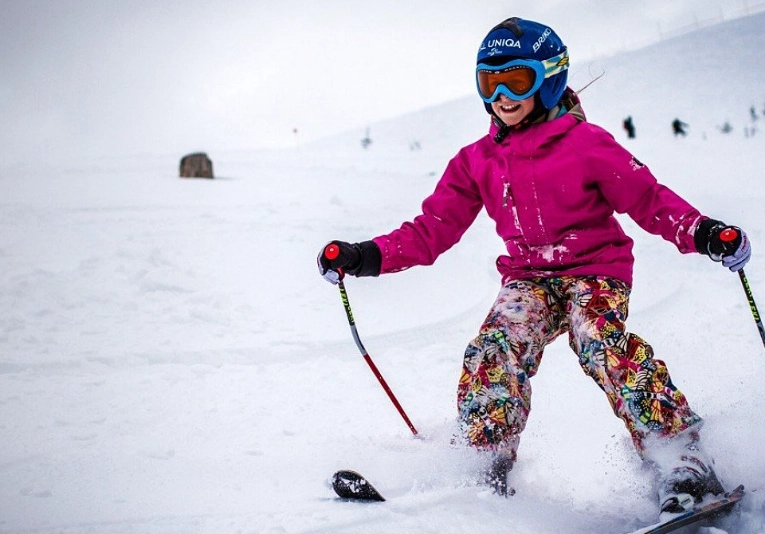
Let's be honest. That first run of the season often feels more like a brutal wake-up call than a graceful glide. Your legs burn, your balance is off, and by lunchtime, you're done. I've been there, watching teenagers zip past while my quads screamed for mercy. But after a decade of coaching and figuring this out the hard way, I can tell you this: the mountain doesn't care how much you "love skiing." It only responds to prepared legs.
The secret isn't just getting stronger. It's training the right muscles, in the right way, to handle the specific demands of skiing. That means building strength that works on a moving, unstable platform (your skis), training your body to absorb force like a shock absorber, and fixing the imbalances that lead to fatigue and injury.
This isn't about getting gym-rat huge. It's about building resilient, smart muscle that lets you ski longer, tackle tougher terrain, and actually enjoy the last run as much as the first.
Your Quick Guide to Off-Snow Ski Fitness
Why Off-Snow Training is Non-Negotiable
Think of skiing as a series of controlled crashes. Each turn forces your legs to decelerate your body's momentum (eccentric loading) before driving you into the next turn (concentric power). The steeper or bumpier the run, the greater the forces.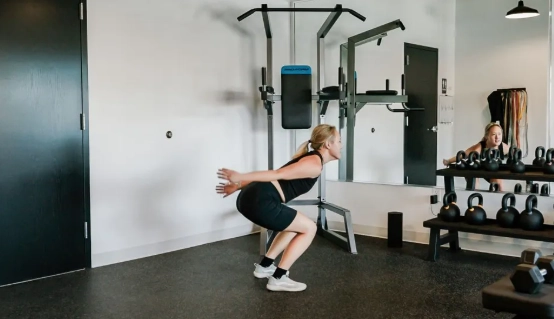
If your muscles aren't conditioned for this, your joints and ligaments take the hit. That's where injuries happen. A study in the Journal of Science and Medicine in Sport has highlighted the importance of neuromuscular control and strength in preventing common ski injuries like ACL tears. Dryland training is your pre-emptive strike.
Beyond injury prevention, it's about performance. Better strength means you can hold a carve longer. Better balance means you recover from that unexpected ice patch. Better endurance means you're the one suggesting one more run through the trees.
The Three Pillars of Ski-Specific Fitness
Forget just doing squats. You need a balanced attack focused on three areas.
1. Leg Blasters: Strength & Power
This is your engine room. We're talking about the quads, glutes, hamstrings, and calves. But the key is training them unilaterally (one leg at a time) and through a full range of motion. Skiing is rarely a perfectly symmetrical activity.
2. The Core: Your Central Command
Not six-pack abs. I mean the deep, wrap-around musculature that connects your upper and lower body. A strong core transfers power from your legs to your skis and keeps your upper body quiet and controlled. When this fails, you start flailing with your arms to balance—a sure sign of a weak core.
3. Ankles & Knees: The Stabilizers
This is the most overlooked piece. The small muscles around your ankles and knees are what make micro-adjustments to keep your skis on edge. Training proprioception (your body's sense of position) is crucial. If these stabilizers are weak, your big leg muscles have to work overtime just to keep you upright, leading to rapid fatigue.
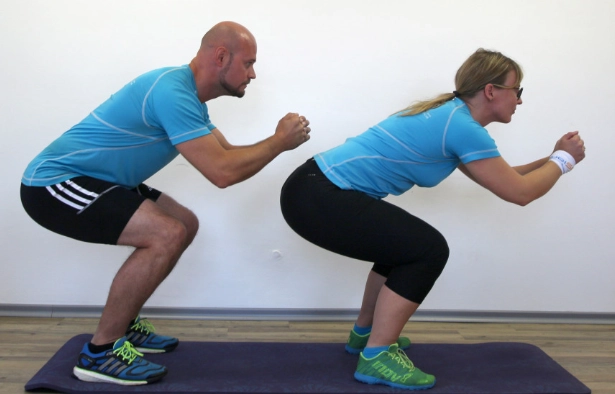
Expert Insight: The biggest mistake I see? Skiers only train the "down" part of a squat or lunge. Skiing is all about the "down under control" part—the eccentric phase. Spend extra time lowering yourself slowly in every exercise. That's what builds the shock-absorber strength for moguls.
The Exercise Blueprint: Movements Over Muscles
Here’s a breakdown of the best ski exercises off snow, categorized by the primary ski skill they enhance. This isn't an exhaustive list, but these are the staples for a reason.
| Exercise | Primary Benefit | Why It Works for Skiing | Beginner Tip |
|---|---|---|---|
| Lateral Lunges | Lateral Strength & Mobility | Directly mimics the side-to-side motion of linking turns. Builds adductor (inner thigh) strength for edge engagement. | Don't let your knee cave in. Push your hips back as you lunge to the side. |
| Single-Leg Romanian Deadlifts | Hamstring/Glute Strength & Balance | Hits the posterior chain critical for hip stability. The single-leg aspect fixes imbalances and challenges proprioception. | Hold onto a wall or chair for balance. Focus on a slow, controlled motion. |
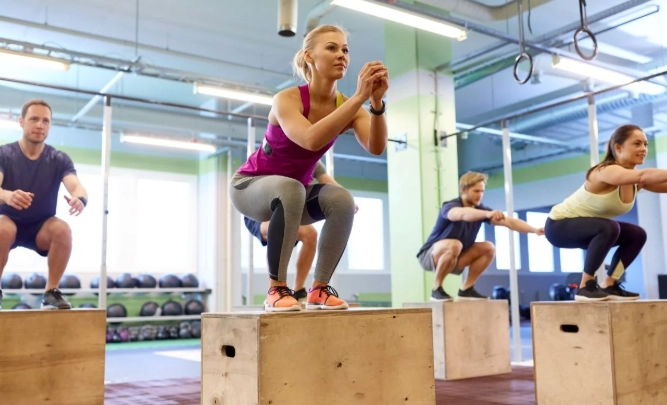
| Box Jumps (or Step-Ups) | Explosive Power | Develops the quick, powerful extension needed to initiate turns and pop over rollers. Step-ups are a safer, joint-friendly alternative. | Start with a low step. Land softly, absorbing the impact with bent knees. |
| Plank with Arm/Leg Reach | Anti-Rotation Core | Trains your core to resist twisting, keeping your shoulders square to the fall line while your legs work independently underneath. | Start from your knees. Keep your hips perfectly still as you reach. |
| Wall Sits with Calf Raises | Isometric Endurance & Ankle Strength | Simulates the brutal, sustained burn of a long GS turn. Adding calf raises engages the ankle for fore/aft pressure control. | Start with 30-second holds. Add calf raises every 10 seconds. |
Your 4-Week Sample Training Plan
Here’s a simple, no-frills plan you can do at home with minimal equipment. Aim for 2-3 sessions per week, with at least a day of rest in between.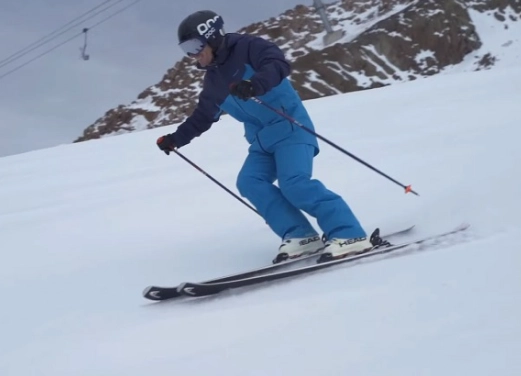
Weeks 1-2 (Foundation): Focus on form and mind-muscle connection. Use bodyweight or light weights.
- Lateral Lunges: 3 sets x 10 reps per side
- Single-Leg Glute Bridges: 3 sets x 12 reps per side
- Step-Ups: 3 sets x 10 reps per leg
- Forearm Plank: 3 holds for 45 seconds
- Standing on one leg (eyes closed): 30 seconds per leg
Weeks 3-4 (Intensity): Increase load, add complexity.
- Lateral Lunges (holding a kettlebell or dumbbell): 4 sets x 8 reps per side
- Single-Leg Romanian Deadlifts: 4 sets x 8 reps per side
- Box Jumps (or explosive Step-Ups): 4 sets x 6 reps
- Plank with Alternating Arm Reach: 3 sets x 10 reaches per side
- Balance Board Stands: 3 sets of 60 seconds
Finish each session with 5 minutes of dynamic stretching—leg swings, torso twists, walking lunges. Don't just collapse on the couch.
The 3 Most Common Training Mistakes (And How to Fix Them)
I've watched countless skiers waste time in the gym.
Mistake 1: Only Training in the Sagittal Plane. That's forward-and-back movements like running and standard squats. Skiing happens in all planes, especially lateral (side-to-side). Fix: Make lateral lunges and side planks staples of your routine.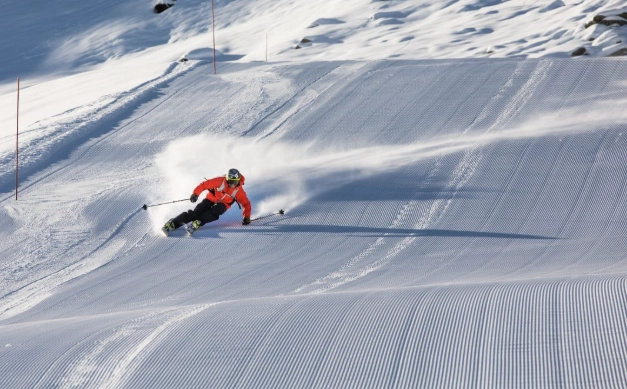
Mistake 2: Neglecting the Eccentric. Everyone focuses on standing up from a squat. The magic is in the slow, controlled descent. Fix: Take 3-4 seconds to lower yourself in every rep. Feel the burn in a whole new way.
Mistake 3: Skipping Balance Work. Lifting heavy on a stable floor doesn't prepare your stabilizers for a variable snow surface. Fix: Dedicate 10 minutes at the end of each workout to single-leg stands, BOSU ball work, or a balance board.
Simple Gear That Actually Helps
You don't need a full gym. A few key items can supercharge your training:
- A Resistance Band: Cheap and versatile. Great for adding tension to lateral walks and activating glutes.
- A Balance Board (Wobble Board or Indo Board): My top recommendation for home use. It directly trains ankle and knee stability like nothing else.
- A Single Kettlebell or Dumbbell: For adding load to lunges and deadlifts. A 16-24kg kettlebell is a great start for most men; 8-12kg for women.
Your Top Questions Answered
The bottom line is this: your skiing is limited by your weakest link. It might be a wobbly ankle, a sleepy glute, or a core that can't say no to rotation. Off-snow training is your chance to find and fix those links. Start today, be consistent, and when you click into your skis this season, you'll feel the difference from the very first lift ride up. The mountain won't feel smaller, but you'll definitely feel bigger on it.