In This Guide
- Why Bother with Formal Children's Ski Lessons Anyway?
- The Step-by-Step Process for Choosing the Right Program
- The Gear Maze: What Your Child Actually Needs
- A Peek Inside: What Does a Great Children's Ski Lesson Look Like?
- Safety: The Boring Stuff You Can't Ignore
- Answering Your Biggest Questions (The FAQ)
- Wrapping It Up: Your Action Plan
Let's be honest. The idea of signing your kid up for children's ski lessons can feel equal parts exciting and utterly daunting. You picture the Instagram-perfect moments: tiny skis, big smiles, rosy cheeks against the white snow. Then reality hits. How old should they be? How do you find a good instructor? What if they hate it? What gear do you actually need to buy versus rent?
I've been through this twice now. My first kid took to the slopes like a duck to water. My second? Let's just say there were tears (his and, I'll admit, a few of mine) before we found our groove. I've also seen fantastic children's ski lessons and a few that were... well, less than ideal. The difference between a great experience and a miserable one often comes down to the prep work you do as a parent before you even get to the mountain.
This guide isn't about selling you a specific resort's program. It's about giving you the insider knowledge—the stuff the brochures don't always tell you—to make an informed decision. We're going to talk about what makes a great lesson, how to spot potential red flags, and how to set your child up for success from the car ride to the mountain to the après-ski hot chocolate.
Why Bother with Formal Children's Ski Lessons Anyway?
Can't you just teach them yourself? Sure, you could. My dad tried with me. I spent most of the morning sitting in the snow crying while he got increasingly frustrated. It's a classic story for a reason.
Professional instructors are trained in techniques specifically for teaching children. They know how to break down movements into kid-friendly language (think "pizza" for snowplow and "french fries" for parallel skis). They're also not emotionally invested in the same way a parent is. A kid will often listen more readily to a cheerful stranger in a fun uniform than to mom or dad repeating instructions for the tenth time.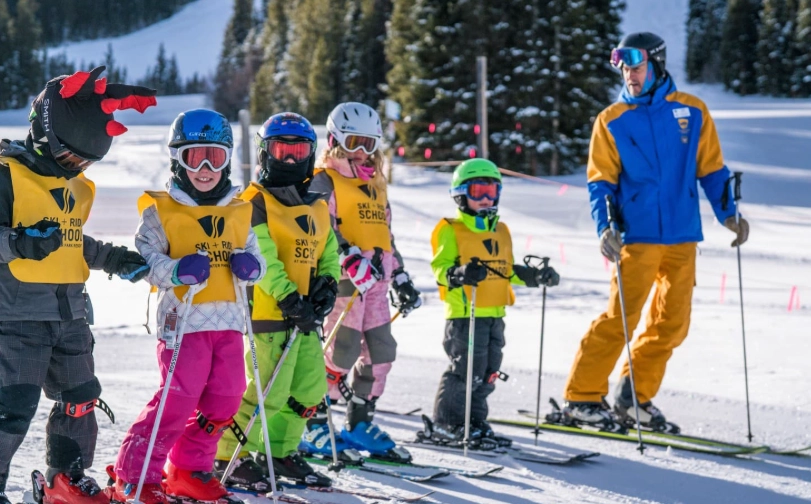
More importantly, certified instructors from recognized schools are trained in safety protocols for teaching children on the mountain. They know how to manage a small group on a beginner slope, what to look for in terms of fatigue or fear, and how to use teaching aids effectively. This peace of mind is, for me, worth the price of the lesson alone.
Structured children's ski lessons provide a social environment too. Learning alongside peers can be a huge motivator and takes the pressure off. It becomes a game, not a chore.
The Step-by-Step Process for Choosing the Right Program
This is where most parents feel overwhelmed. A quick online search for "children's ski lessons near me" throws up a dozen options. How do you pick?
Step 1: Age and Developmental Stage Are Everything
Programs are almost always segmented by age for good reason. A 4-year-old and an 8-year-old have wildly different physical abilities, attention spans, and social needs.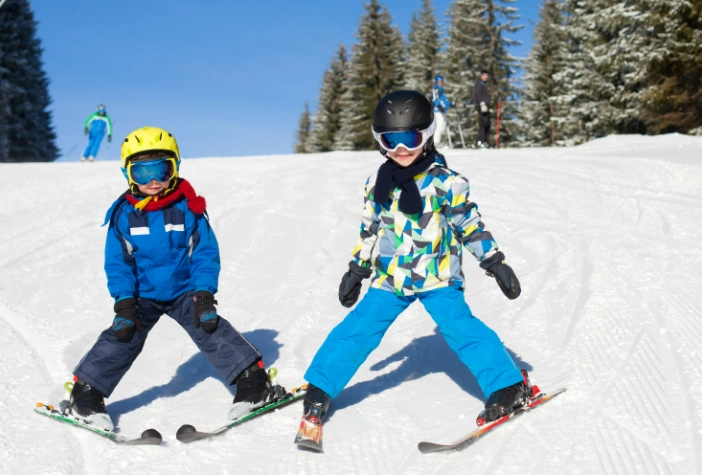
| Age Group | Typical Program Name | What to Expect & Focus | Realistic Parent Expectations |
|---|---|---|---|
| 3-4 years old | Tiny Tots, Penguin Club, First Tracks | Very short sessions (1-2 hours), heavily play-based. Focus is on getting comfortable in gear, sliding on flat ground, maybe a magic carpet ride. Indoor/play breaks are crucial. | Success = putting on the gear and having fun. Don't expect linked turns. Many kids this age do better in a semi-private or private lesson setting. |
| 5-7 years old | Kids' Ski School, Beginner Explorers | Full or half-day programs. Learning the basics: gliding, stopping (the "pizza"), turning, using a lift. Games are still central to the teaching method. | This is the "sweet spot" for many to truly learn. They can usually follow instructions in a group and have the physical strength for a full morning. |
| 8-12 years old | Youth Academy, Mountain Adventures | More skill-focused, moving from wedge turns to parallel skiing, exploring easier green and blue runs. More mountain exploration and camaraderie. | They can progress quickly. Look for programs that group by ability level, not just age, after the first day. |
| Teens (13+) | Teen Clinics, All-Mountain Groups | Less "kid-gloves" approach, more focused on technique, terrain parks, or off-piste skills depending on interest. Social aspect is huge. | They'll want independence. A good teen program gives them space while providing guidance. |
My personal rule of thumb? If your child is under 5, seriously consider if they have the physical stamina and desire. Forcing it rarely works. I made that mistake once, thinking "all kids ski at 4!" Mine was not one of those kids. We waited a year, and it was a completely different (positive) story.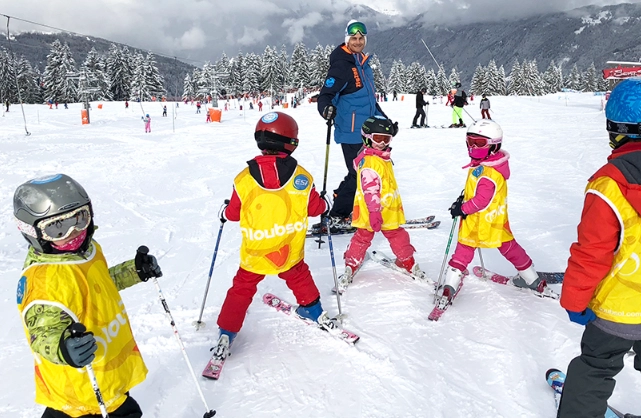
Step 2: Deciphering the Lesson Types: Group, Private, Semi-Private
This is a major budget and outcome decision.
- Group Children's Ski Lessons: The most common and affordable option. Kids are grouped by age and ability. The pros: social, fun, cost-effective. The cons: your child gets less individual attention. A great instructor can manage this well, but a mediocre one might let a shy kid get lost in the shuffle. Ask about the maximum student-to-instructor ratio. Anything over 6:1 for young beginners gives me pause.
- Private Lessons: One-on-one instruction. It's expensive, but the progress can be astronomical. Ideal for very young children, anxious kids, those with special needs, or if you have a specific skill goal in a short time. The instructor's entire focus is on your child's pace and mood.
- Semi-Private Lessons: Usually for your own family/friend group (e.g., 2-4 siblings/cousins). You split the cost of a private instructor. This can be a goldilocks solution—personalized attention at a lower per-person cost than a true private lesson. It works brilliantly if the kids are at a similar level.
Step 3: Vetting the Ski School and Instructors
Not all children's ski lessons are created equal. Here's what to look for beyond the website.
- Certification: In the US, look for schools where instructors are certified by the Professional Ski Instructors of America (PSIA), specifically with the Children's Specialist credential. This is a huge green flag. It means they've had specific training in child development, teaching progressions, and safety for kids. In Canada, look for Canadian Ski Instructors' Alliance (CSIA) certification.
- Facilities: Does the learning area (often called a "magic carpet" or beginner zone) seem safe, separate from faster traffic, and well-maintained? Is there a dedicated, easy-to-find meeting area for kids' lessons?
- Communication: How does the school communicate with parents? Do they provide a progress report at the end of the day? What's the protocol if a child is hurt, overly distressed, or needs the bathroom mid-lesson?
- Gut Check: Call them. Ask questions: "How do you handle a child who is scared?" "What's a typical first-hour lesson plan for a 6-year-old?" Their answers will tell you a lot. Vague, salesy answers are a red flag. Specific, child-centric answers are promising.
The Gear Maze: What Your Child Actually Needs
This is a major source of confusion and expense. Here's a simple breakdown.
Absolute Must-Haves (Non-Negotiable)
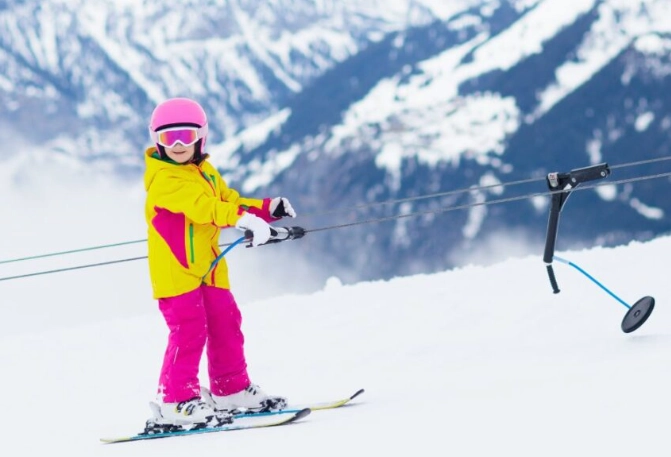
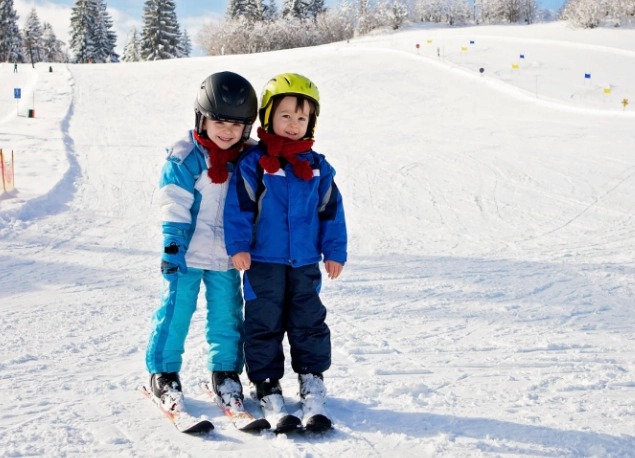
- A Properly Fitted Ski Helmet: This is not optional. Rent it or buy it, but it must fit snugly without wobbling. Goggles that fit with the helmet are also essential for visibility and eye protection.
- Waterproof Mittens (Not Gloves): Kids' fingers stay warmer together. Look for mittens with long cuffs and a clip to connect them through their jacket sleeves so they don't get lost. Wet, cold hands = instant misery.
- Baselayers: Avoid cotton at all costs. Cotton gets wet and stays wet. Use synthetic or wool long underwear top and bottom. This one tip will drastically improve comfort.
- Waterproof Pants & Jacket: Snowsuits are great for the littlest ones. For older kids, bib-style pants are a lifesaver—no snow down their back when they fall (and they will fall).
The Rent vs. Buy Debate for Skis, Boots, and Poles
For beginners, rent. Full stop.
Kids grow out of equipment incredibly fast. Reputable rental shops at the mountain or in town will have modern, well-maintained gear sized correctly for your child. A key advantage of on-mountain rental is that if the boots are painfully wrong or the skis aren't working, you can swap them out quickly. Many ski schools offer package deals that include lift ticket, lesson, and rental—these can be great value and simplify logistics.
When you rent, ensure the ski boots are snug but not painfully tight. They should allow a little toe wiggle but hold the heel firmly in place. Poles are often not given to very young beginners, and that's fine—they learn balance without them.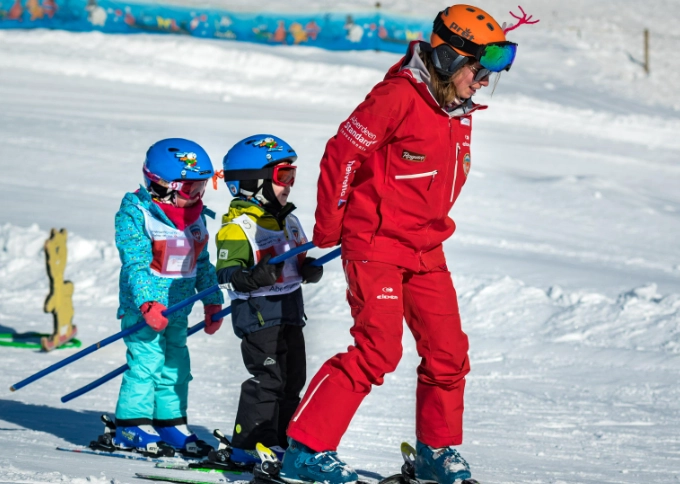
A Peek Inside: What Does a Great Children's Ski Lesson Look Like?
Okay, so you've chosen a program and geared up. What should you expect on the day?
A well-structured session for young kids might flow like this:
The Warm-Up & Welcome (First 15 mins): The instructor gathers the group, does introductions, plays a name game. They check everyone's gear quickly—bindings, helmet buckle, mittens on. This is about building rapport and easing anxiety.
Skill Introduction & Games (Next 30-45 mins): On a flat, gentle area, they'll start with games. "Can you walk like a penguin in your skis?" "Let's pretend we're making a pizza slice with our ski tips to stop." It's all play-based learning. The goal is muscle memory and confidence, not technical perfection.
First Rides & Gentle Slopes (The Main Event): Using a magic carpet (a conveyor belt for skiers) or a very gentle rope tow, they'll take a few short rides. The focus is on stance, feeling the glide, and controlling speed with the "pizza." There will be lots of falls, laughter, and getting back up.
Breaks Are Part of the Program: A good instructor reads the group's energy. They'll call for water breaks, snack breaks, or even a quick indoor warm-up. Little bodies get cold and tired fast.
Cool Down & Recap (Last 10 mins): They'll end on a positive note, maybe with a fun game or a "final run." The instructor should give each child (and you) a quick, specific piece of positive feedback. "Sam, you worked so hard on your pizza stops today!"
The vibe should be positive, patient, and energetic.
If it feels rushed, rigid, or dismissive, that's a problem.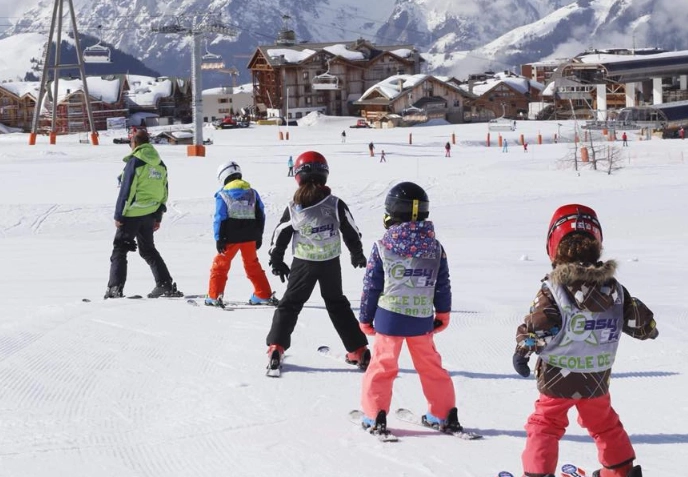
Safety: The Boring Stuff You Can't Ignore
We all want to think nothing bad will happen. But preparation is key.
- Hydration & Nutrition: Skiing is hard work. A big breakfast and a water bottle in their backpack (if they carry one) are crucial. Dehydration leads to fatigue and poor concentration.
- Know the Mountain's Emergency Plan: Where is the ski patrol clinic? What's the number? Make sure your child's lesson ticket or lift ticket has your current cell number on it.
- The "Stop" Rule: Teach your child one simple rule before they go: "If you feel scared, tired, or something hurts, you tell your instructor and you STOP." Empower them to speak up.
- Sun Protection: We mentioned sunscreen. It bears repeating. Goggles protect eyes from UV and wind.
Reputable ski schools operate under strict safety guidelines. Don't be afraid to ask about their protocols for lost children, injury response, and weather-related cancellations (what happens if the lesson is cut short by a blizzard?).
Answering Your Biggest Questions (The FAQ)
Wrapping It Up: Your Action Plan
Finding the right children's ski lessons takes a bit of homework, but it pays off in spades when you see your kid grinning from ear to ear, proud of what they've accomplished.
- Start Early: Research and book lessons well in advance, especially for peak holiday periods. The best instructors and time slots fill up.
- Focus on Fit & Feel: Prioritize a certified, child-focused instructor and properly fitted gear over fancy resort amenities.
- Manage Expectations (Yours and Theirs): The goal of the first lesson is fun and safety, not technical mastery.
- Be the Support Crew: Your job is logistics (getting them there on time, fed, and geared up) and emotional support (enthusiasm and hugs), not on-slope coaching. Leave that to the pros.
The mountain can be a place of incredible joy and freedom for kids. A positive introduction through well-run children's ski lessons is the best gift you can give them to unlock that world. It's an investment not just in a vacation activity, but in a lifetime of potential adventures together.
Now go pack those mittens.