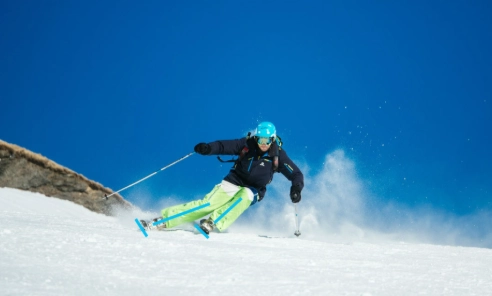
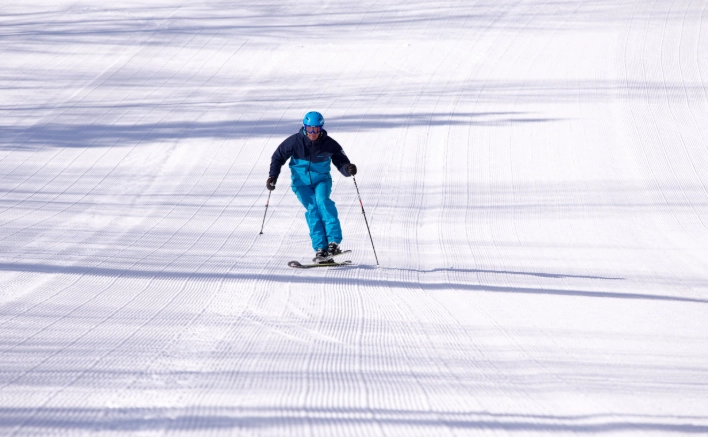
You see them on the mountain—those skiers who seem to glide effortlessly, leaving behind two perfect, pencil-thin lines in the snow. No scraping, no skidding, just a quiet shhhhk as they arc from turn to turn. That's carving. And it's not some magical talent reserved for racers and instructors. It's a learnable skill, a specific set of movements that, once you feel them, will transform your skiing from a struggle against the mountain to a dance with it.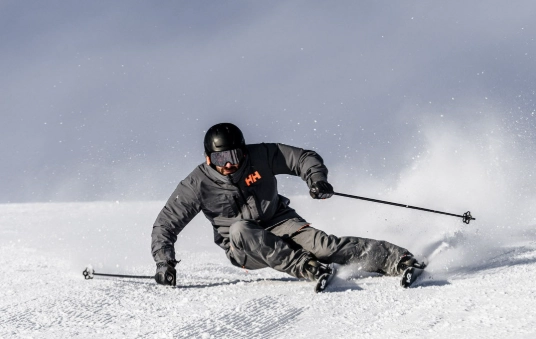
I spent years thinking I was carving because I could go fast and make big turns. Turns out, I was just skidding with style. The moment I finally understood the real mechanics? Everything clicked. The speed felt controlled, the effort dropped, and the fun factor went through the roof. This guide is about getting you to that moment.
What You'll Learn
What Carving Really Is (And Isn't)
Let's clear this up first. Carving is when your ski's metal edge cuts and travels along a precise arc in the snow, like a train on a track. The ski bends, and its sidecut geometry determines the turn radius. You're not pushing the tails out to slow down (that's skidding). You're riding the ski's design.
Skidding is like dragging the side of your shoe across the floor to stop. Carving is like rolling a perfectly round marble—it follows a clean, predetermined path. Most intermediate skiers live in a world of controlled skids. That's fine! It's how we manage speed. But carving unlocks a different mode: higher speed with less perceived effort and incredible edge grip.
Quick Test: Next time you're on a groomed run, look back at your tracks. Are they two clean lines? Or are they wide, washed-out trenches with snow sprayed to the sides? The tracks don't lie.
The Non-Negotiable Body Mechanics of a Carved Turn
Forget "leaning into the turn." That vague advice causes more problems than it solves. Carving is a bottom-up movement chain.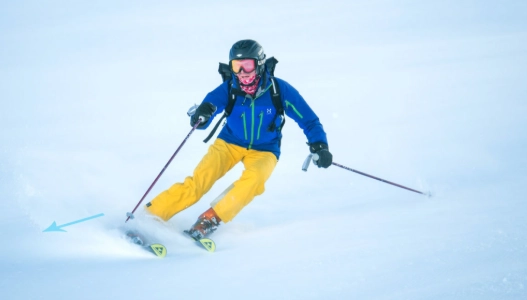
1. Initiation: Ankle Roll, Not Shoulder Swing
The turn starts at your feet. To engage the edge, you roll your ankles and knees inward toward the center of the turn. Imagine trying to press the little-toe edge of your downhill boot into the snow. This subtle, early ankle movement sets the edge long before your upper body commits. The common error? Leading with the shoulders and hips, which twists the skis and causes a skid.
2. The Foundation: Weight on the Downhill Ski
This is the golden rule you must internalize. At the apex of your turn, 80-90% of your weight must be on your outside (downhill) ski. I mean really on it. You should be able to lift your inside ski completely off the snow. Our natural instinct is to keep weight balanced for safety, but that forces both skis to skid. Commitment to the outside ski lets it bend and carve.
3. Alignment: Stack Your Bones
Your ankle, knee, and hip of the outside leg should form a strong, slightly angled column. Your upper body remains relatively quiet and facing downhill. Think of your legs as independent shock absorbers working under a stable platform. If your shoulders are rotating to face the tip of your skis, you're out of alignment and killing your edge hold.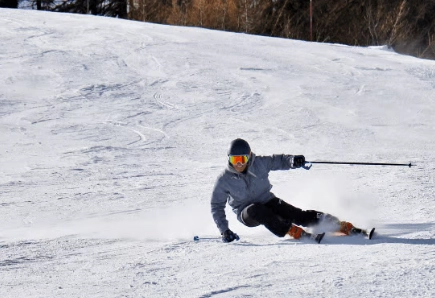
The 3 Mistakes Almost Everyone Makes (And How to Fix Them)
After coaching dozens of skiers, I see these same issues pop up every time.
| Mistake | What It Looks/Feels Like | The Fix |
|---|---|---|
| 1. The Backseat Driver | Weight in your heels, feeling like you're "sitting back" for control. Your quads burn by lunch. This prevents you from pressuring the ski's shovel to initiate the bend. | Consciously press your shins into the front of your boots. Practice on a gentle slope by making turns while trying to keep your toes wiggling inside your boots. |
| 2. The Upper Body Rotator | You point your shoulders where you want to go. Your turns start with a upper body twist, causing the skis to pivot and skid sideways instead of track forward. | Practice with your poles held horizontally across your chest. Keep them pointed downhill. This physically blocks shoulder rotation and forces your legs to do the work. |
| 3. The Fearful Weight-Splitter | You can't commit to the outside ski. You keep weight on both skis because leaning onto one feels scary and unstable. | On a very gentle green run, practice lifting your inside ski entirely off the snow through the entire turn. It feels ridiculous, but it teaches total commitment. |
Your Step-by-Step Carving Progression
Don't try to carve a steep black diamond tomorrow. Follow this progression on a wide, groomed blue run.
Step 1: Find Your Edges (The "Sideslip to Edge" Drill)
Traverse across the slope. Without turning, simply roll your ankles and knees uphill to dig your edges in and stop. Then release the edges to slide sideways again. Do this back and forth. This isolates the feeling of engaging and releasing your edges using only your lower joints.
Step 2: Make Railroad Tracks
Point straight down a very gentle slope. Make a wide, gentle turn, focusing on one thing only: leaving two clean, parallel lines in the snow. Ignore speed, ignore style. Just look back at your tracks. If they're not two distinct lines, you're skidding. This drill is brutally honest feedback.
Step 3: Link the Arcs with Patience
Now, focus on the transition. As you finish one turn, you must first release the old edges (flatten the skis) before you can roll onto the new edges. There's a moment of neutrality. Most people rush this and try to jump directly from one edge to the other, which throws them off balance. Say to yourself: "Finish... flatten... then roll."
It will feel slow and deliberate at first. That's good. Speed comes later from the ski's rebound, not from you forcing it.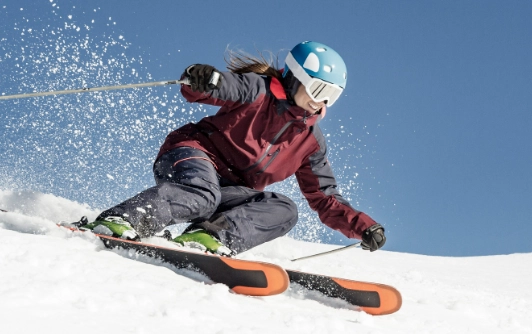
Does Your Gear Actually Matter for Carving?
Yes, but not in the way you might think. You don't need World Cup race skis. But the right tool makes learning possible.
If you're trying to learn on old, straight-shaped skis from the 90s or very wide powder skis (110mm+ underfoot), you're fighting physics. Modern carving skis or all-mountain skis with a focus on frontside performance have specific traits that help:
- Waist Width: Look for something under 80mm for pure carving. 80-90mm is a great versatile range that can still carve well if it has good edge hold.
- Sidecut Radius: A lower radius (12-16m) means a tighter, quicker turn. Higher radius (17m+) means longer, more drawn-out arcs. For learning, a mid-range radius is forgiving.
- Boots are King: A properly fitted, performance-oriented boot is more important than your skis. It's the direct communication device to your edges. If your boot is too loose or soft, you'll never have precise ankle control.
I learned on a pair of stiff, 65mm underfoot slalom skis. They were unforgiving and terrifyingly quick to respond. When I switched to a more forgiving 78mm all-mountain ski, my progress accelerated because the ski allowed for small errors without punishing me instantly.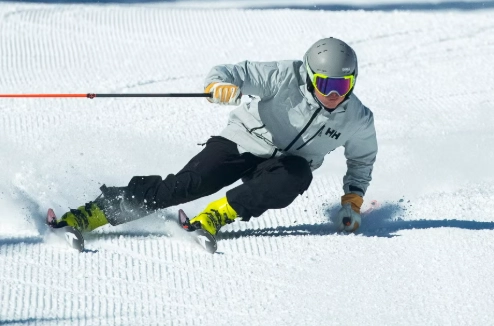
Also, get your edges sharpened. Dull edges will skid no matter how perfect your technique. A professional tune once a season is a game-changer. Resources from organizations like the Professional Ski Instructors of America (PSIA) consistently emphasize the importance of well-maintained equipment for effective skill development.
Your Carving Questions, Answered
Why do my skis still skid when I try to carve?
The most common culprit is not committing your weight fully to the downhill ski. You're likely still balancing between both skis or leaning back. Focus on feeling 90% of your weight on the outside ski's little toe edge. Another sneaky reason is rushing the turn initiation; you might be throwing your shoulders instead of patiently rolling your ankles and knees.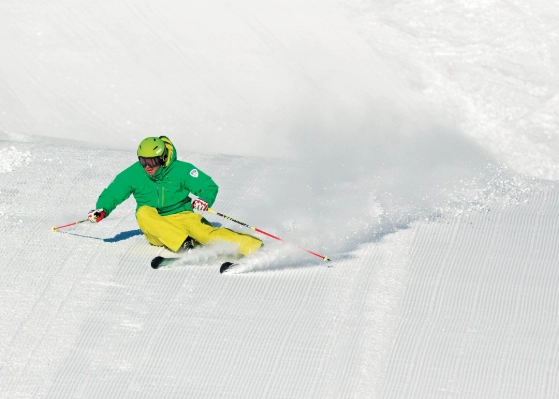
Can you learn to carve on beginner skis or old equipment?
You can learn the movements, but modern carving skis make it exponentially easier. Beginner skis are softer and more forgiving for pivoting, which actually encourages skidding. An old, straight-shaped ski has a huge turning radius, forcing you to muscle it around. A contemporary carving ski (with a waist under 80mm and noticeable sidecut) will naturally want to bend into an arc when you edge it properly. It's like learning to drive with power steering versus without.
How do you know if you're carving correctly?
Listen and look. A proper carve leaves two clean, pencil-thin lines in the snow—no skidded snow spray. You'll hear a quiet, crisp slicing sound, not a loud scraping noise. In your body, you'll feel a smooth, powerful acceleration out of the turn as the ski rebounds, and a distinct lack of upper body rotation; your shoulders should stay nearly square to the fall line.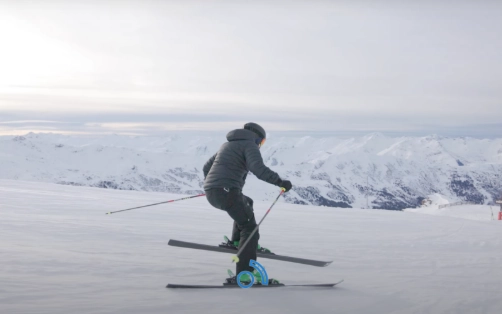
What's the single best drill to improve my carving?
Hands down, it's the 'Railroad Tracks' drill. On a gentle, groomed blue run, try to make two perfectly parallel tracks with your skis. This forces you to keep your skis close together and parallel, eliminating the stem or wedge that leads to skidding. It isolates the edging movement from your lower body. Do it slowly, focusing on the clean lines you leave behind. It's humbling but incredibly effective.
The path to clean carving is less about brute force and more about finesse and understanding. It's about trusting your equipment, committing to that outside ski, and letting the ski do what it was designed to do. Start slow, be patient with the drills, and pay attention to the feedback from your tracks. That moment when you first feel the ski lock into an arc and propel you forward—that's the magic. Go find it.