Explore This Guide
- So, What Exactly Is Nordic Combined? Breaking Down the Basics
- A Quick Stroll Through the Snowy Past: The History of Nordic Combined
- The Two Halves of a Whole: Dissecting the Disciplines
- Becoming a Nordic Combined Athlete: The Training Nightmare
- Watching a Competition: A Viewer's Strategy Guide
- Faces of the Sport: Who's Who in Nordic Combined
- Your Nordic Combined Questions, Answered (FAQ)
- The Future: Where is Nordic Combined Heading?
Let's be honest, when most people think of winter sports, they picture downhill skiing's speed or figure skating's grace. But tucked away in the Olympic program is something else entirely. Something that, in my opinion, demands a unique kind of crazy. I'm talking about Nordic combined. It's the sport that looks at the serene, powerful flight of ski jumping and the lung-burning, relentless grind of cross-country skiing and says, "Yes, let's do both. Back-to-back. And let's make your performance in the first one directly screw you over or help you in the second." It's wild.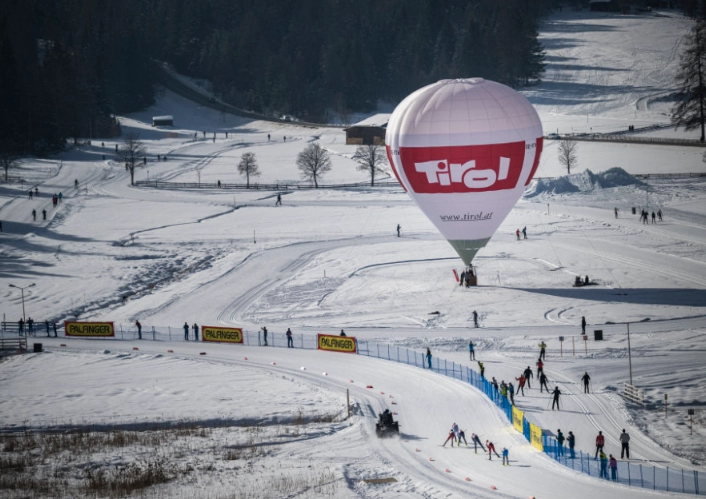
I remember watching my first Nordic combined event. The jumpers soared, it was beautiful. Then, hours later, they were back on screen, faces contorted in pain, skating across a 10km course. I thought my TV was broken, showing highlights from two different days. Nope. That was one athlete, one competition. My mind was blown. What kind of training do you even do for that? How does scoring work? This guide is what I wish I had back then – a deep, no-nonsense dive into the world of Nordic combined, from its quirky history to the sheer physical toll it takes.
So, What Exactly Is Nordic Combined? Breaking Down the Basics
If you're new to this, the concept is simple but the execution is anything but. An athlete competes in two diametrically opposed disciplines in a single day. The goal isn't to be the best jumper or the fastest skier, but to be the best at managing the insane transition between the two. It's a test of explosive power, technical precision, aerobic endurance, and mental fortitude, all wrapped into one punishing package.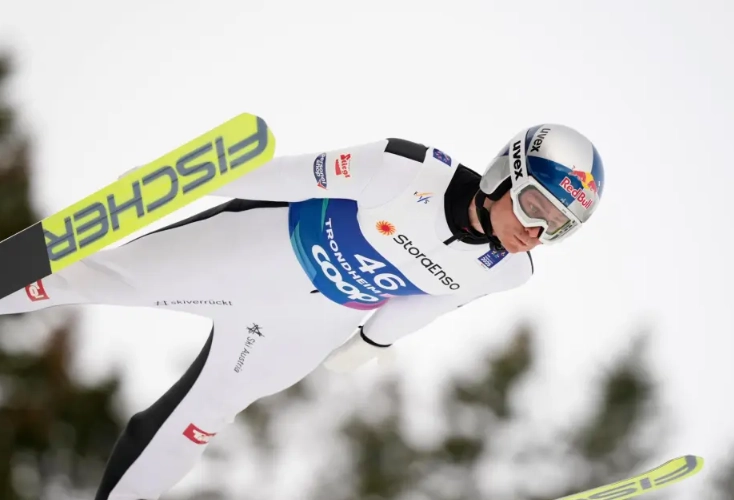
The modern format you'll see at the World Cup or Olympics typically involves one jump in the morning. Judges score that jump for distance and style. Those points are then converted into time advantages. Later that day, the cross-country race starts not as a mass start, but in a staggered pursuit format. The leader from the jump starts first, and everyone else chases, starting a certain number of seconds behind. The first skier to cross the line after 10km is the champion. It creates this incredible narrative of the hunted versus the hunters.
Honestly, the scoring can seem confusing at first glance. You see jump distances in meters and race times in minutes, and they're magically connected. But once you get the Gundersen method, it clicks. It's elegant in its cruelty.
The Heart of the Competition: The Gundersen Method
Named after its creator, Norwegian sports official Gunder Gundersen, this system revolutionized Nordic combined in the 1980s. Before this, athletes had to wait around for hours while officials calculated results. Now, the race starts based on the jump, and the winner is clear the moment the race ends. It's pure drama.
Here’s the simple math: every point you score on the jump gives you a head start in the race. The standard conversion is 1 jump point = 4 seconds head start. So, if Athlete A scores 120 points and Athlete B scores 115 points, Athlete A has a (120-115)*4 = 20-second advantage. Athlete B starts 20 seconds after Athlete A. The race becomes a thrilling chase. Can the stronger skier make up the deficit? Can the jumper hold off the pack? It's never over until the finish line.
A Quick Stroll Through the Snowy Past: The History of Nordic Combined
This sport has roots. Deep, frosty, Scandinavian roots. It was part of the very first Winter Olympic Games in Chamonix in 1924, and it's one of only a few sports to have been on the program every single time since. That tells you something about its foundational status in winter sports culture, particularly in Norway, Germany, Austria, and Finland.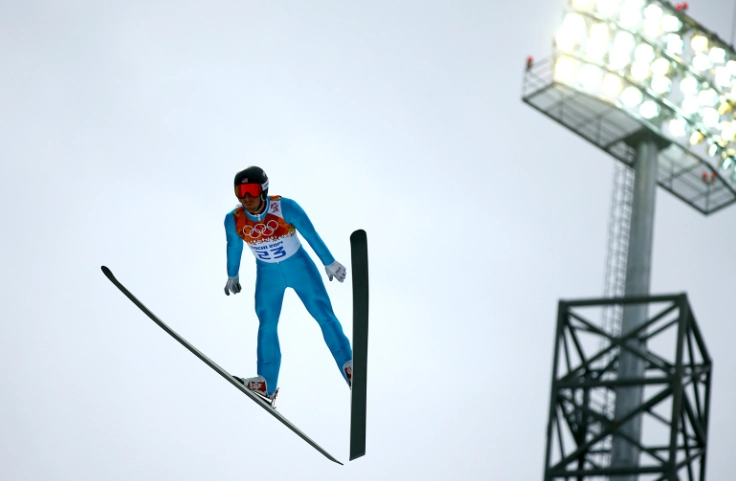
For decades, it was a one-day event: one jump, one 15km race. The sport was dominated by Norwegians, which makes sense given it essentially mimics the activities of a mythical Nordic warrior. The 1980s brought the Gundersen method and the shift to a 10km race, which made it more spectator-friendly. The 2002 Salt Lake City Olympics introduced the sprint event (one jump, 7.5km race), and later, a mass start version and a team event were added to the World Cup circuit to spice things up.
For a long time, Nordic combined was notable for another reason: it was the only Olympic sport without a women's event. That finally changed. Women's Nordic combined made its World Championships debut in 2021 and is scheduled for its Olympic debut at the Milan-Cortina 2026 Winter Games. It's a huge and welcome step for the sport's growth and inclusivity.
The Two Halves of a Whole: Dissecting the Disciplines
To understand the whole, you need to look at the parts. And what contrasting parts they are.
Ski Jumping: Sixty Seconds of Flight and Precision
The jump is about converting raw power into graceful, aerodynamic flight. It's over in less than a minute, but every millisecond counts. The athlete accelerates down the in-run, assumes a low, aerodynamic tuck, hits the take-off table at speeds around 90 km/h (56 mph), and launches themselves into the air. The goal is to achieve the perfect “V” shape with the skis, maximizing lift.
Judges score on distance and style. You get points for landing at or beyond the K-point (the construction point of the hill, marking a "good" landing). Style points (up to 20 per judge) are awarded for flight posture, stability, and landing. A telemark landing—one foot in front, knees bent—is crucial. Wobble in the air or a sloppy landing costs precious points.
Cross-Country Skiing: The 25-Minute Grind
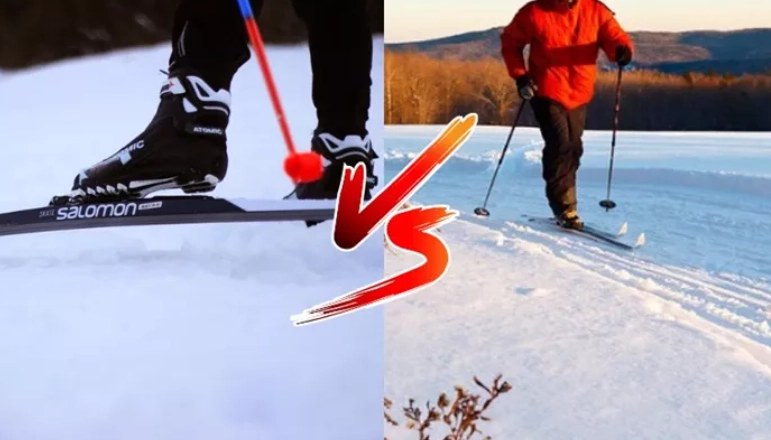
After the adrenaline of the jump comes the agony of the race. Nordic combined uses the freestyle (skating) technique, which is generally faster than the classic technique. The 10km course is a loop with climbs, descents, and flat sections, testing every aspect of skiing fitness.
This is where pure aerobic capacity and efficient technique are king. Athletes have to manage their pace, knowing they might be starting behind and need to chase, or starting ahead and need to defend. The transition from the explosive, technical jump to the sustained, rhythmic effort of the race is the ultimate challenge. Your legs are already loaded from the jump, and now you have to make them perform for another 25+ minutes at maximum effort.
Here’s a quick table to visualize the stark contrast between the two phases:
| Aspect | Ski Jumping Phase | Cross-Country Phase |
|---|---|---|
| Primary Energy System | Anaerobic, Explosive Power | Aerobic, Endurance |
| Duration | ~30-60 seconds | ~24-28 minutes |
| Key Skill | Technical Precision, Airtime Control | Pace Management, Efficient Technique |
| Mental Focus | Intense, Singular, Instantaneous | Strategic, Sustained, Tolerant of Pain |
| Physical Demand | Peak Force Production, Balance | Maximal Oxygen Uptake (VO2 Max), Muscular Endurance |
Becoming a Nordic Combined Athlete: The Training Nightmare
How do you train for this? You basically have to live two separate athletic lives and merge them. Off-season is a blur of roller-skiing, running, strength training, and plyometrics. In-season is a constant juggling act between jump training on plastic mats in summer or snow in winter, and endless hours on ski trails.
A typical training week in the preparation phase might look insane to an outsider:
- Morning: Technical jump simulation work (imitating the take-off motion) or hill running for power.
- Afternoon: A 2-hour roller-ski session focusing on endurance base.
- Next Day: Heavy strength session (squats, cleans, plyometrics) followed by a short, intense interval session on roller-skis.
- And that's before you even add in actual ski jumping, which requires specific conditions and is incredibly taxing on the central nervous system.
The biggest challenge, as several athletes have told me, is managing fatigue. Jump training is neurologically exhausting. It requires fresh, fast-twitch muscles. Endurance training is physically draining. Doing both in the same day, or even the same week, without burning out or getting injured is a high-wire act. Recovery—sleep, nutrition, physio—isn't just important; it's the only thing that makes the schedule possible.
The Gear You Need: From Jump Suits to Race Skis
The equipment is specialized and different for each phase. The rules, governed by the International Ski Federation (FIS), are strict to ensure fairness and safety.
| Equipment | For Ski Jumping | For Cross-Country | Notes & Rules |
|---|---|---|---|
| Skis | Long, wide, heavy. Designed for stability in flight. Length based on height & weight. | Lightweight, carbon-fiber racing skis. Much shorter and narrower. | Athletes have two completely different pairs. Jump skis have grooves on the bottom for the in-run track. |
| Boots/Bindings | High-backed, flexible boots. Bindings allow heel to lift for forward lean. | Low-cut, stiff boots locked at the toe for skating. | Perhaps the most dramatic change. Jump boots are like tall, flexible sneakers. Ski boots are rigid and connected to the ski. |
| Suit | Tight-fitting, air-permeable "jump suit." Material thickness is regulated. | Lightweight, aerodynamic skin suit. | Jump suits are checked for permeability to prevent "wing" effects. They are changed between events. |
| Other | Helmet with chin guard, goggles. | Racing helmet/poles, ski wax. | Poles are used only in cross-country. Wax selection for race skis is a huge tactical factor. |
Watching athletes transition in the break between events is a spectacle in itself. They have a dedicated pit area to change boots, skis, and suits. It's a frantic, choreographed routine. Every second saved in transition is a second earned on the course.
Watching a Competition: A Viewer's Strategy Guide
So you're tuned in to a World Cup event. What should you look for?
During the Jump: Don't just watch the distance. Watch the take-off timing. Is it crisp? Watch the flight. Is the body stable, the V-shape clean? Watch the landing. Is it a smooth telemark, or does the athlete stumble? The commentators will give the distance and points, but the style marks are where you see who really nailed it. A longer jump with a poor style score can be beaten by a shorter, perfect jump.
Between Events: Check the start list for the race. The jumper who won will start at 00:00. Everyone else's start time is their handicap. This list tells you the story. Who has a big lead to defend? Who is a strong skier starting just a bit back, poised to attack?
During the Race: This is the fun part. The clock on screen shows the "gap" between skiers. If the leader has a 30-second gap, it means the chaser is 30 seconds behind on the course. Watch how gaps change on the big climbs—that's where pure skiing strength shows. Watch on the descents and flats—that's where technique and efficiency matter. The final lap is always pure drama. Can the chaser close it? Will the leader crack?
Faces of the Sport: Who's Who in Nordic Combined
The sport has seen legends. Norway's Johannes Thingnes Bø? No, that's biathlon. Nordic combined has its own heroes. For years, the sport was ruled by athletes like Finland's Hannu Manninen or Austria's Felix Gottwald. Recently, the dominant force has been Jarl Magnus Riiber of Norway. When he's on form, his jumping is so superior he often starts the race with a near-unassailable lead of over a minute. It's a testament to how a supreme jumper can dominate.
But the skiers fight back. Athletes like Germany's Vinzenz Geiger or Austria's Johannes Lamparter are often closer on the jumping hill but are absolute motors on the cross-country track. Lamparter, in particular, is known for his incredible skiing speed, often posting the fastest race time even if he starts behind.
The American story is worth mentioning. The U.S. had a drought of medals for decades until Taylor Fletcher and especially Bryan Fletcher became competitive on the World Cup. The current hope is a new generation coming through. They train hard, but breaking the European stranglehold, especially on the jumping hills which require constant access to facilities, is a monumental task.
Your Nordic Combined Questions, Answered (FAQ)
Let's tackle some of the things people always seem to ask, or wonder but never ask.
The Future: Where is Nordic Combined Heading?
The sport is at a crossroads. The inclusion of women's events is the single biggest positive development, opening up to 50% of the athletic population. New formats like the "compact" version (shorter race, maybe even a jump held right next to the stadium) are being experimented with to make it more TV and spectator-friendly.
But challenges remain. It's an expensive sport (building and maintaining jump hills is costly). Finding the balance between tradition and modernization is tricky. Purists love the classic format. Broadcasters want faster-paced, easier-to-understand action. The International Ski Federation has the tough job of navigating this.
For me, the future of Nordic combined lies in showcasing its unique identity. It's not just ski jumping plus skiing. It's the ultimate test of a complete winter athlete. It's chess on skis, played out over two acts. By telling that story better—highlighting the strategy, the duality, the personal battles—the sport can grow. The drama is already there. It just needs the spotlight.
Maybe that's why I'm drawn to it. It feels real. The victory is earned in a way that feels absolute. No flukes. No lucky bounces. Just jump, then chase, until there's a winner. It's simple. And impossibly hard.