You see them gliding down the mountain, skis locked together in perfect harmony, carving elegant arcs with what seems like zero effort. That's the parallel skier. And if you're stuck in a snowplough (the "pizza slice"), making the leap can feel like trying to solve a physics problem while sliding down an ice rink. I've taught this transition to hundreds of skiers over the last decade. The secret isn't about brute strength or courage—it's about understanding a few simple mechanics and trusting a process that feels counterintuitive at first.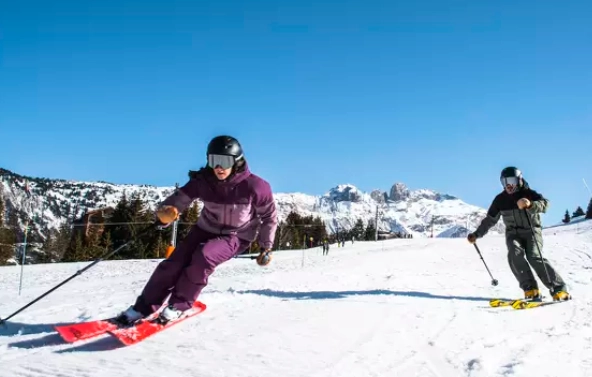
Let's get straight to it. Parallel skiing is the foundational technique for efficient, controlled, and enjoyable skiing on anything beyond the gentlest nursery slopes. It's how you unlock speed control without burning out your thighs, navigate crowded runs with precision, and eventually tackle steeper, more varied terrain.
Your Quick Run Guide
- The Crucial Mindset Shift (It's Not What You Think)
- Building Your Foundation: The Athletic Stance
- How to Actually Initiate a Parallel Turn
- From One Turn to the Next: The Linking Magic
- Taking It to a Steeper Blue Run: A Reality Check
- The 3 Most Common Mistakes (And How to Fix Them)
- Your Burning Questions Answered
The Crucial Mindset Shift (It's Not What You Think)
Most beginners think parallel skiing is about forcing your skis to stay side-by-side. That's the first mistake. It creates tension, a stiff-legged stance, and a fight for control.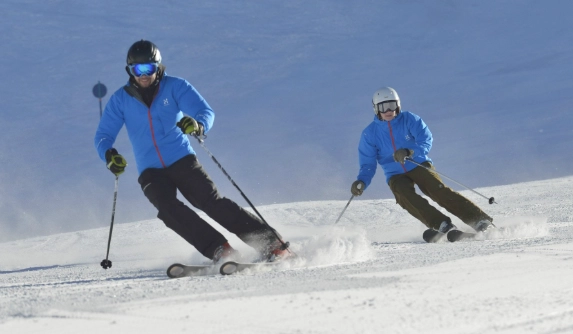
Here's the non-consensus view I give all my students: Parallel skiing is a result, not an action. You don't "make" your skis parallel. They become parallel as a natural consequence of you rolling your knees and ankles to tilt both skis onto their edges at the same time. The focus shifts from your ski tips to your lower joints.
Think of it like riding a bike. You don't consciously think "left pedal down, right pedal up." You think "lean right to turn right." On skis, you think "roll my knees right to go right." The skis follow.
Building Your Foundation: The Athletic Stance
Everything starts here. A bad stance makes every technique ten times harder.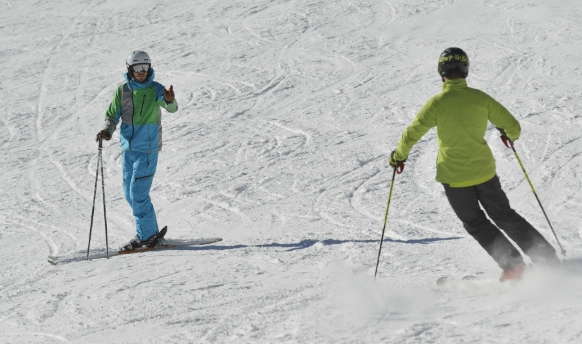
Forget the "stand up straight" advice. You need a ready, dynamic position.
- Feet: Hip-width apart. Imagine you're standing on two rails, not a single plank.
- Ankles and Knees: Flexed forward. Your shins should be in constant contact with the front of your ski boots. If you can slide your hand between your shin and the boot tongue, you're in the "backseat"—skiing's dead zone.
- Hips: Over your boots. Don't sit back.
- Upper Body: Quiet and facing downhill. Your shoulders and hips should point where you want to go, not follow your skis. This separation is key.
- Hands: Forward and in your peripheral vision, like you're holding a steering wheel. This naturally keeps your weight forward.
I see more people fail because they neglect this basic stance than any other reason. Practice it on the flat, on the chairlift, until it's muscle memory.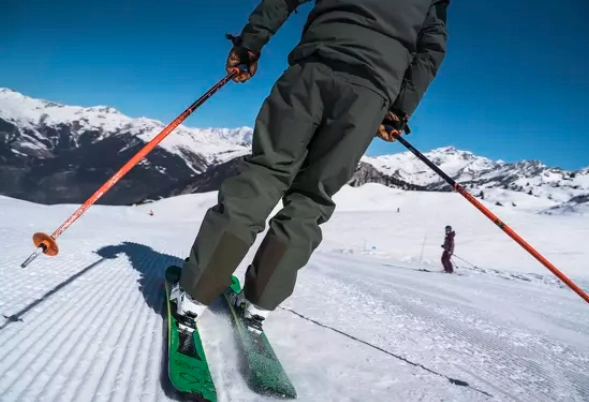
How to Actually Initiate a Parallel Turn
Let's break down a turn to the right. We'll start on a very gentle, wide green slope.
The Step-by-Step Breakdown
- Start in Your Athletic Stance: Skis across the hill, pointing slightly downhill. You're traversing.
- Unweight and Prepare: Gently extend your legs (almost like a tiny, smooth hop). This lightens the pressure on your edges. It's subtle.
- The Magic Move - Roll and Tip: As your skis lighten, actively roll your left knee and ankle inward, towards the hill. Your right knee will follow naturally. You are tipping both skis onto their left edges. This is the core action.
- Let the Skis Bend and Turn: The shaped sidecut of your skis, now on edge, will start to carve an arc to the right. Your job is to maintain that knee roll and forward pressure.
- Control and Finish: To finish the turn and slow down, continue rolling your knees uphill, increasing the edge angle. The skis will curve back across the hill, slowing you down.
The turn is initiated from the downhill (left) ski and knee, not by swinging your shoulders or stabbing your pole. The pole plant is a timing device and balance aid, not a steering wheel. Touch the snow gently next to your boot as you initiate the knee roll.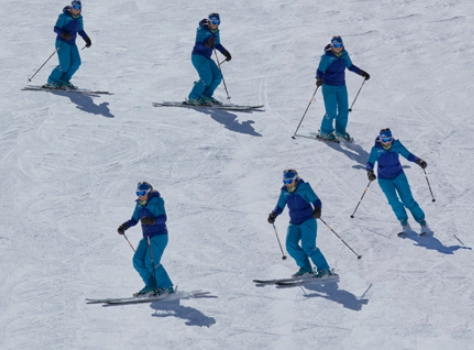
From One Turn to the Next: The Linking Magic
One turn is a victory. Linking them is the game. The link is called the "transition," and it's where most people panic and revert to a snowplough.
As you finish a right turn (skis across the hill, facing left), you're on your left edges. To start a left turn, you need to get onto your right edges.
How? You flatten your skis. That's it.
At the end of your right turn, gently relax the inward roll of your left knee. Your skis will flatten against the snow for a split second. In that moment, you are momentarily pointing straight downhill. This feels exposed, but it's necessary.
Immediately, roll your right knee inward to tip onto the right edges and start the left turn. The rhythm is: Roll (turn)... flatten (transition)... roll (new turn).
Practice this linking on the gentlest slope possible. Speed is not your friend here—rhythm is. Think "smooth, flowing, C-shaped turns."
Taking It to a Steeper Blue Run: A Reality Check
This is the moment of truth. Your perfectly linked turns on the green fall apart. You pick up speed, panic, and wedge.
The technique doesn't change. Your application of it does. On steeper terrain, you need more edge angle and more commitment.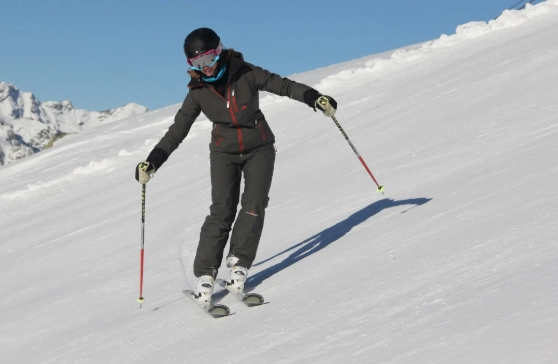
| Element | Green Circle (Easy) | Blue Square (Intermediate) |
|---|---|---|
| Knee Roll | Subtle, guiding movement. | Active, assertive movement. You must really drive that downhill knee into the hill. |
| Edge Angle | Low. Skis are barely tipped. | Higher. You'll feel your boots pressing against your legs. |
| Turn Shape | Wide, leisurely "C" shapes. | Tighter, rounder "C" shapes that finish strongly across the hill to control speed. |
| Upper Body | Easy to keep quiet. | You must fight the urge to twist your shoulders downhill. Keep them facing the valley. |
| Fear Factor | Low. | High. This is normal. Breathe, commit to the turn, and trust your edges. |
The Professional Ski Instructors of America (PSIA) emphasizes that effective speed control on blues comes from turn shape, not skidding. Finish your turn so your skis are pointing across the hill, not down it, at the end of each arc.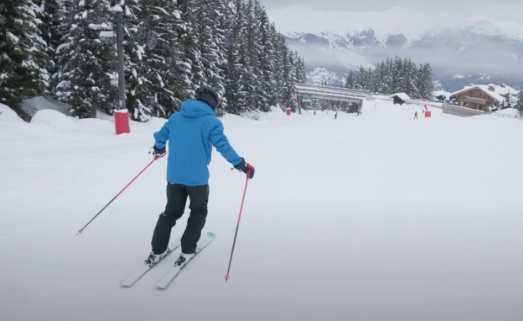
The 3 Most Common Mistakes (And How to Fix Them)
After a decade, I see these patterns every single day.
1. The Backseat Driver
What it looks like: Hips behind boots, weight on the tails of the skis. Skis feel uncontrollable, tips wander and cross.
The fix: Consciously press your shins into the front of your boots all the time. Sing a song in your head and make sure you can feel the pressure on every word. If you're not forward, you're back.
2. The Upper Body Twister
What it looks like: Shoulders and hips rotating with the skis, leading to a violent "wind-up and release" turn, not a carve.
The fix: Pick a tree or lodge in the distance down the fall line. Keep your belly button and chest pointing at it all the way down the slope. Let your legs work independently underneath you.
3. The Static Stance
What it looks like: Legs locked, no up-and-down motion. Turns are jerky and require huge effort.
The fix: Practice making turns with a consistent bounce. Extend to unweight (start the turn), flex as you roll into the turn, extend to finish. This vertical movement makes everything smoother and less exhausting.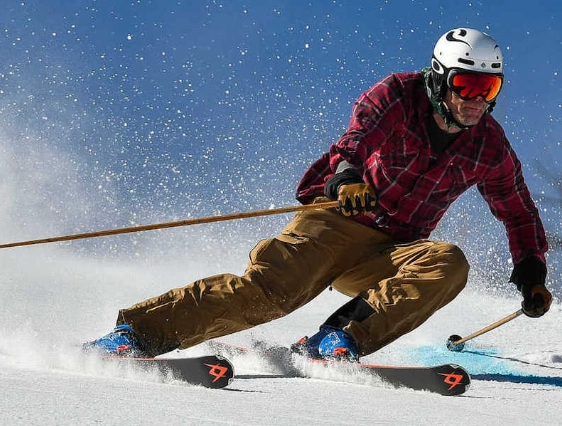
Your Burning Questions Answered
Remember, everyone feels awkward at this stage. The skier you're watching effortlessly carving down the mountain went through the same shaky, frustrating phase. It's a skill built on subtle movements, not strength. Focus on one element at a time: first the stance, then the knee roll, then the linking. Be patient with yourself, take a lesson if you can (a good instructor will spot your specific hiccups instantly), and most importantly, trust that the ski's shape wants to turn—you just need to guide it with your edges.