Quick Guide
Let's be honest, when most people think of skiing, they picture zooming down a mountain at what feels like a hundred miles an hour. That's one way to do it. But there's another side to the skiing world, one that's quieter, arguably more accessible, and gives you a workout that'll make you feel amazing afterwards. I'm talking about cross-country skiing.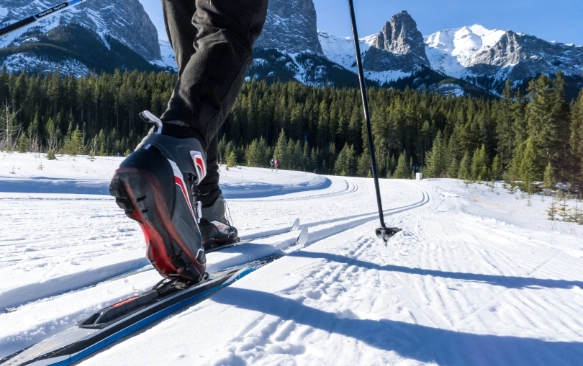
My first time trying it wasn't some graceful, cinematic moment. It was a lot of shuffling, a few unceremonious plops into soft snow, and muscles I didn't know I had complaining the next day. But there was also this incredible sense of peace, gliding through a silent, snow-covered forest, and a deep satisfaction that's hard to find on a crowded downhill slope. That's the magic it can hold.
So, what exactly is cross-country skiing? At its core, it's traveling across snow-covered terrain using skis and poles. You're propelling yourself forward, either on prepared tracks at a groomed center or breaking trail through untouched snow in the backcountry. It's hiking, running, and a full-body dance, all on skis.
Why Bother? The Surprising Benefits of Hitting the Tracks
You might be wondering why you'd choose this over a cozy afternoon indoors. The reasons are pretty compelling, and they go beyond just "getting some exercise."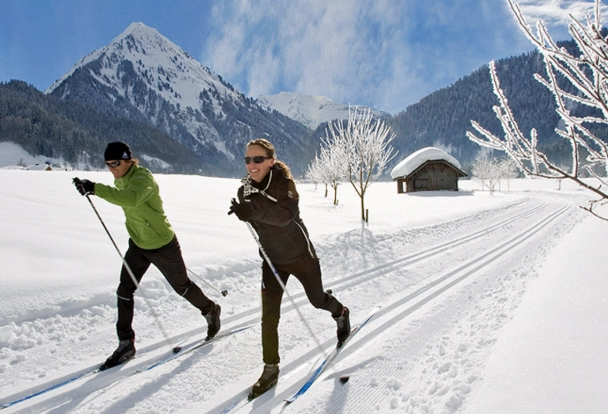
A Top-Tier Cardio Workout
Forget the treadmill. Cross-country skiing is consistently ranked as one of the best cardiovascular exercises you can do. Because you're using both your arms and legs, you engage nearly every major muscle group. Your heart and lungs get a serious, efficient workout. I've found that an hour on the skis leaves me feeling more thoroughly worked out—in a good way—than an hour of running, without the same joint pounding.
It's also incredibly scalable. You can take a gentle, flat stroll on the tracks, or you can attack hills and push for speed. The intensity is entirely in your control.
Low Impact, High Reward
This is a huge one, especially if you're like me and your knees send memos after certain activities. The gliding motion is smooth. There's no jarring impact from jumping or hard landings. It's gentle on your joints, making it a fantastic lifelong sport. I know folks in their 70s who are still out on the trails regularly, something that's much harder to say about many other winter sports.
Then there's the mental health angle. There's something almost meditative about the repetitive kick-and-glide rhythm. Combine that with being immersed in nature, away from screens and notifications, and the stress-melting effect is real. It's active mindfulness.
Gearing Up: What You Actually Need to Start
This is where a lot of beginners get overwhelmed. The gear jargon can be confusing. Let's break it down into simple, essential pieces. The good news? You don't need a mountain of expensive equipment to give it a try. Most local trail centers offer very decent rental packages.
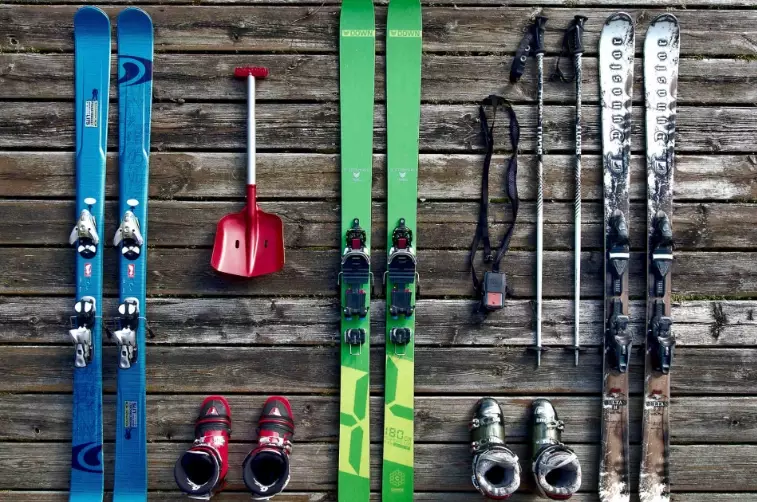
The three big-ticket items are skis, boots, and bindings. They need to work together as a system, which is why getting fitted at a specialty shop (or a good rental center) is worth its weight in gold.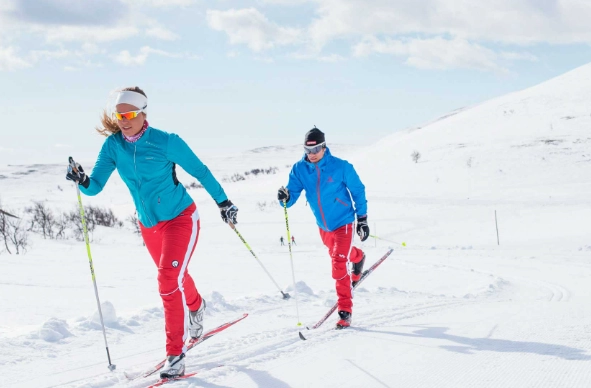
The Ski-Boot-Binding System Demystified
First, you need to decide which of the two main cross-country skiing techniques you want to focus on, as the gear is different. We'll get into the techniques themselves later.
| Feature | Classic Skiing Gear | Skate Skiing Gear |
|---|---|---|
| Primary Use | For use in prepared parallel tracks (the "ruts" in the snow). Mimics a walking/running motion. | For use on a wide, groomed, corduroy-like trail (a "skate lane"). Mimics an ice-skating motion. |
| Ski Length | Longer. Typically your height plus 15-25 cm (6-10 inches). Provides more glide. | Shorter. Typically your height plus 5-15 cm (2-6 inches). Allows for quicker, more dynamic pushes. |
| Ski Bottom (Kick Zone) | Has a grippy wax zone or a "fishscale"/skin pattern in the middle to prevent slipping backward when you push off. | Completely smooth, meant to glide in all directions. Grip comes from the angled push of the ski edge. |
| Boots | Ankle-high, flexible, with a reinforced sole for pushing off. Toe attaches to binding. | Higher, stiffer cuff (like a low hiking boot) for lateral support. Toe attaches to binding. |
| Poles | Shorter. Pole tip should reach to about your armpit. | Longer. Pole tip should reach to between your chin and nose. |
| Best For Beginners? | Yes. The motion is more intuitive and the learning curve is gentler. | Not usually. Requires more balance, core strength, and specific technique. Best learned after some classic skiing. |
For 95% of people starting out, classic cross-country skiing is the way to go. The gear is more forgiving and the technique feels more natural. So, let's focus on that.
Your Classic Cross-Country Skiing Gear Checklist
| Item | What to Look For | Pro Tip / Common Mistake |
|---|---|---|
| Skis | Waxless ("fishscale" or skin) for beginners. This eliminates the hassle of kick wax. Ensure they are the correct length and flex (camber) for your weight. A shop will do a "paper test" to check. | Don't buy skis that are too stiff. If the grip zone doesn't touch the snow when you stand on them evenly, you'll slip backwards. A proper fit is non-negotiable. |
| Boots | Comfort is king. They should be snug but not tight, with room to wiggle toes. Ensure they match your binding system (NNN or SNS are the two main types). | Wear the socks you plan to ski in when trying them on. Avoid cotton socks—they hold sweat and get cold. Use merino wool or synthetic. |
| Bindings | These are mounted to the skis and must match the boot brand/system (NNN or SNS). Usually come pre-mounted on ski packages. | Double-check compatibility. An NNN boot will NOT fit an SNS binding. It's the most common rookie purchase error. |
| Poles | Classic length: armpit height. Should have a comfortable grip, a strap, and a sharp, durable basket (the round part at the bottom). | Poles that are too long will mess up your rhythm and feel awkward. Too short, and you lose power. |
The Clothing Game: Dressing to Move, Not to Shiver
Dressing for cross-country skiing is an art form. You will get warm, very warm, once you get moving. But you start cold. The key is layers you can shed.
The Base Layer: This is non-negotiable. No cotton. Ever. It's a recipe for being cold and clammy. Go for merino wool or a synthetic moisture-wicking fabric. It sits against your skin and moves sweat away.
The Insulating Layer: A fleece jacket, a thin puffy vest, or a wool sweater. This is your adjustable thermostat. On milder days, you might ski in just this over your base layer.
The Shell Layer: A windproof and water-resistant (not necessarily waterproof) jacket and pants. Wind is your biggest enemy, as it cuts right through sweat. Look for jackets with pit zips for ventilation—they are a game-changer. Your pants should be stretchy and not too bulky.
Accessories matter too. A thin beanie or headband, light gloves (you can always carry a warmer pair), sunglasses, and sunblock. The sun reflects off the snow intensely.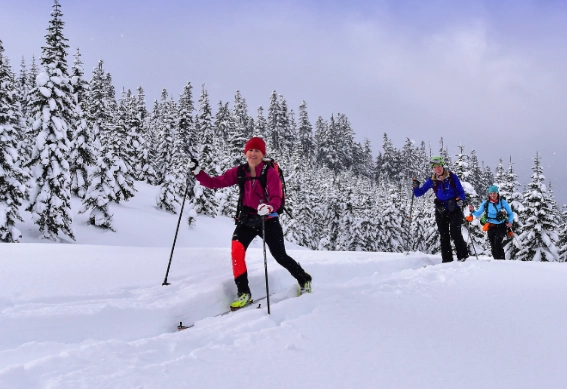
Getting the Move: Classic Technique Basics
Okay, you've got the gear. Now, how do you actually move without looking like a newborn deer? The classic technique is based on a natural diagonal stride.
Think of it as an exaggerated, powerful walk. You kick one ski back to grip the snow and propel yourself forward, while gliding on the other ski. Your opposite arm comes forward with the pole plant. Left leg, right arm. Right leg, left arm.
Here’s a simple breakdown to practice even without skis on:
- The Stance: Stand relaxed, knees slightly bent, weight centered over your feet.
- The Kick: Shift your weight fully onto one foot. Press that ski down into the snow to engage the grip zone. This is the "kick." It's a quick, powerful press, not a long shove.
- The Glide: As you kick, let your other foot glide forward. Try to balance on that gliding ski for a moment. This is where the magic and efficiency happen.
- The Poles: Plant the pole opposite your kicking leg. Don't "row" with your arms. Push down and back through the pole strap to add power.
When you first get on snow, find a flat, groomed track. Just shuffle. Get a feel for the skis sliding. Then try the weight shift. It will feel awkward. Everyone's first time does. The biggest mistake is being too stiff in the legs. Bend those knees!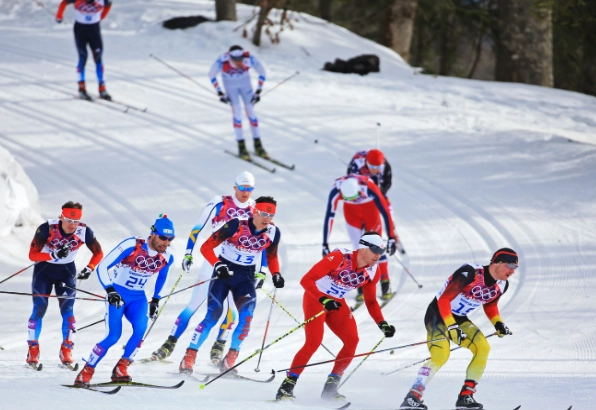
Hills: The Great Intimidator
Going up: Use a "herringbone" step. Point your ski tips out, tails in, like a duck, and walk straight up. It's tiring but effective. For longer, gentler hills, just shorten your stride and keep the rhythm.
Going down: The snowplow (or wedge) is your friend. Push your ski tails out, tips together, to make a "V" shape. This creates friction and controls your speed. Squeeze your knees together slightly. Practice on a tiny slope first. And remember, it's okay to just step out of the track and walk down if you're not comfortable yet. Seriously, no shame.
Finding Your Path: Where to Go Cross-Country Skiing
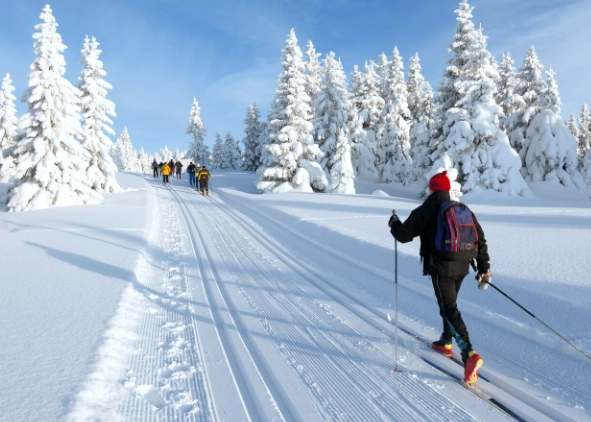
You don't need a remote mountain. Many places have dedicated Nordic centers or groomed trails in city parks, golf courses, or state parks.
Groomed Trail Centers: This is the best place for a beginner. Trails are machine-groomed into distinct classic tracks and a smooth skate lane. They are graded like hiking trails (easy green circles, intermediate blue squares, difficult black diamonds). They often have a warming lodge, rentals, and lessons. A small trail fee supports the grooming. The U.S. Forest Service and many state park systems maintain excellent trail networks; checking their websites is a great start.
Ungroomed/Backcountry: This is skiing on unbroken snow, often in wilder areas. It requires wider skis (often called backcountry or backcountry touring skis), more skill, and knowledge of avalanche safety if in mountainous terrain. This is an amazing next step after you're comfortable on groomed trails, but it's not where I'd recommend starting.
How to find trails near you? Search online for "Nordic ski center near [your town]" or "groomed cross-country ski trails." Apps like Trailforks or websites from local ski clubs are goldmines of information.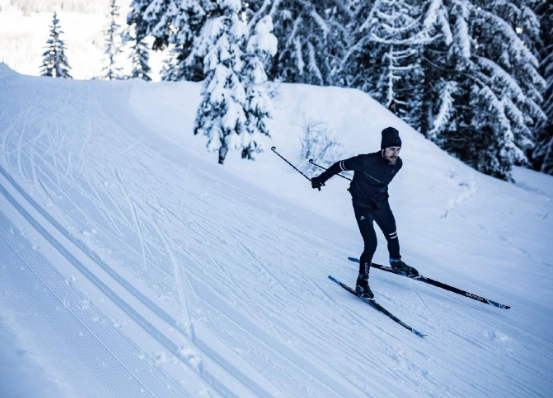
Staying Safe and Sound on the Snow
It's a generally safe sport, but winter has its rules. A little preparation goes a long way.
- Tell Someone: If you're heading out alone, especially on less-traveled trails, let someone know where you're going and when you expect to be back.
- Check the Weather: This isn't just about temperature. Wind chill and the potential for a sudden storm are real concerns. The National Weather Service website is a reliable source.
- Know Your Limits: Don't try to ski a 20k loop on your first day. Fatigue leads to poor technique and then falls. Start short and sweet.
- Hydrate and Fuel: You're working hard, even if it's cold. Bring water and a snack like a granola bar or some nuts.
- Trail Etiquette: If you stop, step out of the track so others can pass. The skier going downhill has the right of way. If you're on a shared-use trail, be mindful of snowshoers and walkers—don't ski in their footprints, and they shouldn't walk in the ski tracks. It's a common-sense courtesy that keeps everyone happy.
Answering Your Burning Questions (FAQ)
Here are some of the specific questions I had when I started, and the ones I hear most often from others.
The Final Push
Look, the hardest part is often just getting out the door on a cold morning. But I've rarely, if ever, regretted a ski once I'm out there. The combination of physical challenge, mental clarity, and connection with the winter landscape is unique.
Cross-country skiing offers a path—literally and figuratively. It can be a peaceful solo escape, a fun activity with friends, or a rigorous athletic pursuit. It meets you where you are.
My advice? Don't overthink it. Find a local trail center that rents gear. Book a one-hour beginner lesson if you can. Dress in layers. And just go try it. Embrace the initial clumsiness. Laugh when you fall (you will, in soft snow—it doesn't hurt). Feel the sun on your face and the rhythm of your own motion.
That first real, effortless glide you achieve, where everything clicks for a few seconds, is what hooks you. And suddenly, you'll find yourself looking forward to snow in the forecast.