You see the Instagram posts—private jets on snowy tarmacs, sleek chalets with floor-to-ceiling windows, après-ski that looks more like a Wall Street gala. It's natural to wonder: where exactly do the people with net worths that read like phone numbers go to ski in America? It's not just about the best powder or the steepest chutes. For the ultra-wealthy, skiing is a nexus of privacy, real estate, social capital, and convenience. Having spent over a decade writing about and visiting these enclaves, I can tell you the answer is more layered than a simple resort name.
The billionaire ski circuit is a tiered system. There are the famous, celebrity-heavy towns everyone knows, and then there are the truly exclusive, members-only domains you rarely hear about unless you're invited. This isn't a list of nice ski resorts; it's a breakdown of the ecosystems where wealth congregates and operates on a different plane.
What's Inside?
The Iconic Hubs: Where Fame and Fortune Meet
These are the destinations with global name recognition. They're not secret, but within them exist hyper-exclusive neighborhoods and social circles.
Aspen/Snowmass, Colorado: The Undisputed Capital
Aspen isn't just a ski town; it's a brand, a social calendar, and a real estate portfolio. The skiing across its four mountains (Aspen Mountain, Snowmass, Aspen Highlands, Buttermilk) is world-class, but that's almost secondary. The draw is the scene. Billionaires don't come here to hide; they come to see and be seen, albeit within their own rarefied stratum.
The Real Estate: This is the core of the Aspen billionaire experience. The Red Mountain neighborhood is the most coveted address, with homes routinely trading for $50 million to over $100 million. A plot of land there can cost $30 million before you even think about building. Starwood, on the way to Snowmass, is another gated community popular with tech billionaires and CEOs. Properties here aren't just homes; they're compounds with guest houses, heated driveways, and private ski access portals.
The Access: Many fly directly into the Aspen-Pitkin County Airport (ASE) on their private jets, though slots are fiercely competitive and the airport is notoriously tricky in bad weather. A common move is to jet into Denver (DEN) or even nearby Rifle (RIL) and take a helicopter or a private driver the rest of the way.
The Vibe: It's intense. The shopping on Galena Street is akin to Rodeo Drive. The restaurants (like Cloud Nine Alpine Bistro on Highlands for chaotic champagne spraying, or Casa Tua for a more subdued, members-club feel) are stages. The downside? It can feel crowded and performative. The local grocery store, Clark's Market, at peak season is a surreal cross-section of billionaires, celebrities, and overwhelmed tourists all reaching for the same artisanal cheese.
Jackson Hole, Wyoming: The Rugged Playground
Jackson appeals to a different billionaire archetype—the one who wants to project an image of ruggedness and adventure. The terrain at Jackson Hole Mountain Resort is legitimately extreme, a badge of honor. The town of Jackson maintains a Western facade, but don't be fooled.
The Real Estate: The action is in Teton Village, at the base of the tram, and especially in the surrounding valley. The Snake River Sporting Club and 3 Creek Ranch are exclusive, gated residential communities offering massive ranch-style estates with views of the Tetons. Membership and property buy-in here can start in the tens of millions. These aren't just homes; they are wildlife-equipped private parks.
The Access: Jackson Hole Airport (JAC) is the only commercial airport inside a US national park, and it welcomes plenty of private flights. For ultimate convenience, some own land with a private landing strip.
The Vibe: More low-key than Aspen in terms of flashy displays, but no less exclusive. The luxury here is space, privacy, and direct access to nature. The Four Seasons Resort Jackson Hole is a social hub, but the real networking happens on private ranches or in the members-only lounges of the sporting clubs.
The Ultra-Private Clubs: Skiing Behind the Velvet Rope
This is the next level. If iconic towns are where billionaires own homes, private clubs are where they control the entire mountain experience. These are the most telling answers to "where do billionaires go to ski?"
| Club Name & Location | Key Feature & Access | The Billionaire Appeal |
|---|---|---|
| The Yellowstone Club, Big Sky, Montana | The world's only private ski and golf community. Requires a $400,000+ initiation fee, annual dues (~$50k), and members must own property (starting around $10M for a condo). | Absolute privacy on 2,200+ private acres. No day tickets, ever. A community exclusively of peers (membership is vetted for wealth and "social compatibility"). It's a fortress of exclusivity. |
| Moonlight Basin Club, Big Sky, Montana | Adjacent to the Yellowstone Club. More focused on the ski experience within the larger Big Sky Resort terrain. Significant initiation and property ownership required. | Access to some of the best skiing in North America (Big Sky's 5,850 acres) with club-only lifts, a stunning cliffside lodge (the Moonlight Lodge), and curated experiences. Slightly less insular than YC but equally elite. |
| Deer Valley, Utah (Restricted Areas) | While not a wholly private club, Deer Valley's policy of limiting lift ticket sales and its famed service creates a club-like feel. The really private access comes through real estate in zones like The Chateaux or Viking Yurt parcels. | Predictable luxury, impeccable grooming, and a no-snowboarders policy that appeals to a certain old-money sensibility. The luxury real estate provides de facto private lift access and a serene, controlled environment. |
A common misconception is that these clubs are just about skiing. They're not. They're business networks, family compounds, and social safety vaults. The skiing is the shared activity, but the currency is access and association.
The Understated Havens: Low-Key Luxury
Not every billionaire wants the spotlight of Aspen or the formal structure of a private club. A segment prefers destinations known for understated elegance and genuine local culture.
Sun Valley, Idaho: This is the old-school, Hollywood royalty choice. It's where the term "après-ski" was invented. The vibe is relaxed, the lines are short, and the community is tight-knit. Billionaires here often own sprawling, rustic-chic homes in Warm Springs or on Trail Creek. They value the lack of pretense and the ability to actually relax. The airport (SUN) is easy for private aviation. It feels like a real town that happens to have phenomenal skiing, not a ski resort that became a town.
Telluride, Colorado: Isolated by its box canyon, Telluride is breathtaking and remote. The Mountain Village, accessible by a free gondola from the historic town, is where luxury real estate clusters. The appeal is the dramatic scenery, challenging terrain, and a cultural scene (like the film festival) that's more intellectual than flashy. Getting there requires a commitment—a flight into Montrose (MTJ) or Telluride's own regional airport (TEX), followed by a long drive or helicopter ride. That journey acts as a filter.
One observation from the road: The most telling sign of a billionaire ski haven isn't the presence of a Gucci store. It's the density of private aviation terminals, the discreet signage for family offices and wealth management firms tucked away on second-floor balconies, and the fact that the most coveted restaurant reservations aren't at the newest hotspot, but at a decades-old, unassuming place where the chef knows every family's order by heart.
The Billionaire Ski Checklist: What Really Matters
Forget vertical drop. When wealth reaches this level, the priorities shift.
- Privacy & Security: Gated communities, private lifts, and homes set back from the road with natural barriers. The goal is to be invisible.
- Convenience Access: A seamless journey from their primary home. This means reliable private jet airports (or helipads on their property) and on-call transportation.
- Turnkey Services: They don't just own a house; they employ a full-time local property manager, a chef, and sometimes a personal ski guide who is on retainer for the season. The home is fully stocked and staffed before they arrive.
- Peer Community: It's about who is next door or sharing the chairlift. These destinations are self-selecting ecosystems of similar net worth, providing a social and business network.
- Appreciating Asset: The real estate purchase is an investment first, a vacation home second. They're buying into a land-limited commodity in a climate-controlled (for now) luxury market.
Your Questions on Billionaire Ski Spots Answered
Can a "regular" person even experience these places, or are they completely closed off?
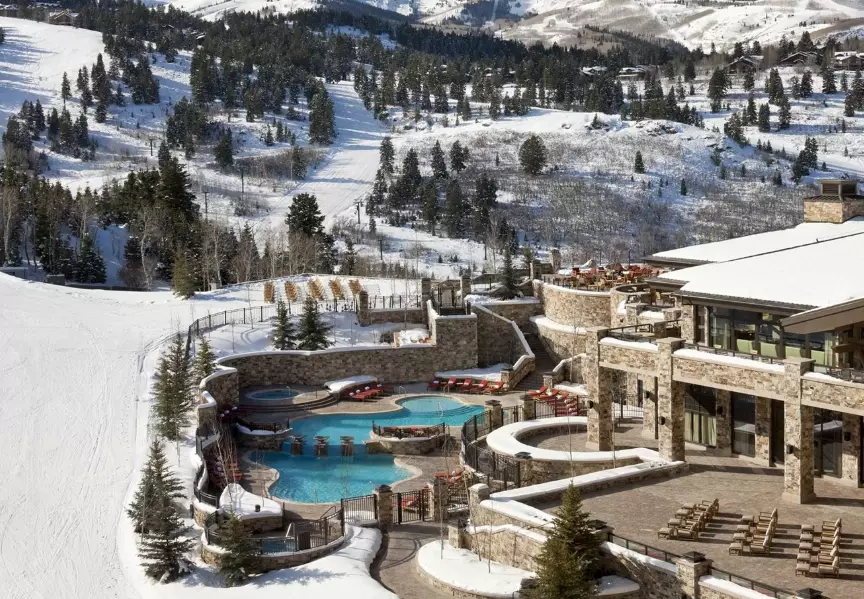
You can access the towns (Aspen, Jackson Hole, Deer Valley, Sun Valley, Telluride) as a regular visitor—you can book a hotel, buy a lift ticket, and eat at many restaurants. The experience will be expensive, but it's possible. The private clubs (Yellowstone Club, Moonlight Basin core areas) are completely inaccessible unless you are a guest of a member. There are no day passes, no public lodges. Your best bet for a taste is to book a stay at a luxury hotel that has some affiliated access, like the Montage or the St. Regis in Deer Valley, which offer ski valet and concierge services that mimic the club experience, or seek out guided experiences in Jackson that access backcountry terrain.
Do billionaires actually ski, or do they just own the homes?
Most of them do ski, and often quite well. It's a sport that rewards fitness, risk assessment, and control—qualities that align with the billionaire mindset. However, their ski day is different. It might start later (after calls), involve a private guide to maximize time and safety, and likely ends with a long, catered lunch at a private club or their home. The skiing is a central activity, but it's seamlessly integrated into a day of other obligations and pleasures.
What's the biggest mistake people make when trying to understand luxury ski travel?
Assuming it's all about opulence and showing off. For the truly wealthy, the highest form of luxury is effortlessness and time. The billion-dollar infrastructure is designed to remove all friction: no lines, no logistics, no uncertainty. A heated driveway isn't just fancy; it means no shoveling, no delay. A private guide isn't just for bragging rights; it means navigating the mountain with maximum efficiency, avoiding crowds, and having ski gear carried and pre-warmed. The luxury is in the subtraction of hassle, not just the addition of finery.
Is there an "up-and-coming" ski destination for the wealthy?
Keep an eye on Big Sky, Montana, beyond the private clubs. The recent connection of Big Sky and Moonlight Basin via the Lone Peak Tram created one of the largest ski areas in the US. The relative remoteness and vast terrain are attracting a new wave of wealth looking for space and a frontier feel, before it becomes as established as Jackson. Similarly, the expansion and continued development of Colorado's Beaver Creek Resort—already incredibly high-end but slightly less frenetic than Vail next door—is consistently drawing families seeking a more controlled, luxury-focused environment.
So, where do billionaires go to ski? They go where the ecosystem supports their lifestyle: to iconic towns for social capital, to private clubs for absolute control and privacy, and to understated havens for authentic respite. The mountain is important, but it's merely the stunning backdrop for a much more complex equation of asset management, network building, and curated experience. For them, the perfect ski destination isn't just about the descent; it's about the entire, frictionless ascent.