Your Skiing Cheat Sheet
- Why Bother Learning Skiing Lingo?
- The Absolute Basics: What are some skiing terms you'll hear day one?
- On-Snow Technique: The language of movement
- Terrain and Advanced Features
- Safety and Communication Terms (The Most Important Section)
- Freestyle and Freeskiing Lingo
- Common Questions About Skiing Terms (FAQs)
- Putting It All Together: A Quick-Reference Table
Ever been on a chairlift and heard people throwing around words that sound like a foreign language? Or maybe you're planning your first ski trip and the equipment rental form looks like it's written in code. You're not alone. Figuring out what are some skiing terms you actually need to know can feel overwhelming.
I remember my first time in a ski shop. The guy asked if I wanted a "twin-tip" or a "traditional camber" ski. I just stared blankly and said, "The red ones?"
Not a great start.
That's why I put this together. This isn't just a dry list. Think of it as your cheat sheet to sounding like you belong on the mountain, whether you're a total newbie or someone trying to move past the bunny hill. We'll break it down into chunks that make sense, from the gear you strap on your feet to the words that might save your skin in tricky situations.
Let's get you from confused to confident.
Why Bother Learning Skiing Lingo?
You could just point and go, right? Sure. But knowing the language does three big things. First, it keeps you safe. Understanding signs that say "CLOSED: AVALANCHE DANGER" or hearing a patroller yell "Skier's left!" is pretty crucial. Second, it helps you learn. If an instructor tells you to "weight your downhill ski" or "get forward in the boots," you'll actually know what to do. Third, it just makes the whole experience more fun. You can read a trail map, choose the right run for your mood, and maybe even chat with the locals in the lodge without feeling lost.
The Absolute Basics: What are some skiing terms you'll hear day one?
These are the non-negotiables. The stuff you'll encounter from the parking lot to the lift line.
Gear & Equipment Terms
This is where most people's confusion starts. Let's clear it up.
Skis, Boots, Bindings, Poles: The core setup. The bindings are the mechanisms that connect your boots to the skis. They're designed to release during a fall to prevent injury. Your poles help with balance and timing.
Alpine Skiing vs. Cross-Country (Nordic) Skiing: This is the biggest divide. Alpine skiing is what most people picture—going down groomed slopes at a resort, using chairlifts. Your heel is locked down in the binding. Cross-country skiing (or Nordic) is like hiking on skis. Your heel lifts freely, and you travel across flatter or rolling terrain, often in dedicated trails. The gear is completely different and lighter.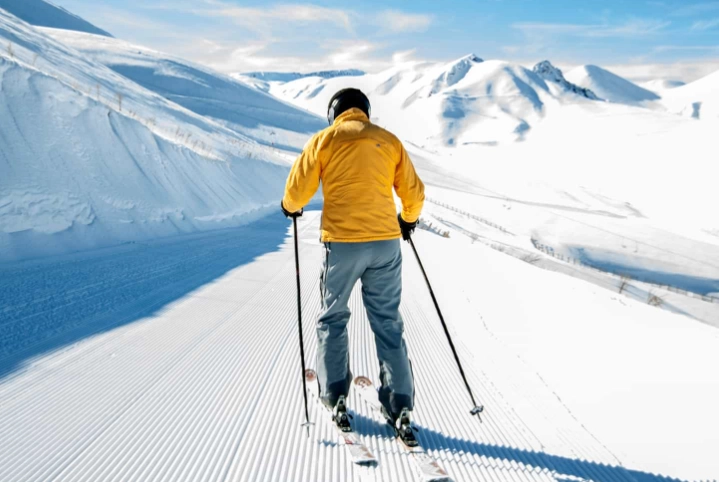
Ski Types: This is where it gets detailed. Skis are shaped and built for different purposes.
- All-Mountain: The most common type for resort skiers. Designed to handle a bit of everything—groomed runs, some powder, some ice. A great one-ski quiver.
- Powder Skis: Wider underfoot (often 100mm+), with more rocker in the tip and tail. They float on deep snow instead of sinking. Useless on hardpack, magical in fresh snow.
- Carving Skis: Narrower, with a deep sidecut (meaning a pronounced hourglass shape). They're built to make clean, arcing turns on hard, groomed snow.
- Twin-Tip: Skis with an upturned tip and tail. Allows for skiing backwards (switch) and is popular in the terrain park and for freestyle skiing.
Ski Geometry Terms: These describe the shape of the ski when laid flat.
- Camber: The classic arch. The middle of the ski is off the snow when unweighted, providing pop and edge grip on hard snow.
- Rocker (or Reverse Camber): The ski curves upward at the tip, tail, or both, like a banana. Makes initiating turns easier and improves float in powder. Many modern skis have a hybrid "rocker-camber-rocker" profile.
The Mountain Layout & Lift Lingo
Navigating the resort is its own puzzle.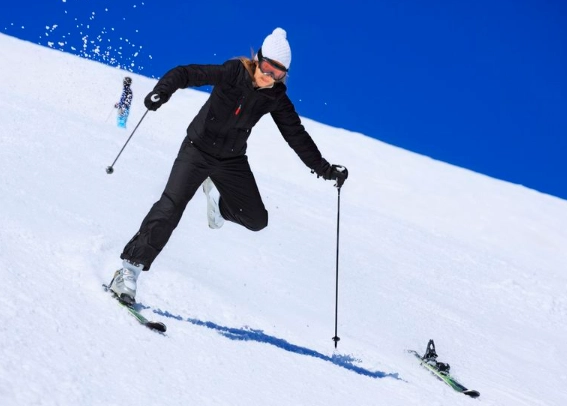
Green Circle, Blue Square, Black Diamond: The universal trail difficulty rating system. Green is beginner (easy, gentle slopes). Blue is intermediate. Black Diamond is advanced (steep, may be ungroomed). Double Black Diamond is expert-only—extremely steep, with likely obstacles and variable conditions. Some places use other symbols for terrain parks or extreme zones.
Groomed vs. Off-Piste: A groomed run (or corduroy, named for the textured pattern left by the snowcat) has been smoothed out by machines. Off-piste (or backcountry, out-of-bounds) is ungroomed, natural snow outside the marked and patrolled resort boundaries. Skiing off-piste requires specific safety knowledge and gear, like avalanche transceivers.
Lifts: The contraptions that get you up the hill.
- Chairlift: The standard. Can be a double, triple, quad, six-pack, or even an eight-seater.
- Gondola: An enclosed cabin that carries multiple people. Great for bad weather.
- Surface Lift: Drags you up while you stand on your skis. Includes T-bars (a T-shaped bar behind your legs) and rope tows (a basic moving rope). These are notoriously awkward for beginners.
- Magic Carpet: A conveyor belt on the ground for beginner slopes. The easiest way up.
Base Lodge: The main building at the bottom of the mountain with amenities like ticket windows, rentals, food, and restrooms.
On-Snow Technique: The language of movement
This is what instructors and experienced friends will talk about. Understanding these terms will directly improve your skiing.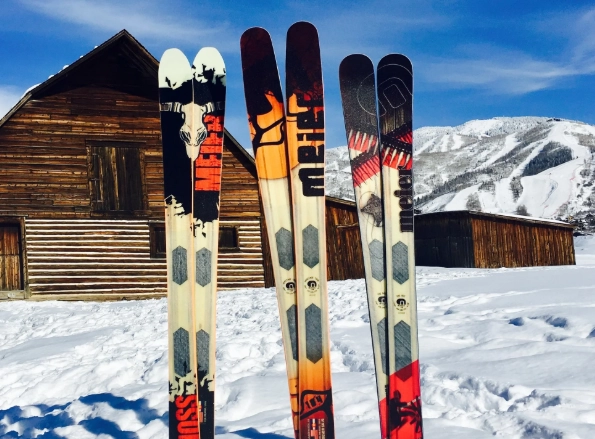
Turning and Control
Snowplow (or Wedge): The foundational beginner turn. Tips together, tails apart in a V-shape. Creates a braking effect. It's how everyone starts.
Parallel Turn: The goal for most recreational skiers. Both skis stay parallel (side-by-side) throughout the turn, rather than in a wedge. It's more efficient, controlled, and looks smoother.
Carving: An advanced parallel turn where the ski's metal edge cuts a clean, narrow track in the snow with minimal skidding. You feel a strong G-force and hear a satisfying "shhh" sound.
Edging: Tilting your skis onto their metal edges to grip the snow. More edge angle = more grip and a tighter turn.
Weighting/Unweighting: Shifting your body weight to initiate or guide a turn. You might "weight your outside ski" (the one on the outside of the turn arc) for stability.
Snow Conditions (This changes everything)
The same run feels totally different depending on the snow. Here are the key terms.
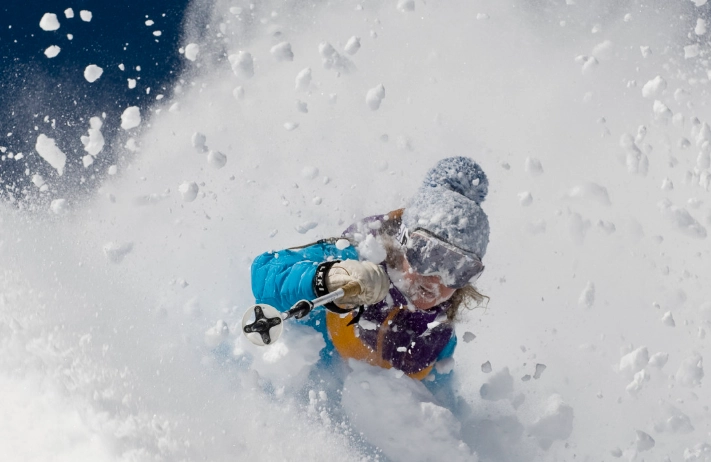
Powder/Pow: Fresh, light, dry snow. The holy grail for many skiers. Deep powder requires a different technique—leaning back slightly to keep the ski tips from diving.
Pack Powder/Groomed: Powder that has been packed down by skiers or grooming machines. The most common and user-friendly condition.
Crud: Chunked-up, uneven snow that's been skied over after a powder day. It's bumpy and requires strong, active legs to absorb the variations.
Ice/Hardpack: Very firm, often slick snow. Demands precise edging and confidence. Can be scary for beginners.
Slush: Wet, granular snow that typically occurs on warm spring afternoons. Skis slow down and turn sluggishly in deep slush.
Moguls/Bumps: A field of rounded mounds of snow formed by skiers repeatedly turning in the same spots. Mogul skiing is a specific, demanding skill involving quick, rhythmic turns.
See what I mean? Asking "what are some skiing terms?" opens up a whole world of understanding about the actual experience under your feet.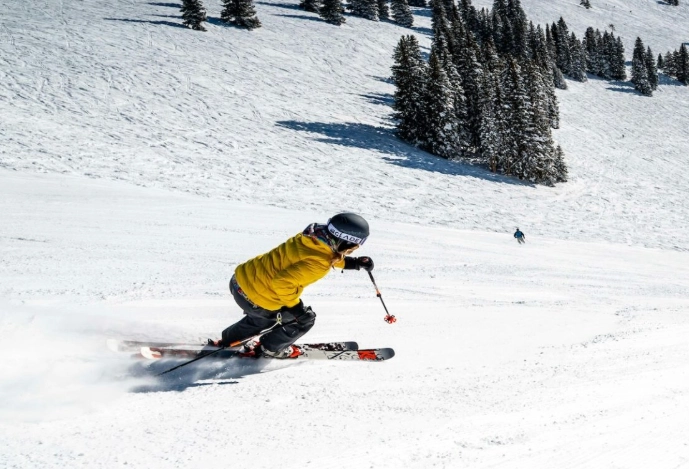
Terrain and Advanced Features
As you progress, you'll venture into more interesting terrain. Here's the map for that.
Terrain Park: An area with constructed features for freestyle skiing. This has its own deep vocabulary.
- Jump/Kicker: A ramp for getting air.
- Rail/Box: A metal rail or plastic box for sliding along with your skis.
- Halfpipe: A U-shaped channel of snow with vertical walls for performing aerial tricks.
Glades/Gladed Skiing: Skiing through trees that have been thinned out by the resort. Offers great powder stashes and a beautiful, enclosed feeling. Requires tight, quick turns.
Cornice: An overhanging ledge of wind-blown snow at the top of a ridge or cliff. Can be dangerous if it breaks.
Chute: A narrow, steep passageway, often between rocks. For experts only.
Safety and Communication Terms (The Most Important Section)
This isn't just jargon—it can be critical. Pay close attention here.
Avalanche Terms (for off-piste/backcountry): If you ever venture beyond resort boundaries, this is mandatory knowledge.
- Avalanche Beacon/Transceiver: A device that transmits and receives a radio signal to locate a buried person. Everyone in the party must wear one, know how to use it, and practice regularly.
- Probe: A collapsible pole used to pinpoint a buried victim's location after a beacon search.
- Shovel: For digging out a victim. A small, lightweight aluminum one is part of the standard backcountry kit.
- Aspect: The direction a slope faces (north, south, etc.). Crucial for assessing sun exposure and avalanche risk.
On-Hill Communication:
- "On your left/right!" The standard verbal pass. Yell it clearly when overtaking another skier or snowboarder.
- "Track!" or "Below you!" A warning yelled by someone above you to make you aware they are coming down. It's your responsibility to yield to people below you.
- Skier's Left/Right: Directions given from the perspective of someone facing downhill. So, "obstacle on skier's left" means look to your left as you face down the mountain.
Ski Patrol: The mountain's safety and emergency response team. They mark hazards, close trails, and provide first aid. A red cross on a white jacket is their common symbol.
CLOSED: A rope, sign, or bamboo pole with a "CLOSED" sign on it. Do not, under any circumstances, ski past this. It's closed for a reason—avalanche work, thin cover, obstacles, or other hazards.
Freestyle and Freeskiing Lingo
The world of jumps, spins, and rails has a vibrant, ever-evolving slang. Here's a taste.
Air: Simply getting off the ground.
Grab: Grabbing part of your ski while in the air. Different grabs have names like Safety (front of the ski, between bindings), Mute (front of the ski, across the body), or Japan (back hand, between feet).
Spin: A rotation. A 360 is one full rotation, a 720 is two, etc. Spins can be off-axis (like a cork or rodeo) where the axis isn't vertical.
Switch: Skiing backwards (with what is normally your tail leading).
Butter: A press on the nose or tail of the ski while sliding, creating a smooth, buttery-looking maneuver.
Stomp: Landing a jump perfectly and solidly.
Common Questions About Skiing Terms (FAQs)
Let's tackle some of the specific questions people type into Google when they're wondering what are some skiing terms they should know.
What's the difference between Alpine and Nordic skiing?
We touched on it, but it's the #1 confusion point. Alpine = downhill at resorts, heel locked. Nordic = cross-country on trails, heel free. The boots, skis, bindings, and technique are completely different. It's like comparing a mountain bike to a road bike.
What does "off-piste" really mean? Is it the same as backcountry?
They're often used interchangeably, but there's a subtle difference. Off-piste technically means any ungroomed snow within a resort's boundaries (like the trees between groomed runs). It's usually still patrolled and avalanche-controlled. Backcountry specifically refers to terrain outside the resort's boundary, where there are no patrols, no avalanche control, and you are entirely responsible for your own safety and navigation.
What are "black runs" like? Am I ready?
It varies massively by resort. A black at a small, gentle Midwest hill might be a blue at a Rocky Mountain resort. Generally, if you can confidently link parallel turns on a steep blue run, in variable conditions (not just perfect corduroy), and can control your speed at all times, you might be ready to try a groomed black. Start with the easiest-looking one. If in doubt, ask a local instructor or patroller for their opinion.
What is "apres-ski"?
Not a technique, but a vital cultural term! It's French for "after ski" and refers to the social activities—drinks, food, music—that happen after the lifts close. It's as much a part of the ski experience for many as the skiing itself.
Putting It All Together: A Quick-Reference Table
Here’s a cheat sheet that groups some of the most essential terms by category. Stick this in your phone notes.
| Category | Term | What It Means |
|---|---|---|
| Difficulty | Green Circle | Beginner. Gentle, wide slope. |
| Blue Square | Intermediate. Moderately steep. | |
| Black Diamond | Advanced. Steep, may be ungroomed. | |
| Snow | Powder | Fresh, deep, dry snow. |
| Groomed/Corduroy | Machine-smoothed snow with lines. | |
| Moguls | Bumps formed by skiers' turns. | |
| Technique | Snowplow | Beginner "V" shape for slowing down. |
| Parallel Turn | Skis parallel, the standard turn. | |
| Carving | High-speed turn with no skidding. | |
| Safety | Skier's Responsibility Code | The 7 rules for safe conduct on slopes. |
| CLOSED | Do not enter. Period. | |
| Avalanche Beacon | Mandatory safety device for backcountry. | |
| Terrain | Glades | Thinned-out trees for skiing. |
| Terrain Park | Area with jumps, rails, and boxes. | |
| Off-Piste | Ungroomed snow within resort bounds. |
So, what are some skiing terms you should focus on first? Start with the trail ratings (green, blue, black), the basic gear names, and the safety commands. That'll get you through day one. As you ride the lifts, listen to what people are talking about. You'll start to recognize the words for snow conditions and turns.
The mountain has its own language, but it's not a secret club. Everyone was a beginner once. I still have to ask what a new piece of park slang means.
The goal isn't to know every single term. It's to understand enough to be safe, learn effectively, and have more fun. Now you've got a solid foundation. Print this, bookmark it, or just remember that if someone yells "Skier's left!" you should probably look to your left.
See you out there.