Quick Navigation
Let's talk about one of the most effective, yet sometimes misunderstood, exercises for building a powerful back: the T-bar lift exercise. If you've spent any time in a serious gym, you've seen that weird landmine attachment with a long bar and a V-handle. Maybe you've tried it, felt a great pump, but weren't 100% sure if you were doing it right. Or maybe you've avoided it, thinking it's just a fancy version of a bent-over row. I was in that second camp for a long time.
I used to think my back day was complete with pull-ups and dumbbell rows. Then I watched a guy with a back that looked like a detailed anatomy chart absolutely demolish the T-bar row station. The way his lats flared with each rep was a lesson in itself. I gave it a real shot, and honestly, it humbled me. The movement pattern felt different. It targeted my muscles in a way other rows didn't. It quickly became a staple.
So, what's the big deal? The T-bar row, or T-bar lift, is a compound exercise that primarily targets the latissimus dorsi (your lats), but also smashes the rhomboids, traps, rear delts, and even your biceps and forearms. It's a vertical pull pattern that allows for significant overload in a relatively stable position, especially compared to a free-weight bent-over row. That stability is its superpower and its curse—it lets you move serious weight, but it also lets you cheat with serious weight if you're not careful.
The Core Idea: At its heart, the T-bar lift exercise is a horizontal pulling movement where your torso is supported at an angle, and you pull a weighted bar into your midsection. The "T" usually refers to the handle or the bar's orientation. It bridges the gap between machine-based rows (like the seated cable row) and completely free-weight rows (like the barbell row).
How to Perform the T-Bar Row with Flawless Form (Step-by-Step)
Getting the form right on this lift is non-negotiable. Do it wrong, and you're inviting lower back strain and missing out on the incredible back-building benefits. Do it right, and you'll feel your back working in glorious, painful harmony.
Setting Up for Success
First, you need the equipment. Most commercial gyms have a dedicated T-bar row machine—a platform with a padded chest support and a barbell fixed at one end in a landmine or pivot. If your gym doesn't have one, you can create a makeshift version using a landmine attachment on the floor and a barbell. Load weight plates onto the free end of the bar. You'll typically use a V-grip or a neutral-grip handle attached to the bar's end.
Stance is everything. Stand on the platform (or straddle the barbell if using a landmine) with your feet shoulder-width apart. Your knees should be slightly bent. Now, hinge at your hips—push your butt back like you're trying to close a car door with it—and lower your torso until it's nearly parallel to the floor. Your back should be straight, forming a straight line from your head to your tailbone. Not rounded. Neutral spine. This is the most critical part.
Grab the handles with a neutral grip (palms facing each other). Your arms should be fully extended, feeling a stretch in your lats. Your chest should be lightly pressed against the support pad (if your machine has one). This is your starting position. Take a deep breath and brace your core as if you're about to be punched in the gut.
The Pulling Phase
Now, initiate the pull by driving your elbows back and up. Think about squeezing a pencil between your shoulder blades. Your focus should be on moving your elbows, not your hands. The hands are just hooks. Pull the handle or the bar until it touches your lower chest or upper abdomen.
At the top of the movement, pause for a brief second. Squeeze your back muscles as hard as you can. You should feel a massive contraction in your mid-back and lats. This is where the magic happens—the mind-muscle connection. Don't just yank the weight; command your back to move it.
Common Form Breakdown: The biggest mistake I see? People turning the T-bar row into a full-body heave. They yank with their arms, arch their lower back violently, and use momentum to swing the weight up. This turns a back exercise into a lower back and bicep exercise with a high risk of injury. If you see the weight plates banging together at the top from a swing, the weight is too heavy.
The Lowering Phase and Breathing
This part is just as important. Under control, lower the weight back to the starting position. Don't just drop it. Feel the stretch in your lats as your arms fully extend. This eccentric (lowering) phase causes significant muscle damage (the good kind that leads to growth).
Breathe out as you pull the weight towards you. Breathe in as you lower it back down. This breathing pattern helps maintain intra-abdominal pressure and keeps your core tight, protecting your spine.
Top Benefits of Making the T-Bar Lift a Staple
Why bother with this specific movement when there are a dozen other row variations? The T-bar lift exercise offers a unique cocktail of benefits that are hard to replicate.
Serious Muscle Hypertrophy: This is a mass-builder. The stable, supported position allows you to focus purely on overloading the back muscles without worrying as much about balance. You can often handle more weight in a T-bar row than in a dumbbell or barbell row with similar form, leading to greater mechanical tension—a key driver of muscle growth.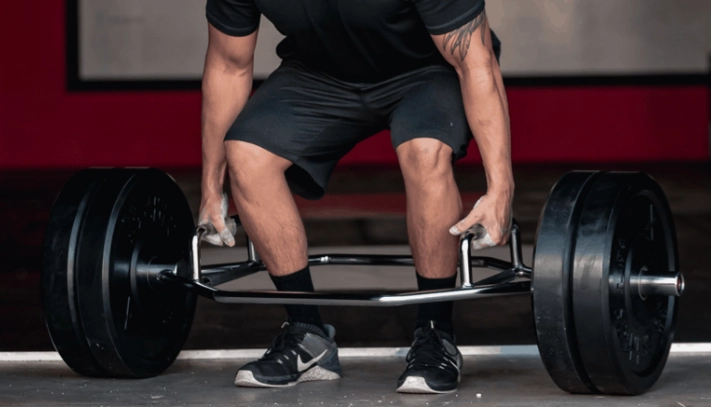
Improved Mind-Muscle Connection: Because the path is somewhat fixed, it's easier to focus on feeling your back muscles contract. You're not fighting to stabilize a free barbell in space. This makes the T-bar row an excellent teaching tool for learning how to engage the lats and rhomboids effectively.
Spinal-Friendly Positioning (When Done Right): For individuals with lower back concerns, a properly performed T-bar row on a machine with chest support can be safer than a bent-over barbell row. The support takes shear force off the spine. However, this is a double-edged sword—poor form on the T-bar is still dangerous.
Functional Strength Carryover: The movement pattern—a strong horizontal pull—is fundamental to real-world strength and athletic performance. It builds the pulling power essential for sports like wrestling, climbing, and football, and it directly counters the hunched-over posture we develop from sitting all day.
Posture Perk: Regularly training your mid-back with exercises like the T-bar row is one of the best proactive measures against "desk posture." It strengthens the muscles that pull your shoulders back, helping you stand taller and reducing upper back pain.
Who Should (and Shouldn't) Do the T-Bar Row?
This isn't an exercise for absolute beginners. If you're new to weight training, you should master bodyweight rows, cable rows, and dumbbell rows first. These teach you the basic movement pattern with less complexity and risk.
The T-bar lift exercise is ideal for:
- Intermediate to Advanced Lifters looking to break through a back development plateau.
- Bodybuilders seeking a potent hypertrophy tool for adding thickness to the middle and upper back.
- Strength Athletes (powerlifters, strongmen) who want to build raw pulling power to assist their deadlifts and overall posterior chain strength.
You might want to avoid it or proceed with extreme caution if:
- You have an active lower back injury or disc issues. Even with support, the loaded flexion can be problematic. Consult a physical therapist.
- You have poor core stability and cannot maintain a neutral spine under load. Fix your core first.
- Your gym only has the landmine setup and you struggle with the bent-over position. In that case, a chest-supported row machine is a better bet.
I'll be honest, I don't think the T-bar row is a "must-do" for everyone. I know fantastic lifters with incredible backs who never touch it. It's a tool, not a religion. If it doesn't feel right for your body, don't force it. There are always alternatives.
T-Bar Row Variations and Smart Alternatives
Not all T-bar setups are created equal. And sometimes, you need a change. Here’s a breakdown of the main variations and what they do differently.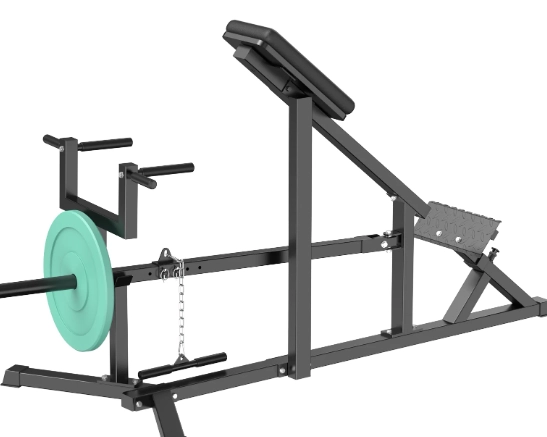
| Variation Name | How It's Done | Primary Muscle Focus & Feel | Best For |
|---|---|---|---|
| Machine T-Bar Row (Chest-Supported) | Using a dedicated machine with a padded chest rest and a fixed bar path. | Maximum lat and mid-back isolation. Minimal lower back involvement. Allows for the strictest form. | Bodybuilders, those with lower back concerns, anyone learning the movement. |
| Landmine T-Bar Row | Barbell in a landmine attachment, straddling the bar, no chest support. | More core and posterior chain stabilization required. Slightly greater range of motion. Feels more "free-weight." | Advanced lifters wanting more core engagement, gyms without a dedicated machine. |
| Wide-Grip T-Bar Row | Using a wider, pronated (overhand) grip attachment. | Shifts emphasis to the upper lats, rear delts, and traps. Mimics a wide-grip barbell row. | Building width in the upper back and improving shoulder health. |
| Close-Grip / Neutral-Grip T-Bar Row | Using a V-handle or parallel grips (palms facing). This is the most common. | Greater lat activation and longer range of motion. Easier on the shoulders for most people. | Overall back thickness, most people's default choice. |
| Single-Arm Landmine Row | One hand on the end of the barbell in a landmine, other hand on knee for support. | Unilateral work, addresses imbalances, allows for torso rotation which can be more natural for some. | Correcting side-to-side strength differences, improving core anti-rotation strength. |
If you don't have access to any T-bar setup, don't sweat it. These exercises target similar musculature and can be just as effective:
- Chest-Supported Dumbbell Rows: My personal favorite alternative. Lie face-down on an incline bench with a dumbbell in each hand. Zero lower back stress, fantastic range of motion, and you can work each side independently. It's brutally effective.
- Seated Cable Rows: The constant tension from the cable is phenomenal for muscle growth. Play with different attachments (V-bar, wide bar, rope) to change the stimulus.
- Bent-Over Barbell Rows: The classic. It demands more from your core and posterior chain than a supported T-bar row, making it a more "complete" strength exercise, but also more technically demanding.
- Meadows Rows: A niche but fantastic variation popularized by bodybuilder John Meadows, using a landmine and a specific stance. It's like a hybrid between a dumbbell row and a T-bar lift workout.
Programming the T-Bar Lift for Growth and Strength
You can't just throw this exercise anywhere in your workout and expect magic. How you program it depends entirely on your goal.
For Muscle Growth (Hypertrophy)
Place the T-bar row in the middle of your back workout, after your vertical pulling (like pull-ups) but before isolation work (like face pulls). Aim for 3-4 sets of 8-12 reps. The key here is time under tension and a strong mind-muscle connection. Use a weight that allows you to get all reps with perfect form, squeezing hard at the top. Rest 60-90 seconds between sets.
For Strength
If pure strength is the goal, you might place it first in your session when you're freshest. Work in lower rep ranges: 4-5 sets of 4-6 reps. The weight will be significantly heavier, but form cannot break down. Your back should still be doing the work, not your ego. Rest longer—2-3 minutes between sets to fully recover for the next heavy set.
Here's a simple progression model for a T-bar lift exercise focused on growth over a 6-week block:
- Weeks 1-2: 3 sets x 10 reps @ 70% of your estimated 10-rep max. Focus on perfect technique.
- Weeks 3-4: 4 sets x 8 reps @ 75-80%. Intensity increases.
- Weeks 5-6: 3 sets x 10-12 reps @ the heavier weight from weeks 3-4. This is where you aim to beat your previous performance.
Frequently Asked Questions (FAQs)
Wrapping It Up: Is the T-Bar Row Worth Your Time?
Look, the fitness world is full of fads and overly complicated exercises. The T-bar lift exercise isn't one of them. It's a tried-and-true, brutally effective movement for building a thicker, stronger, more resilient back. Its unique blend of stability and overload potential makes it a standout.
But remember, it's just one tool. The best back workout is the one you can perform consistently with great form and progressive overload. Whether that includes the T-bar row, dumbbell rows, cable rows, or a mix of all three, is up to you and your body's response.
My advice? Give it a real, focused 8-week trial. Drop your ego at the door, start light, master the form, and progressively add weight. Pay attention to how your back feels and looks. I think you'll be surprised. For more foundational information on exercise science and programming principles that can help you maximize exercises like the T-bar row, reputable sources like the American College of Sports Medicine (ACSM) offer evidence-based guidelines.
Now go build that back.