That feeling. The wind starts to whistle, the trees blur, and your brain screams "too fast!" Your muscles lock, you lean back instinctively, and control vanishes. Fear of speed skiing isn't a sign you're a bad skier. It's a sign you're a sensible human. But it's also the single biggest barrier between intermediate cruising and the effortless, flowing joy of confident skiing. I've coached hundreds of skiers through this, and the solution isn't just "be braver." It's a systematic dismantling of fear, rebuilt with specific technique and mental frameworks.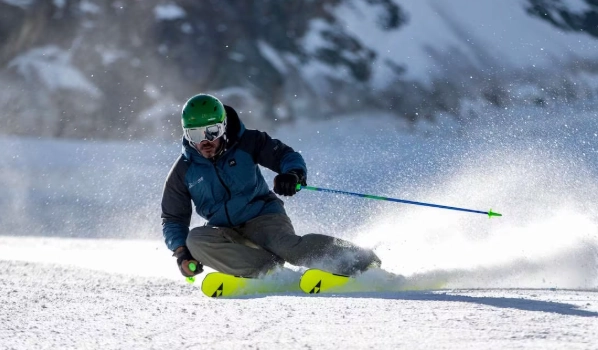
What You'll Find in This Guide
Why Fear Happens in Speed Skiing (And It's Not Cowardice)
Let's get one thing straight. Fear on skis isn't an emotion flaw. It's a data processing error. Your body receives inputs—increased visual flow, wind pressure, ski vibration—and your ancient lizard brain interprets them as "DANGER: FALLING = DEATH." It doesn't understand modern ski design, grooming, or your helmet.
The biggest mistake I see? People trying to relax when they're scared. It's impossible. Telling yourself to relax when your system is flooded with cortisol is like telling a boiling kettle to cool down by willpower. The key is to give your brain new, better data and specific jobs to do, so it switches from panic mode to processing mode.
Expert Insight: The fear isn't of speed itself, but of the perceived loss of control at speed. We feel in control when we can make deliberate, skidded turns to scrub off speed. True carved turns at higher speeds feel different—they're quieter, require less brute force, and involve committing your weight forward. This unfamiliar feeling is often mislabeled as "being out of control."
The Mental Game Reset: Rewiring Your Instant Reactions
Before you even click into your skis, you need new software. This is where most generic advice fails.
1. Redefine the Sensation
Stop calling it "fear." Start calling it "activation" or "focus fuel." This isn't positive thinking fluff. It's semantic framing used by competitive alpine skiers. That jittery feeling in your chest? That's your body preparing for high performance. Acknowledge it: "Okay, there's the activation. Good. Now let's channel it."
2. The 3-2-1 Grounding Drill (Do This on the Chairlift)
When anxiety starts to creep in, don't fight it. Engage your senses:
3 things you see (e.g., the pattern of snow on a pine tree, the color of a skier's jacket, the shape of a cloud).
2 things you hear (the scrape of edges, the chairlift hum, your own breath).
1 thing you feel (the pressure of the seat on your legs, the cold air on your cheeks).
This takes 15 seconds and pulls you out of the catastrophic future your brain is imagining and back into the present, manageable moment.
3. Adopt a Target Focus
Fear causes tunnel vision, often fixed on the immediate snow directly in front of your tips—the worst place to look. You react to every tiny bump. Force your eyes up. Pick a visual target 20-30 meters down the run—a tree, a lift tower, a snow fence. Ski toward that target. Your peripheral vision will handle the immediate terrain, and your body will naturally find a smoother, more balanced path. This one change is monumental.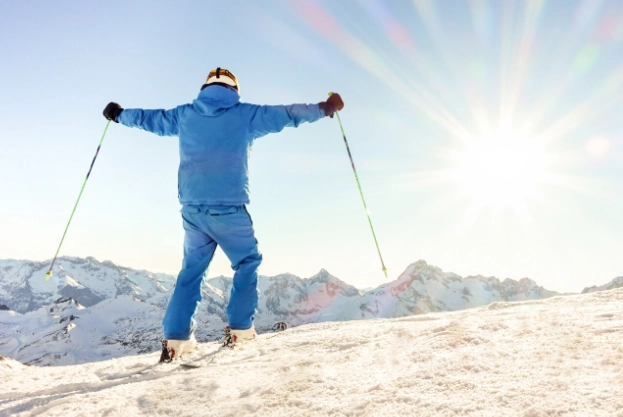
The Non-Consensus View: Many instructors say "breathe." That's insufficient. The real trick is to exhale during the initiation of your turn, especially when you're tense. A forceful, intentional exhale as you start to roll your knees downhill releases chest tension and facilitates a more natural, forward movement. Try it. It's a physical override for a mental state.
Your Progressive On-Snow Training Plan: No Leaps of Faith
You cannot think your way into confident speed skiing. You must feel it through progressive success. This is a 4-phase drill sequence. Master each phase on a comfortable, groomed blue run before adding speed or moving to the next.
| Phase | Drill Name & Focus | What You're Building | Key Cue |
|---|---|---|---|
| 1. Foundation | Railroad Tracks: Make wide, perfectly parallel turns. Focus on quiet skis. | Edge control, balance, and the feeling of clean engagement. | "Let the skis turn you." |
| 2. Engagement | Pressure Pulse: In your traverse, firmly press your shins into boot tongues for 2 seconds, then release. Feel the edge grip. | Trust in edge hold and active forward pressure without leaning back. | "Press to connect." |
| 3. Dynamics | Garland Turns: Traverse, then turn your skis slightly downhill (15-20 degrees) before steering back to a traverse. Repeat. | Comfort with the acceleration phase of a turn in a controlled, low-commitment way. | |
| 4. Commitment | Turn Extension: From a garland, let the turn continue all the way across the fall line into a full, completed turn. | Linking the feeling of acceleration directly into a controlled finish. | "Commit and complete." |
Spend a whole day, or even two, on Phase 1 and 2. The goal isn't speed; it's quality of sensation. When you can do Railroad Tracks with absolutely no skidding chatter, you will have already gained 10 km/h of stable speed without even trying, because efficient carving is inherently faster.
Gear Myths and Must-Haves: Stability Over Speed
Wrong gear amplifies fear. Let's bust myths.
Myth 1: "I need stiffer, longer skis to go faster." False. Skis that are too demanding for your skill level will feel unpredictable and hooky, increasing fear. Use skis you can bend and control comfortably. A well-tuned, all-mountain ski in the correct length for your weight is ideal.
Myth 2: "Boots should be super tight." Partly false. They should be snug, but circulation-cutting tightness causes foot pain and makes you back away from pressure. You can't drive a ski forward if your foot is screaming. A proper boot fit is the #1 equipment investment for confidence.
The Non-Negotiable: A properly fitted helmet. Not a loose, old one. Modern helmets with MIPS technology are lighter and safer. Knowing your head is protected provides a subconscious permission slip to focus on technique, not survival. Resources like the SKI Magazine gear guides are a good place to start research.
And tune your skis. Dull edges that skid unpredictably are a core source of instability. A basic sharpening and waxing makes a world of difference.
Your Speed Skiing Questions Answered
The path to overcoming fear of speed skiing isn't a cliff jump. It's a staircase. Each step—each mental reframe, each mastered drill—builds a brick of confidence. It's not about becoming fearless. It's about becoming skilled enough that your confidence outweighs the fear. Start with the railroad tracks. Master the feeling of quiet, engaged skis. The speed will come as a byproduct of good technique, not as an act of bravery. And that's when the real fun begins.