Quick Navigation
- Why Bother Mastering the Snowplough Turn?
- The Step-by-Step Blueprint for Your First Snowplough Turn
- The Top 3 Snowplough Turn Mistakes (And How to Fix Them)
- From Snowplough to Parallel: The Natural Progression
- Gear Talk: Does Your Equipment Help or Hinder?
- Your Snowplough Turn Questions, Answered
- Putting It All Together: A Practice Plan for Your Next Ski Day
Let's be honest for a second. Your first day on skis can feel like a special kind of chaos. You're sliding around, feeling like your legs have a mind of their own, and the idea of actually steering feels like a distant dream. That's where the snowplough turn comes in. It's not the flashiest move in skiing, but it's arguably the most important one you'll ever learn. It's your key to unlocking the mountain, the foundation every single skier builds upon. Forget about parallel turns for now. If you can't do a solid, controlled snowplough turn, you're putting the cart way before the horse.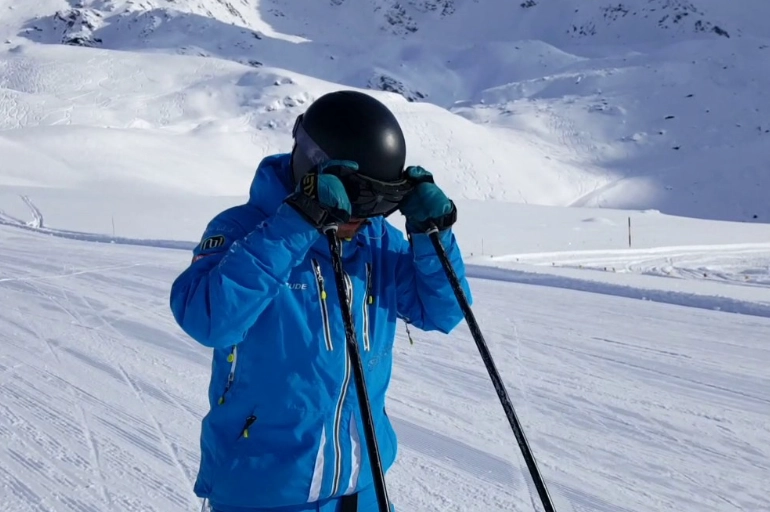
I remember my own first attempts. I'd point my skis into a wedge, lean back in a panic, and hope for the best. It was more of a controlled fall than a turn. It took a patient instructor pointing out the tiny details—where my weight was, what my little toe was doing—for it to finally click. That click is what this guide is about. We're going to dissect the snowplough turn from every angle, so you can stop hoping and start controlling.
What exactly is a snowplough turn? (Also called a wedge turn or pizza turn). It's the fundamental braking and turning technique where you position your ski tips close together and your tails wide apart, forming a wedge or triangle shape. By shifting your weight and pressure from one ski to the other inside this wedge, you initiate a turn. It's your brakes and your steering wheel, all in one.
Why Bother Mastering the Snowplough Turn?
You might wonder why we focus so much on this seemingly basic move. Can't you just skip to the cool stuff? Well, no. And here's why trying to skip it is a recipe for a bad time.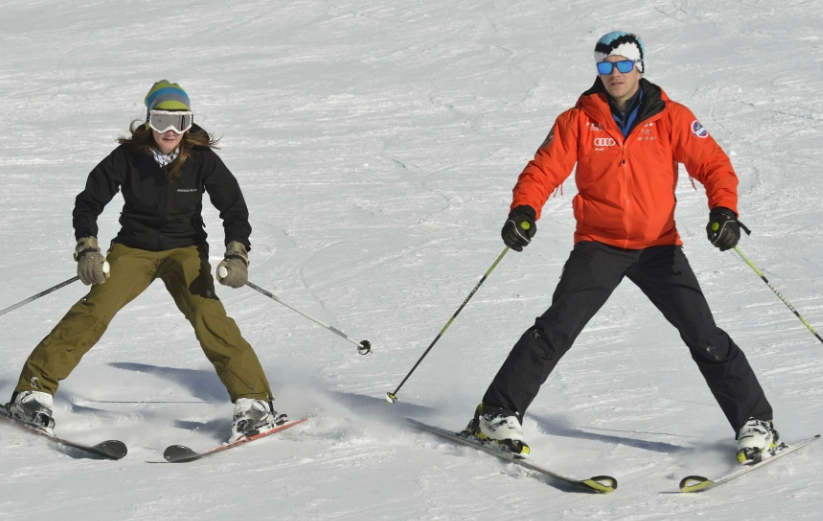
First, it's all about control. A proper snowplough turn gives you the ability to manage your speed independently of your direction. You can slow down while you turn. This builds a sense of security that's absolutely priceless when you're starting out. That security is what lets you relax, and relaxation is the secret ingredient to good skiing.
Second, it teaches you the core mechanics of all skiing turns: edging, pressure control, and rotational separation. When you press on the little-toe edge of your right ski to turn left, you're learning about edging. When you feel more weight on that right foot, that's pressure control. Your upper body facing down the hill while your legs turn underneath? That's the beginning of separation. Master these feelings in a snowplough, and every future turn will make more sense.
Finally, it's your safe space. On a steeper slope than you expected? Go back to your snowplough turn. Feeling tired at the end of the day? Trusty snowplough turn. It's the reliable tool you can always return to.
A quick reality check: The snowplough turn often gets a bad rap from skiers who are stuck in it for too long, unable to progress. The goal isn't to live in the snowplough forever. The goal is to use it as a solid, confident stepping stone. The problem isn't the turn itself; it's not knowing how to get out of it. We'll cover that too.
The Step-by-Step Blueprint for Your First Snowplough Turn
Let's break this down into digestible pieces. Don't try to do it all at once. Find a gentle, wide slope (often called a "bunny hill") and work on each step.
Step 1: Find Your Stance (The Athletic Ready Position)
Stand still on a flat area first. Skis parallel, hip-width apart. Bend your ankles, knees, and hips slightly. Imagine you're about to sit on a high stool. Your shins should be pressing against the front of your ski boots—this connection is crucial. Hands forward and in sight, like you're holding a lunch tray. This isn't a passive stance; it's active and ready.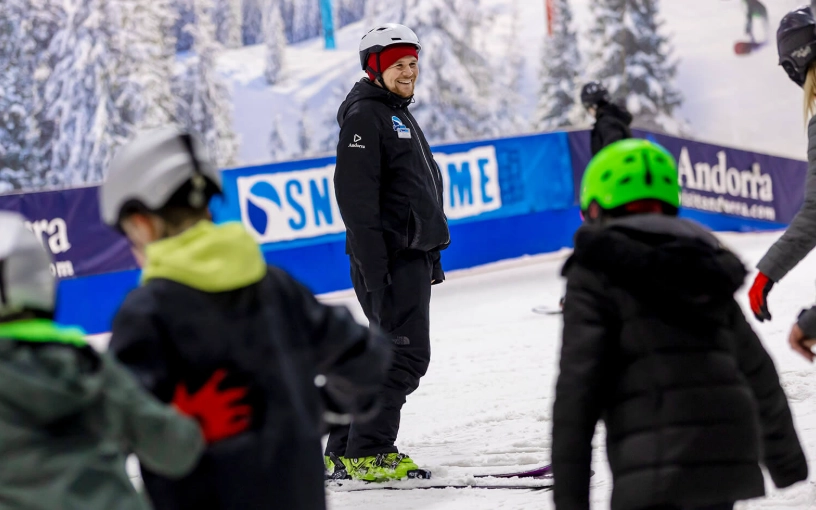
Step 2: Form the Wedge (The Pizza)
From your ready position, gently push your heels out to the sides, keeping your ski tips close together (about a fist's width apart). Your skis will form a "V" or a slice of pizza. The inside edges of both skis will bite into the snow. This is your braking position. Practice making the wedge bigger and smaller while standing still. Feel the edges engage.
A common hiccup here is pushing the tails out by rotating your entire leg from the hip. Try to think about moving your knees apart instead. It's a subtler, more effective movement.
Step 3: The Magic of Weight Shift (This is the Turn)
This is the core of the snowplough turn. In your wedge, start sliding forward on a gentle slope. To turn left, you need to put more weight on your RIGHT foot. I know, it feels counterintuitive. But pressing down on your right ski increases the edge angle and pressure, which pulls you to the left.
Don't lean your whole body over. It's a subtle transfer of weight. Feel your right foot press into the sole of your boot. Your left leg will lighten up. As you press, your right ski will naturally start to carve a slight arc leftwards. Your left ski is just along for the ride, maintaining the wedge shape for control.
Progression Tip: Before linking turns, practice "traversing." Do one snowplough turn to the left and ride across the hill in your wedge. Then do one to the right and ride across. This helps you get comfortable with the feeling of control on each side before putting it all together in a rhythm.
Step 4: Finishing and Starting the Next Turn
You've turned left. To stop the turn and go the other way, you need to recenter your weight. Gently bring your weight back to a 50/50 balance between both feet in the wedge. As you do this, you'll stop turning. Then, immediately transfer weight to your LEFT foot to initiate a turn to the right.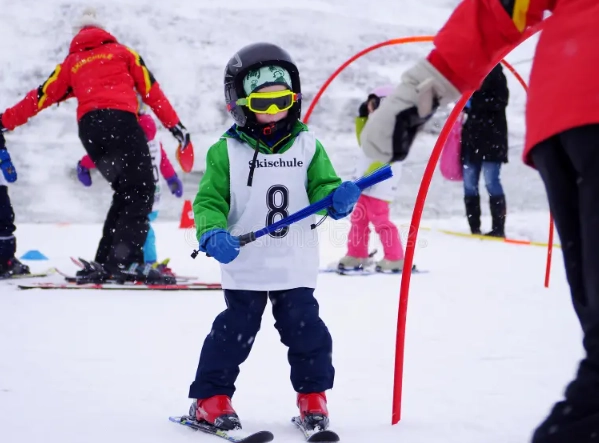
The rhythm is: Weight right (turn left) -> Center -> Weight left (turn right) -> Center. The "center" phase is quick but critical. It's the reset button.
The Top 3 Snowplough Turn Mistakes (And How to Fix Them)
Everyone makes these. Spotting them is half the battle.
| The Mistake | What It Looks/Feels Like | The Simple Fix |
|---|---|---|
| Leaning Back (In the "Backseat") | You feel out of control, your quads burn like crazy, and your skis feel wobbly. You're trying to "sit down" to slow down. | Consciously think "shins to boot tongues." Sing a song in your head that makes you bounce slightly. Focus on keeping your hands forward and down the hill. This naturally pulls your weight forward. |
| The "A-Frame" or Inward Knee Collapse | Your knees knock together inside the wedge. The inside edge of your turning ski loses grip, causing it to skid or slip out. | When turning left (weight on right foot), actively think about pushing your right knee out and down the hill, toward your little toe. This engages the edge properly. A good instructor from an organization like the Professional Ski Instructors of America & American Association of Snowboard Instructors (PSIA-AASI) can give you instant feedback on this. |
| Rotating the Upper Body to Steer | You wind up your shoulders and heave them around to try and force the turn. It looks exhausting and the turns are jerky. | Practice on a gentle slope with your poles held horizontally across your chest in both hands. This locks your upper body facing down the fall line. You'll be forced to make the turn with your feet and legs only, which is exactly what you want. |
The inward knee collapse was my personal nemesis for ages. I'd turn, my inside knee would buckle in, and I'd lose all edge control. It wasn't until another skier pointed it out that I realized I was doing it. Fixing it felt like discovering a secret lever on my skis.
From Snowplough to Parallel: The Natural Progression
So you're making confident, linked snowplough turns. You can control your speed on blue runs. What's next? You don't just wake up one day and decide to ski parallel. The progression is a gradual narrowing of the wedge.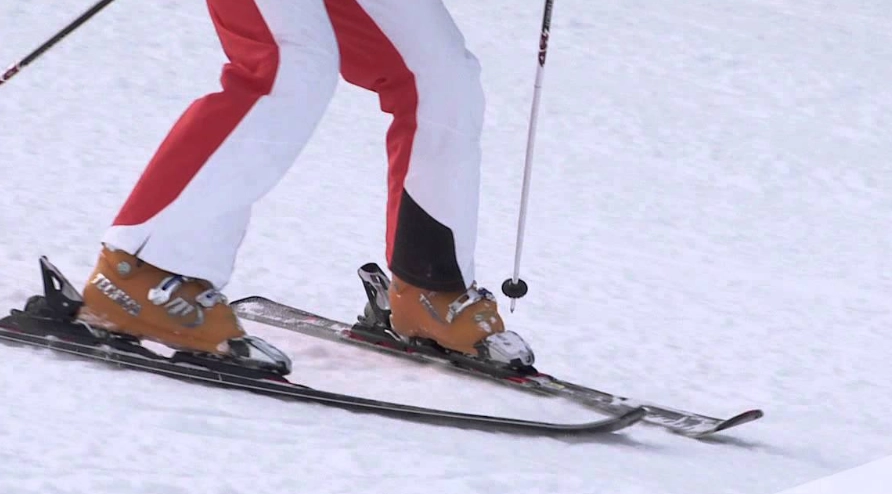
Start by making your wedge smaller as you initiate each turn. Instead of a wide pizza, think of a narrow pizza slice. With a narrower wedge, you'll need more precise edge and pressure control. This is good. Then, focus on finishing the turn with your skis more parallel. As you complete a turn to the left, actively pull your light (left) ski back to parallel with your guiding (right) ski at the end of the arc.
Drills like the "stem christie" are the official bridge between snowplough and parallel. You start the turn with a small wedge (the stem) and finish it with both skis parallel (the christie). It's the logical next step that instructors use worldwide. Resources from established ski schools and publications, like Ski Magazine, often feature excellent drills for this transition phase.
When should you start this transition? When your snowplough turns feel automatic, not thought-about. That's your signal.
Gear Talk: Does Your Equipment Help or Hinder?
You can't blame your tools for everything, but the right gear makes learning the snowplough turn significantly easier.
- Skis: Beginner skis are softer, more forgiving, and have significant sidecut (an hourglass shape) that literally wants to turn when put on edge. If you're on old, straight, stiff racing skis, you're fighting an uphill battle. Rent modern beginner skis from a reputable shop.
- Boots: This is the most important piece. They must fit snugly, especially in the heel and ankle. If your heel lifts when you lean forward, you lose all control and leverage. A proper boot fitting is worth every penny. Don't just buy the size you wear in shoes.
- Bindings: Ensure they are set correctly for your weight and ability (DIN setting). A shop will do this. This is a critical safety feature.
Retailers like REI offer great general guides on boot fitting principles, which underscores how vital this is.
Your Snowplough Turn Questions, Answered
Yes and no. Some burning is normal because you're using new muscles (especially if you're leaning back). The fix is to focus on a forward stance and take frequent breaks. If your legs are constantly screaming, you're likely too static. Try to make smaller, more frequent turns to distribute the effort.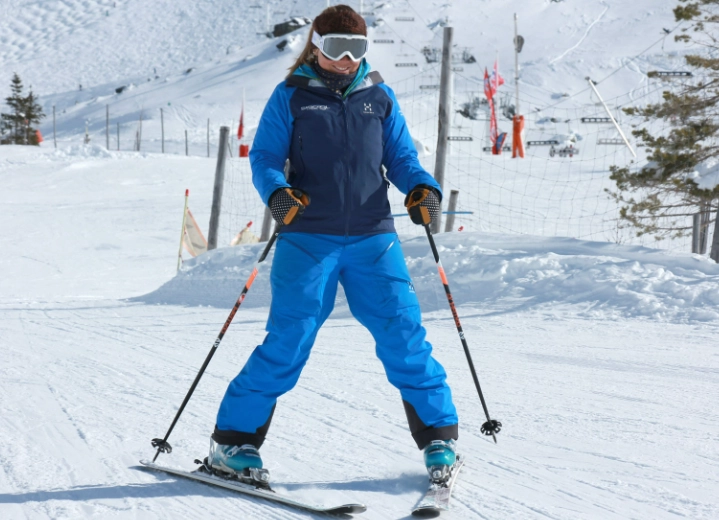
This is incredibly common. Most people have a dominant leg. The solution is to practice your "bad side" turn deliberately. Go back to the gentlest slope and do five turns in a row only to that side. Exaggerate the movements. Think about it more. It will catch up.
Not when you can survive it, but when you can control your speed and line on it using your snowplough turns. If you're picking up too much speed and panicking, you're not ready. Mastery on easier terrain always comes first. There's no rush.
Performed correctly—with a balanced stance and without the knees collapsing inward—it's a safe, foundational movement. If you have pre-existing knee issues, consult a doctor. The torque on the knees is much lower in a controlled snowplough than in a crash because you couldn't turn or stop.
Putting It All Together: A Practice Plan for Your Next Ski Day
Don't just aimlessly ride the lift. Have a goal.
- Warm-up Run: Gentle slope. Focus ONLY on your stance. Hands up, shins forward. Make big, slow wedge turns without thinking about anything else.
- Drill Run: Pick one flaw to fix. Is it your A-frame? Do the whole run thinking "knee to little toe." Is it leaning back? Sing a song and bounce.
- Linking Run: Focus on the rhythm: Weight -> Center -> Weight -> Center. Count it out loud. Make a smooth, rhythmic "S" down the hill.
- Progression Run: Try one run where you make your wedge 20% smaller. See how it feels. Can you still control it?
The snowplough turn is your foundation. It's not a trick or a gimmick. It's the essential language of control that every skier speaks. Nail this down with patience, focus on the feelings in your feet and legs, and you'll build confidence that opens up the entire mountain. The flashy parallel turns will come in time, but they'll be built on the solid rock of a great snowplough. Now get out there and make some turns.