You see them on the mountain—the skiers who make it look easy. Their turns are smooth, powerful, and seemingly effortless. Their upper bodies are calm, almost still, while their legs do all the work. That's the hallmark of advanced skiing: a quiet upper body. It's not just about looking good; it's the foundation for control, efficiency, and tackling any terrain with confidence. If you're fighting your skis, feeling unstable, or just can't seem to stop your shoulders from swinging around, this is the skill you need to focus on.
What's Inside?
Why a Quiet Upper Body Matters
Think of your upper body as the command center and your legs as the specialized tools. If the command center is wobbling all over the place, the tools can't do their job precisely. A stable torso creates a stable platform.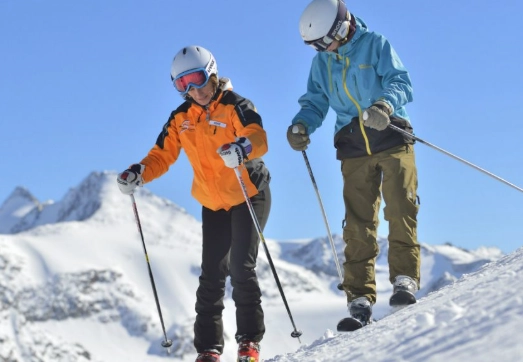
Better Balance: Your center of mass stays over your feet. When you hit a bump or variable snow, you don't get thrown off as easily. I remember a particularly icy day in Whistler where keeping my core rock-solid was the only thing that kept me from washing out on every turn.
More Efficient Turns: All your energy goes into steering your skis, not into wasteful upper body movement. This means you tire less quickly and can ski longer, harder runs.
Cleaner Carving: For your skis to carve a clean arc, the edges need consistent pressure. A rotating upper body unweights the inside ski, breaks the edge hold, and forces a skid. The Professional Ski Instructors of America (PSIA) emphasizes upper-lower body separation as a core component of modern carving.
Preparation for Advanced Terrain: In moguls, powder, or trees, your legs need to move independently and rapidly. A quiet upper body allows that. It's the shock absorber that lets your legs pump through the bumps while you stay in control.
How to Achieve a Quiet Upper Body: A Step-by-Step Guide
This isn't about freezing up. It's about intentional stability. Let's break it down.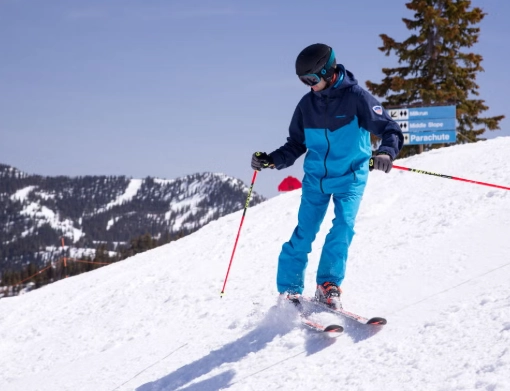
1. Start with Your Stance and Core
Forget standing upright. Adopt an athletic, ready position: ankles, knees, and hips slightly flexed. Your spine should be tall but not rigid. Now, engage your core. Not a crunch, but a gentle bracing, like you're about to laugh. This connection from your pelvis to your ribcage is your stability belt.
2. Master the Art of Separation
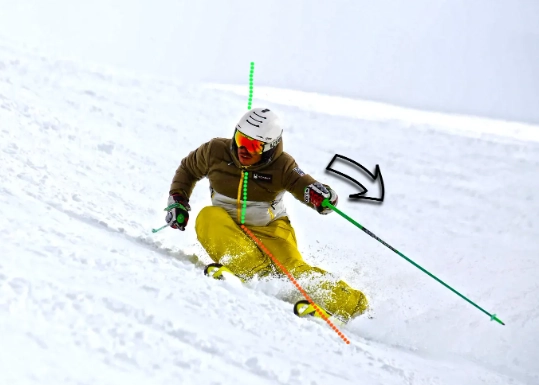
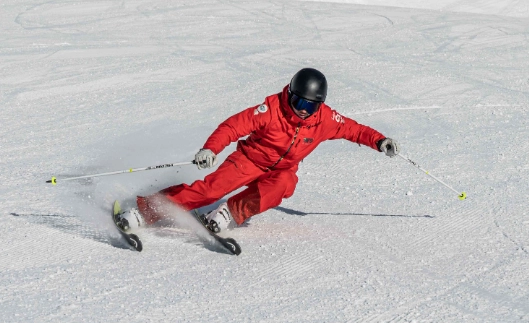
This is the golden key: Upper-Lower Body Separation. Your hips and shoulders face generally downhill, while your legs turn the skis from side to side. Your belly button should point between your tips, not follow them around the turn.
A common pitfall I see is skiers initiating the turn by twisting their shoulders. The turn should start from the snow up—pressure the front of your boots, roll your ankles and knees into the hill, and let the skis come around. Your upper body is a passenger for the first half of the turn.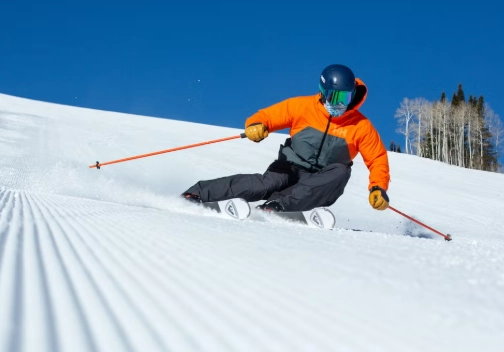
3. Hand Position is a Tell
Your hands don't steer the ski, but they reveal everything. Swinging, dropped hands mean a disengaged core and a rotating torso.
Keep your hands up, forward, and in your peripheral vision. Imagine holding a steering wheel or a tray. This forward position naturally keeps your chest facing downhill and your weight forward.
4. Use Your Eyes to Lead
Your body tends to follow your gaze. Look two or three turns ahead, down the line you want to ski. Don't stare at your ski tips. Looking ahead automatically helps stabilize your head and shoulders, reducing the urge to twist and look into the immediate turn.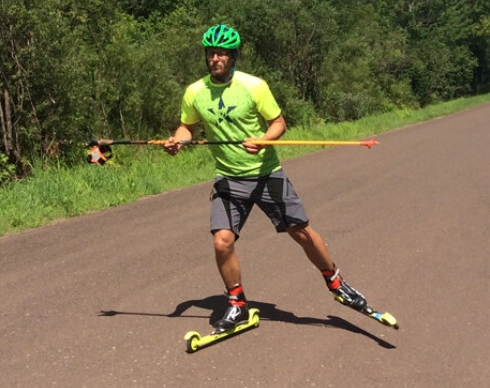
Common Mistakes That Ruin Your Upper Body Stability
We all develop bad habits. Here are the big ones to watch for and how to fix them.
| Mistake | What Happens | The Fix |
|---|---|---|
| Arm Steering | You swing your outside arm back and around to "pull" the turn. This rotates your shoulders, kills edge angle, and makes you backseat. | Focus on pole plant as a timing cue, not a pulling motion. Keep the outside hand forward and quiet. |
| The "Wind-Up" | Before initiating, you twist your upper body in the opposite direction to "get ready." This adds unnecessary motion and often leads to over-rotation. | Keep your torso square to the fall line. Initiate the turn with subtle ankle and knee movement, not a torso wind-up. |
| Leaning In (vs. Angulating) | To get edge angle, you lean your whole body into the turn. This moves your center of mass inside, making you unstable and reliant on the inside ski. | Keep your head and shoulders over your outside ski. Create angle by tipping your knees into the hill while your upper body remains more upright and facing downhill. |
| Stiffening Up | You try to "hold" your upper body still, creating tension in your shoulders and back. This kills fluidity and makes absorption impossible. | Focus on a strong, engaged core, but keep your shoulders relaxed and loose. Allow your legs to move independently under a stable platform. |
FAQ: Your Top Questions on Quiet Upper Body Skiing
Mastering a quiet upper body won't happen in a day. It's a fundamental skill that you'll refine over seasons. Start on the easy green runs. Focus on one element at a time—your core, your hand position, your separation. Be patient with yourself. The payoff is immense: skiing that feels more controlled, less exhausting, and infinitely more fun. See you on the hill.