Let's talk about that moment of truth on a steep, groomed black diamond. You finish a turn, point your skis across the fall line, and... your edges give up. What was supposed to be a controlled, arcing slide across the hill turns into a tense, skidding scrape. Your heart rate spikes. You fight for control.
That's the carved traverse, or more accurately, the failed attempt at one. It's the bridge between turns, the moment of stability, and for intermediate skiers pushing into advanced terrain, it's often the weakest link. Most instruction focuses on the turn itself. But the traverse is where you prove you're in control. Mastering it isn't just about looking cool—it's about safety, efficiency, and unlocking the whole mountain.
I've taught this for over a decade, and I see the same subtle mistakes trip people up every time. It's rarely about brute strength. It's about a few millimeters of ankle movement, a specific point of pressure in your foot, and a mental commitment most skiers don't know they need to make.
What's Inside This Guide
Why the Carved Traverse is Your Foundation
Think of your skiing as a chain. Each turn is a link. The traverse is the connector between those links. If it's weak, the whole chain falls apart under pressure—namely, on steeper or icier slopes.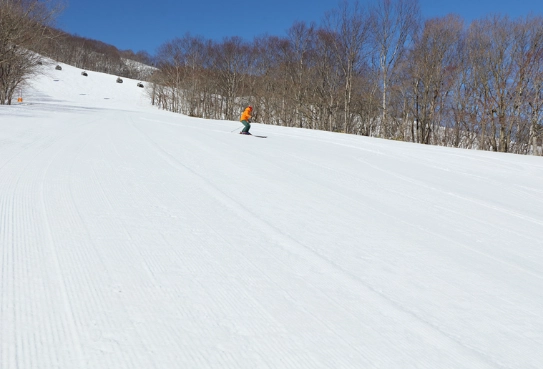
A skidded traverse is passive. You're a passenger, hoping your edges hold. A carved traverse is active. You're the pilot, dictating the path, speed, and pressure. This control lets you:
- Pick precise lines through moguls or trees, because you can hold a line without slipping sideways.
- Manage speed effortlessly on steep terrain by letting the edge angle, not friction, control your descent.
- Set up perfect turns. A stable, carved finish to one turn gives you a perfect platform to launch the next.
The goal isn't to traverse across the whole mountain. It's to own that phase completely so you're never caught off guard. According to the Professional Ski Instructors of America (PSIA), the ability to manage pressure and edge angle along the length of the ski is a core competency for advanced parallel skiing. The traverse is the purest test of that skill.
The Anatomy of a Perfect Traverse: It's Not What You Think
Most people think a good traverse is about leaning your whole body into the hill. That's only a small piece, and it can actually cause problems. Here's the breakdown from the snow up.
The Foot and Ankle: The True Command Center
This is the non-consensus part. Everyone talks about knee angulation. I'm going to tell you to forget your knees for a second and focus on your ankles. The initial edge engagement starts by rolling your ankle inside your boot. Feel the cuff of your boot press against your lower shin. That pressure is your primary feedback tool.
Your weight should be concentrated on the ball of your downhill foot, specifically just behind the big toe. If you feel pressure on your heel or little toe, your alignment is off. This precise foot steering is what allows for micro-adjustments.
Knees and Hips: The Support Structure
Once your ankle is set, your knee follows. It drives diagonally down and towards the snow. Your hip moves laterally over the downhill ski. The key is that your upper body remains relatively quiet and facing across the hill—don't let your shoulders rotate downhill. Imagine a spring coil from your downhill foot to your opposite shoulder. There's tension, but it's balanced.
The Uphill Ski: The Silent Partner
It's not just along for the ride. Your uphill ski should be flat or very lightly edged, running parallel and close to your downhill ski. Its job is balance. If it's wildly edged or far apart, it's fighting your downhill ski. This is a huge tell of an intermediate skier.
How to Practice Carved Traverses Step-by-Step
Don't just go to a steep slope and hope for the best. You need a progression. Here’s a practice plan I use with my students.
Drill 1: The Feeling on Flat Ground
Strap in on a flat area. Stand tall, then flex your downhill ankle, rolling your knee inward. Feel the edge bite. Stand up to release. Do this 10 times on each side. You're programming the muscle memory of edge engagement without gravity's complications.
Drill 2: The Green Run Traverse-Hold
Find a wide, gentle slope (a green circle). Start moving slowly across it. Engage your edges as above and try to hold the traverse until you come to a complete stop. Listen. A carve is a quiet shhh. A skid is a loud scrape. Your goal is the quiet sound. When you stop, step your skis around (a garland turn) and traverse back. This isolates the traverse phase.
Drill 3: The Pressure Pulse
On a gentle blue square, initiate a traverse. Once your edge is set, gently push your downhill knee forward (towards the ski tip) for a two-count, then relax for a two-count. You'll feel the grip intensify and relax. This teaches you to actively manage pressure along the ski. Most people just stand there statically. This drill makes it dynamic.
Spend a whole run on just one of these drills. Quality over quantity. Your legs will feel it in new places—that's a good sign.
3 Common Mistakes (And How to Fix Them For Good)
Let's diagnose the usual suspects. I see these every single day on the hill.
Mistake 1: The Upper Body Twist
The Symptom: Your shoulders and hips are pointed down the fall line, even though your skis are going across it. You look twisted.
The Root Cause: You're trying to see where you're going (downhill) instead of trusting your path.
The Fix: Pick a tree or lift tower directly across the hill from you. Keep your chest and belly button pointed at that object. Use your peripheral vision to see downhill. This alone will transform your stability.
Mistake 2: The Backseat Ride
The Symptom: Your weight is on the tails of your skis, your quads are burning, and you feel like you're constantly fighting to not accelerate.
The Root Cause: Fear. Leaning back feels safer, but it puts you in the weakest possible position for edge control.
The Fix: Consciously feel the front of your shins pressing into the boot tongues. It should be a constant, firm pressure. Practice on a gentle slope by getting into your traverse stance, then lifting your ski tails off the snow for a second. This forces you forward.
Mistake 3: The Static Stance
The Symptom: You get into a position and freeze, becoming a rigid statue. Any bump knocks you off balance.
The Root Cause: Thinking of the traverse as a pose, not an active balancing act.
The Fix: Incorporate micro-movements. Let your ankles and knees be shock absorbers. Practice the Pressure Pulse drill above. Think "active feet," not "locked legs."
Taking Your Practice to Steeper Terrain
So you've got it on a blue run. Now for the real test. The mental game changes here.
First, choose the right steep slope. Look for a groomed black diamond early in the day, before it gets chewed up. Corduroy is your friend. I often take students to a run like this—wide, consistently steep, with no surprises.
Your focus points shift:
- Commitment Over Everything: On steeps, hesitation is failure. You must aggressively set that downhill edge at the start of the traverse. A timid edge angle will instantly wash out.
- Shorter Traverses: Don't try to go all the way across. Make your goal to hold a clean, carved line for 3-4 meters, then confidently initiate your next turn. Short, controlled successes build confidence.
- Look Ahead, Not Down: Your instinct will be to stare at the snow right in front of your skis. Fight it. Look 10-15 meters across your planned path. Your body will follow your eyes.
Remember, fatigue makes cowards of us all. If your legs are shot, your technique will crumble. Practice when you're fresh. Call it a day after a few good runs rather than pushing until you're making mistakes.
Your Carved Traverse Questions, Answered
Why do my skis skid out when I try to carve across a steep slope?
This usually boils down to a lack of commitment to the downhill edge. You're likely keeping your weight too centered or even on your uphill ski. The fix is aggressive: consciously drive your downhill knee towards the snow, feel the boot cuff press against your shin, and trust that edge to hold. It feels scary at first, but that's the commitment required. Also, check your speed—entering the traverse too fast makes it harder to set the edge.
What's the single most important body part for a stable carved traverse?
Your ankles. Most skiers focus on their knees or hips, but ankle flexion and control are the true secret. Think about rolling your ankles inside your boots to initiate the edge angle, not just tilting your knees. A strong, active ankle allows for finer, quicker edge adjustments over variable snow, which your knees alone can't provide. It's the difference between a rigid platform and a responsive one.
How can I practice carved traverses off the snow or on a gentle slope?
Find a wide, gentle green run. Practice traversing at a walking pace. Focus purely on the sensation of the edge gripping—listen for the quiet 'shhh' of a carve, not the 'scrape' of a skid. Hold the traverse until you almost stop. Then, instead of turning, step your skis around (a garland turn) and traverse back the other way. This drill isolates the edge-hold phase without the complexity of a full turn. Off-snow, practice balancing on one foot with a slight forward and lateral lean, mimicking the pressure on your downhill ski.
My legs burn out quickly when holding a traverse. Am I doing it wrong?
Probably, yes. Burning quads mean you're in a defensive, static position, likely sitting back and using muscle strength to force the edge. Efficient carving uses skeletal alignment, not just muscle. Ensure your shins are pressing firmly into the boot tongues, your hips are over your feet (not behind them), and your core is engaged to support your upper body. The pressure should feel like a solid pillar from your foot to your hip, not a desperate thigh squeeze. When it's right, you can hold it much longer with less fatigue.
The carved traverse is a humbling skill. It exposes every little flaw in your stance and balance. But that's also its gift. By working on it, you're not just learning to slide across a hill—you're building the fundamental body awareness that makes every other part of skiing easier, safer, and more fun. Start slow, focus on the ankles, and commit to the edge. You'll be amazed at the terrain that suddenly opens up to you.