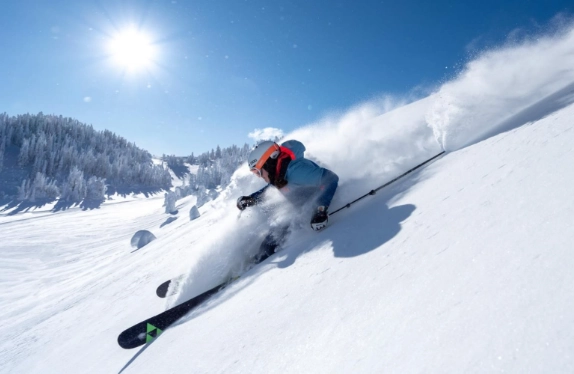
I remember my first season vividly. I’d point my skis downhill, lean back, and pray. My turns were a series of desperate, skidding maneuvers. I’d watch other skiers slice clean, graceful arcs and think it was pure magic. It wasn’t. The single skill that transformed my skiing from survival to expression was learning to use my ski edges properly. It’s not about forcing the ski around; it’s about communicating with it. This guide strips away the mystery and gives you the language.
What You’ll Learn
Why Your Edges Are Everything (It’s Not Just for Turning)
Think of your ski edge as a pencil. Skidding is like dragging the side of the pencil lead—it’s messy and hard to control. Carving is using the sharp point—it’s precise and leaves a clean line. That clean line is control.
Your edges are your only connection to the snow. They dictate speed, direction, and stability. When you engage them correctly, you’re not fighting the mountain; you’re working with it. The ski’s sidecut—that hourglass shape—is designed to bend into an arc when you put it on edge. You’re just activating its built-in technology.
Here’s the core truth most instructors don’t spell out: Good edging isn’t about being aggressive. It’s about being precise. A subtle, well-timed edge engagement is far more powerful than a frantic, whole-body heave.
The 3 Edge Mistakes That Keep You Stuck
Let’s diagnose the usual suspects. I made all of these.
1. The Upper Body Wrestler
You twist your shoulders and arms to initiate the turn. Your skis might eventually follow, but they’re skidding the whole way. The problem? Your edges aren’t engaged; you’re just muscling the skis sideways. Your upper body should be quiet, facing downhill, while your legs work independently underneath.
2. The Backseat Driver
Leaning back disengages the tips of your skis, where a huge portion of the edge and steering capability lives. You lose all pressure control. You’re along for the ride, and on anything steep or variable, it’s a terrifying one. Pressure needs to be on the ball of your foot, driving your shin into the boot tongue.
3. The Flat-Footed Skidder
This is the most subtle error. You’re not actively rolling your ankles and knees to tilt the skis onto their edges. The skis stay flat, or nearly flat, on the snow. Flat skis can’t hold. They slide. Edging starts from the feet up—an ankle roll, followed by a knee drive into the hill.
The Proper Technique: It’s a Three-Part Harmony
Proper edging is a dance between three elements: pressure, tilt, and steering. Get them in sync, and it clicks.
Pressure: Where’s Your Weight?
At any moment in a turn, about 80% of your weight should be on your outside ski. Not 50/50. That outside ski is your workhorse. You pressure it by flexing that ankle and knee, driving your weight down through the center of the ski. Imagine crushing a grape under the ball of that outside foot. This pressure bends the ski, engaging its sidecut.
Tilt: Getting the Ski on Its Side
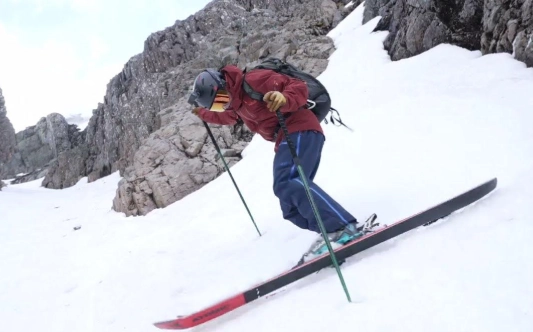
This is the literal “edging.” You don’t lean your whole body. You roll your ankles and knees inward, toward the center of the turn. For a right turn, roll your left ankle and knee to the right. The ski tilts onto its left edge. The more you tilt, the sharper the arc—but find the limit where it holds without skidding. It’s a feel thing.
Steering: Guiding the Arc
Once pressured and tilted, you gently guide the ski through the arc with your legs. It’s not a forceful twist. Think of pointing your knee where you want to go. The steering is a natural result of the pressure and tilt you’ve already applied. This is where carving happens—the ski follows its designed path.
An expert nuance: The sequence matters. You initiate with a little steering and tilt to start the arc, then build pressure through the middle of the turn. Releasing the edge at the end is just as important—it’s the smooth transition to the next turn.
Forget Theory. Try These Drills.
Reading is one thing. Feeling it is another. Do these on a comfortable, groomed blue run.
Drill 1: The J-Turn to a Stop. Point straight down a gentle slope. Now, only by rolling both ankles to one side, engage your edges. Don’t turn your body. Just tip the skis. Feel them start to curve? Let them turn all the way across the hill until you stop. This isolates the ankle-roll motion. Do it left and right until it’s boring.
Drill 2: Outside Ski Balance. Make a series of turns lifting your inside ski completely off the snow. Just the tail, then the whole thing. This forces you to balance and pressure that outside ski. You’ll instantly feel if you’re in the backseat. It’s humbling and incredibly effective.
Drill 3: Railroad Tracks. Try to make two clean, pencil-thin lines in the snow. Focus on a smooth, progressive edge engagement. No skidding allowed. This teaches patience and precision. If you see a smeared “pizza” shape, you’re skidding. Reset and try again with less upper body movement.
Taking It Further: Ice, Moguls & Real Carving
Once the basics are muscle memory, the mountain opens up.
On Ice & Hardpack: This is where timid edging fails. You need a more decisive, committed edge set. Sharper ski edges are non-negotiable—get a tune. The motion is quicker and more assertive. You must trust that edge to grip. It’s a faster ankle roll and more aggressive pressure build. Hesitation means a slide.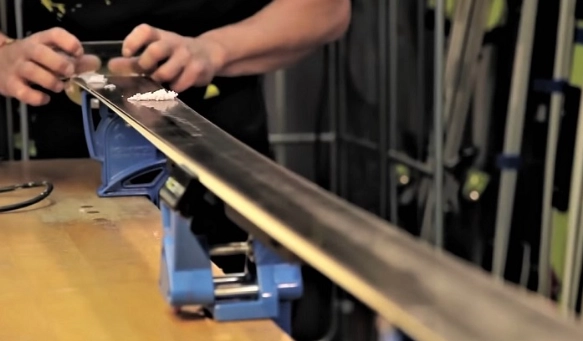
In Moguls: Edge control is about quickness and absorption. You’re not holding long arcs. You’re setting an edge on the top or side of the bump to pivot and control speed, then quickly releasing to slide into the next trough. It’s a rapid fire sequence of edge-set, release, edge-set. Your legs act as shock absorbers.
High-Speed Carving: This is the full expression. You tilt the skis high on edge, bending them deeply. Your body leans inward (counteracted by centrifugal force), and you ride that clean arc. It requires confidence, good form, and appropriate terrain. Start with gentle, groomed slopes and gradually increase speed and edge angle. The sound of a clean carve is unmistakable—a sharp hiss, not a scrape.
For authoritative technique standards, the Professional Ski Instructors of America & American Association of Snowboard Instructors (PSIA-AASI) frameworks are the gold standard for learning progression.
Your Top Edge Control Questions
Mastering your edges isn’t a destination; it’s a journey of refinement. One day, you’ll be in the middle of a turn on challenging terrain, and you’ll realize you’re not thinking about ankles or pressure. You’re just doing it. The mountain feels smaller, and your options feel endless. That’s the power of proper technique. Now go find some snow and feel it for yourself.