Explore This Guide
- The Heart of the Matter: Core Differences Broken Down
- Gear Talk: What's in Your Pack Changes Everything
- The Safety Elephant in the Room: Avalanches and Beyond
- Which Path is For You? A Self-Assessment
- Getting Started: Your First Steps Off the Beaten Path
- Common Questions (The Stuff You're Actually Searching For)
- Final Thoughts: It's About Your Mountain Experience
So you're dreaming of untracked lines, bottomless powder, and escaping the lift lines. That's awesome. But then you start reading, and you see these two terms thrown around: freeride skiing and backcountry skiing. Sometimes they're used like they're the same thing. Other times, people get weirdly defensive about one not being the other. It can be confusing as heck when you're just trying to figure out where to start.
I remember when I first got the bug. I'd mastered the resort, started ducking ropes for a taste of the sidecountry (that's a whole other conversation), and wanted more. More space, more silence, more adventure. But the information out there felt like it was written for people who already knew the secret handshake. Let's fix that.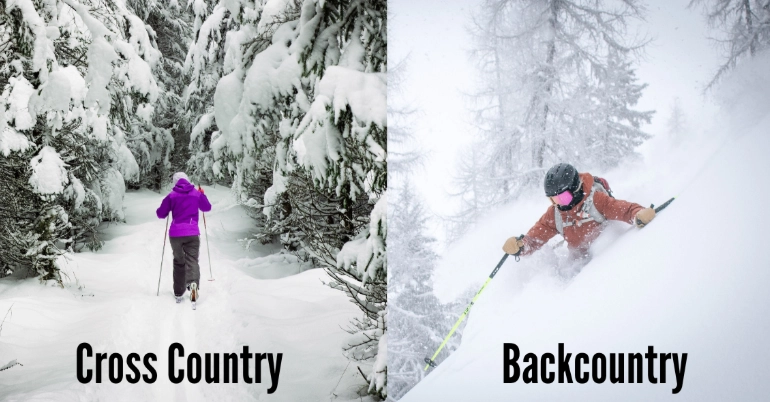
The core of the freeride skiing vs backcountry skiing debate isn't about which is better. It's about understanding two different approaches to finding freedom on snow. One is often about the pure athletic expression on big, challenging terrain. The other is a deeper, more self-reliant wilderness journey. Your choice changes everything—your gear, your risk, your preparation, and your experience.
The Heart of the Matter: Core Differences Broken Down
Let's stop talking in circles. The difference between freeride and backcountry skiing really comes down to a few practical, tangible things. Where you go, how you get there, and what you're trying to get out of the day.
Freeride skiing, in its modern sense, is primarily about the ride down. The focus is on skiing technically demanding, un-groomed terrain—steep chutes, big cliffs, complex pillow lines. The terrain is the star. Access can be from a ski lift (in-bounds or sidecountry), a helicopter, a snowcat, or even your own two feet with touring gear. But the goal is singular: to ski that line with style, power, and control. The culture is heavily influenced by films and competitions like the Freeride World Tour. It's about pushing personal limits on nature's most dramatic stages.
Backcountry skiing, or ski touring, is about the entire journey. It's a human-powered round trip. You climb up under your own power (using skins on your skis), and you ski down. The ascent is as much a part of the experience as the descent. It's about exploration, self-sufficiency, and immersion in the winter landscape. The terrain skied might be mellow meadow slopes or steep couloirs—the challenge is holistic, encompassing navigation, endurance, and risk management, not just the technical ski descent. The mindset is closer to mountaineering.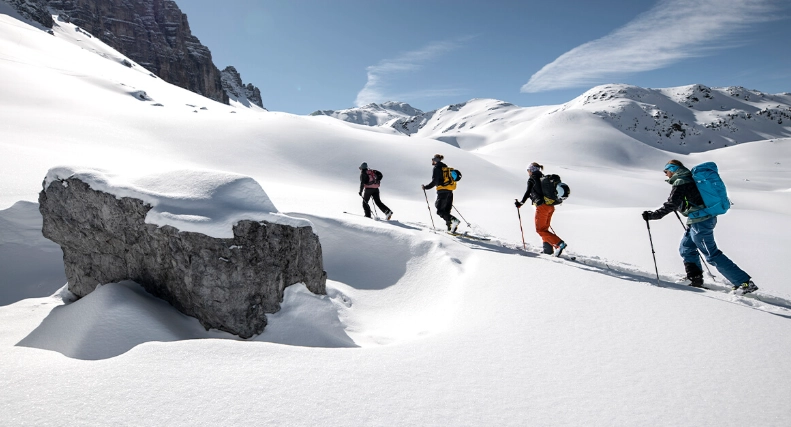
Here’s a table to make the freeride skiing vs backcountry skiing comparison crystal clear:
| Aspect | Freeride Skiing | Backcountry Skiing (Ski Touring) |
|---|---|---|
| Primary Focus | The technical descent; style & difficulty of the line. | The complete wilderness journey; ascent & descent. |
| Typical Access | Lifts, helicopters, snowcats, short hikes. | Exclusively human-powered (skinning/skiing). |
| Terrain | Often extreme & dramatic: cliffs, steep faces, tight chutes. | Varies widely: from gentle tours to extreme lines. |
| Key Mindset | Athletic performance, pushing limits on specific features. | Adventure, self-reliance, wilderness travel, risk management. |
| Gear Core | Performance-oriented skis/boots; may or may not include touring bindings. | Mandatory touring gear: touring bindings, boots with walk mode, skins, avy safety kit. |
| Community Hub | Freeride competitions, film segments, resort sidecountry gates. | Mountaineering clubs, avalanche education courses, guide services. |
See? They overlap on a Venn diagram, but their centers of gravity are different. A pro freerider might take a heli to a remote peak to ski a crazy line—that's also backcountry. A backcountry skier might spend hours skinning to ski an incredibly steep, technical couloir—that's also a freeride line. The terms get fuzzy at the edges, but the intents are distinct.
Gear Talk: What's in Your Pack Changes Everything
This is where the rubber meets the road, or rather, the ski meets the snow. Your gear choices scream which camp you're leaning towards. Getting this wrong isn't just inconvenient; it can be dangerous or just plain miserable.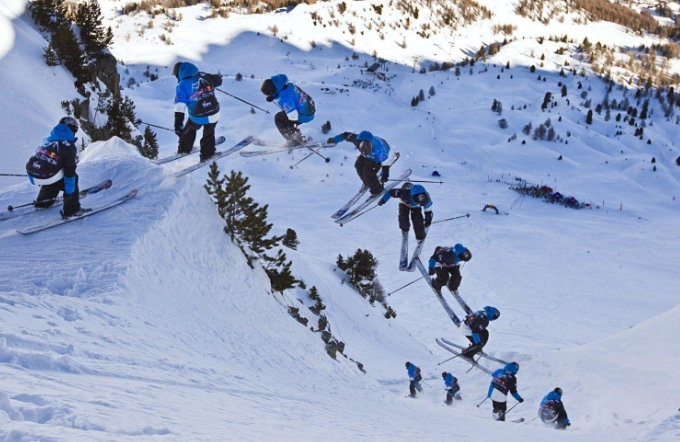
Now, for backcountry skiing, the equation flips.
- Touring Bindings: Tech bindings (like those from Dynafit or Salomon/Atomic) are the gold standard. They're lightweight, free-pivoting for the climb, and lock down for the descent.
- Touring Boots: These have a walk mode (often with significant range of motion) and a ski mode. They're lighter and more flexible for walking than pure alpine boots, though the best ones now ski incredibly well.
- Skins: Strips of material that stick to your ski base, providing traction for the climb. You can't tour without them.
- Avalanche Safety Kit (Non-Negotiable): Beacon, probe, shovel. And the knowledge to use them.
Here's a personal take: I started with heavy freeride skis on frame bindings because I thought I needed that power. My first real tour felt like I was dragging two dead tree trunks up the mountain. I was gassed before the fun even started. Switching to a lighter, dedicated backcountry setup was a revelation. The descent was still a blast (maybe 90% as good on perfect snow), but the climb became enjoyable, not a sufferfest. That shift in mindset is key to the backcountry skiing vs freeride skiing gear choice.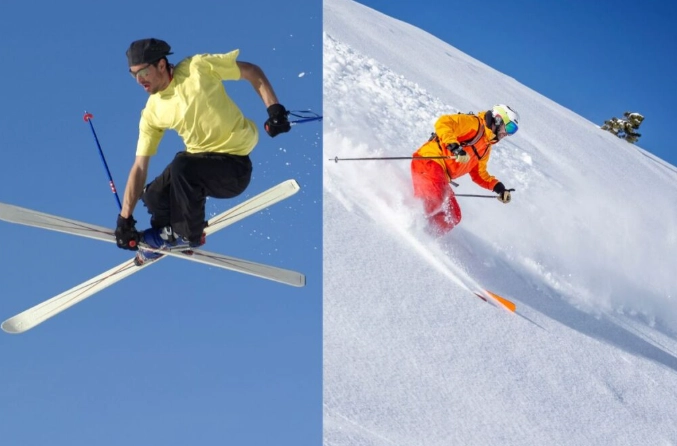
The Safety Elephant in the Room: Avalanches and Beyond
We have to talk about this. It's the most serious part of leaving the resort boundary. The freeride skiing vs backcountry skiing safety discussion has layers.
For both, avalanche awareness is paramount. There's no ski patrol to do control work. The snowpack is your responsibility. But the risk profiles can differ. Freeriders accessing terrain via lifts often ski slopes that see more traffic and may have some historical control (in sidecountry areas). However, this can breed a false sense of security. Some of the deadliest avalanches have caught people just outside resort boundaries.
True backcountry skiers, venturing deeper, face a more complex risk landscape. They need to be proficient in:
- Route Planning: Using maps, apps like CalTopo or Gaia GPS, and avalanche forecasts from centers like the American Avalanche Association.
- Snowpack Assessment: Reading avalanche forecasts, digging snow pits, understanding layers and instability.
- Terrain Management: Identifying and avoiding avalanche terrain (slope angle, aspect, anchors). This is the number one mitigation tool.
- Rescue Skills: Not just carrying a beacon, probe, and shovel, but being able to perform a fast, organized companion rescue under extreme stress.
Beyond avalanches, backcountry skiing demands more general wilderness preparedness. Weather changes rapidly. Navigation is critical. You need to know first aid, have emergency communication (like a satellite messenger—I never leave the trailhead without my Garmin inReach), and pack essentials like extra layers, food, water, and a headlamp. For freeriding closer to resorts, the margin for error might be slightly smaller, but the principles are the same.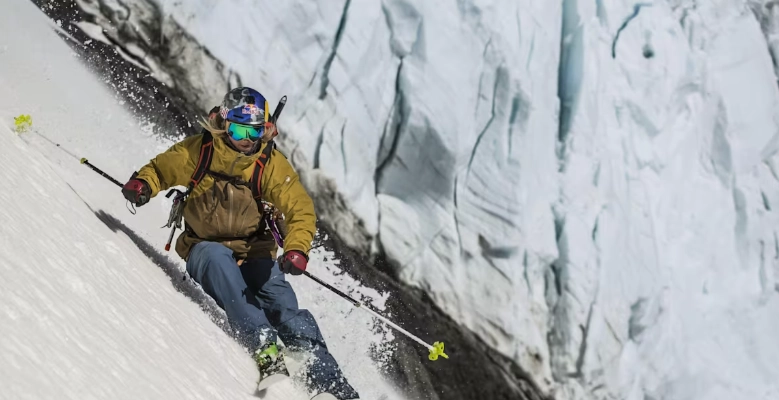
Which Path is For You? A Self-Assessment
This isn't a personality test, but your answers will point you in a direction. Be honest with yourself.
You Might Be Leaning Towards Freeride Skiing If...
- You live for the adrenaline rush of a steep, technical descent.
- Your favorite part of skiing is mastering difficult features and riding with power.
- You prefer to maximize vertical feet of descent per day and minimize uphill travel.
- You're happy using lifts or mechanized access to get to the good stuff.
- You're primarily focused on improving your downhill technique in natural terrain.
You Might Be Leaning Towards Backcountry Skiing (Ski Touring) If...
- You find deep satisfaction in the quiet, rhythmic effort of the climb.
- The idea of a self-powered wilderness adventure is as appealing as the skiing itself.
- You enjoy navigation, planning, and the problem-solving aspects of mountain travel.
- You want to get away from crowds and explore untouched landscapes.
- You view the ski descent as the glorious reward for a journey well-traveled.
Most people eventually dabble in both. A solid freerider will benefit immensely from the fitness and terrain awareness gained from touring. A backcountry skier will have more fun on the descent by honing freeride skills. The freeride skiing vs backcountry skiing choice isn't always permanent; it's about what you want right now.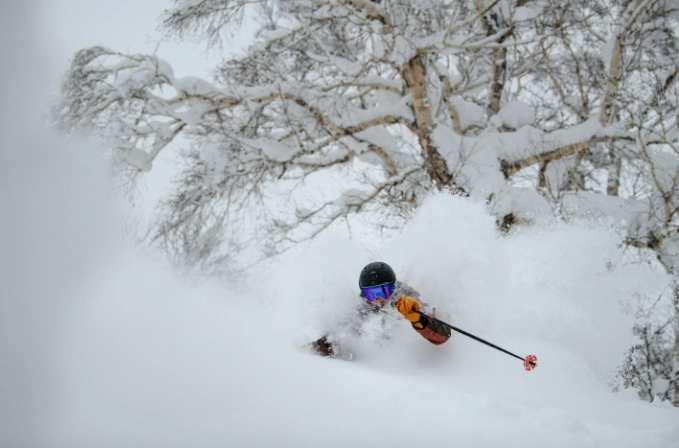
Getting Started: Your First Steps Off the Beaten Path
Okay, you're convinced. Let's talk about a sane, safe way to start. I'm going to assume you're a competent resort skier who can handle black diamond runs in most conditions.
Option 1: The Freeride Path. Start in-bounds. Most big mountain resorts have fantastic, challenging freeride terrain within the ski area boundary—think of the famous bowls at Jackson Hole or the chutes at Snowbird. Learn to read natural terrain, ski variable snow (powder, crud, wind slab), and manage your speed and line choice without the safety net of perfect grooming. Take a freeride or big mountain ski clinic. This builds the foundational skills without the added complexity of avalanche danger.
Then, cautiously explore "sidecountry" or "slackcountry"—terrain accessible from a lift that requires a short hike or traverse to return to the resort. CRUCIAL: Treat this as backcountry. Have your avalanche gear and know how to use it. Check the forecast. Don't just follow the track ahead of you. Many resorts have specific gates for this; understand the policies and risks. The transition from freeride skiing vs backcountry skiing often starts right here.
Option 2: The Backcountry Path. This requires more upfront investment. Here's a checklist:
- Education First: Sign up for that AIARE 1 or equivalent avalanche course.
- Gear Up Slowly: Rent or borrow touring gear at first. Many guide services offer packages. See if you like the feel of skinning before dropping thousands.
- Go With a Mentor or Guide: Your first days should NOT be with another clueless friend. Hire a certified guide from the American Mountain Guides Association (AMGA) or join a trip with an experienced, trusted friend who can teach you. A guide will teach you proper skinning technique, transition routines, and decision-making in real time.
- Start Mellow: Your first objective is not a 40-degree couloir. Find a low-angle (less than 30 degrees), forested area with a simple approach. Practice your skills, your gear transitions, and get used to the rhythm.
- Fitness: Skinny is a different kind of workout. Build your aerobic base and leg strength before you go.
Common Questions (The Stuff You're Actually Searching For)
Let's tackle some of the specific questions that pop up when you're deep in a freeride skiing vs backcountry skiing Google rabbit hole.
Final Thoughts: It's About Your Mountain Experience
At the end of the day, the freeride skiing vs backcountry skiing discussion is about what you want your day in the mountains to feel like.
Is it a focused, high-octane blast down a masterpiece of natural terrain?
Or is it a peaceful, self-powered expedition where the summit view and the quiet of the forest are as valuable as the face shots on the way down?
Most of us who love the mountains end up somewhere in the middle, blending elements of both. We might spend a day skinning up a gentle ridge with friends, laughing and sharing chocolate, then rip a gorgeous powder field back to the car. That's the magic. That's where the distinction between freeride skiing and backcountry skiing melts away, and you're just a skier, finding your own freedom on the snow.
Start where you are. Get the education. Find good partners. Respect the mountains. The lines will come, and they'll be all yours.