Explore This Guide
- From 80s Fad to Cult Classic: A Wild Ride Through History
- Why on Earth Would You Choose a Monoski?
- Monoski vs. Snowboard vs. Skis: The Nerd's Comparison Table
- Picking Your First Monoski: Don't Just Buy the Shiniest One
- How to Actually Ride the Thing: A No-BS Technique Primer
- Gear Talk: What Else Do You Need?
- Maintenance: Keep Your Odd Board Happy
- Your Monoski Questions, Answered (The Real Ones)
- Final Thoughts: Is the Monoski For You?
You're scrolling through Instagram or YouTube, and you see it. Someone flying down a mountain, but instead of two skis or a regular snowboard, they're on this single, wide plank with two boots locked in side-by-side. Your brain does a double-take. Is that a mutant snowboard? A failed ski experiment? Nope, my friend, you've just had your first encounter with the monoski snowboard.
Let's get one thing straight right off the bat. A monoski isn't just a wide snowboard. The feel, the history, the whole philosophy behind it is different. I remember the first time I saw one in a dusty corner of a ski shop in Chamonix. I laughed. It looked like a relic, a joke. Then I tried one in deep powder the next season, and let's just say I stopped laughing pretty quickly. It was a revelation, but also a humbling slap in the face. This guide is everything I wish I'd known before that day.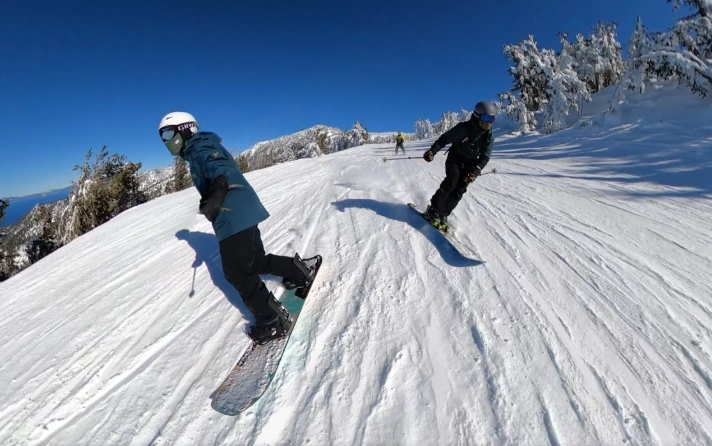
What exactly is a Monoski? In the simplest terms, a monoski is a single, wide ski or snowboard-like platform where both of your feet are attached side-by-side, facing forward, using standard ski bindings and boots. You use two ski poles for balance, just like a skier. It's a hybrid beast that sits in its own weird and wonderful category.
From 80s Fad to Cult Classic: A Wild Ride Through History
The story of the monoski is a rollercoaster. It first popped up in the late 1970s and exploded in the 80s. Picture neon onesies and big hair, and right there with them was the monoski, being touted as the next big thing. Brands were making them, competitions were held, and for a hot minute, it looked like it might actually dethrone the traditional ski.
Then, it vanished. Almost overnight. The snowboard arrived with its counter-culture cool, and the monoski was left looking, well, a bit dorky. It became a punchline, a forgotten footnote.
But here's the thing about great ideas—they don't always die. They hibernate. A small, dedicated group of riders, often in the deep powder havens of the Alps and Japan, never stopped. They kept tinkering, riding, and evangelizing. Fast forward to today, and we're in the middle of a quiet but real monoski renaissance. New, sophisticated models are being produced by niche brands, and you're more likely to spot one on the mountain than you were ten years ago. The International Skiing History Association has some fascinating archives on this if you're a history buff, showing just how deep the roots go. You can dig into some of that early history on the International Skiing History Association website.
So why the comeback? It's not nostalgia. It's because the monoski snowboard does something truly unique that neither skis nor snowboards can fully replicate.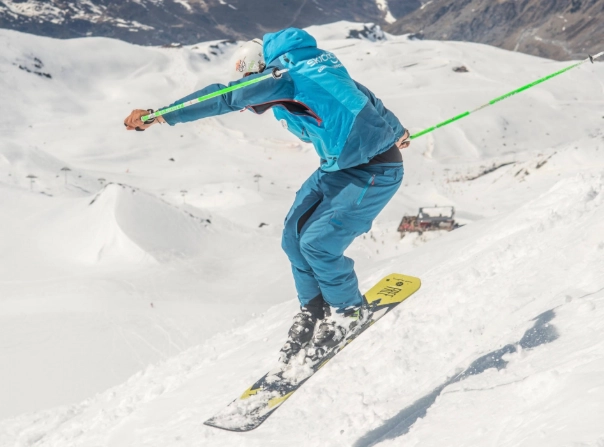
Why on Earth Would You Choose a Monoski?
Let's cut through the hype. A monoski isn't for everyone. But for the right person, it solves specific problems in a brilliant way.
The Good Stuff (The Real Appeal)
First, the powder. Oh, the powder. This is where the monoski snowboard earns its keep. That wide platform and forward-facing stance give you incredible float. You don't sink, you plane. It feels like surfing on clouds. I've been in waist-deep stuff on both a snowboard and a monoski, and the monoski requires noticeably less effort to stay afloat. Your legs aren't forced apart like on skis, so you stay more compact and agile.
Second, it's a knee-saver. Seriously. If you're an ex-skier with dodgy knees (like my buddy Mark), the monoski can be a game-changer. Your feet are locked together on a single platform, which eliminates the independent leg movement that often leads to twisting knee injuries in skiing. The stress is distributed differently. Mark switched after his second ACL surgery and hasn't looked back.
Third, it's just plain fun and stable. Carving on a groomed run feels powerful and secure. You have four edges working for you (two on each side), and the side-by-side stance feels incredibly balanced for tackling variable or choppy snow. It's less tiring for your legs on long, hard-packed runs compared to a snowboard's sideways stance.
My Take: The biggest surprise for me wasn't the powder performance—I expected that. It was the moguls. I hate moguls on a snowboard. On the monoski, with the ability to pivot and use my poles for timing, I found myself actually seeking them out. It was a completely different, and honestly more enjoyable, challenge.
The Not-So-Good Stuff (Let's Be Honest)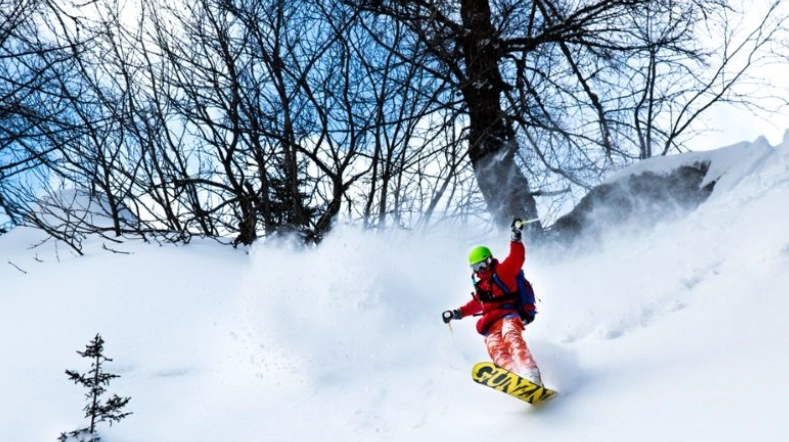
Now, the downsides. They're real, and ignoring them is how you end up with an expensive garage ornament.
The Learning Curve: If you're a skier, you'll pick it up faster. If you're a snowboarder, prepare to feel like a baby giraffe on ice for the first day or two. That forward-facing stance while being locked to a single board messes with your brain. Turning isn't intuitive at first. It's not harder than learning to ski or snowboard from zero, but if you're already proficient in one, the muscle memory conflict is real.
Flat Sections & Lifts: This is the monoski's Achilles' heel. On a completely flat cat-track or trying to skate to the lift line, you're stuck. You have to use your poles like a cross-country skier, which is awkward and slow. Getting on and off chairlifts requires a specific technique (unclick one binding) that you need to practice. Resort staff will often stare at you, confused.
The Social Stigma & Practical Hurdles: You will get questions. You will get strange looks. You'll also struggle to find rental gear outside of a few specific resorts in Europe or Japan. Buying one is a commitment, as the market is small. And forget about walking anywhere in your boots—you'll need to carry the monoski and change into shoes, just like a snowboarder.
Biggest Pet Peeve: The "monoski vs snowboard" debate online is full of people who have never tried one calling it pointless. The reality is, it's a different tool for a slightly different job. It's not better or worse, just different.
Monoski vs. Snowboard vs. Skis: The Nerd's Comparison Table
Okay, let's break this down visually. Where does the monoski snowboard actually sit?
| Feature | Monoski | Snowboard | Alpine Skis |
|---|---|---|---|
| Stance | Feet forward, side-by-side | Feet sideways, angled | Feet forward, parallel |
| Primary Control | Body rotation, edging, ski poles | Heel/toe pressure, body rotation | Independent leg movement, edging |
| Best Terrain | Deep powder, crud, moguls | Park, pipes, powder (with setback) | Groomers, racing, all-mountain precision |
| Worst Terrain | Flat cat-tracks, skating | Flat cat-tracks (to a lesser degree) | Extreme deep powder (without fat skis) |
| Learning Curve (for a beginner) | Moderate | Steep initial curve | Moderate initial, long mastery |
| Learning Curve (for a skier) | Relatively quick | Very steep (new stance) | N/A |
| Learning Curve (for a snowboarder) | Steep (stance conflict) | N/A | Very steep (independent feet) |
| Knee/Injury Friendliness | Very high (locked-together feet) | High (ankle/knee stress possible) | Lower (risk of twisting forces) |
| Gear Availability | Very low (niche market) | Extremely high | Extremely high |
See? It's not about one being the best. It's about what you want to do and how you want to feel doing it.
Picking Your First Monoski: Don't Just Buy the Shiniest One
If you're sold on giving it a go, choosing your board is critical. The modern monoski snowboard market has variety.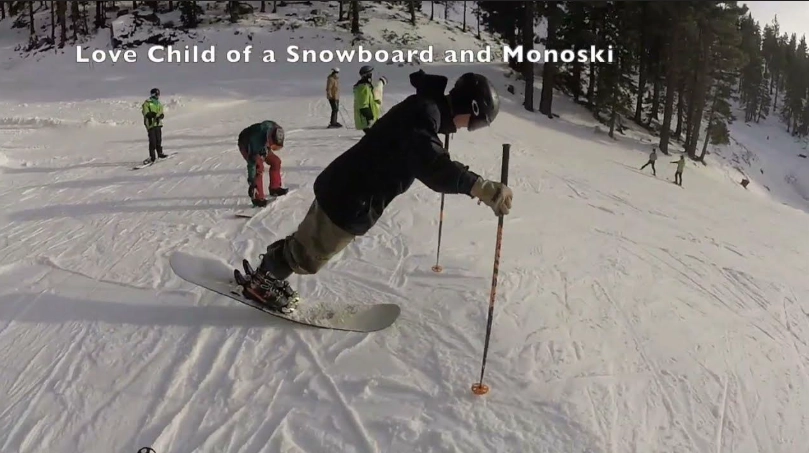
Key Things to Look For
- Type: All-Mountain models are versatile. Powder monoski snowboards are wider with more rocker for float. Race/Carving models are stiffer and narrower for hard snow.
- Length: General rule: Your height minus 10-20cm. Shorter for maneuverability and powder, longer for stability and speed. I'm 180cm and ride a 165cm all-mountain monoski.
- Width: This is key. Underfoot width (the "waist") dictates float. For powder, look for 28cm+. For all-mountain, 25-28cm is common.
- Shape & Camber: Most have sidecut (curved edges) for turning. Camber profiles (the curve of the board) vary. Traditional camber is grippy. Rocker (reverse camber) is looser and better in powder. Hybrids are popular.
- Flex: Softer flex is more forgiving and playful. Stiffer flex is more stable at speed and powerful on carves.
- Core: Wood cores (like poplar/paulownia) offer a lively, damp feel. Foam cores are lighter. Some use composites.
- Bindings: You use STANDARD SKI BINDINGS. This is a huge plus. No special gear needed. Just mount a pair of your favorite alpine ski bindings to the board. Make sure they're adjusted for your boot sole length (BSL) and DIN.
Pro Tip: Your first monoski shouldn't be a specialist race model or an ultra-fat powder board. Find a middle-of-the-road all-mountain monoski. It'll let you learn the technique and figure out what you like before you niche down.
How to Actually Ride the Thing: A No-BS Technique Primer
Reading about it is one thing. Standing on it is another. Here's the core of how to ride a monoski, broken down.
The Absolute Basics (Day One Stuff)
Stance: Feet shoulder-width apart, knees bent, back straight. Look where you want to go. It feels weirdly like a surfing stance.
Turning: This is the mental hurdle. You don't steer with your feet like skis. You initiate a turn by rotating your upper body and shoulders in the direction you want to go, while applying pressure to the corresponding edge. Want to go right? Rotate your torso right and press on your right (inside) edge. The poles help with timing and balance, especially in the beginning.
Stopping: Same principle. Rotate your body to face directly across the hill and dig in both edges evenly. It's a solid, powerful stop.
Leveling Up (After You Stop Falling Every Ten Feet)
Carving: This is where the monoski sings. As you get comfortable, you can lay it over on edge and hold a carve. The feeling of power and grip from all four edges is addictive. It's smoother than a snowboard carve, in my opinion.
Moguls: Use your poles to plant and pivot. It's a rhythmic dance—pole plant, quick upper-body rotation to swing the board around, absorb the bump with your knees. It's technical but incredibly satisfying when you get the flow.
Powder: Lean back a bit, keep the nose up, and let the board float. Make gentle, sweeping turns. The monoski snowboard will do most of the work. It's effortless joy.
Essential Skills They Don't Tell You
- Getting Up After a Fall: It's awkward. You can't just roll over like on a snowboard. The easiest way is to unclip one binding, stand up on that ski boot, then re-clip in. Practice this on a gentle slope.
- Using Lifts: For chairlifts, unclip your back foot (the one further from the chair as you approach). Rest that boot on the board and ride up like a skier with one foot out. For gondolas or T-bars, you can usually stay clipped in.
- Traversing: You can sideslip like a snowboarder, or keep your skis pointed across the hill and use pole plants for stability.
For visual learners, the techniques shared by professional riders on platforms like the International Ski Federation (FIS) channel for adaptive skiing (where monoskiing is a major discipline) can offer brilliant insights into body positioning and efficiency, even if you're not an adaptive athlete.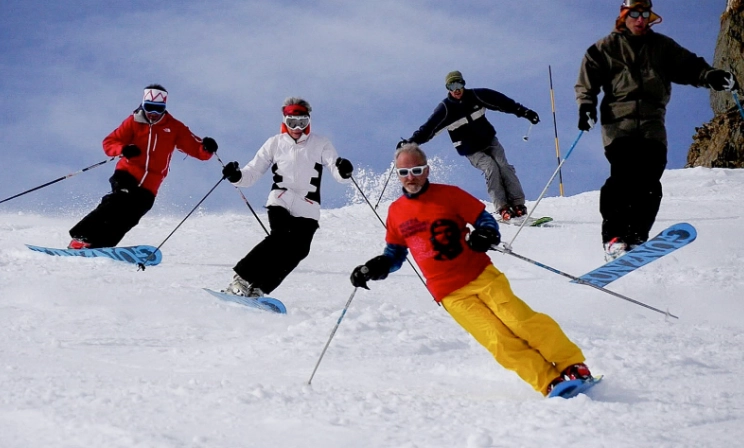
Gear Talk: What Else Do You Need?
Beyond the monoski itself and your ski bindings, you need the usual winter gear. But a few notes:
- Boots: Your normal alpine ski boots are perfect.
- Poles: Standard ski poles. Maybe go for a slightly longer pole if you're used to powder skiing, as the extra length helps with pushing on flats.
- Backpack: Useful for carrying a screwdriver (for binding adjustments), water, and layers. You'll be working up a sweat learning.
- Leash: A non-negotiable safety item. Always attach a leash from your binding to your boot. A runaway monoski is a deadly missile.
Maintenance: Keep Your Odd Board Happy
A monoski snowboard is maintained just like a high-end ski or snowboard.
- Waxing: Hot wax it regularly, especially if you're riding a lot on man-made snow. A well-waxed base makes a huge difference in glide, even on a wide board.
- Edges: Keep them sharp. You have four edges to maintain, so it takes a bit longer. A 1-degree side bevel and a 0.5-degree base bevel are good starting points.
- Storage: Store it flat, base down, in a cool, dry place. Don't leave it leaning on its edge for months.
- Binding Checks: Periodically check that the screws mounting your bindings to the board are tight. Vibration can loosen them.
Your Monoski Questions, Answered (The Real Ones)
Final Thoughts: Is the Monoski For You?
Look, the monoski snowboard isn't going to replace your quiver. It's not the one board to rule them all. For most people, it's a fantastic second or third board—a specialist tool for specific days and specific moods.
It's for the skier who wants more float and fun in powder without the learning curve of a snowboard. It's for the snowboarder looking for a new challenge and a different way to interact with the mountain. It's for anyone with knee concerns who misses carving. It's for the gear nerd who just loves trying something different.
It requires patience, a sense of humor, and a willingness to look a bit silly while you learn. But the reward is a uniquely fun, powerful, and surprisingly versatile way to ride. That forgotten 80s fad? It's back, and it's got a point to prove. Maybe it's time you listened.
My advice? If you ever get the chance to demo one on a soft powder day, take it. You might just hate it. Or, you might discover your new favorite way to slide on snow. There's only one way to find out.