Quick Navigation
- Why Your Ski Boots Are More Important Than Your Skis
- Anatomy of a Ski Boot: Breaking Down the Jargon
- The Three Main Types of Ski Boots: Which World Do You Live In?
- The Holy Grail: Finding the Right Fit
- The Boot Buying Process: A Step-by-Step Guide
- Caring for Your Ski Boots: Make Them Last
- Ski Boots: Your Questions, Answered
- Final Thoughts: It's an Investment, Not an Expense
Let's be real for a second. Most skiers, especially when they're starting out, spend hours researching skis, maybe even goggles and jackets. But the ski boots? They often get picked based on color or whatever the shop guy says is "on sale." I made that mistake myself years ago. I ended up with a pair of shiny red boots that were so painfully wrong for my feet and skiing style that I almost quit the sport after two days. The agony was real. That's why I'm putting this together – because your ski boots are the single most important piece of gear you'll own. They're the direct interface between you and your skis. Get this wrong, and nothing else matters.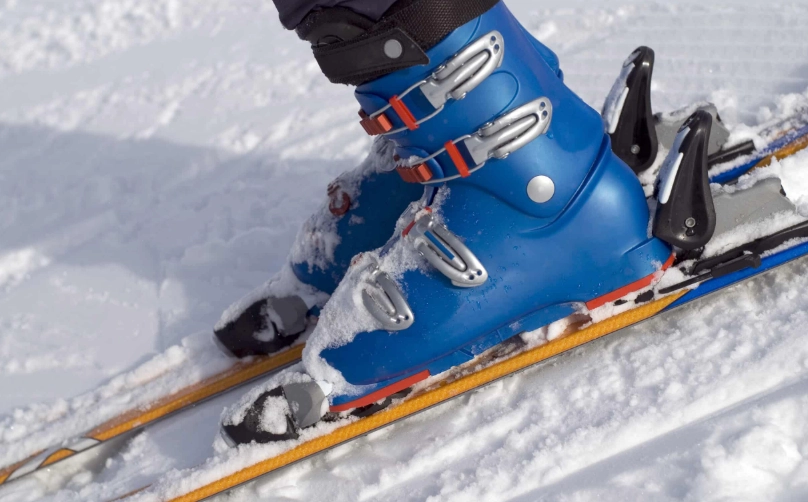
Think of it like driving a high-performance car while wearing clown shoes. You just can't control it properly. A great pair of ski boots transforms your entire experience on the mountain. Suddenly, you're not fighting your equipment; you're working with it. Turns feel crisp, control feels immediate, and your feet... well, they might even be comfortable.
Why Your Ski Boots Are More Important Than Your Skis
This isn't just my opinion. Ask any seasoned instructor or bootfitter. Your skis determine *how* you slide on snow, but your ski boots determine *if* and *how well* you can tell your skis what to do. Every subtle shift in weight, every edge engagement, every bit of pressure you apply travels through your boots. If there's slop, dead space, or misalignment in that connection, your commands get lost in translation.
Bad boots lead to a cascade of problems. Over-gripping with your toes to feel some control (which leads to foot cramps). Leaning back because you can't feel the front of the ski. Even knee and back pain can often be traced back to a poor boot fit or alignment. Investing time and money here isn't a luxury; it's a necessity for enjoyment and progression.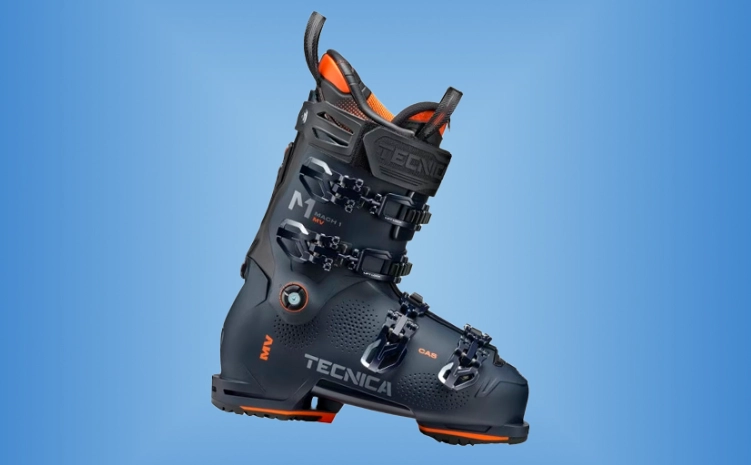
Anatomy of a Ski Boot: Breaking Down the Jargon
Before we dive into choosing, let's get familiar with the parts. It helps to know what people are talking about.
The Shell is the hard, outer plastic part. It's what gives the boot its structure and flex. Most are made from polyurethane, but higher-end models might use different plastics or carbon for a lighter, more responsive feel.
Inside is the Liner. It's the padded, removable inner boot that provides warmth and comfort. Liners pack out over time (compress and mold), which is why a tight initial fit is crucial.
The Closure System usually involves a combination of buckles, a power strap (that velcro strap over the cuff), and often a micro-adjustable cuff. The trend is towards more overlap in the lower shell for a more precise, wrap-around fit.
Then there's the Flex. This number (like 90, 110, 130) indicates stiffness. Lower numbers are softer, more forgiving. Higher numbers are stiffer, more responsive and demanding. We'll get into how to choose this later.
The Last is the width of the boot's shell at its widest point around the forefoot, measured in millimeters. This is a critical, often misunderstood number. A "100mm last" is considered medium-narrow. A "104mm last" is much roomier in the toe box.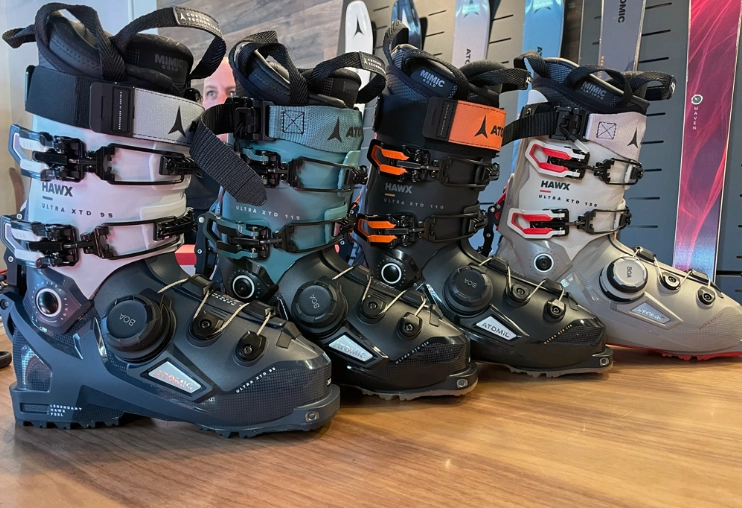
Finally, the Sole. Most modern alpine boots have standardized GripWalk or ISO 5355 Alpine soles. This matters for binding compatibility. If you're getting into touring, you'll look for boots with tech fittings (little pin holes in the toe and heel).
The Three Main Types of Ski Boots: Which World Do You Live In?
This is your first big decision. Getting the wrong type is like buying a mountain bike for a road race.
Alpine (Downhill) Ski Boots
These are the classic, hard-shell boots you see most people wearing at resorts. They're designed for one thing: performance on groomed slopes and inbounds terrain. They have the stiffest flex patterns, the most precise fit, and are meant to be used with standard alpine ski bindings. If you ride chairlifts all day and prioritize carving, control, and power, this is your category. Virtually every beginner starts here, and many experts never leave.
I spent years in stiff alpine boots, and for riding hardpack and crud, there's still nothing better. The connection is telepathic.
Alpine Touring (AT) / "Tech" Boots
These are for the skiers who earn their turns. They're built to walk uphill comfortably. They have a "walk mode" that unlocks the cuff, often with significant range of motion, and tech fittings in the toe and heel to connect to pin bindings for the ascent. The compromise? They're almost always lighter and less stiff than a pure alpine boot of the same flex rating. The liner might be less plush for weight savings. If your day involves skinning up a ridge before skiing down, you need these. Organizations like the American Alpine Club have tons of resources on backcountry safety and gear, which starts with the right footwear.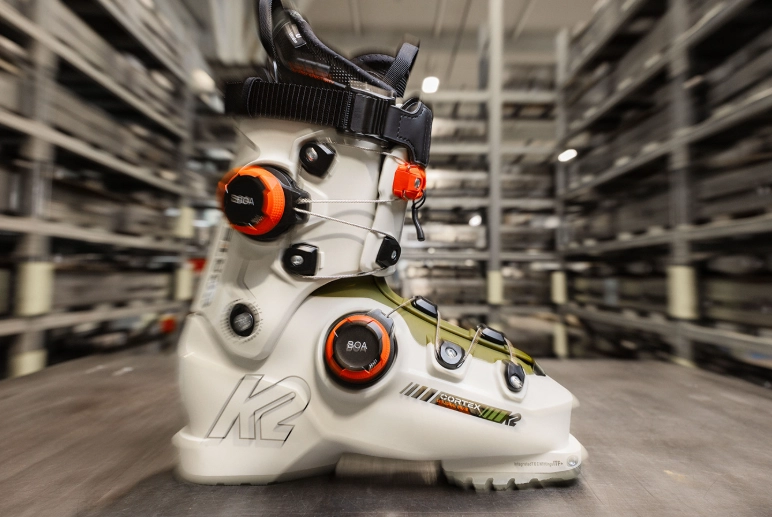
Hybrid / "Crossover" Boots
This is the fastest-growing category, and for good reason. Most of us don't live in pure extremes. Maybe you ski 80% inbounds but want the option for a short tour or hike to a powder stash. Hybrid boots try to bridge the gap. They have a walk mode and often tech fittings, but they prioritize downhill performance more than a pure AT boot. They might be a bit heavier, with a stiffer flex and a more resort-oriented liner. Brands like Salomon's Shift or Dalbello's Lupo series are perfect examples. They're a fantastic "one-boot" quiver for the majority of recreational skiers who dabble in both worlds.
Here’s a quick comparison to make it visual:
| Boot Type | Best For | Key Features | Downside |
|---|---|---|---|
| Alpine (Downhill) | Resort skiing, carving, maximum power & precision | Stiffest flex, precise fit, standard alpine sole | Very difficult to walk in |
| Alpine Touring (AT) | Backcountry/sidecountry, uphill travel | Walk mode, tech fittings, lighter weight | Less damp/stable downhill, often less warm |
| Hybrid / Crossover | Mixed use: mostly resort, some touring | Walk mode (often), tech fittings, focus on downhill feel | Jack-of-all-trades, master of none (slight compromise) |
The Holy Grail: Finding the Right Fit
This is where the magic (or misery) happens. You can have the "best" boot on the market, but if it doesn't fit your unique foot, it's the worst boot for you. Period.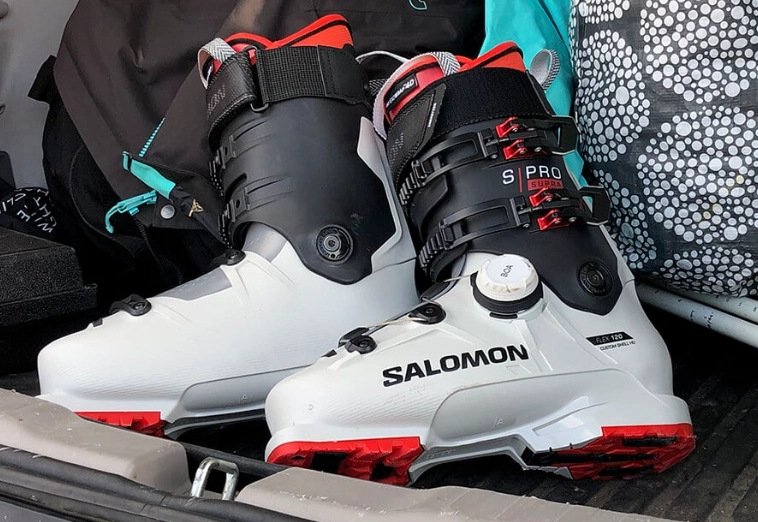
Step 1: Forget Your Shoe Size
Seriously. Your street shoe size is almost meaningless. Ski boots are sized in Mondopoint, which is based on the length of your foot in centimeters. A size 27.5 boot is for a foot roughly 27.5 cm long. You will almost certainly need a ski boot that is 1-2 sizes smaller than your regular shoes. This feels terrifyingly small at first. A proper fit should feel snug – even tight – everywhere, with no pressure points that feel like sharp pain. Your toes should just brush the end of the liner when you're standing in a neutral, athletic stance (knees slightly bent). When you flex forward into a skiing position, your heel pulls back and your toes should pull away from the front.
That sensation of your heel being securely locked down in the heel pocket is non-negotiable. If your heel lifts when you flex, you'll never have good control.
Step 2: Understand Your Foot Shape (The Last)
This is the width measurement. Foot shapes are wildly different.
- Low Volume / Narrow Feet: You have a slender foot with a low instep. You'll likely need a boot with a last under 100mm (98-100mm). Brands like Lange, some Nordica, and Atomic models often run narrower.
- Medium Volume / Average Feet: The most common. You'll fit well in boots with a 100-102mm last. This is the sweet spot for most major brands' core models.
- High Volume / Wide Feet: You have a wider forefoot and/or a high instep. You'll be looking at lasts of 103mm and up. Brands like Dalbello, K2, and certain "HV" (High Volume) models from other brands are your friends. Trying to cram a wide foot into a narrow boot is the leading cause of boot-related suffering.
Step 3: Choosing the Right Flex
The flex index is not a measure of manliness or skill. It's a tool. Softer flexes are more forgiving and easier to initiate turns. Stiffer flexes are more stable at speed and provide more powerful rebound out of turns.
- Beginner / Intermediate (Flex 60-90): Easier to flex forward, more forgiving of a backseat position. Perfect for learning and cruising.
- Advanced (Flex 95-115): The most common range for confident recreational skiers. Provides good response and support for most on-piste conditions.
- Expert / Aggressive (Flex 120-130+): For strong, aggressive skiers who charge hard, ski fast, and demand instant, powerful feedback. These can be exhausting for a less dynamic skier.
My advice? Err on the side of softer. A boot that's too stiff will fight you and tire you out. A slightly softer boot that you can fully flex and control is always better than a stiff boot you can't bend. Weight matters too. A lighter skier will struggle to flex a 130 boot, while a heavier, powerful skier might obliterate a 90 flex.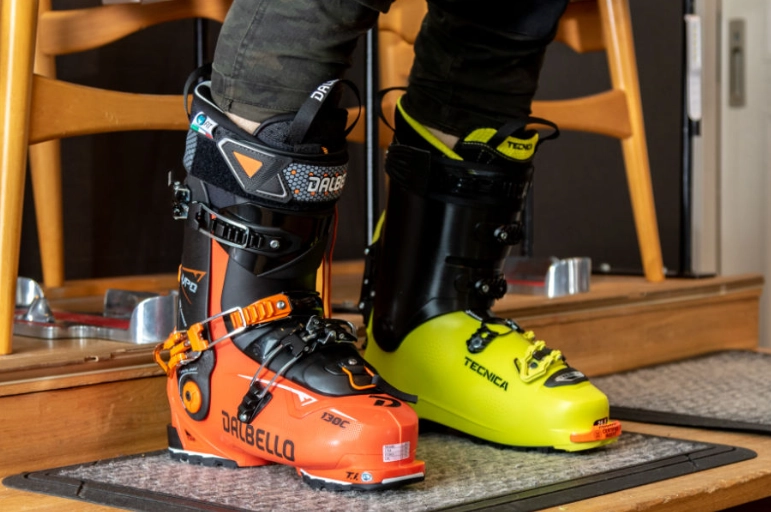
The Boot Buying Process: A Step-by-Step Guide
Okay, you're armed with knowledge. Here's how to actually go buy your ski boots.
1. Go to a Specialty Ski Shop, Not a General Sporting Goods Store.
Find a shop with a dedicated bootfitter. This is non-negotiable. Look for shops that have been around for years and have strong reputations. These fitters are artists. They'll look at your feet, watch you walk, ask about your skiing, and pull 2-3 models they think will work. Yelp and local ski forums are great for finding these gems.
2. The Try-On Ritual.
Wear the socks you intend to ski in (thin, synthetic ski socks, not cotton!). Try on the shell without the liner first. Slide your foot (in the thin sock) into the empty shell. Push your foot all the way forward so your toes touch. Now, have someone slide their fingers behind your heel.
Then, put the liner back in and buckle up. Not super tight at first. Stand up, flex forward. Walk around the shop for at least 10-15 minutes. Feel for specific pressure points—is it just general snugness, or is there a knife-like pain on your fifth metatarsal (a common hotspot)?
3. The Bootfitter's Magic.
A good bootfitter will assess the fit and say things like, "Your right ankle bone is sitting right on the collar, we'll need to punch that out," or "Your instep is high, let's try a different footbed." This is where you pay for expertise. Custom footbeds (insoles) are arguably the single best upgrade you can make. They support your arch, stabilize your foot, and prevent it from collapsing and swimming inside the boot. They make a massive difference.
Shell modifications ("punching" or "grinding") are common to create room for bony protrusions. This is normal. No boot is perfect off the shelf for every foot.
4. Commit and Follow Up.
Buy from the shop that provides this service. The fitting is often included. Ski in them for a day or two. Take notes on where it hurts. Go back. A good shop will make adjustments after the initial break-in. This follow-up is critical.
Caring for Your Ski Boots: Make Them Last
Treat your boots well, and they'll treat you well for many seasons.
- Dry Them Out: After every ski day, pull the liners out of the shells. Let everything air dry at room temperature, away from direct heat (radiators, hair dryers). Heat destroys the liner's foam and can warp the plastic shell.
- Clean the Liners: Occasionally, use a damp cloth with mild soap on the liner's interior to remove sweat and bacteria. Let them dry completely.
- Buckles and Straps: Keep buckles fastened when not in use to maintain spring tension. Don't crank them down super tight in storage.
- Walk with Care: If you have to walk in them, use rubber sole protectors (like Cat Tracks). Walking on pavement or parking lots will destroy the lug pattern on your soles, which can affect binding release safety. Standards for ski boot soles are meticulously defined by organizations like ISO (International Organization for Standardization), and damaging them compromises that design.
- Storage: Store them in a cool, dry place, buckled loosely.
Ski Boots: Your Questions, Answered
Let's tackle some of the most common things people secretly Google.
Final Thoughts: It's an Investment, Not an Expense
Look, I get it. This is a lot of information. And good ski boots, plus a fitting, aren't cheap. But think of it this way: you're investing in every single turn you'll take for the next 5+ years. You're investing in comfort, control, and progression. You're investing in the pure joy of skiing, not the dread of foot pain.
Skip the fancy new jacket this season. Put that money towards the best-fitting pair of ski boots you can find. Go to a real bootfitter, be patient with the process, and trust their expertise more than your eye for color. Your feet—and your skiing—will thank you for it.
Remember, the goal isn't to find a boot you don't feel. The goal is to find a boot that becomes a seamless, responsive part of you. When you finally get that pair dialed in, it's a revelation. Everything just... clicks. And that feeling is worth every penny and every minute spent in the shop.