Quick Navigation
I remember the first time I stood at the top of a terrain park, looking down at a line of jumps and rails. My heart was pounding. It wasn't fear, exactly. More like a mix of pure adrenaline and a single, overwhelming question: how on earth do people make this look so easy? That's the thing about freestyle skiing – from the outside, it's all effortless air and cool landings. On the inside, it's a puzzle of physics, muscle memory, and a bit of controlled chaos. If you're curious about it, whether you're a total newbie on skis or an intermediate looking to hit your first box, you've come to the right place. Let's ditch the intimidating jargon and talk about what freestyle skiing really is, how you can start, and what nobody tells you about the journey.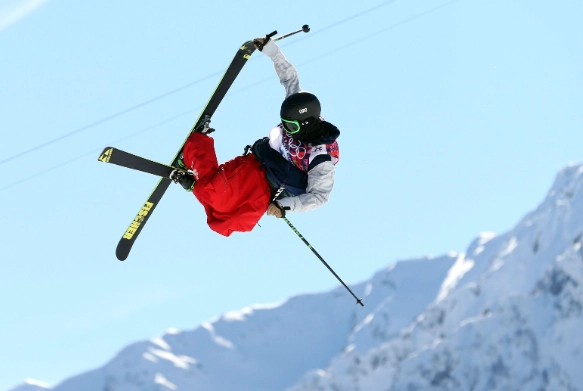
So, what is freestyle skiing? At its core, it's the artistic and athletic expression of skiing. It's using the mountain, or specially built features, as a canvas for jumps, spins, grabs, and slides. It's about creativity and style as much as it is about technical skill. Forget any notion that it's just for reckless teenagers. The freestyle skiing community is incredibly diverse, from kids learning 180s to masters perfecting cork 720s. The International Ski and Snowboard Federation (FIS) governs its competitive side, which might surprise you with its variety, but the soul of it lives in local ski parks everywhere.
From Bumps to Big Air: The Different Flavors of Freestyle
When people say "freestyle skiing," they could be talking about a few different things. It's not a monolith. Knowing the branches helps you understand what part might call to you.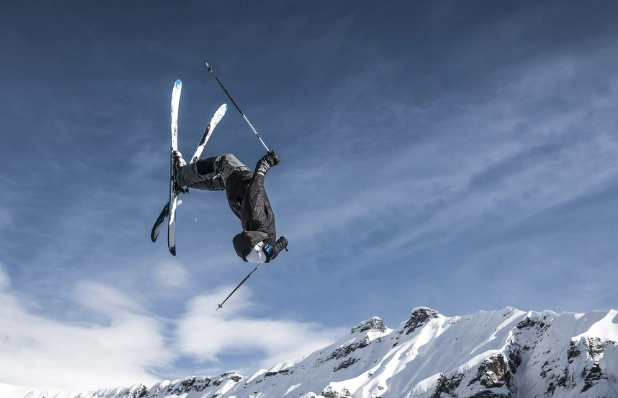
Moguls: The Original Test
This is where competitive freestyle skiing began. Imagine a steep slope covered in a consistent pattern of large, icy bumps (moguls). Your job is to ski down the fall line as fast as possible, making precise turns on each bump, and launching off two designated jumps to perform aerial tricks. It's brutally physically demanding – a full-body workout that requires insane leg strength and endurance. The aerial jumps in moguls are usually more classic, upright maneuvers like spread-eagles or helis. It's less about radical rotation and more about control in chaos. Personally, I have immense respect for mogul skiers; my knees ache just watching them.
Aerials: The High-Flying Art
This is the diving of the snow world. Skiers launch off massive, steep jumps (kickers) that propel them 50-60 feet in the air. They use that height to execute complex, multi-flipping, multi-spinning maneuvers before landing on a steep, softened slope. It's pure, unadulterated aerial gymnastics on skis. The training is meticulous, often involving water ramps and foam pits before ever trying a trick on snow. It's arguably the most specialized and dangerous discipline. You won't just stumble into aerials at your local hill; it's a dedicated, elite pathway.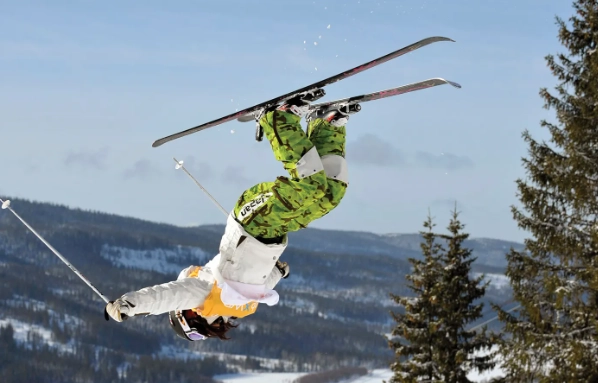
The Park and Pipe Disciplines: Where Most of Us Play
This is the freestyle skiing most people encounter and imagine. It revolves around man-made features in a terrain park and the halfpipe.
Slopestyle: This is the most common competitive and recreational format. Skiers navigate a course featuring a variety of obstacles in a line: jumps (kickers), rails, boxes, and sometimes wall rides. The goal is to link tricks on each feature with style and amplitude. Creativity is king here. A slopestyle run tells a story.
Halfpipe: Skiing in a giant, U-shaped snow channel (the pipe). Skiers ride up one wall, launch into the air above the lip, perform a trick, land, and ride across to the opposite wall to do it again. Linking multiple big hits in one run is the challenge. The amplitude (height) is a huge part of the scoring. The feeling of dropping into a 22-foot superpipe is unlike anything else – a moment of weightlessness followed by a rush of acceleration.
Big Air: As simple and terrifying as it sounds. One massive jump. One chance to throw your biggest, most technical trick. It's all about maximum rotation, style, and a clean landing. The simplicity is beautiful and brutal.
Most recreational freestyle skiing happens in the terrain park, focusing on slopestyle features. That's where your journey will likely begin.
Gearing Up: Your Kit for Creativity (and Safety)
You can't talk about starting freestyle skiing without talking gear. Using the wrong equipment isn't just a hindrance; it can be unsafe. I learned this the hard way trying to land a basic jump on old, stiff, racing skis – they were not forgiving.
The Heart of It: Twin-Tip Skis
This is non-negotiable. Freestyle skis are designed with an upward curve (rocker) at both the tip and the tail – hence "twin-tip." This allows you to ski and land backwards (switch) comfortably. They're also typically softer flexing than all-mountain or racing skis. This softer flex helps with pressuring rails and absorbing landings. Length is personal, but park skis are often skied slightly shorter than your height for better maneuverability in the air and on rails.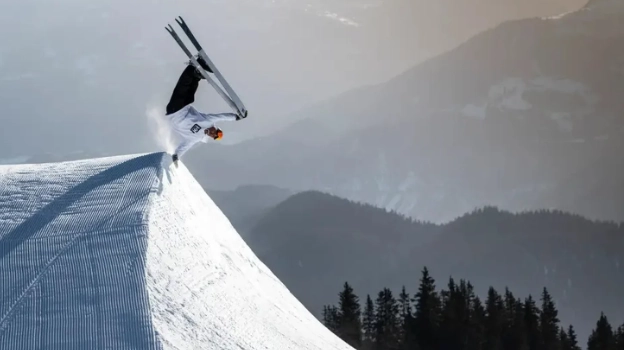
Bindings and Boots: The Connection
Your boots should have a forward flex that's comfortable for you – stiff enough for control, but soft enough to allow a good athletic stance. Park-specific bindings often have a lower stand-height profile. This lowers your center of gravity, making rail slides and landings more stable. It's a subtle difference, but you feel it.
Here’s a quick look at how some popular ski types compare, which can be super helpful if you're in the market:
| Ski Type | Best For | Flex | Shape/Rocker Profile | Compromise Factor |
|---|---|---|---|---|
| Pure Park Ski | Jumps, rails, park laps. Light & playful. | Soft to Medium | Significant twin-tip rocker | Can feel unstable at high speeds on groomers. |
| All-Mountain Freestyle | Most recreational skiers. Does park well but can ski the whole mountain. | Medium | Twin-tip, moderate rocker | The "jack of all trades" – a fantastic first freestyle ski. |
| Freeride/Powder Ski | Big mountain lines, deep snow, natural features. | Medium-Stiff | Directional or partial twin-tip, lots of rocker in tip | Heavier, less nimble on park rails. |
The Safety Non-Negotiables
Let's be blunt. If you're going to try freestyle skiing, you must wear a helmet. A modern ski helmet is lightweight, warm, and can prevent life-altering injuries. It's the single most important piece of equipment. Full stop.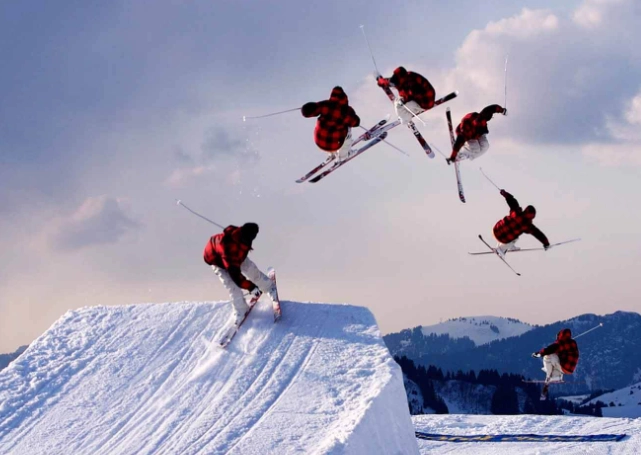
Beyond that, consider impact shorts (they protect your hips and tailbone on failed landings), a mouthguard (concussion risk is real), and wrist guards if you're prone to catching yourself with your hands. I wore impact shorts for my first two seasons in the park, and they saved me from countless bruises. It's not uncool to be safe; it's smart.
How to Actually Start (Without Getting Hurt)
This is the part everyone wants to know. The path isn't linear, but there's a logical progression most coaches and experienced skiers recommend. Rushing it is the fastest way to get hurt or develop bad habits.
Step Zero: Master the Fundamentals
You need to be a competent, confident skier on blue runs before you even think about a terrain park. Can you link parallel turns with control? Can you stop confidently at speed? Can you ski switch (backwards) in a straight line or a wide, gentle turn? If not, spend time here. The park will still be there next week. Solid fundamentals are your safety net.
Step One: The Terrain Park Etiquette & Baby Features
Find the small park or the "progression park" at your resort. These have tiny features. Before you hit anything, learn the unwritten rules:
- Look before you drop: Always scope your line from the side first.
- Take turns: One person on a feature at a time.
- Clear the landing quickly: Don't sit in the landing area.
- Use a spotter: If you're with a friend, have them watch and signal when the landing is clear.
Start on a tiny, mellow jump (a "side hit" or a small park kicker). Don't try to spin. Just practice a solid, athletic pop off the lip and landing in a balanced stance. Get comfortable with the feeling of being airborne. Then, try a straight air off a slightly bigger jump. Boring? Maybe. Essential? Absolutely.
Step Two: Introduction to Spins and Rails
For spins, start with a 180. It's just a half-rotation. The key is to look over your shoulder where you want to go, and your body will follow. Practice on flat ground first, then on a very small jump. The landing will be switch (backwards), so you must be comfortable skiing switch.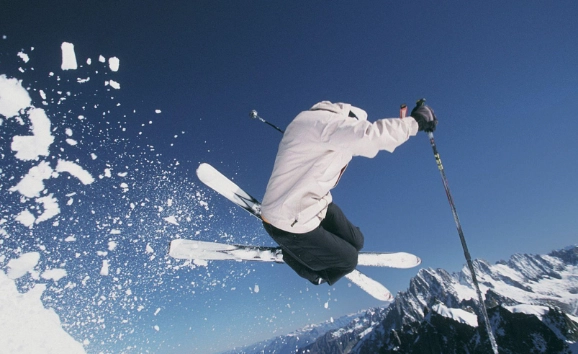
For rails and boxes, start with a low, wide box (a "rainbow box" is perfect). Approach straight on, at a slow, controlled speed. Stand tall, keep your weight centered over your feet, and look at the end of the box. Don't look down at your skis! A common first trick is a 50-50 (both skis sliding straight along the feature).
The number one mistake beginners make on rails? Leaning back. This causes your skis to shoot out from under you. Stay centered, or even slightly forward.
Step Three: Building Your Trick Bag
Once 180s feel comfortable, you can work on 360s. From there, the world opens up: grabs (touching your skis in the air), different rail slides (like a frontside or boardslide), and combining spins with grabs. This is where having a friend film you on your phone is incredibly helpful. You can see what you're actually doing versus what you think you're doing. I can't tell you how many times I thought I was spinning late, but the video showed I was throwing my arms way too early.
The Mind Game and Managing Risk
Freestyle skiing is as mental as it is physical. Fear is normal. The trick is to manage it.
Progression, not pressure: Don't compare yourself to the 14-year-old throwing double corks. Your progression is yours alone. Celebrate the small wins – your first clean box slide, your first grabbed 180.
Know when to walk away: If you're tired, cold, or your head just isn't in it, call it a day. Most mistakes happen on the last run when you're fatigued.
Understand the risks: Sprains, fractures, and concussions are possible. Proper progression, good gear, and listening to your body mitigate these risks significantly. It's an action sport; risk is inherent, but it can be smartly managed. The official safety resources and guidelines from bodies like FIS for competition, or your local ski area's park safety guidelines, are worth reviewing to understand the structured approach to safety in managed environments.
Freestyle Skiing FAQs: The Stuff You're Actually Wondering
Let's tackle some of the common questions that pop up when people are thinking about getting into freestyle skiing.
Wrapping It Up: Your Next Steps
Freestyle skiing is a journey, not a destination. It's about the process of learning, the camaraderie in the park, and the unparalleled feeling of stomping a trick you've worked on for weeks. It will frustrate you. It will scare you at times. But it will also give you moments of pure, unadulterated joy that are hard to find anywhere else.
Start small. Respect the sport and the terrain park rules. Gear up safely. And most importantly, have fun with it. Don't get so focused on nailing a specific trick that you forget why you started – to play on the snow.
The mountain is your playground. Freestyle skiing is just one of the most creative ways to play in it. Now go find a small jump and get a little bit of air. You might just get hooked.