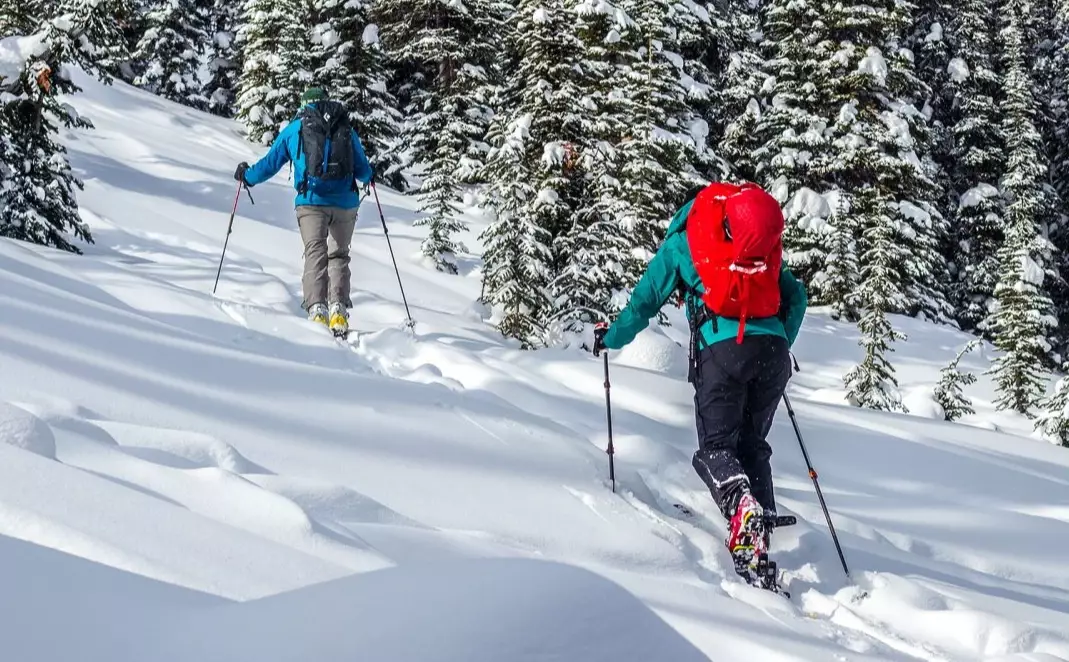
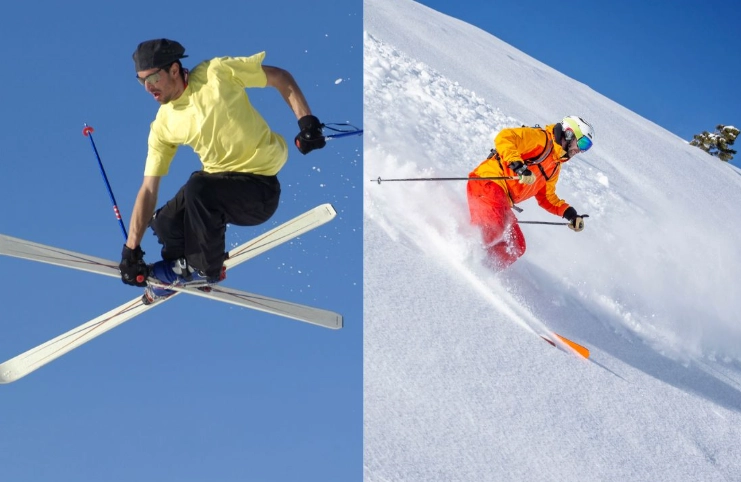
You've seen the photos. A lone track snaking up a pristine snowfield, leading to an untouched summit, followed by the perfect powder run down. That's ski touring. It's also called backcountry skiing or Alpine Touring (AT). It's the art of using your own power to climb mountains on skis, then skiing back down. No lifts, no crowds, just you, your partners, and the mountains. Sounds incredible, right? It is. But jumping in without a map is how people get hurt, or worse.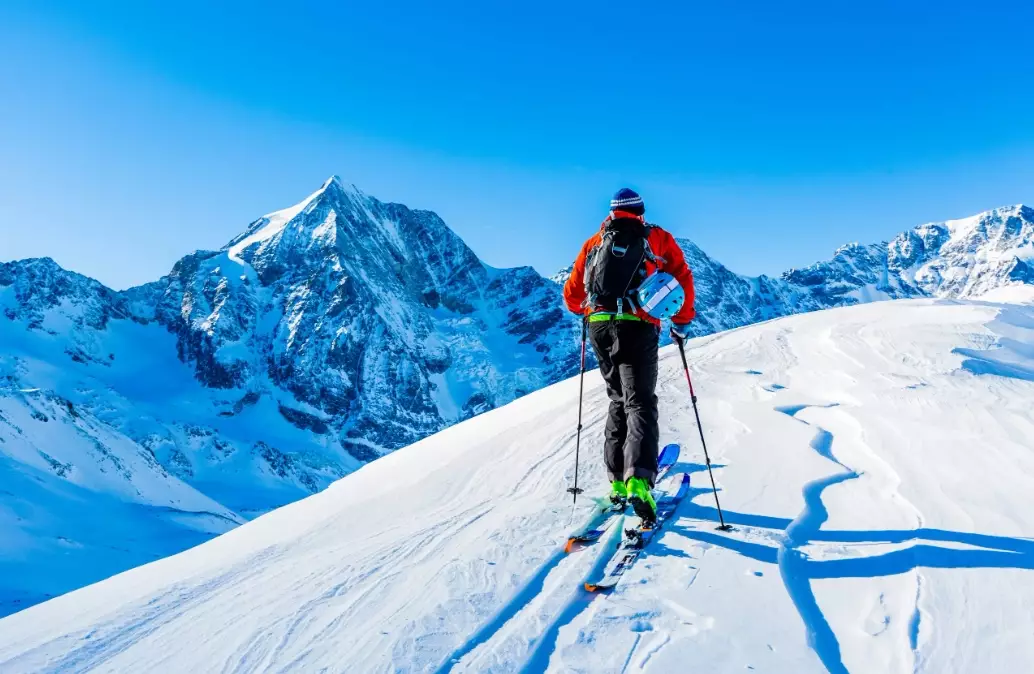
I've been doing this for over a decade, guiding friends and making every mistake in the book so you don't have to. This isn't a fluffy inspirational piece. It's a practical, no-BS guide to getting started the right way.
What's Inside This Guide?
The Real Gear Breakdown: What You Actually Need
Forget the fancy marketing. Your gear list falls into two categories: Mandatory for Survival and Mandatory for Enjoyment. Mix them up at your peril.
Avalanche Transceiver (Beacon): This sends and receives a signal to locate someone buried in an avalanche. Buy a modern digital 3-antenna model (like from BCA, Ortovox, or Arva). Practice with it weekly in the parking lot before your trip.
Avalanche Probe: This collapsible pole is for pinpointing a burial depth once your beacon gets you close. Get one that's at least 240cm long. The cheap, short ones are useless in deep snow.
Avalanche Shovel: Not a sandcastle toy. A metal-bladed, sturdy shovel with an extendable handle. Plastic blades shatter in hard avalanche debris. This is your primary rescue tool.
+1: A Partner. Solo ski touring is an advanced, high-risk endeavor. For beginners, a trusted, knowledgeable partner is your most important piece of safety gear.
The Enjoyment Kit (The Climb & Descent System)
This is where most beginners overspend or buy wrong. The goal is efficiency uphill without sacrificing too much control downhill.
| Gear Piece | What It Is & Why It Matters | Beginner-Friendly Tip |
|---|---|---|
| Touring Skis | Lighter than resort skis for climbing. Usually 85-105mm underfoot. Wider is more float in powder but harder to edge on hard snow. | Don't go ultra-light. A mid-weight touring ski (1500-1800g per ski) offers more stability on the descent while you're learning. |
| Touring Bindings | These have a free-heel mode for climbing and lock down for the descent. "Tech" or "pin" bindings are the standard for efficiency. | Look for a model with a lateral heel release (like a Salomon/Atomic Shift, Fritschi Tecton, or Marker Duke PT). It adds safety over pure pin bindings as you learn. |
| Touring Boots | Stiffer than hiking boots, lighter than downhill boots. They have a "walk mode" that frees your ankle for climbing. | Fit is king. A boot that's 95% comfortable in the shop will be 150% painful on a 3-hour climb. Prioritize a heel-locked-down fit with room for your toes to wiggle. |
| Skins | Strips you stick to the base of your skis. The nap lets you slide forward but grips when you step back, allowing uphill travel. | Get nylon-mohair mix skins. Pure mohair is slicker for experts; pure nylon is grippier but slower. The mix is the sweet spot. |
| Poles | Adjustable-length poles. You'll make them longer for climbing, shorter for skiing down. | Get poles with large, solid powder baskets. The tiny baskets on racing poles sink uselessly in deep snow. |
Renting is a brilliant way to start. Most shops in mountain towns offer complete touring packages. It lets you try the gear before dropping $2000.
Skills You Need Before Hitting the Hills
You're a solid intermediate resort skier. That's the baseline. Ski touring adds a whole new set of mountain travel skills.
1. Avalanche Education. This is non-negotiable. A Level 1 course from a provider like the American Institute for Avalanche Research and Education (AIARE) or the Canadian Avalanche Association (CAA) is your entry ticket. You'll learn to read avalanche forecasts, identify dangerous terrain, perform rescues, and make group decisions. Books and videos don't cut it. The hands-on practice is everything.
2. Transition Efficiency. Changing from climb mode to descent mode (and back) involves removing skins, adjusting bindings and boots, and stowing gear. In a cold wind, this can be miserable if you're fumbling. Practice this sequence in your garage ten times: Lock heels, remove skins, fold skins, stow in jacket, adjust poles, go. Time yourself. A smooth transition keeps you warm and keeps the group moving.
3. The Kick Turn. This is how you switch direction on a steep slope when you can't side-step. It looks easy. It's not. It's a ballet move on skis. Find a gentle slope and practice until it's muscle memory. Nothing saps morale faster than a group member struggling with kick turns for 10 minutes on a 30-degree face.
4. Map, App & Compass Navigation. GPS apps like Fatmap, CalTopo, or Gaia GPS are incredible. Phones die. Batteries fail. Always carry a paper map and compass and know how to use them. Plot your route the night before, noting obvious landmarks and potential hazard zones.
Where to Go: Picking Your First Destinations
Your first tour shouldn't be a remote epic. It should be a safe, accessible, and forgiving learning ground. Look for areas with these traits: Simple, low-angle terrain (less than 30 degrees), a clear, established track to follow, and cell service or easy exit options.
Here are three types of perfect beginner zones, with specific examples:
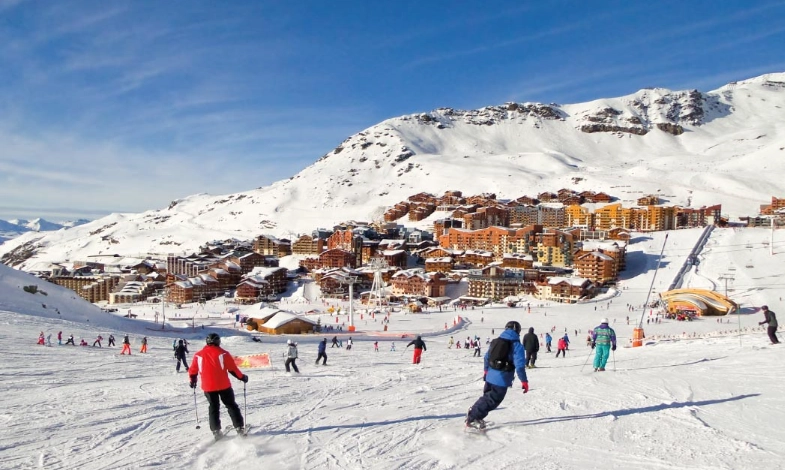
1. The Uphill Policy Resort. Many ski resorts now allow uphill travel on designated routes before/after operating hours or on specific trails. This is gold. You're in a controlled, patrolled area (check times!), the skin track is often set, and the descent is on a groomed run. It's skill practice with a safety net.
- Example: Aspen Mountain, Colorado. They have a well-marked, low-angle uphill route. You skin up under the stars, watch the sunrise from the top, and get first tracks down a groomer before the lifts spin. Cost? Just a pre-dawn alarm clock.
2. The Popular Backcountry Gateway. These are trailheads just outside resorts that see heavy traffic. A beaten path means less route-finding stress. The terrain is generally mellow, and there are other people around (which is comforting for emergencies but also means go early to get fresh snow).
- Example: Rogers Pass, Glacier National Park, Canada. While it has complex terrain, areas like the 8800 Bowl or the Ursus Trees have standard, low-angle approaches perfect for a first day after fresh snow. Mandatory: You must carry a park pass and check the daily avalanche forecast. The visitor center is an invaluable resource.
- Example: Berthoud Pass, Colorado. The terrain off the east side of the pass is vast, but the initial slopes right from the parking lot offer gentle, rolling terrain to get your legs under you.
3. The Guided Intro Day. This is the single best investment for a total beginner. Hire a certified guide (IFMGA/UIAGM or AMGA). They provide the safety framework, teach you the rhythms, handle the route, and often provide or rent you gear. You absorb knowledge simply by following their process.
- How to find one: Search for "IFMGA guide [your destination]" or look at established guide services like Exum, Alpine Ascents International in the US, or ACMG guides in Canada. A day of guiding might cost $400-$600 per person in a small group, but it accelerates your learning curve exponentially.
Planning & Execution: From Map to Mountain
Let's walk through a hypothetical first tour. Say you're in Salt Lake City, have taken your avy course, rented gear, and want to try a classic beginner line.
Destination: Mill D North Fork in Big Cottonwood Canyon. It's a frequent recommendation for good reason. The approach is a forest road, the main bowl is wide and generally under 30 degrees, and it's close to town.
The Night Before:
- Check Forecasts: Utah Avalanche Center forecast for the Salt Lake area. Look for "Low" or "Moderate" danger. Read the details—what layers are problematic? What aspects are dangerous?
- Weather: NOAA forecast. Wind speed? New snow? Temperature? A -20°F day is a different beast than a 25°F day.
- Plan Route: On Fatmap, trace the skin track up the road, then into the bowl. Total vertical gain: about 2000ft. Estimated time: 3-4 hours up, 30 mins down. Identify a safe lunch spot out of avalanche runout zones.
- Pack: Lay out all gear. Beacon on body, check battery. Pack: shovel, probe, extra layers (puffy jacket), water (2L), high-calorie food, headlamp, first-aid kit, repair kit (duct tape, ski strap), map/compass. Charge phone and power bank.
Morning Of:
- Meet at 6:30 AM at a park-and-ride. Discuss plan, decision points, and turnaround time (e.g., "We turn around at 1 PM no matter where we are").
- Beacon Check: In the parking lot, everyone turns on beacons, sends a signal, and confirms everyone else can receive it. Do a quick practice search on a hidden beacon.
- Start Skinning: Go slow. The goal is a pace where you can hold a conversation. Drink water and eat a snack before you're thirsty or hungry.
- On the Descent: Ski one at a time through any steeper sections or terrain traps. Watch your partner from a safe spot. It's not a race. Your legs will be tired from the climb—focus on controlled turns.
The feeling you get back at the car, peeling off sweaty layers and drinking a warm drink, is unmatched. You earned every turn.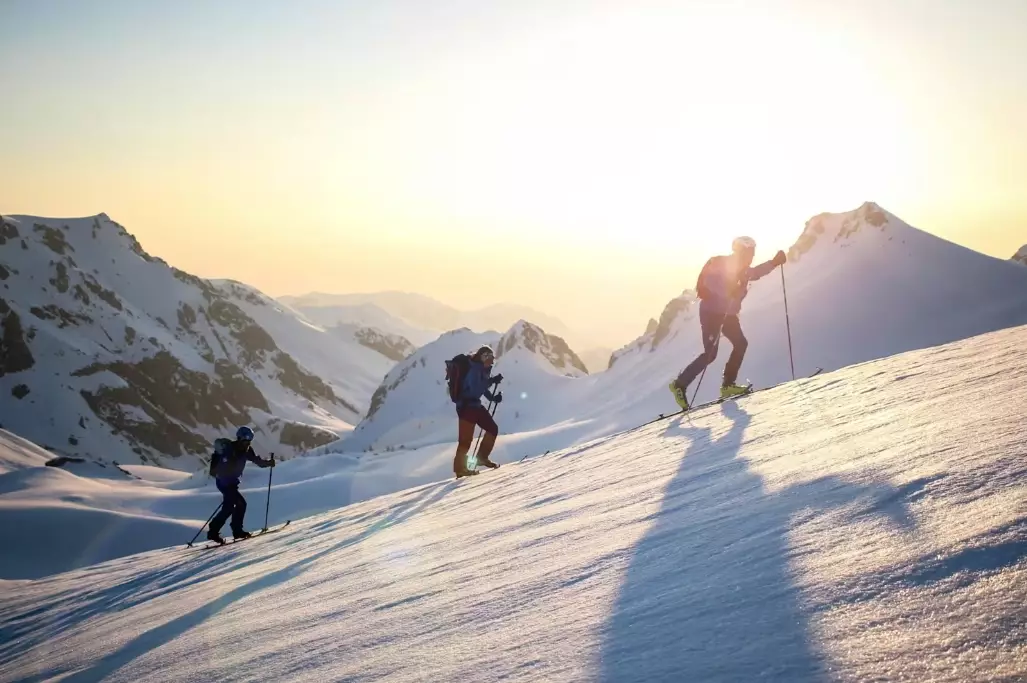
Answers to the Questions You're Afraid to Ask