Ski Drills Quick Guide
Let's be honest. For a lot of us, a day of skiing is a mix of pure joy and sheer terror. You might have a few great runs, then one where you feel completely out of control, skis chattering, legs burning, praying for the lift line. I've been there. I spent years just pointing my skis downhill and hoping for the best. It was exhausting, and honestly, a bit scary. The turning point? When I stopped just skiing and started practicing.
That's what this is all about. We're not talking about Olympic-level training regimens. We're talking about simple, focused exercises you can do on any blue run—or even a green—that rewire your muscle memory. The goal isn't to make you look fancy; it's to make you feel in control, conserve energy, and actually enjoy the mountain more. Good ski technique drills are the secret shortcut that most recreational skiers never bother with.
Why do drills work when just skiing more doesn't? It's about isolating movements. When you're trying to get down a whole run, your brain is overwhelmed. Drills break skiing down into its component parts. You focus on one thing: your edges, your balance, your turn shape. You do it slowly, you do it wrong, you figure it out, and then it becomes automatic. Suddenly, that steep section doesn't require a panic attack, just a slight shift in weight.
The Core Five: Non-Negotiable Ski Technique Drills for Every Level
You don't need a hundred different exercises. Master these five foundational ski technique drills, and you'll have the toolkit for 90% of the terrain you'll encounter. I've listed them in a logical progression. Start with the first one, get comfortable, then layer on the next. Trying to do them all at once is a recipe for frustration.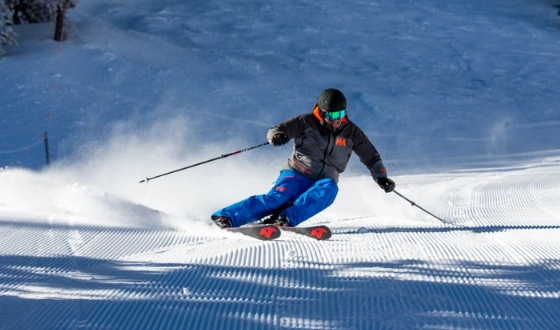
The Side Slip: Finding Your Edges
This is the ABCs of ski control. If you can't side slip comfortably, you're missing a fundamental safety skill. The goal is to slide sideways down the fall line, controlling your speed with your edges, not your pizza wedge.
How to do it: Find a gentle, groomed slope. Point your skis across the hill (traverse). Now, gently roll your knees and ankles downhill. Feel your edges release? You'll start sliding sideways. To stop, roll your knees back up the hill to set your edges. The motion is in your lower legs, not your torso. Don't lean back!
Why it works: This drill builds an intimate feel for your ski edges—the primary tool for speed control and turning. It teaches you that control comes from subtle ankle and knee movements, not violent upper-body swings. When you're nervous on steeps, a controlled side slip can be your best friend to navigate a tricky spot.
The J-Turn or Garlands: Introducing the Turn
Think of this as a half-turn. You're connecting a sideslip into the beginning of a turn, then sliding back across the hill. It's the bridge between sliding and full carving.
How to do it: Start in a sideslip facing left across the hill. As you slide, gradually roll your knees to the right and press your right shin into the front of your boot. Your skis will start to hook up and carve an arc—shaping a "J" in the snow—before you let them slide sideways again. Repeat the pattern: slip, engage, carve a bit, release, slip.
Why it works: It isolates the turn initiation phase. Most intermediate skiers initiate turns by rotating their shoulders or hips. Garlands force you to use your edges and lower-body angulation to start the turn. It builds the muscle memory for clean turn beginnings, which sets up everything that follows.
Railroad Tracks (Flat Ski Tracking): Precision and Balance
This one looks easy but humbles everyone. The goal is to make two perfectly parallel tracks in the snow, as if your skis are train tracks. No skidding, no sideways movement.
How to do it: On a very gentle green run, pick up a bit of speed. Focus on keeping your skis absolutely parallel and flat on the snow. Make gentle, wide turns by ever-so-slightly rolling your ankles. Look behind you. Are your tracks two clean, carved lines, or are they smeared? If they're smeared, you're skidding. The challenge is to maintain perfect parallel tracking throughout the entire turn.
Why it works: This is the ultimate test of balance and independent leg action. It forces you to keep equal weight on both skis and use precise edge angles. It also highlights if you're relying on a stem (one ski pushing out) to start your turns. Mastering railroad tracks means you're carving, not skidding.

Pole Touch Timing: Rhythm and Coordination
This isn't about planting your pole like you're spearing a fish. It's a gentle, rhythmic tap to coordinate your upper and lower body.
How to do it: As you initiate each turn (that knee-roll action you practiced in the garlands), reach forward and lightly touch the snow with your pole grip. The touch should happen just as your skis start to change direction. Your upper body should remain facing downhill—your arms are doing the reaching, not your whole torso.
Why it works: A well-timed pole touch does two things. First, it forces proper turn initiation timing. If your pole touch is late, your turn is late. Second, it stabilizes your upper body, preventing that wild rotation that throws you off balance. It adds a metronome-like rhythm to your skiing.
One-Ski Skiing (Weight Transfer Drill)
Yes, you read that right. This is an advanced-beginner/intermediate drill, but its impact is massive. It proves where your weight should be.
How to do it: On a very gentle slope, lift the tail of your inside ski slightly off the snow, keeping just the tip touching. Now make a turn. You'll be forced to balance completely on your outside ski. Switch and do the other side. The goal isn't to ski a whole run like this, but to make 2-3 turns while balancing on one ski.
Why it works: This drill obliterates the "A-frame" (skis apart, knees together) and the habit of sitting on your inside ski. Proper skiing requires nearly all your weight on the outside ski through the turn's arc. This drill makes that physical reality unavoidable. It builds leg strength and balance like nothing else.
Beyond the Basics: Drills for Specific Problems
Okay, you've got the core five down. But what if you have a specific issue? Here's a quick-reference table. I find this more useful than a long paragraph when you're trying to diagnose a problem.
| What You're Feeling | The Likely Culprit | The Fix-It Drill |
|---|---|---|
| "My legs burn out so fast!" | Backseat skiing (weight on heels), static posture. | "Hands on Knees" Drill: Ski with your hands firmly planted on the front of your knees. This forces your weight forward and into an athletic, flexed position. |
| "I can't link my turns smoothly." | Finishing turns incompletely, rushing the initiation. | "Count to Three" Drill: In each turn, count "one-two-three" during the finish/control phase before initiating the next turn. This builds patience and complete turn shape. |
| "My skis always cross or get tangled." | Rotating the upper body to start turns. | "Pole Drag" Drill: Hold both poles horizontally in front of you, parallel to the snow. Keep them perfectly level as you turn. If they rotate, your shoulders are rotating. |
| "I skid and slide instead of carving." | Not committing to the outside ski, flat skis. | The Railroad Tracks and One-Ski Skiing drills (see above) are your best friends here. Also, try on gentler terrain first. |
How to Actually Practice Without Getting Bored or Frustrated
Knowing the drills is one thing. Sticking with them is another. Here's the real-world approach that works.
Don't dedicate your whole day to drills. That's a surefire way to suck the fun out of skiing. Instead, use the "Drill Lap, Fun Lap" method. Take one warm-up lap on an easy run and focus purely on a single drill. Go slow. Be analytical. Then, for your next two or three laps, just ski normally on your favorite runs. You'll be amazed at how the drilled movement starts to creep into your normal skiing without you even thinking about it.
Another method: pick a "Drill of the Day." Before you get on the lift, decide you're going to focus on pole touch timing. Every few turns, consciously check in on it. This keeps your mind engaged without overwhelming you.
And for heaven's sake, practice on appropriate terrain. Don't try to work on one-ski skiing for the first time on a steep black diamond. A wide, gentle blue run is the perfect laboratory. Even green runs are fantastic for most foundational ski technique drills. The pressure is off, and you can focus on movement, not survival.
Gear Talk: Does Your Equipment Help or Hinder Your Drills?
I'm not going to tell you to buy new skis. But you should know that old, poorly tuned gear can fight you every step of the way. Dull edges won't hold for a railroad tracks drill. Boots that are too loose won't give you the precise feedback you need for side slips.
The most important piece of equipment is your boots. If they don't fit properly, everything else is harder. A good rule of thumb: if you can lift your heel inside the boot when it's buckled, it's probably too big. Your local ski shop can do a basic fit check. Organizations like the National Ski Areas Association (NSAA) often emphasize proper equipment fitting as a fundamental part of safety and enjoyment, which aligns perfectly with effective practice.
As for skis, a good, modern all-mountain ski with a bit of sidecut (the hourglass shape) will make learning to carve with these drills infinitely easier than an old, straight pair of boards. If your skis are more than 10 years old, it might be time for a demo day at the mountain to feel the difference.
Answers to the Questions You're Probably Asking
How long before I see results?
Immediately, and also over a long time. You'll feel a slight difference after one focused session—maybe a bit more control on your "fun" laps. Real, ingrained change takes a season of consistent, smart practice. Don't expect magic, expect gradual, satisfying improvement.
Should I take a lesson to learn these drills?
Absolutely, 100%. A certified instructor can see what you can't feel. You might think you're doing a perfect side slip, but you're leaning back. An instructor will correct that in 30 seconds, saving you months of ingraining a bad habit. Think of a lesson as buying a detailed map instead of wandering in the woods. Many resorts offer cheap, hour-long "clinic"-style lessons focused purely on drills. Check out resources from major outdoor retailers like REI's expert advice section for foundational tips that complement professional instruction.
Can I do these drills if I'm a total beginner?
The first two drills—the side slip and very basic garlands—are perfect for confident beginners who have mastered the wedge turn (pizza). They are the next logical step. If you're still working on stopping and controlling speed in a wedge, stick with that for now. Drills come next.
What's the single most important thing to remember when practicing?
Start slow. Speed hides flaws. If you can't do the drill perfectly at a walking pace, you definitely can't do it right at speed. Slow practice builds correct neural pathways. Fast, sloppy practice just reinforces bad habits.
Look, at the end of the day, nobody is handing out medals for the cleanest side slip. But they do hand out more confidence, more energy for last chair, and more smiles on the chairlift ride up. That's the real prize. Skiing isn't just about getting down the mountain; it's about how you feel while you're doing it. These ski technique drills are the tools that shift the experience from exhausting to exhilarating. So next time you're out there, take 15 minutes. Pick one drill. Feel silly, feel awkward, then feel it click. Your future self, cruising down that run that used to scare you, will thank you.
Got a specific drill that saved your skiing? Or one you just can't figure out? The conversation is what makes us all better. Now go find some snow.