Quick Navigation
Let's cut to the chase. You're here because you've seen a video of someone carving down a mountain on what looks like a single, extra-wide snowboard with two ski boots bolted to it. It looks wild. It looks fun. And your immediate, gut reaction was probably: "Is monoskiing harder than skiing?" It's the question every curious skier asks before diving down the rabbit hole.
I asked myself the same thing a few seasons back. I was stuck in a rut with my parallel turns, feeling like I'd hit a plateau on my traditional two skis. The monoski, with its quirky, old-school-cool vibe, called to me as a new challenge. So I rented one, pointed it down a gentle blue run, and promptly ate more snow in an hour than I had in the entire previous season. It was humbling, hilarious, and incredibly revealing.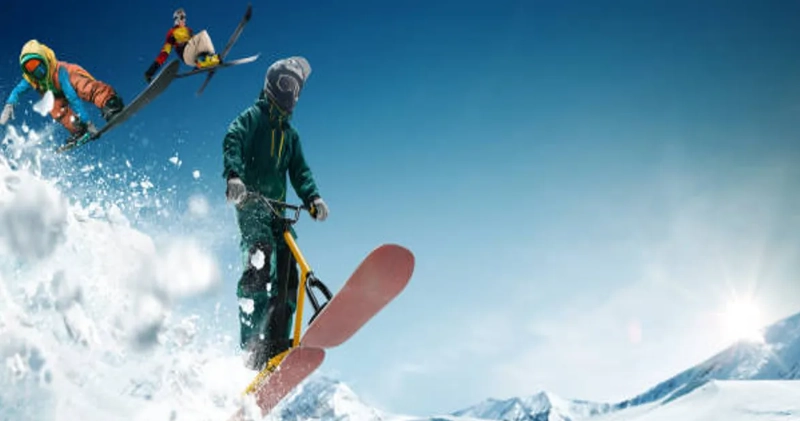
Think of it this way: learning to ride a bicycle with training wheels (traditional skis) versus learning on a unicycle (monoski). Both involve balance on wheels, but the fundamental skills are worlds apart. One has a gentler on-ramp; the other throws you into the deep end of balance and core control from minute one.
What Even Is a Monoski? A Quick History Lesson
Before we get into the nitty-gritty of difficulty, let's clear up what we're talking about. A monoski is a single, wide ski with two fixed bindings mounted side-by-side. Your feet are planted parallel to each other, facing forward, similar to a snowboarder's stance but in rigid ski boots. It originated in the late 1970s and had a brief moment of glory in the 80s before being largely eclipsed by the snowboarding revolution.
Now, it's experiencing a quiet but passionate resurgence. Enthusiasts love it for the unique feel—a blend of skiing's forward-facing posture and snowboarding's unified platform. You can find modern monoski manufacturers and dedicated communities online, like the resources and history preserved by the Ski Museum, which documents the evolution of ski equipment.
So, is monoskiing harder than skiing? To answer that properly, we need to break it down piece by piece.
The Core Difficulty Breakdown: Monoski vs. Two Skis
This isn't a simple yes/no. It's a spectrum across different skills. Let's lay it out in a table—it's the easiest way to see the contrast.
| Skill Area | Traditional Alpine Skiing (Two Skis) | Monoskiing (One Ski) | Which is Harder Initially? |
|---|---|---|---|
| Balance & Stance | Legs operate independently. Balance is dynamic between two separate edges. You can recover by shifting weight to one ski. | Legs are locked together on one platform. Balance is a unified, core-intensive act. A mistake engages the entire ski's edge. | Monoskiing. The lack of independent leg control is the biggest initial shock. |
| Basic Turning | Learned via "wedge" or snowplow. Intuitive for beginners—push heels out to slow and turn. | No snowplow. You must learn to tilt/roll the single ski onto its edge immediately to initiate any turn. Far less intuitive. | Monoskiing, by a huge margin. The first-day learning curve is steep. |
| Stopping | Snowplow is an easy, reliable braking method for novices. | Only stopping method is a skidded turn to a halt or a hockey stop. Requires basic edge control from day one. | Monoskiing. The fear factor of "how do I stop?!" is real. |
| Lifts & Flat Areas | Managing two skis on cat tracks and getting on/off lifts requires coordination but is standard. | Easier in some ways! One ski means no tangled tips. But skating on flat terrain is nearly impossible. | Mixed. Different challenges, but often easier for monoski once you're used to it. |
| Advanced Carving | Requires precise, independent leg angulation and pressure control to carve two skis simultaneously. | Once edge control is mastered, the single platform can feel incredibly stable and locked into a carve. Some find it more intuitive for pure arcs. | Traditional Skiing. High-level parallel carving on two skis is technically very demanding. |
| Moguls & Tight Trees | Independent legs allow for quick, independent pivots and absorption in bumps. | The locked-together stance makes quick pivots very difficult. Moguls are a significant challenge. | Monoskiing. This is its Achilles' heel for many riders. |
| Powder Snow | Requires keeping skis together and balanced fore/aft. Can be tiring. | The large surface area provides incredible float. Often described as a "powder surfboard" feel. A major strength. | Traditional Skiing. Monoski excels here, making deep snow easier. |
See what I mean? It's not black and white. Asking "is monoskiing harder than skiing" gets different answers for stopping versus powder riding.
The Brutal First Hour: Where Monoskiing Wins the "Harder" Title
If you're a complete beginner to snow sports, starting on a monoski is like deciding to learn a language by reading Shakespeare. The initial concepts are abstract and the feedback is confusing.
On two skis, your first lesson is the snowplow. It's logical: point the tips together, push out the tails, and you slow down and turn. It gives you a sense of control and safety almost immediately. On a monoski, that tool is gone. Completely. Your instructor (if you're lucky enough to find one) will immediately start talking about "edging" and "knee drive." You'll stand on a gentle slope, try to move, and the ski will either go straight or hook violently into a turn you didn't ask for. It's disorienting.
You fall. A lot.
Getting up is its own comedy routine. With two skis, you can position them across the hill and push up. With a monoski, you're essentially wearing a giant, slippery plank. The technique involves rolling onto your knees, positioning the ski across the fall line, and standing up in one motion—a move that feels anything but natural when you're tired and frustrated.
The Turning Point: When Monoskiing Starts to Click
Here's the magic, though. After the brutal initial phase—which might be 2 to 4 days for an experienced skier—something happens. The concept of edging clicks. You realize that to turn left, you don't "steer," you simply press your right knee down and into the hill. The monoski, with its single, continuous edge, responds with a smooth, arcing turn.
For many intermediate skiers who struggle with keeping their skis parallel or developing clean carve turns, the monoski can be a revelation. It forces you into proper form. There's no stemming, no snowplow fallback, no A-framing. It's pure, unified edge engagement. Organizations like PSIA (Professional Ski Instructors of America) teach edging as a fundamental skill, and the monoski is the ultimate drill for it.
So, is monoskiing harder than skiing in the intermediate phase? For someone who's plateaued on two skis, it might actually provide a clearer path to understanding carving mechanics.
Who Should Actually Try a Monoski? (And Who Should Avoid It)
This isn't for everyone. Based on my own trial and error and talking to other monoskiers, here's who might love it and who will likely hate it.
Good Candidates for Monoskiing:
- Experienced skiers stuck in an intermediate rut. If you can confidently ski blue runs but your parallel turns are still skidded, the monoski can break bad habits.
- Powder hounds. The float is sublime. If your mountain gets frequent dumps, this is a game-changer.
- Snowboard-curious skiers. You get a taste of the unified feel without switching to soft boots and a totally new stance.
- Anyone seeking a unique, attention-grabbing challenge. You will get questions on every lift ride.
Poor Candidates for Monoskiing:
- First-timers to snow sports. Just don't. Start on skis or a snowboard. The learning curve is too punitive.
- Skiers who love moguls and tight, technical terrain. The monoski is a cruiser and powder board. It's cumbersome in the bumps.
- Anyone with significant knee or hip mobility issues. The locked stance and need for aggressive angulation can strain joints.
- Impatient personalities. If you get frustrated easily by lack of immediate progress, this will test you.
Gear and Logistics: The Hidden Hurdles
Difficulty isn't just about technique. Finding the gear itself is a challenge. You won't find monoski rentals at your average resort ski shop. You'll likely need to seek out specialty shops or rent online in advance. Buying one is a commitment to a niche community.
Bindings are another quirk. They are often modified snowboard bindings or specific monoSki models. Setting them up with the right stance width and angles (duck foot, forward, etc.) is crucial and adds another layer of complexity for a beginner. Resources from established winter sports outlets like REI's Expert Advice can be helpful for understanding gear basics, even if they don't cover monoskiing specifically.
Then there's the lift line stigma.
It's mostly friendly curiosity, but be prepared to explain what you're riding all day long. Some older lifties might give you a dubious look. It's part of the experience.
Common Questions (The Stuff You're Really Wondering)
Is monoskiing more dangerous than skiing?
Not inherently, but the risk profile is different. The locked stance means you can't "step out" of a fall as easily, which can lead to more twisting falls. The learning curve also means beginners spend more time out of control, which is always riskier. Wearing a helmet is non-negotiable, and considering additional protective gear like wrist guards or impact shorts for your first days is a smart move. Always follow the NSAA Responsibility Code regardless of your equipment.
Can I use my normal ski boots on a monoski?
Yes! This is a huge advantage over snowboarding. Your familiar, comfortable alpine ski boots click right into the monoski bindings. No need for new boots or the uncomfortable break-in period of snowboard boots.
How long does it take to learn monoskiing if I'm an intermediate skier?
Expect a solid 2-3 days of dedicated practice on easy terrain to feel comfortable linking turns on green and easy blue runs. The transition from "surviving" to "enjoying" might take 5-7 days on the snow. It's not a quick learn, but the skills are deep and rewarding once acquired.
Is it better for your knees?
This is debated. Some claim the unified platform reduces the risk of knee twisting from independent leg movement (a common ACL injury mechanism in skiing). Others argue the aggressive, forced angulation puts more lateral stress on the knees. Personally, my knees felt more fatigued from the constant tension required to control the single edge, but I didn't feel the same "twisting" vulnerability. If you have existing knee issues, consult a physiotherapist before trying.
Can you do tricks or park riding on a monoski?
The park scene for monoskiing is extremely niche. The equipment isn't designed for it—tails aren't usually twin-tips, and the swing weight is enormous. While some talented riders can hit small jumps and ride switch, it's primarily a tool for carving and powder. Don't buy a monoski expecting to progress in the terrain park.
The Final Verdict: So, Is Monoskiing Harder?
Let's circle back to the core question that brought you here: Is monoskiing harder than skiing?
For the absolute beginner, monoskiing is unequivocally, undoubtedly harder. The lack of a simple braking method and the abstract initial learning curve create a steep, frustrating first experience. Traditional skiing offers a much more graduated and accessible path.
For the competent intermediate to advanced skier, the answer gets fuzzy. The initial re-learning is hard—you have to dismantle muscle memory. But in specific conditions, like deep powder or wide-open carving runs, the monoski can actually feel easier, more stable, and more intuitive than managing two skis. It simplifies some high-level concepts while making basic maneuvers complex.
Should you try it? If you're an experienced skier looking for a fresh perspective on the mountain, craving a new challenge, or dreaming of effortless powder floats, then absolutely. Rent one for a weekend. Embrace the falls. Laugh at yourself. The moment you link your first few smooth, carving turns on a single ski, you'll have your own, deeply personal answer to the question—and you'll probably have a grin plastered on your face that lasts all the way back to the lift.
Just maybe don't make it your first day ever on snow.