In This Guide
- What Exactly IS a Ski Mountaineering Adventure?
- Why Bother? The Allure of the Earned Descent
- The Non-Negotiable Gear List: Don't Skimp Here
- Skills Before Thrills: The Training Pyramid
- Planning Your Dream Trip: A Step-by-Step Reality Check
- Safety: It's Not a Checklist, It's a Mindset
- Answering Your Burning Questions (The FAQ)
Let's cut to the chase. You're here because the idea of skinning up a silent, snow-clad peak under your own power and then carving fresh tracks down a face few have ever seen gets your heart racing. I get it. Completely. That pull towards the high, wild places is what draws us all in. But between that dream and standing on the summit with your skis on your back lies a whole world of preparation, knowledge, and, let's be honest, a bit of healthy fear. This isn't your average resort day. A true ski mountaineering adventure blends the endurance of climbing with the thrill of skiing in its most raw and demanding form.
I remember my first real foray beyond the resort boundary, thinking I was hot stuff because I could handle black diamonds. The mountain humbled me quickly. The snow was different, the terrain was relentless, and the consequences of a mistake felt suddenly very, very real. That experience taught me more than any guidebook ever could. So, consider this not just a guide, but a conversation from someone who's been humbled, scared, and ultimately utterly addicted to finding those perfect lines.
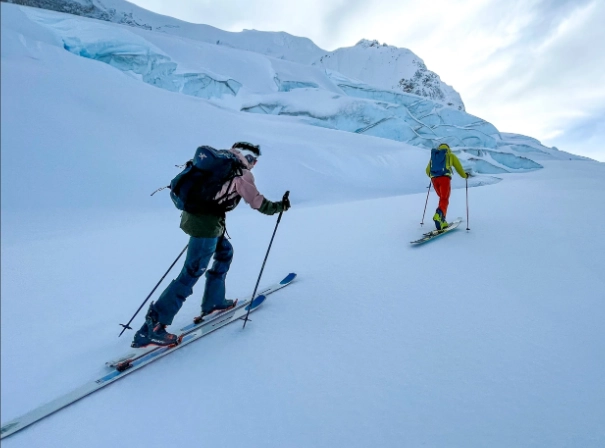 It's about earning your turns in the most profound way possible.
What Exactly IS a Ski Mountaineering Adventure?
People throw the term around a lot. Is it just fancy backcountry skiing? Not quite. Think of it as a spectrum. On one end, you have a simple ski tour in rolling, low-angle terrain. On the far other end, you have technical ascents involving ice axes, crampons, ropes, and climbing steep couloirs where a fall would be disastrous. A ski mountaineering adventure typically lives closer to that technical end. It involves using skiing as a mode of ascent and descent in alpine terrain where mountaineering skills are non-negotiable for safety. The goal is the summit, and the ski down is the glorious reward.
The beauty—and the challenge—is that every trip is a puzzle. You're constantly assessing: snow stability, weather windows, route finding, and your own energy levels. It's a 3D chess game played on a moving, sometimes hostile, but always beautiful board. Planning these adventures requires a different mindset than booking a lift ticket.
Why Bother? The Allure of the Earned Descent
Why put yourself through the grueling climb, the early starts, the heavy pack, and the very real risks? For me, and for many, it boils down to a few things you simply can't get anywhere else.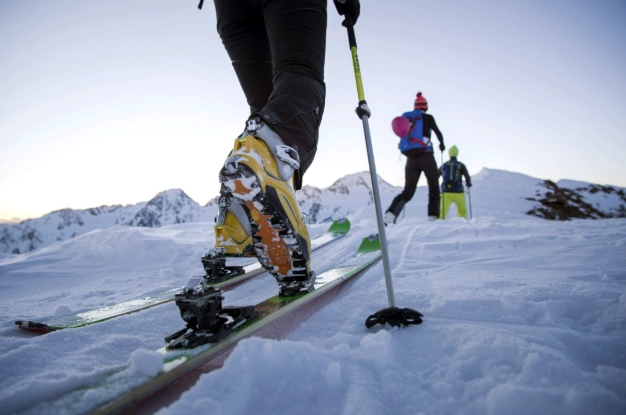
- Absolute Freedom and Solitude: You leave the crowds, the lines, and the tracked-out snow far behind. The only sound is your breathing and the crunch of your skins on snow. The sense of being in a place entirely on your own terms is intoxicating.
- The Ultimate Challenge: It tests you physically and mentally like few other things. Successfully navigating a complex route, managing fear, and pushing your limits creates a sense of accomplishment that lasts for weeks.
- A Deeper Connection to the Mountains: You learn to read the landscape—the shape of the snowdrifts, the angle of the sun on a slope, the whisper of the wind over a ridge. You're not a passenger; you're a participant.
- The Quality of the Skiing: Let's not forget the payoff! The snow in the high alpine, protected from sun and wind, can be the lightest, deepest powder you'll ever experience. And you get to claim that entire face as your own personal run.
The Non-Negotiable Gear List: Don't Skimp Here
Your gear is your lifeline. In the backcountry, there's no ski patrol to bail you out. Every item needs to be reliable, and you need to know how to use it. Forgetting something isn't an inconvenience; it can be a trip-ender or worse. Here’s a breakdown of what you actually need for serious ski mountaineering adventures.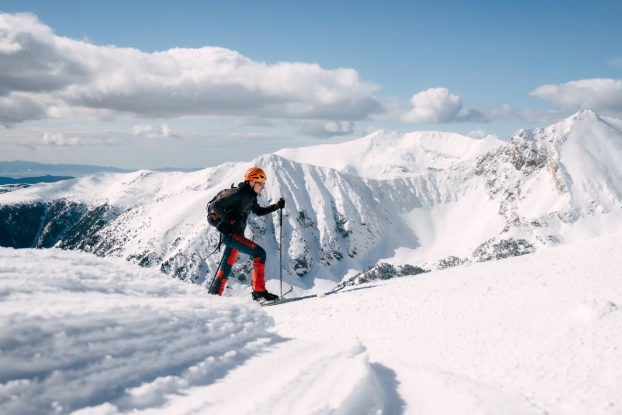
The Core System (The Big Three)
This is your foundation. Getting this right is more important than any fancy gadget.
- Skis: You want something versatile—not too heavy for the ascent, but stable and floaty for variable descent conditions. Mid-fat touring skis (95-105mm underfoot) are the sweet spot for most.
- Bindings: Tech (pin) bindings are the undisputed king for efficiency on the uphill. Look for models with a reliable release mechanism for the down. Don't just buy the lightest ones; durability matters when you're kicking steps in rock-hard snow.
- Boots: This is your most critical interface. A good ski mountaineering boot walks nearly as well as a hiking boot but still delivers powerful ski performance. Fit is everything. A blister at 12,000 feet ruins everything.
But the core system is just the start. The real meat of a ski mountaineering kit is in the safety and climbing gear.
| Item Category | Specific Gear | Why It's Crucial | Pro Tip / Watch Out |
|---|---|---|---|
| Avalanche Safety | Transceiver, Probe, Shovel (Metal Blade!) | This is your group's insurance policy. Non-negotiable for every person, every time. | Practice with your transceiver monthly. A buried beacon's battery doesn't care about your good intentions. |
| Climbing Hardware | Crampons (compatible with boots), Ice Axe (often two for steep terrain), Harness, Helmet | Enables travel on steep, icy, or technical terrain where skis alone are unsafe. | Make sure your crampons FIT YOUR BOOTS PERFECTLY before the trip. A loose crampon is a deadly projectile. |
| Clothing System | Baselayers, Insulating Mid-layers, Hardshell Jacket & Pants, Gloves (multiple pairs), Goggles & Sunglasses | You'll experience sweating on the climb and freezing on the descent. Layering is the only way to manage. | Cotton kills. It stays wet. Merino wool or synthetic fabrics only. Bring a dedicated, warm, dry pair of gloves for the summit and descent. |
| Pack & Essentials | 35-45L Backcountry Pack, First Aid Kit, Headlamp, Fire Starter, Multi-tool, Map/Compass/GPS | Carries your gear and survival essentials. Your pack should carry well when heavy. | Organize your pack for quick access: avalanche gear on top, layers in the middle, spare food/water at the bottom. Practice accessing your probe and shovel blindfolded. |
Skills Before Thrills: The Training Pyramid
You can have all the gear in the world, but without the skills, it's just expensive baggage. Building competence is a pyramid. You can't jump to the top.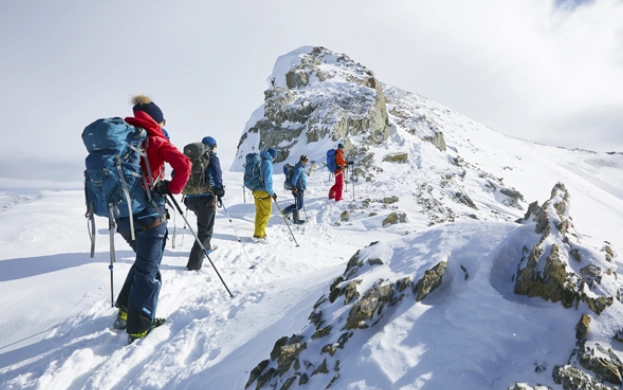
Foundation Level: Competent Resort Skier + Basic Fitness
You need to be able to ski all conditions—ice, crud, deep powder, moguls—confidently and in control. Falling is not an option on a 45-degree slope with rocks below. Fitness-wise, you need strong legs and cardio. A typical day involves 4-8 hours of continuous exertion with a 20-30 lb pack. Start training months in advance.
Intermediate Level: Avalanche Education & Basic Touring
This is the single most important step. Take an Avalanche Rescue course immediately, followed by a Level 1 course from a reputable provider like the American Avalanche Association. This isn't optional. Learn to use your gear, practice skinning, and master transitions on easy terrain.
Advanced Level: Mountaineering Skills & Complex Navigation
This is where ski mountaineering truly separates itself. You need to learn:
- Self-arrest with an ice axe (and practice it until it's muscle memory).
- Efficient travel in crampons on steep snow and ice.
- Rope work for short rappels or belayed sections.
- Advanced navigation using a map, compass, and GPS in whiteout conditions.
Planning Your Dream Trip: A Step-by-Step Reality Check
Okay, you're getting geared up and skilled up. Now for the fun part: planning the adventure. But 'fun' here means 'meticulous'. A successful ski mountaineering trip is 80% planning, 20% execution.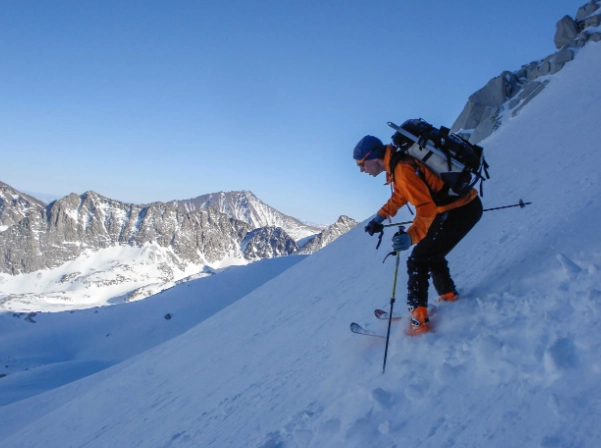
Step 1: Choose Your Objective (Be Realistic)
Don't pick a photo from a magazine and decide that's your first goal. Match the objective to the weakest member of your team. Use guidebooks, sites like SummitPost, and local knowledge. Consider: round-trip distance, total elevation gain, max slope angle, and technical challenges (crevasses, rock bands, etc.).
Step 2: The Nitty-Gritty Logistics
This is where trips fall apart. Permits? Many popular alpine zones require them. Check with the local land manager, like the National Park Service or US Forest Service. Access? Is the trailhead road plowed? Where will you camp or stay? Book huts or campgrounds far in advance. Weather windows? Be prepared to postpone or change objectives entirely. Flexibility is a core skill.
Step 3: The Daily Game Plan
Start early. I mean, *alpine start* early. You want to be heading down before the sun has had time to warm the snow slopes and increase avalanche danger. Plan conservative turn-around times and stick to them. The mountain will always be there another day. Ego won't dig you out of a slide.
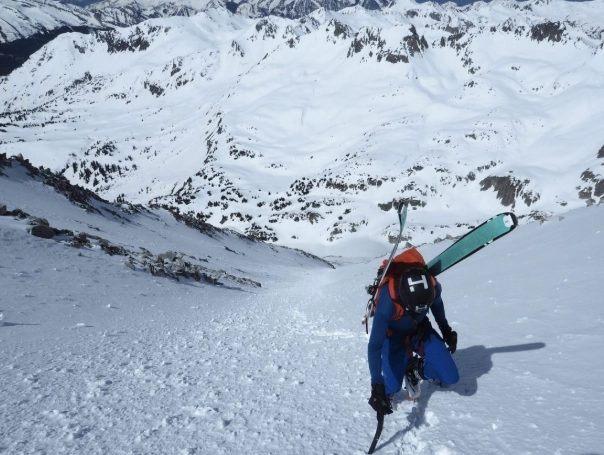 The summit is optional. The return is mandatory.
Safety: It's Not a Checklist, It's a Mindset
We've touched on avalanche safety, but let's go deeper. For ski mountaineering adventures, the hazards multiply.
- Cornices: Those beautiful, wave-like overhangs of snow on ridges? They can break off far back from the edge. Never walk on the crest of a corniced ridge.
- Crevasses: Traveling on glaciers requires roped travel, crevasse rescue knowledge, and the ability to recognize hidden danger. Unless you're trained, avoid glaciated terrain without a guide.
- Changing Conditions: A sunny morning can turn into a whiteout blizzard in hours. Always have a bail-out plan and know your escape routes.
- Group Dynamics: Open, honest communication is vital. If someone is tired, scared, or has a bad feeling, the group must listen. There's no room for peer pressure in the mountains.
Check the avalanche forecast every day from a reliable source like the American Avalanche Association's forecast centers, but remember—the forecast is a starting point, not a guarantee. You are responsible for your own snow assessments on the ground.
Answering Your Burning Questions (The FAQ)
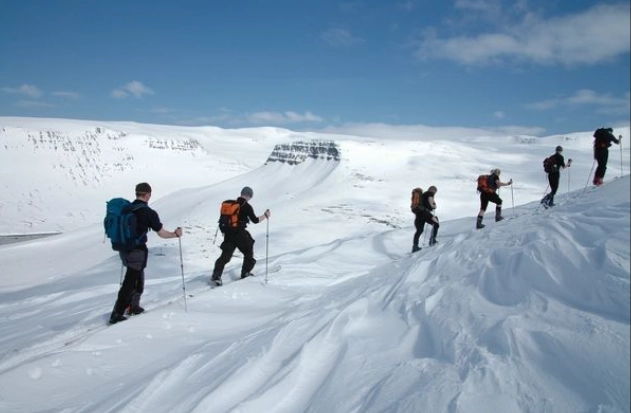
So, is it worth it? The frozen toes, the pre-dawn alarms, the heart-in-your-throat moments on an exposed ridge? For a slice of perfect silence at 13,000 feet, followed by a descent that feels like flying through a world you've earned the right to see... absolutely. It redefines what skiing can be. Now get out there, but for goodness' sake, get trained first.