Quick Navigation
- Getting Started: Your First Foray onto Snow
- Moving Beyond the Basics: The Art of the Turn
- The Holy Grail: Powder Skiing and Off-Piste Adventures
- Gear Deep Dive: Building Your Quiver
- Planning the Ultimate Ski Trip (Without Going Broke)
- Staying Safe and Sound on the Hill
- Answers to Questions You're Probably Asking
Let's be honest. The idea of skiing can be equal parts thrilling and terrifying. You see those videos of people floating through untouched powder, carving perfect arcs down a sun-drenched mountain, and you think, "I want that." Then you remember the cost, the cold, the very real possibility of spending more time on your backside than on your skis. I get it. My first time on skis was a comedy of errors that ended with me gently colliding with a very patient ski instructor. But here's the thing – it gets better. Fast.
This isn't some fluffy inspirational piece. We're going to dig into the real stuff. The gear that's actually worth your money, the techniques that make a difference, and how to plan a trip that doesn't leave you bankrupt or broken. Whether you're staring at a rental form wondering what "ski length" even means, or you're a weekend warrior looking to step off the groomed trails, there's something here for you.
Skiing is more than a sport; it's a passport to winter landscapes you'd otherwise never see. The silence of a forest after a snowfall, the burn in your legs after a long run, the sheer joy of linking turns together – it's addictive. But you've got to start smart.
Getting Started: Your First Foray onto Snow
So you've decided to give it a shot. Awesome. The first hurdle is often just figuring out what you need. The ski industry loves jargon, so let's cut through it.
Gear: To Buy or Not to Buy?
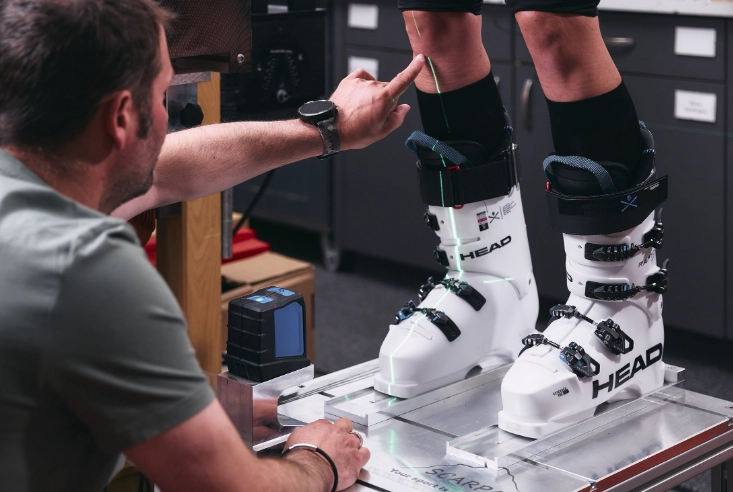
For your first few times, rent everything. Modern rental gear from a reputable shop at the mountain is perfectly good. It lets you try skiing without a massive upfront cost. When you're ready to buy, start with boots. Ill-fitting boots are the number one source of misery on the mountain. A good boot fitter is worth their weight in gold – they'll make sure your feet are snug, warm, and in control.
Skis come in all shapes. For beginners, you want something shorter, softer, and with "rocker" at the tip – this makes them easier to turn. As you progress, you'll look for longer, stiffer skis for stability at speed. But that's a problem for future you.
What should you buy first? A helmet. Non-negotiable. Goggles. Gloves (and a spare pair because wet gloves are the worst). Good socks – not cotton! Merino wool is your friend. A baselayer that wicks sweat. You can layer up with cheaper mid-layers and a waterproof shell. Don't get sucked into buying the most expensive jacket right away.
Where to Go: Picking Your First Mountain
Not all ski areas are created equal for beginners. You want a place with a dedicated, gentle learning area (often called a "bunny hill" or "magic carpet" area), a good ski school, and patient staff. A smaller, local hill can often be a better, less intimidating choice than a massive, famous resort.
Look for places that offer beginner-friendly package deals – lift ticket, rental, and lesson all bundled together. It's simpler and usually cheaper.
Here’s a quick comparison of considerations for your first few trips versus when you're more confident:
| Consideration | First-Time Ski Trip Focus | Intermediate+ Trip Focus |
|---|---|---|
| Terrain | Abundant green (easy) runs, dedicated learning zone, gentle slopes. | Variety of blue (intermediate) and black (advanced) runs, off-piste access, terrain parks. |
| Cost Priority | Value packages (lift/rental/lesson), proximity to save on travel. | Snow quality, vertical drop, advanced lift systems (gondolas, high-speed chairs). |
| On-Mountain Needs | Easy lodge access, patient rental staff, clear signage. | Quick food options, reliable ski patrol, good apres-ski scene. |
| Gear Mindset | Comfort and forgiveness. Rent to try different setups. | Performance and specialization. Demoing to fine-tune your perfect ski. |
Moving Beyond the Basics: The Art of the Turn
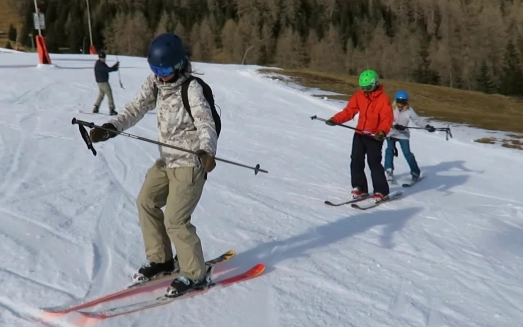
Once you can slide down a gentle slope without panicking, the real fun begins. Learning to turn is what unlocks the mountain. It's not about forcing the skis around with sheer will. It's about subtle weight shifts and letting the ski's design do the work.
The snowplough (or pizza slice) is your initial brake and steering tool. But the goal is to graduate to parallel turns, where your skis stay side-by-side. How do you get there? It's about moving your weight forward and onto the edges of your skis. Think about pressing your shins into the front of your boot and rolling your knees slightly inward toward the slope.
It feels weird at first. You'll catch an edge and fall. Everyone does. The key is to start on a slope so easy you're almost bored. Practice there. Build the muscle memory. Then take it to a slightly steeper pitch.
What's the biggest mental block? Fear of speed. It makes you lean back, which is the worst thing you can do. Leaning back puts you out of control. You have to commit to being forward, even when everything in you is screaming to sit down. A good instructor can literally push you into the right position.
Different snow conditions demand different techniques. Groomed corduroy is forgiving and fast. Icy patches require sharper, more committed edging. Heavy, wet snow (often called "mashed potatoes") needs a more powerful, up-and-down motion to power through. And then there's powder...
The Holy Grail: Powder Skiing and Off-Piste Adventures
Powder. It's the reason people get obsessed with skiing. Floating through deep, light snow is a sensation unlike any other. It's quiet, effortless, and profoundly joyful. But it's also a different skill set entirely.
In powder, you need to unlearn some habits from groomed snow. You must stay centered or even slightly back on your skis to keep the tips from diving. Your turns become slower, rounder, and more fluid. You let the snow buoy you up. It's less about carving and more about surfing.
This is where ski design matters. Powder skis are wider (often 100mm+ underfoot) with more rocker. This extra surface area keeps you on top of the snow instead of plunging through it.
But here's the critical part: off-piste skiing demands avalanche awareness. Venturing outside the marked ski area boundaries (backcountry) or even into un-groomed areas within the resort (sidecountry) comes with serious risks.
This is non-negotiable.
If you want to explore beyond the ropes, you need education and gear. An avalanche safety course is mandatory. You need to learn how to read terrain, understand avalanche forecasts, and use rescue equipment. The essential gear trio is a transceiver (beacon), a probe, and a shovel. Everyone in your group must have one and know how to use it. This isn't gear for show; it's for finding and digging out a buried partner in a race against time.
Always check the local avalanche forecast before you go. In the US, the American Avalanche Association provides links to regional forecast centers. In Canada, consult Avalanche Canada. In Europe, services like the SLF Institute for Snow and Avalanche Research in Switzerland are vital resources. Never rely on guesswork.
Is it worth the hassle? For the right person, absolutely. The solitude, the untracked lines, the sense of adventure – it's the pinnacle of skiing for many. But you have to respect the mountain. It doesn't care about your experience level.
Gear Deep Dive: Building Your Quiver
Once you're hooked, you'll start thinking about your own equipment. The concept of a "quiver" – having different skis for different conditions – is real. But you don't need five pairs. Most recreational skiers can be covered with one or two.
Let's break down the categories:
- The All-Mountain Daily Driver: This is your workhorse. 85mm-100mm underfoot. It can handle groomers, a bit of chop, and the occasional powder day. It's the most versatile ski you can own. If you only buy one pair, make it this.
- The Powder Specialist: Wider, 105mm+. Lots of rocker. Blissful in deep snow, a chore on hardpack. A luxury for most, but a necessity if you live somewhere with frequent dumps.
- The Carver / Frontside Ripper: Narrow (70mm-85mm), stiff, with lots of camber. Designed for high-speed, precise turns on groomed snow. Incredibly fun if you love racing down corduroy, useless in anything soft.
Bindings matter too. They're not just foot holders; they're your release mechanism in a fall. Always have them adjusted by a certified shop technician based on your weight, height, age, and ability (your "DIN" setting). Don't tinker with this yourself.
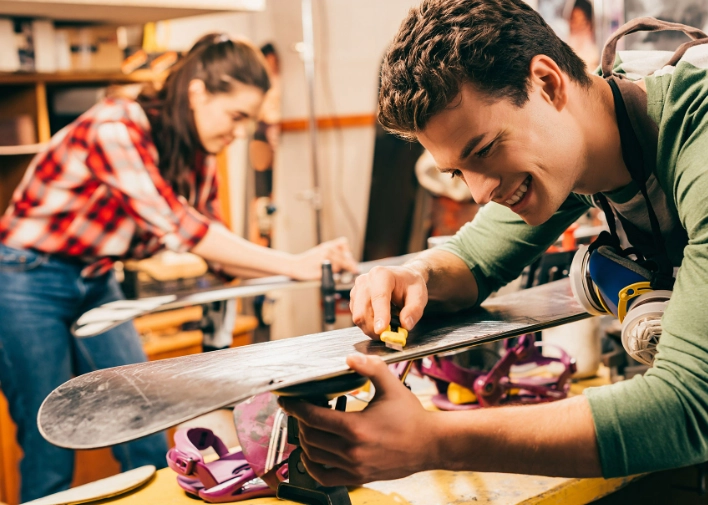
Ski maintenance is boring but crucial. Getting your skis professionally tuned (edges sharpened, base waxed) a couple of times a season makes a world of difference. A well-waxed ski glides faster with less effort. Dull edges won't grip on ice. You can learn to do a basic wax at home with an iron and some wax – it's satisfying and saves money.
Planning the Ultimate Ski Trip (Without Going Broke)
Ski vacations are expensive. There's no sugar-coating it. But you can be smart about it.
Timing is everything. Avoid peak periods like Christmas, New Year's, and President's Day weekend. Prices skyrocket and slopes are crowded. January (after New Year's) often has great snow and lower prices. Late March and April offer longer days and spring skiing vibes – the snow can be fantastic in the morning, slushy in the afternoon (aka "corn snow").
Look beyond the famous mega-resorts. Smaller, independent mountains often have cheaper lift tickets, shorter lines, and more character. In North America, consider places in the Canadian Rockies, the Pacific Northwest, or the smaller hills of New England. In Europe, the Alps are king, but look at lesser-known valleys in Austria, Italy, or France instead of just the big names like Chamonix or St. Anton.
Accommodation: Staying "ski-in/ski-out" is luxurious but costs a premium. Often, a condo or hotel a short shuttle ride away is significantly cheaper. Cooking some of your own meals saves a fortune compared to eating out for every meal.
Lift tickets: Buy online in advance. Almost every resort offers a discount for early purchase. Look at multi-day passes. If you're planning multiple trips, the Epic Pass or Ikon Pass can offer incredible value, but do the math – you need to ski a lot of days to break even.
Staying Safe and Sound on the Hill
Skiing involves risk. Managing that risk is part of the sport. The responsibility code isn't just a sign you ignore. It's common sense.
- The skier downhill of you has the right of way. You're responsible for avoiding them.
- Don't stop where you obstruct a trail or are hidden from above.
- Look uphill before merging onto a trail.
- Use devices to help prevent runaway equipment.
- If you're involved in or witness an accident, alert Ski Patrol and assist.
Fitness matters. Skiing uses muscles you forget you have. Doing some pre-season conditioning – squats, lunges, core work, cardio – will make your first days less painful and reduce injury risk. Stretch in the morning and after skiing.
Hydrate. The cold and altitude trick you into thinking you're not thirsty. Drink water constantly. And use sunscreen. The sun reflecting off the snow is intense. Goggle tan lines are a badge of honor, but sunburn isn't.
Know your limits. There's no shame in skiing a blue run all day. Pushing yourself is how you improve, but recklessly following friends down a double-black diamond when you're not ready is a recipe for a bad time or worse. Listen to your gut. If a run looks terrifying, it probably is – for you, right now. You can always come back to it next season.
Answers to Questions You're Probably Asking
At the end of the day, skiing is about fun. It's about the cold air on your face, the stunning views, the shared laughter on the chairlift, and the feeling of accomplishment after conquering a tough run. It has its frustrations, its costs, and its risks. But for millions of us, the pull of the mountains every winter is irresistible. Start small, be safe, and enjoy the ride down. You might just find your new favorite thing.
See you on the slopes.