Let's be honest. The first time you see a drag lift, it looks deceptively simple. A moving T-shaped bar or a rope that pulls you up the hill. How hard could it be? Then you try it. Maybe you tumble off halfway up. Maybe you and your partner get tangled like a couple of newborn giraffes on ice. Suddenly, that green run at the top feels miles away, guarded by this mechanical gatekeeper.
I've been there. I remember my first encounter with a T-bar at a small local hill. I was confident after mastering the chairlift. The drag lift ski humbled me, quickly and decisively. It's a rite of passage. But here's the thing: once you crack the code, a whole new world of skiing opens up. Some of the best, least crowded runs are serviced by these old-school workhorses. This guide is here to demystify the whole process, from that initial apprehension to riding up with your eyes closed (well, maybe not closed).
In This Guide
- What Exactly Is a Drag Lift Ski, Anyway?
- The Drag Lift Family: Know Your T-Bar from Your J-Bar
- The Step-by-Step: How to Actually Ride a Drag Lift Without Falling
- Top 5 Reasons People Fall Off a Drag Lift (And How to Be the One Who Doesn't)
- Snowboarders vs. The Drag Lift: A Special Consideration
- Beyond the Basics: When the Drag Lift Gets Gnarly
- Your Drag Lift Questions, Answered (The Stuff You Were Afraid to Ask)
- The Final Verdict: Is Conquering the Drag Lift Worth It?
What Exactly Is a Drag Lift Ski, Anyway?
Before we dive into the how-to, let's clear up the what. The term "drag lift" is the broad category. It refers to any lift where you remain in contact with the snow while being towed uphill. You're not sitting; you're being dragged, hence the name. Your skis or snowboard stay on the snow. This is different from a chairlift or gondola where you're fully off the ground.
Why do resorts still use them?
Simple economics and terrain. They're cheaper to install and maintain than chairlifts, especially for shorter, steeper pitches where putting in a chair would be overkill or technically challenging. They're perfect for getting you from the bottom of a bowl back to the ridge, or accessing a classic beginner area. So, learning to use a drag lift ski isn't just a quirky skill—it's a key to unlocking more of the mountain.
The Drag Lift Family: Know Your T-Bar from Your J-Bar
Not all drag lifts are created equal. Knowing what you're approaching can save you a world of confusion. Here’s the breakdown.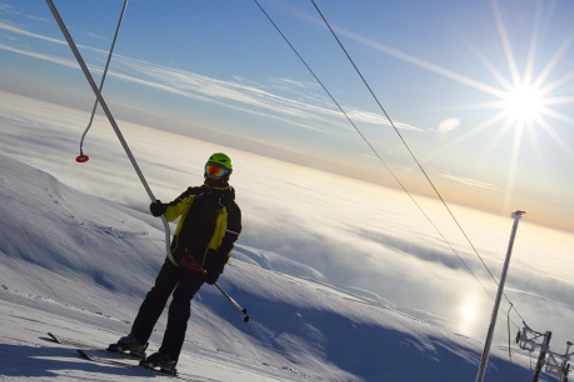
| Type | What It Looks Like | Who It's For / Capacity | The Good Stuff | The Annoying Bits |
|---|---|---|---|---|
| T-Bar | A horizontal bar shaped like a 'T'. The crossbar goes behind you. | Primarily two people (one on each side of the T). Some are single. | Stable for pairs, good for social ride-up. Efficient mover of people. | Requires coordination with a partner. Can be tricky on very steep sections. |
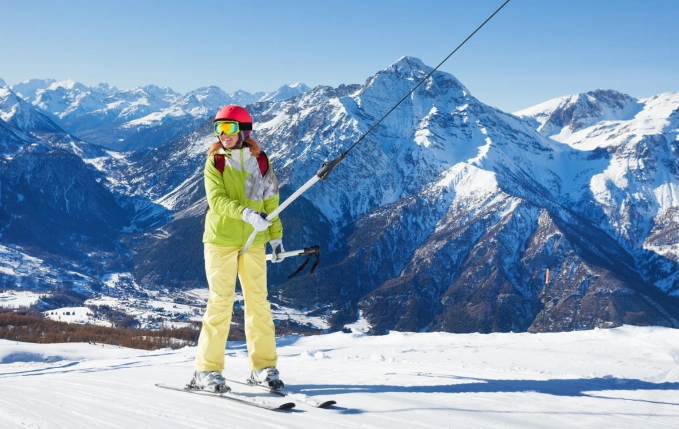
| J-Bar / Platter / Poma | A vertical pole with a round disc or 'platter' at the end. You sit the disc between your legs. | One person per lift. | You only have to worry about yourself. Simple concept. | Requires good balance. The pole can feel intrusive. The disc is cold! |
| Rope Tow | A continuously moving loop of rope you grab onto. | Multiple people, one after another. | Ultra-simple technology. Often found on beginner slopes and magic carpets. | Requires grip strength. Can be jerky. Rope burns are a real (and painful) possibility. |
You'll hear the terms used somewhat interchangeably, but a T-bar is the most common two-person drag lift you'll encounter. The single-person platter lift (often called a Poma lift after the company that popularized them) is a close second. Rope tows are less common on main slopes but are a staple at ski schools and tiny hills.
The Step-by-Step: How to Actually Ride a Drag Lift Without Falling
This is the core of it. Let's break it down into phases. I'm focusing on the T-bar and J-bar here, as they're the most common. The principles for a rope tow are similar—just substitute "grab the rope" for "get into position."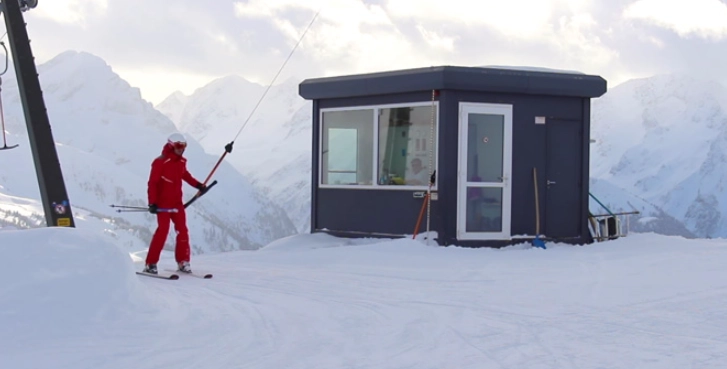
Phase 1: The Load Zone (Don't Rush!)
This is where 50% of mistakes happen. People panic and try to load before they're ready.
- Observe first. Watch one or two pairs/riders ahead of you. See where they stand, how they grab the bar, how the attendant handles it.
- Get your gear ready. Skis pointed straight ahead. Poles in your outside hand (the one away from the lift). If you're on a snowboard, strap both feet in. This is non-negotiable for a drag lift ski.
- Move to the wait line. Usually marked on the snow. Go with your partner if you're on a T-bar. Get your timing synced.
A quick word on partners for a T-bar:
Choose wisely. Ideally, someone of similar height and weight. A mismatch can make the ride lopsided and uncomfortable. If you're with a kid, there are often special kid-sized T-bars or you can ride with them between your legs. Ask the lift attendant.
Phase 2: The Grab and Sit
Here's the moment of truth. The attendant will swing the T-bar or J-bar around to you.
For a T-Bar: As the bar comes, grab the center pole with your free hand (the one not holding poles). Let the horizontal bar swing behind you and rest snugly against your backside. Do NOT sit down on it like a chair. It's a support. You and your partner should feel the bar evenly between you. Stand up straight, skis parallel and pointed directly up the track.
For a J-Bar / Platter: As the disc comes, guide it between your legs. Let the pole come to you. Place the disc firmly underneath you, like you're sitting on a very tiny, cold bicycle seat. Hold the vertical pole lightly for balance. Again, stand tall, weight centered.
Phase 3: The Ride Up (The Easy Part, Honestly)
Once you're moving, it's usually smooth sailing if you follow these rules:
- Look ahead, not down. Your body follows your eyes. Look up the hill at the track, not at your skis or the disc. This keeps you balanced.
- Relax your body. Tension is the enemy. A stiff, rigid posture makes every bump worse. Keep a slight, athletic flex in your knees and ankles.
- Let the lift pull you. Don't try to shuffle or skate uphill. Just glide. Your job is to balance, not to propel.
- For T-bars: Maintain light contact with your partner. Don't lean away from each other. If one person falls, let go of the bar immediately. Don't try to hold on and drag them.
Phase 4: The Unload (Don't Celebrate Early)
You see the top. Don't get excited and bail out prematurely.
- Ride all the way to the clearly marked unload area. It's often a flat or slightly rising section.
- As you enter the flat, prepare to let go. For a T-bar, simply let the bar slide out from behind you as you glide forward. For a J-bar, let the pole slip through your hands and push the disc away from you gently.
- Skate or step quickly away from the unload track. Clear the area for the people behind you. Then you can finally celebrate making it.
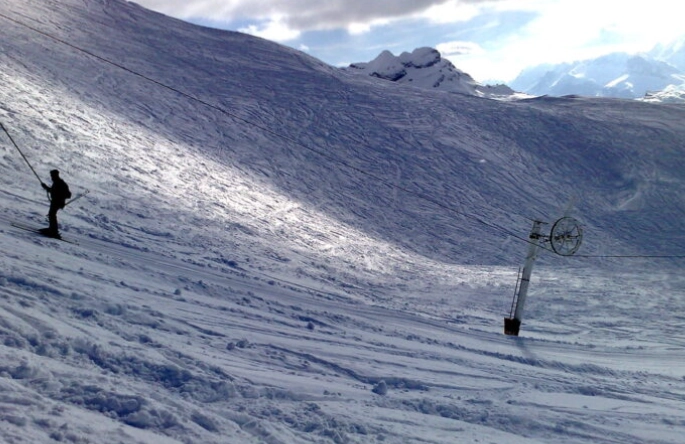
Top 5 Reasons People Fall Off a Drag Lift (And How to Be the One Who Doesn't)
Let's diagnose the common failures. I've been guilty of a few of these myself.
1. The Panic Lean-Back: The lift pulls you, so your instinct is to lean back against it like you're waterskiing. This pulls the bar or disc into the back of your legs, your tips rise, and you're on your back in the snow. Solution: Stand vertically. Let the pull come from your feet, not your butt.
2. The Death Grip: Clutching the pole or rope for dear life transfers every tiny jerk directly into your upper body, throwing you off balance. Solution: Hold on just enough to guide the bar. It's a light touch, not a wrestling match.
3. The Look-Down Spiral: You get nervous, you look at your skis, your weight goes forward, your tails slip out, and down you go. Solution: Head up, eyes on the horizon or the person's back in front of you.
4. The Mismatched T-Bar Tango: One person leans left, the other leans right. The bar becomes a seesaw of doom. Solution: Communicate. A simple "ready?" and agreeing to stand straight solves this. If you're significantly mismatched, ride solo on a J-bar if possible.
5. The Early Bailout: You see the end and think "I'm done!" and step away while the bar is still pulling. This almost always ends with a stumble. Solution: Patience. Ride it out until the pull naturally lessens in the unloading zone.
Snowboarders vs. The Drag Lift: A Special Consideration
Snowboarders, I see you. The drag lift ski can feel like it was designed specifically to torment you. Riding with one foot strapped is a nightmare. The universal rule is: strap both feet in before loading.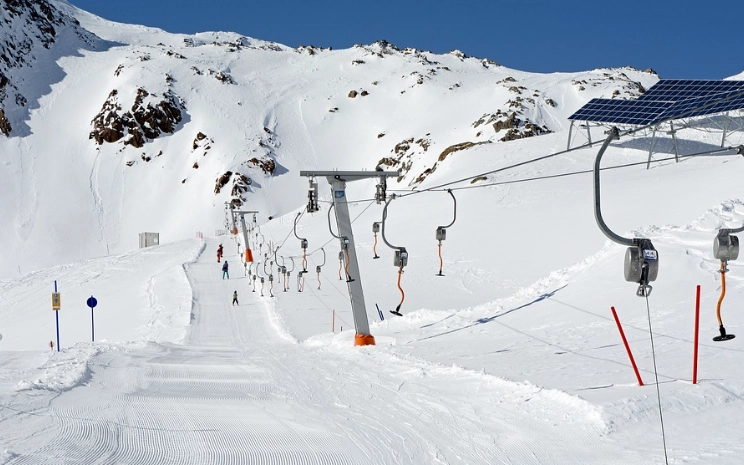
For a J-bar, it's straightforward—just face straight ahead like a skier. For a T-bar, it gets interesting. You have two options:
- Front Foot Forward: The most common method. Stand with your front foot pointing straight up the hill. Your back foot will be perpendicular across the board. It feels weird but works.
- Back Foot Forward: Some prefer to ride switch (backwards) with their back foot leading. Try both on a gentle slope first to see what feels more stable for you.
The key is to keep the board flat on the snow. Any hard edge catch will send you spinning. It requires more core tension than skiing, but you get used to it. The Professional Ski Instructors of America & American Association of Snowboard Instructors (PSIA-AASI) teach the front-foot-forward method as the standard, and their instructor resources are a goldmine for technique breakdowns.
Beyond the Basics: When the Drag Lift Gets Gnarly
Okay, you've mastered the bunny hill drag lift. Now you encounter one that goes up a steep, bumpy, or off-camber pitch. Gulp.
Steep Sections: This is where not leaning back is absolutely crucial. The steeper it gets, the more you might feel like you're being pulled over your skis. Counterintuitively, you need to keep your weight centered or even slightly forward to keep your tips down. Trust the bar behind you.
Bumps and Uneven Terrain: Use your legs! Absorb the bumps like you're skiing over them. Let your knees and ankles act as suspension. A rigid posture will get bucked off.
Icy Track: This is the worst. Your skis might want to slide sideways. Focus on keeping them perfectly in the groomed track. Sometimes a slight, subtle edge can help, but be careful not to catch an edge.
Honestly, on really tough drag lifts, sometimes it's just about survival. Everyone struggles. Laugh it off if you fall. I've seen expert skiers take a tumble on a tricky Poma lift. It's a great equalizer.
Your Drag Lift Questions, Answered (The Stuff You Were Afraid to Ask)
Your Drag Lift Questions, Answered (The Stuff You Were Afraid to Ask)
Let's tackle some specific queries that pop up all the time in forums and lift lines.
The Final Verdict: Is Conquering the Drag Lift Worth It?
Absolutely, 100%. Think of it as a skill investment. That one intimidating drag lift ski might be the gateway to an incredible, quiet bowl, a fun beginner area with your kids, or just a more efficient way to lap a favorite short run. It makes you a more versatile, confident mountain user.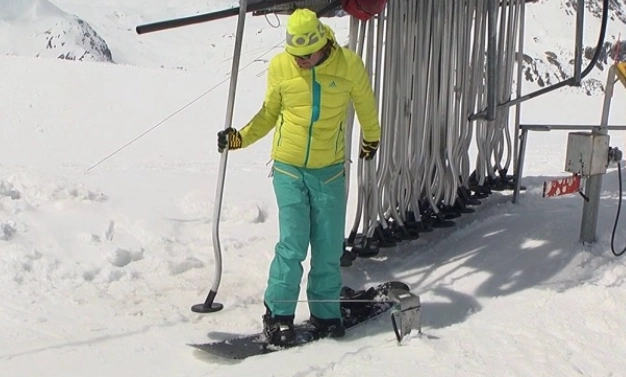
My advice? Find a quiet, gentle one and practice without pressure. Don't wait until you're at the top of a famous resort with a line behind you. The muscle memory will kick in faster than you think.
The drag lift is a classic piece of ski culture. It's not always glamorous, but it's honest. It asks for a little skill and gives back a lot of access. Master it, and you've truly earned your turns.
Now go find one and give it a shot. You've got this.