You're about to drop a few hundred dollars on a new ski helmet. You see stickers for "ASTM F2040," "EN 1077," and maybe a yellow one that says "MIPS." What do they all mean? Is one better than the other? I've been through this confusion myself, standing in the shop, turning a helmet over in my hands. Let's cut through the marketing and get to the truth about ski helmet safety ratings. Your brain will thank you.
What's Inside This Guide
How Do Ski Helmet Safety Ratings Work?
Those little stickers on the inside aren't just for show. They're the result of the helmet being smashed, dropped, and tested in labs to meet specific safety standards. Think of them as a helmet's diploma. No sticker? Don't even consider it.
The Two Main Standards: ASTM and EN 1077
Most helmets you'll see are certified to one or both of these. They're similar but have key differences that matter.
| Standard | Origin / Common Use | Key Focus in Testing | What It Means for You |
|---|---|---|---|
| ASTM F2040 | United States. Common in North America. | Often has more stringent impact energy management tests, particularly for multiple impacts on the same area and side/rear impacts. The test anvils (what they hit the helmet against) can be different. | Considered by many experts to be a slightly more rigorous standard for the types of impacts common in alpine skiing. If you ski mostly in the US or Canada, this is your baseline. |
| EN 1077 | European Union. The standard across Europe and widely accepted globally. | Focuses on impact absorption and field of vision. Has specific tests for retention system strength (the chin strap) and penetration resistance. | The global benchmark. A helmet with EN 1077 is definitely safe. Many high-end helmets carry both certifications to appeal to a worldwide market. |
So, which is better? Here's my take: If a helmet has both stickers, it's passed two tough sets of exams. That's a good sign. If it only has one, choose based on your primary skiing location. For a deep dive into the ASTM F2040 standard, you can check the official ASTM International page.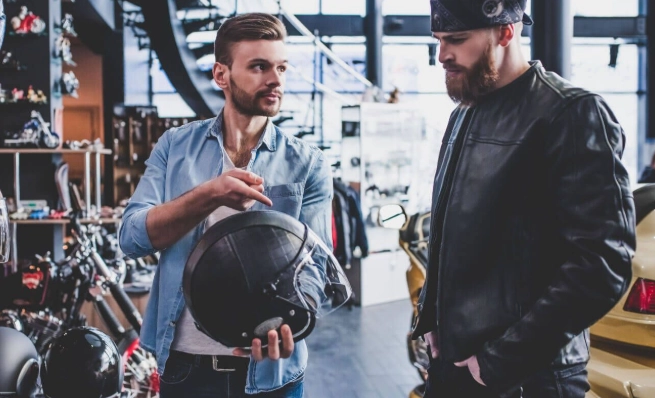
Pro Tip: Don't get hung up on ASTM vs. EN. The bigger mistake is buying a helmet without any proper certification. I've seen "novelty" helmets online that look cool but offer zero real protection. Always check for the sticker.
Understanding MIPS and Other Rotational Impact Technologies
This is where things get interesting, and where a lot of newer research is focused. Traditional standards test for straight, linear impacts. But when you crash on a slope, you're rarely hitting your head straight on. You're more likely to hit at an angle, which causes your head to rotate suddenly.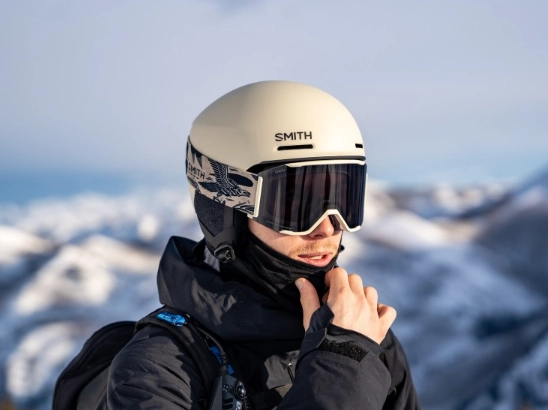
That rotational motion is a major contributor to brain injuries like concussions.
Enter technologies like MIPS (Multi-directional Impact Protection System). It's not a separate rating, but a low-friction layer inside the helmet that allows the outer shell to slide slightly relative to your head during an angled impact. This helps reduce the rotational forces transferred to your brain.
Think of it like this: If your helmet is glued to your head in a crash, all that twisting energy goes straight to your skull. If it can slide 10-15mm, it dissipates some of that energy.
MIPS is the most common, but it's not alone. WaveCel (from brand like POC and others) uses a collapsible cellular material that bends and glides. SPIN (Shearing Pad INside) from Smith uses silicone pads that shear. They all aim to solve the same problem: rotational force.
Is it worth the extra $50-$100? After a close call in the trees a few seasons back, I say absolutely. For beginners sticking to groomers, the baseline ASTM/EN rating might suffice. But if you're pushing your limits, skiing in variable conditions, or just value cutting-edge protection, it's a smart investment. Learn more about how the technology works from the MIPS official site.
How to Choose a Ski Helmet Based on Safety Ratings?
Okay, you know what the stickers mean. Now let's apply it. Buying the safest helmet isn't just about picking the one with the most acronyms. Fit is everything. A poorly fitting $300 helmet with MIPS is less safe than a perfectly fitting $150 helmet without it.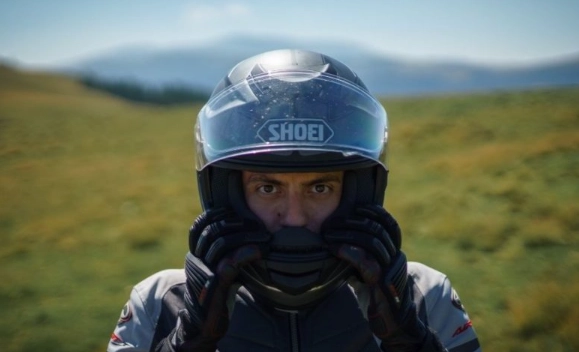
Here’s your actionable checklist:
- Step 1: Certification First. Immediately rule out any helmet without an ASTM F2040 or EN 1077 (or both) label inside. This is non-negotiable.
- Step 2: Prioritize Rotational Tech. For your shortlist, lean towards models featuring MIPS, WaveCel, SPIN, or a similar system. It's the single biggest safety advancement in helmets in the last decade.
- Step 3: The Fit Test. This is where most people go wrong. The helmet must be snug, not tight. With it on, try to roll it forward off your head. If it moves more than an inch, it's too big. Shake your head side-to-side and up-and-down. The helmet should move with your skin, not independently. The cheek pads should touch your cheeks without pressure points.
- Step 4: Goggle Compatibility. Bring your goggles or try some on in the shop. There should be no gap between the top of the goggle and the helmet brow (the "gapo"). This isn't just about style; it's about keeping snow and wind out.
- Step 5: Consider Construction. In-mold construction (a foam liner fused to a thin shell) is lighter and often better at dissipating repeated impacts. Hardshell (a thick ABS shell over foam) can be more durable for rough handling and major single impacts. For most skiers, in-mold is the way to go.
A personal story: I once bought a helmet online based purely on tech specs and a good price. It had all the right ratings. When it arrived, it felt "okay." On the hill, every hard turn or bump made it shift just a little. That constant micro-movement was distracting and, I realized, a sign it wouldn't stay put in a real crash. I sold it and went to a shop. The difference was night and day.
FAQs on Ski Helmet Safety Ratings
Having both is the gold standard—it means the helmet has been tested against two different, rigorous protocols. In practical terms, ASTM F2040 is sometimes considered to have slightly tougher criteria for certain types of impacts common in skiing. However, both certifications guarantee a high level of baseline protection. Don't stress over choosing one vs. the other if a helmet has both. If you're in North America, prioritizing ASTM is fine; in Europe, EN 1077 is the norm. The key is having at least one.
It's the most significant safety upgrade you can buy after ensuring basic certification. Traditional standards don't address rotational forces, which are a major factor in many brain injuries. While it adds to the cost, think of it as insurance for your most important asset. For casual skiers on gentle slopes, the risk profile is lower. But for anyone skiing fast, in challenging terrain, park, or trees, the added protection is a wise investment. I won't buy a helmet without it anymore.
The common advice is every 5 years, due to the degradation of the foam's materials from UV exposure, sweat, and temperature cycles. But that's a guideline, not a rule. The non-negotiable replacement triggers are: 1) Any significant impact, even if you don't see a crack. The foam compresses to absorb energy, and it won't perform the same way twice. 2) Visible damage like cracks, deep scratches, or a compromised shell. 3) If the fit system no longer tightens properly or parts are broken. If you treat it well and have no crashes, you might get more than 5 years. But err on the side of caution.