You feel that? The board seems to have a mind of its own. You initiate a turn, and the edge either doesn't engage or washes out completely. You're fighting for control in the powder, feeling like you're just along for the ride. Or maybe you're in the park, and every landing feels like you're about to snap an ankle.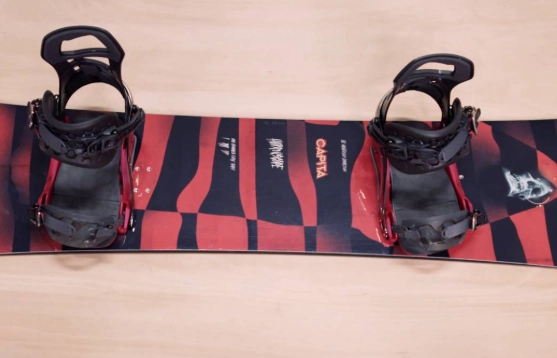
I've been there. Years ago, I blamed my boots, my board, even the snow. It took a near-catastrophic washout on a steep, icy face to realize the truth. The problem wasn't me. It was my bindings.
More specifically, it was my snowboard binding setup.
That's what we're tackling today. This isn't just about tightening some straps. It's about the precise relationship between your body and your board. Get it wrong, and you're fighting your own gear. Get it right, and the board becomes an extension of your legs.
What You’ll Learn
The Foundation: Stance Width and Binding Angles
Let's start with the basics. Your bindings are your only connection to the board. Think of them as the steering wheel and gas pedal of your snowboard. A bad setup gives you vague, unresponsive steering and a laggy throttle. A good one gives you direct, immediate feedback.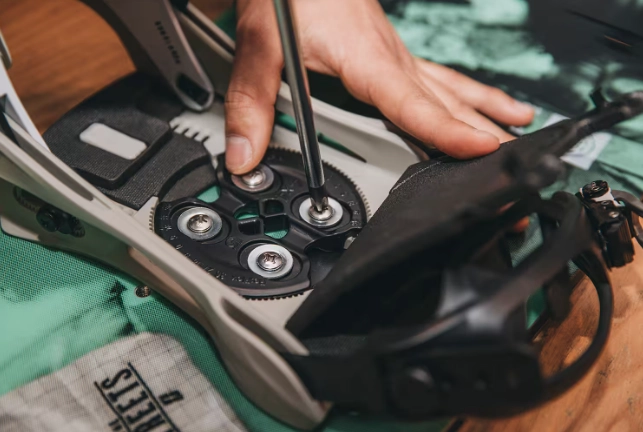
You have two primary levers to pull: where you stand (stance width) and which way your feet point (binding angles).
Stance Width: A Measurement, Not a Guess
This is the distance between the centers of your two bindings. It's not random. It directly affects your board's leverage and your body's stability.
The most common advice is to match your stance width to the width of your shoulders. That's a decent starting point, but it's incomplete. Your shoulder width is a bone measurement. Your riding stance needs to account for your muscle mass and your riding style.
Here's a better method:
- Stand in your socks on a hard floor.
- Jump up and land naturally, a few times.
- Measure the distance between the centers of your feet. This is your natural athletic stance.
Now, take that measurement. For most adults, it falls between 50 and 60 centimeters (roughly 20 to 24 inches).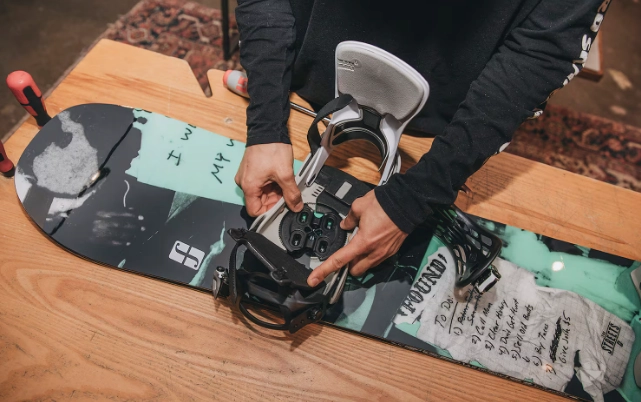
But here's the kicker, and a mistake I see constantly:
Do not set your bindings to the exact reference points stamped on your board. Those are the manufacturer's recommended stance. They are designed for an average rider, on average snow, doing average turns. You are not average.
Instead, start with your natural stance. Then, go ride. Pay attention to these two feelings:
- Tip Catch: Do you feel like the nose of your board is diving into the snow when you're not expecting it, especially in powder or on choppy terrain? That means your stance is likely too narrow. You're too centered over the board, putting too much weight on the nose. Widen your stance by 1-2 centimeters (about half an inch) to shift your weight back slightly.
- Lack of Leverage: Do you feel like you're muscling the board around to initiate a turn, or that it feels sluggish and unresponsive? This could mean your stance is too wide. You're over-extended, reducing your effective leverage on the edge. Narrow it by 1-2 centimeters.
Adjust in small increments. A centimeter can make a noticeable difference.
Binding Angles: The +15/-6 Myth
This is the big one. The "standard" duck stance (+15 degrees on the front foot, -6 degrees on the back) is a great starting point for freestyle riders. It offers a balanced, neutral platform for riding switch (backwards).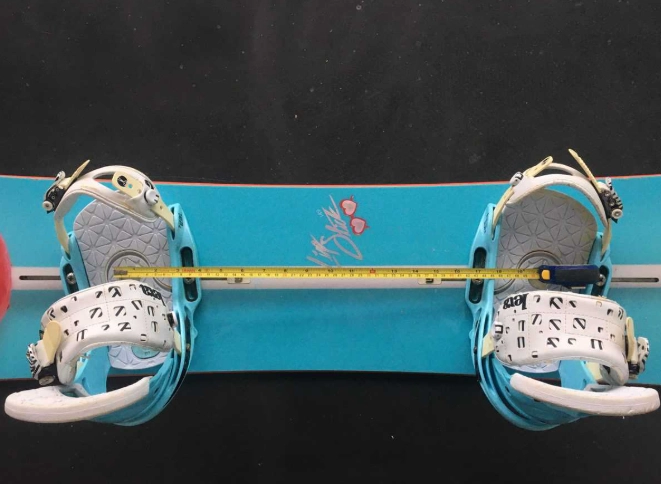
But here's a non-consensus opinion I've developed after years of coaching:
The +15/-6 setup is actively harmful if you're not spending at least 50% of your time riding switch. It trains your body to be slightly pigeon-toed, which can feel unnatural and reduce power transfer on your natural edge.
Most riders will benefit from a more aggressive, directional stance.
| Riding Style | Front Binding Angle | Back Binding Angle | What It Does For You |
|---|---|---|---|
| Freestyle & Park | +12° to +18° | -6° to -12° | Maximum switch riding comfort, neutral edge pressure. |
| All-Mountain & Freeride | +18° to +21° | -3° to -9° | More powerful, engaged front knee driving turns, better edge hold on hard snow. |
| Powder & Deep Snow | +21° to +24° | -1° to -6° | Extremely directional, forces a forward-leaning stance for effortless float. |
My personal go-to for everything except dedicated park days is a +21/-3 setup. It gives me a powerful, driving front foot without making my back foot feel completely disconnected. Try it for a day. You might be surprised at the extra grip and control you gain on your heel-side turns.
The First Adjustment: Finding Your Stance Width
Once you've settled on a base angle setup, you need to position your bindings on the board. This is your stance width. Again, the reference marks are just suggestions.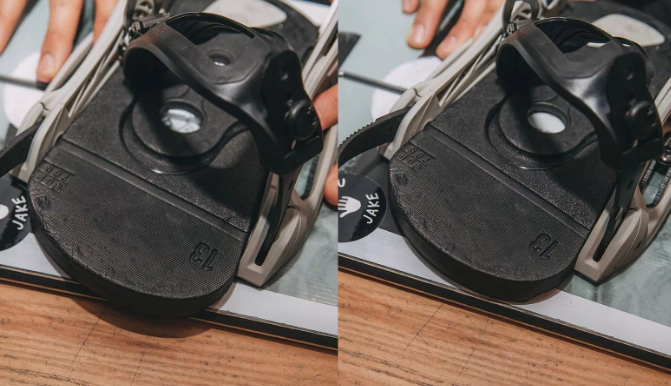
I use a method I call the "knee-over-toe" test. With your boots strapped into the bindings (but not yet on the snow!), stand in your natural athletic stance. Now, slowly bend your knees as if you were initiating a turn.
Look down. Where is your front knee in relation to the front binding disc? If it's way behind the disc, you're too far back. If it's way in front, you're too far forward. You want your front knee to be roughly aligned with the front mounting holes of your front binding. This puts your body in a powerful, balanced position over the board's effective edge.
For most people, this means moving both bindings slightly forward from the reference marks.
The Most Overlooked Setting: Forward Lean and Highback Pre-Bend
This is where the magic happens, and where 90% of setups go wrong. Forward lean and highback pre-bend are not the same thing, but they work together.
- Forward Lean is set at the baseplate of your binding. It tilts the entire binding (and your boot) forward or backward. More forward lean (15°-20°) forces you into a more aggressive, bent-knee posture. This gives you more immediate response when initiating a turn, especially from the back foot. Less forward lean (0°-10°) is more relaxed and forgiving, better for butters and presses.
- Highback Pre-Bend is the forward curve of the highback itself. A flat highback does nothing. You need to pre-bend it forward to match the forward lean of your binding baseplate. This creates a "loaded spring" effect, giving you immediate power and response when initiating a turn, especially from the back foot.
The mistake I see constantly is riders setting their forward lean to a comfortable standing position on flat ground. Don't do that. Set it while simulating a turn.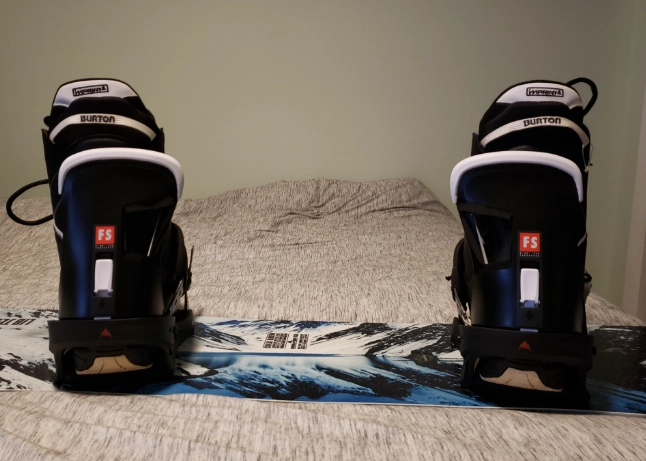
Here's my method:
- Stand on a slight incline (a carpeted staircase works in a pinch).
- Bend your knees as if you were about to carve into the slope.
- Now, adjust the forward lean so that your shin is pressing firmly and evenly against the front of your boot cuff, but not painfully so.
You want a slight pressure. This ensures that when you're actually riding, your leg is engaged and ready to drive into the turn.
As for the highback pre-bend, most modern bindings allow you to adjust this. A good starting point is to match it to your forward lean setting. If your forward lean is at 18°, set your highback pre-bend to around 15°-18°. This creates that harmonious, loaded spring feel.
The Fine-Tuning: Dialing in the Response
Now for the micro-adjustments that separate a good setup from a great one. These are the settings that fine-tune how your board reacts to your input.
Canting: Fixing Your Natural Stance
Most bindings have some degree of cant adjustment. This tilts your boot inward or outward at the ankle. If you're a person who naturally stands with your ankles rolled in (pronation) or out (supination), canting can help align your joints to a neutral, powerful position.
But here's the secret: you should adjust cant last. Get your width, angles, and forward lean dialed in first. Then, go ride. Do you feel any pressure points on the inside or outside of your ankles or knees? If yes, then consider a 1-2 degree cant adjustment to relieve that pressure.
Don't just set it because a chart says so.
Toe Ramp and Heel Cup Adjustments: The Forgotten Details
These are the parts of the binding that actually grip your boot. The toe ramp should be adjusted so that there is no gap between the end of your boot toe and the ramp. The heel cup should be snug around your boot heel.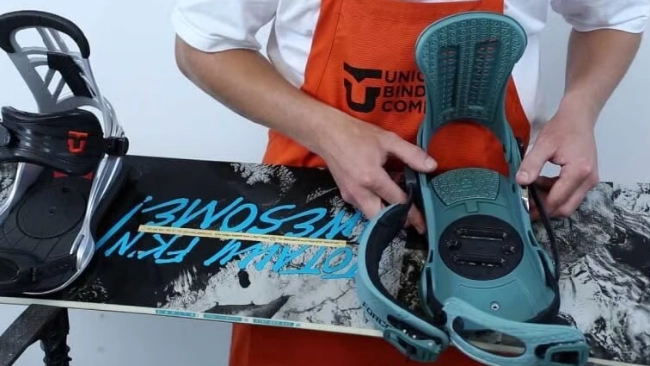
A common mistake is setting the toe ramp too far forward, which can create pressure points on your shins. And a loose heel cup will allow your heel to lift, destroying your edge control.
Make sure these are snug but not overtightened. You should be able to wiggle your toes slightly inside the boot, but your heel should feel locked in place.
Common Mistakes and How to Spot Them
Let's run through a quick diagnostic checklist. If you're experiencing any of these issues, your binding setup is likely the culprit:
- "Washing Out" on Toe-Side Turns: Your heels feel like they're lifting out of the bindings, or the edge just doesn't hold. This is almost always a problem with the forward lean or the highback. If your highback is too far back, it won't engage your calf until you're already deep into a turn. Move it forward so the top of the highback sits just below the top of your boot's cuff. Also, check your forward lean adjustment screw on the baseplate. If this is set to zero, your highback is vertical, offering no support. Increase it to 15-20 degrees for a more responsive feel.
- "Catching an Edge" Unpredictably: This often feels like the board is suddenly grabbing or releasing. It could be an issue with your binding angles being too symmetrical for your natural stance. Try a more directional setup like +18/-6.
- Lack of Pop or Playfulness: The board feels dead, like you're riding a plank. This can be related to too much forward lean putting you in a perpetually tense position, or your stance width being too wide, reducing your leverage. Experiment with reducing forward lean to 10-15 degrees and narrowing your stance slightly.
Scenario-Based Setups: From Park to Powder
Let's get practical. Here are my recommended starting points for different types of riding. Remember, these are starting points. Adjust them based on the diagnostic checklist above.
For Freestyle & Park Riding:
- Angles: +15° front / -9° back
- Stance Width: Shoulder width or slightly narrower
- Forward Lean: 10°-15°
- Highback Pre-Bend: Match forward lean or slightly less
- Goal: Maximum switch riding comfort, neutral edge pressure.
For All-Mountain & Freeride:
- Angles: +21° front / -3° back (my personal favorite)
- Stance Width: Shoulder width or 1-2 cm wider
- Forward Lean: 18°
- Highback Pre-Bend: 15°-18°
- Goal: More powerful, engaged front knee driving turns, better edge hold on hard snow.
For Powder & Deep Snow:
- Angles: +24° front / -1° back
- Stance Width: 2-3 cm wider than your all-mountain stance
- Forward Lean: 15°
- Highback Pre-Bend: 12°-15°
- Goal: Extremely directional, forces a forward-leaning stance for effortless float.
Let's Fix a Specific Problem: The "Loose Binding" Feeling
You've set everything according to the charts. You've tightened the straps until your feet feel numb. But when you ride, especially on bumpy terrain or hard landings, you still get that unsettling feeling that your foot is moving inside the binding.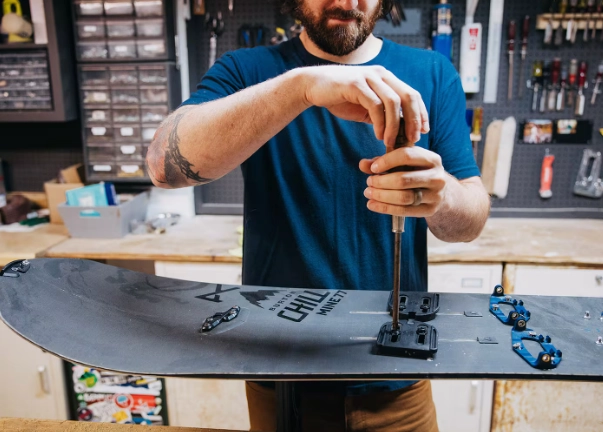
Nine times out of ten, this is not a problem with the strap tightness. It's a problem with the boot-to-binding interface.
Check these two things:
- Toe Ramp Alignment: Is the top of your boot toe pressing firmly against the entire length of the toe ramp? Or is it only making contact at the top or bottom? Adjust the toe ramp forward or backward until you get full, even contact.
- Heel Cup Tension: Most bindings have a heel cup adjustment. There's usually a small lever or screw. Make sure this is snug around your boot heel. It should hold your heel firmly in place without any vertical play.
If you're still getting movement, check your boot's sole lugs. Are they worn down? Worn lugs won't grip the binding's disc properly. It might be time for new boots, or at least a new set of lugs if your boots have replaceable ones.
Putting It All Together: A Step-by-Step Setup Guide
Enough theory. Let's walk through a setup from scratch. Imagine you just bought a new board and a new pair of bindings. Here's exactly what to do:
- Place your board on a flat, stable surface.
- Stand in your natural athletic stance (remember the jump test?).
- Position your bindings so that your front knee is roughly over the front mounting holes.
- Set your angles according to the table above for your intended riding style.
- Set your forward lean to 15-18 degrees if you're all-mountain riding.
- Pre-bend your highbacks to match.
- Put your boots on and strap in tightly.
- Perform the knee-over-toe test by simulating a turn.
- Adjust your forward lean if needed to get that slight shin pressure.
- Check toe ramp and heel cup contact.
- Go ride for 15-20 minutes on a gentle slope.
- Ask yourself the diagnostic questions from the checklist above.
- Make micro-adjustments as needed.
Advanced Topic: Asymmetrical Setups for the Obsessive
This is a deep cut, but one that can unlock a new level of performance for certain riders. Most of us have one leg that is slightly stronger or more coordinated than the other. This can lead to a subconscious favoring of one edge over the other.
An asymmetrical binding setup can help balance this. For example, you could try a slightly more aggressive angle on your stronger front foot (e.g., +22° instead of +21°) and a slightly less aggressive angle on your back foot (e.g., -2° instead of -3°). The differences are subtle, measured in single degrees, but some riders swear by them.
I personally don't run an asymmetrical setup, but I know world-class racers who do. It's something to experiment with only after you've completely mastered a symmetrical setup and are looking for that last 1% of performance.
Maintenance: The Setup You Forgot
Your binding setup isn't a "set it and forget it" thing. Before every season, and every few rides in variable conditions, you should check:
- Screw tightness: Lugs can loosen with vibration. A loose binding is a dangerous binding.
- Strap elasticity: Over time, straps can stretch and lose their grip. Replace them if they're worn or no longer hold tight.
- Highback alignment: Make sure it's still centered on your boot and hasn't shifted.
- Baseplate condition: Check for cracks or damage, especially if you're riding older bindings.
A quick 5-minute pre-ride check can prevent a serious injury.
Conclusion: It's a Conversation, Not a Prescription
The perfect snowboard binding setup is a deeply personal thing. It's a conversation between you, your board, and the mountain. The numbers and charts are just a starting point for that conversation.
Start with the recommendations here. Then, go have that conversation. Pay attention to what the board is telling you. Make small adjustments. See how they feel.
That's how you find your own perfect setup.