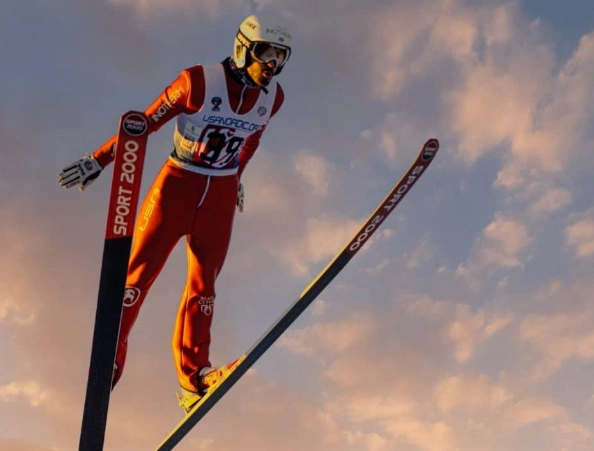
You've seen it in videos. A skier launches off a jump, carves a clean arc in the air, and lands with a satisfying *thump*, continuing their line without missing a beat. That's ski jump turning. It looks effortless, but when you try it, it often feels like you're fighting physics. Your skis cross, you land sideways, or you just can't seem to initiate the rotation at the right moment.
I spent years thinking it was about brute force or luck. It's not. It's a precise sequence of movements, and most instruction misses the subtle, non-negotiable details that separate a sketchy hop from a styled-out maneuver.
What You'll Learn in This Guide
Deconstructing the Ski Jump Turn: The Four Phases
Forget thinking of it as one motion. A proper turn on a jump happens in four distinct phases: the approach, the takeoff, the flight, and the landing. Mess up one, and the whole thing unravels.
1. The Approach & Wind-Up
This is where you set the stage. Your speed needs to match the jump. Too slow, you won't clear the knuckle. Too fast, you'll overshoot the sweet spot of the landing. The real secret here is the wind-up.
As you ride up the lip, you need to pre-rotate your upper body in the opposite direction of your intended turn. Want to spin left? Wind your shoulders slightly to the right. This creates tension, like coiling a spring. Most beginners just ride straight up, which means they have to generate all the rotational force mid-air—a nearly impossible task.
2. The Takeoff (The "Pop" & Release)
The lip of the jump is your launchpad. You don't just let it throw you; you pop. Extend your legs powerfully as you feel the transition from the lip to the air. This pop gives you height and, crucially, time.
Simultaneously, you release the wind-up. That coiled tension in your upper body? Let it go. Your shoulders and core snap into the direction of the turn. This is the moment of truth. If you popped straight and released the coil, the rotation starts cleanly from your core. Your skis will follow naturally.
3. The Flight (Control, Not Chaos)
You're airborne. Now what? A common misconception is that you keep spinning violently. Wrong. Once initiated, the turn in the air is about control and shaping.
Bring your skis up under you. Keep your hands in front for balance. Your eyes are your guide. For a simple 90 or 180-degree turn, spot your landing early. Look at where you want your skis to point when they touch down. Your body will naturally align to where your head is looking. For bigger spins, your gaze leads the rotation.
This is also where you manage wind resistance. A tight, compact body (knees bent, skis together) spins faster and cleaner than a spread-out, "starfish" position.
4. The Landing (The Commitment)
You see the snow coming up. The instinct is to brace for impact, which usually means stiffening up and dropping your weight back.
Fight that instinct. Commit to being forward. As you complete the last bit of your rotation, actively drive your feet down towards the landing. Aim to have your skis flat or slightly on edge, ready to engage immediately. Your legs are your suspension; keep them flexed and ready to absorb. A good landing isn't silent—it's a solid, confident sound followed by an immediate continuation of your turn on the snow.
Where It All Goes Wrong: A Breakdown of Common Mistakes
Let's diagnose the problems you're likely facing. I've seen these hundreds of times coaching in the terrain park.
The "Dead Fish" Takeoff
Symptom: No pop, no wind-up. You ride passively off the lip and then desperately try to whip your skis around in the air.
Result: Weak rotation, off-axis flight, almost guaranteed sketchy landing.
Fix: Drill the wind-up and pop on a tiny, forgiving bump. Make the movements exaggerated until they feel connected.
The "Arm Flail"
Symptom: Trying to initiate the spin by throwing your arms wildly.
Result: Your upper body spins, but your heavy skis and legs lag behind, causing a violent twist in your spine and a total loss of control.
Fix: Keep your hands in your peripheral vision. The rotation comes from the core and shoulders, not the limbs. Practice jumps with your hands on your hips to feel the core initiation.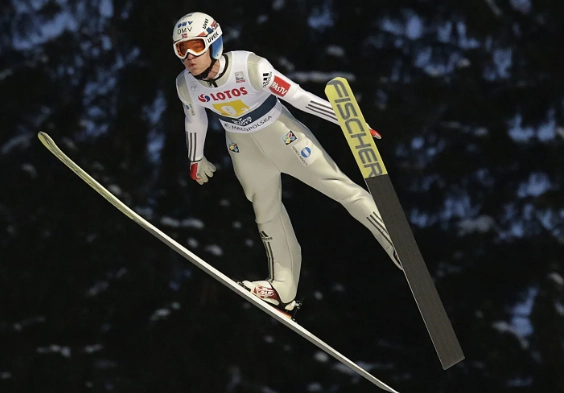
The "Look Down" Landing
Symptom: Staring at your ski tips or the ground directly beneath you as you land.
Result: Forces your weight back, causing a backseat landing, loss of control, or a washout.
Fix: Train your eyes to look 20-30 feet down the landing zone, in the direction of your travel. Your body follows your eyes.
Your Off-Snow and On-Snow Progression Plan
You can't just huck yourself off a medium jump and hope it clicks. You need a progression.
Stage 1: Foundation (Your Living Room & Small Bumps)
Dryland Drill: Stand in socks on a smooth floor. Practice the wind-up and release motion for a 90-degree turn. Feel how your core engages. Do this 50 times a day for a week. Muscle memory is key.
On-Snow: Find a natural side-hit or a tiny, rolled-over park jump. Practice popping straight airs first. Then, add the smallest upper-body wind-up and release for a slight directional change (even just 10 degrees). Get comfortable with the feeling of initiating in the air.
Stage 2: Building the Arc (Small Park Jumps)
Move to a small, well-shaped tabletop jump. Your goal here is a clean 90-degree turn (from straight down the fall line to across it).
Focus: Solid pop, clear shoulder initiation, spotting the side of the landing zone. The landing should be controlled, and you should ride away cleanly across the hill. Master the 90 in both directions before even thinking about a 180.
Stage 3: The Full Rotation (180s and Beyond)
For a 180, the principle scales up. The wind-up is more pronounced. The key difference is your head movement. As you release and spin, your head should lead, looking over your leading shoulder back up towards the jump you just left. You complete the spin by spotting the landing over your other shoulder. Practice on the same small tabletop until it's automatic. Only then consider larger jumps.
Sound familiar? It's the same fundamental sequence, just amplified. Rushing to big jumps with incomplete fundamentals is the fastest way to develop bad habits—or get hurt.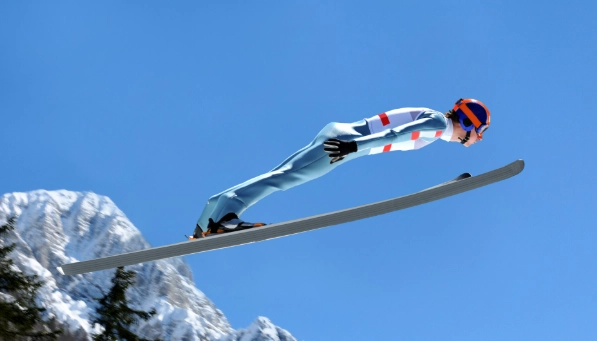
Your Top Jump Turning Questions, Answered
Got More Questions? Here's My Take.
How do I overcome the fear of initiating a turn during ski jump takeoff?
What's the most common mistake skiers make when trying to spin on a large ski jump?
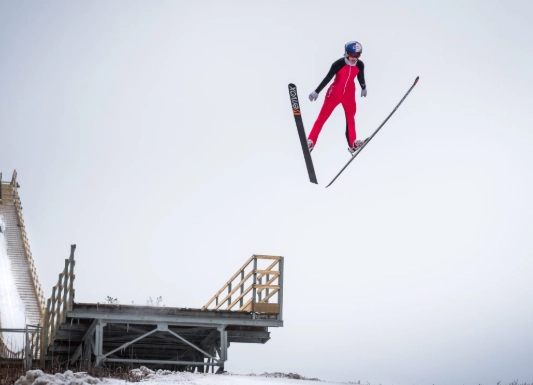
Why do I always land off-balance after a 180 or 360 on a ski jump?
Do I need special skis or equipment for park jumping and turning?
The journey to clean ski jump turns is about breaking down a complex motion into manageable, repeatable parts. It's not magic. It's mechanics, timing, and a whole lot of practice on progressively larger features. Focus on the process—nailing the wind-up on a small bump, mastering the pop, controlling your eyes in the air—and the stylish, controlled turns will follow. Now go find a side-hit and start winding up.