Let's get one thing straight: you won't be carving down black diamond runs after one day. Anyone who promises that is selling a fantasy. But can you learn enough to have genuine fun, get down a gentle slope safely, and feel the thrill of sliding on snow? Absolutely. I've taught hundreds of first-timers, and the key isn't some magic trick—it's managing expectations and focusing on the right fundamentals from minute one. This guide strips away the hype and gives you a concrete, hour-by-hour roadmap for what a successful "learn to ski in one day" mission actually looks like.
Your Day-One Skiing Roadmap
- What Can You Realistically Achieve in One Day?
- How to Choose the Right "Learn to Ski in One Day" Program
- Your Learning Blueprint: The 4 Essential Skills
- The Gear You Actually Need (And What to Skip)
- A Sample Timeline for Your Ski Day
- Common First-Day Mistakes and How to Avoid Them
- Your First-Day Skiing Questions, Answered
What Can You Realistically Achieve in One Day?
Think of your first day as software installation. You're loading the basic operating system—not downloading all the fancy apps. Your primary goal is to be safe, controlled, and to end the day wanting more, not nursing fear or injury.
By the end of a well-structured day, a complete beginner should be able to:
- Walk and glide on flat terrain with skis on.
- Ride the "magic carpet" or beginner chairlift without panic.
- Perform a solid "pizza" or snowplough stop consistently. This is your emergency brake.
- Make basic "pizza" turns on a designated beginner slope (often called a "bunny hill").
- Get up from a fall efficiently, which you will do. A lot.
If you can check these boxes, your day is a massive success. You've built the platform. Speed and parallel turns come later.
How to Choose the Right "Learn to Ski in One Day" Program
Not all ski schools are created equal for the one-day warrior. Here’s what to look for:
Prioritize a dedicated beginner area. This is non-negotiable. You need a separate, fenced-off slope with its own gentle lift (a magic carpet is ideal). Resorts like Whistler Blackcomb in Canada or Park City in Utah have fantastic, dedicated beginner zones. Avoid mountains that funnel beginners onto slopes shared with faster skiers—it's intimidating and dangerous.
The lesson format is your biggest decision.
| Option | Pros | Cons | Best For... |
|---|---|---|---|
| Group Lesson (Max 6-8 people) | Most affordable, social, often includes lift ticket & gear rental package. | Less personal attention, pace set by slowest in group. | Budget-conscious learners, friends learning together, those who enjoy group energy. |
| Private Lesson (1-on-1) | Fully personalized, fastest progress, instructor adapts to your fears/strengths. | Significantly more expensive. | Anyone wanting maximum results in minimal time, those with high anxiety, or specific physical considerations. |
| Semi-Private (2-4 people) | Good balance of cost and attention, great for families or couples. | Harder to book last minute, need compatible partners. | Small groups who learn at a similar pace. |
My blunt advice? If you're serious about the "one day" goal and can swing it, a 2-3 hour private lesson in the morning is the single best investment. It builds correct muscle memory from the start. You can practice on your own in the afternoon.
Book everything online in advance. Show up 90 minutes before your lesson to get rentals and boots sorted without stress.
Your Learning Blueprint: The 4 Essential Skills
Forget style. Day one is about function. Here’s the hierarchy of what you’ll learn, in order.
1. The Stance and How to Move
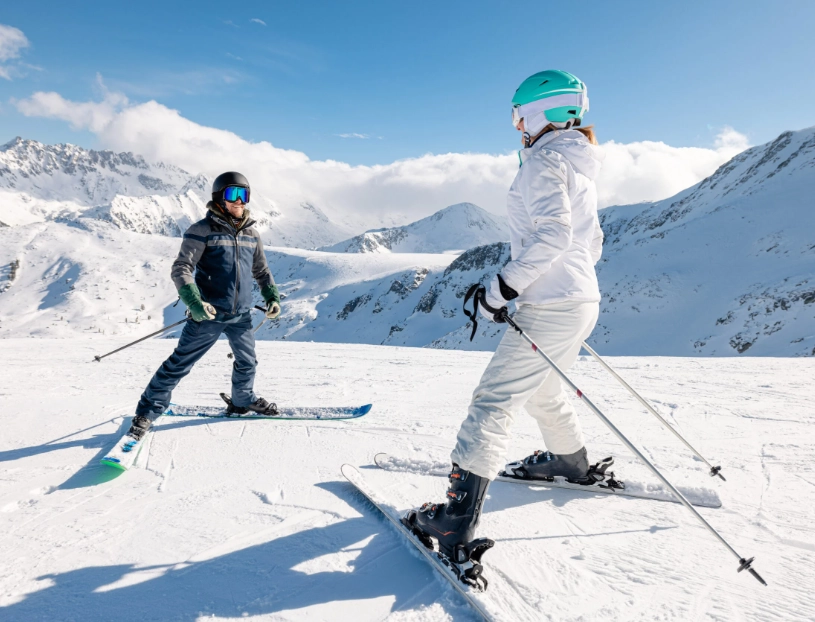
Before you slide an inch, get the posture right. Stand with feet hip-width apart, knees bent like you're sitting in a low chair, hands forward and visible. The biggest error I see is people leaning back—it makes you lose all control. You must feel your shins pressing into the front of your ski boots. This is your "control center." Practice marching in place on flat snow.
2. The "Pizza" (Snowplough) - Your Best Friend
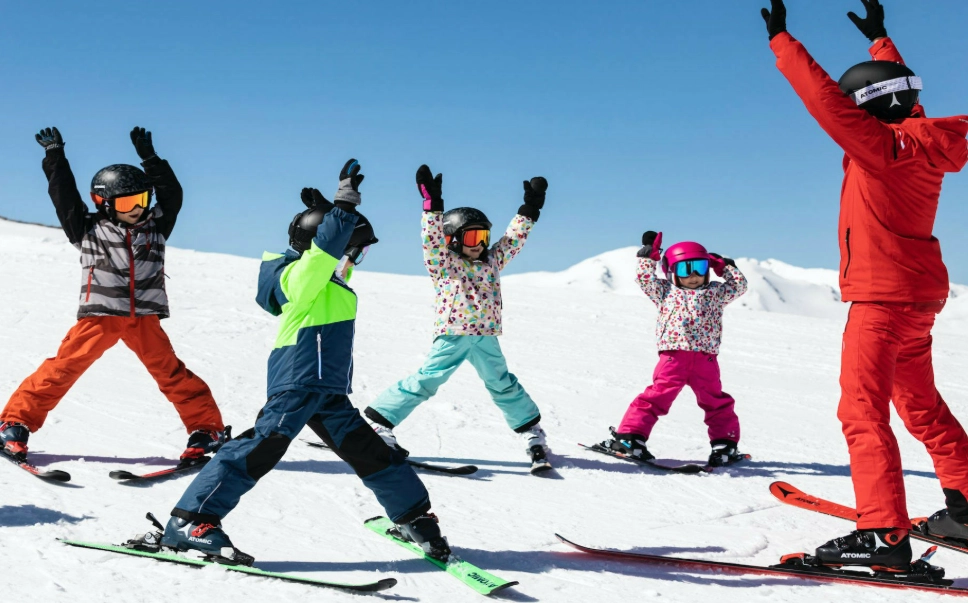
This is everything. Point your ski tips together, tails apart, forming a wedge or a slice of pizza. This shape creates friction and slows you down. More pressure on the inside edges of your skis = more brake. Practice making your pizza bigger and smaller while stationary, then on a barely perceptible incline.
3. Turning with Your Pizza
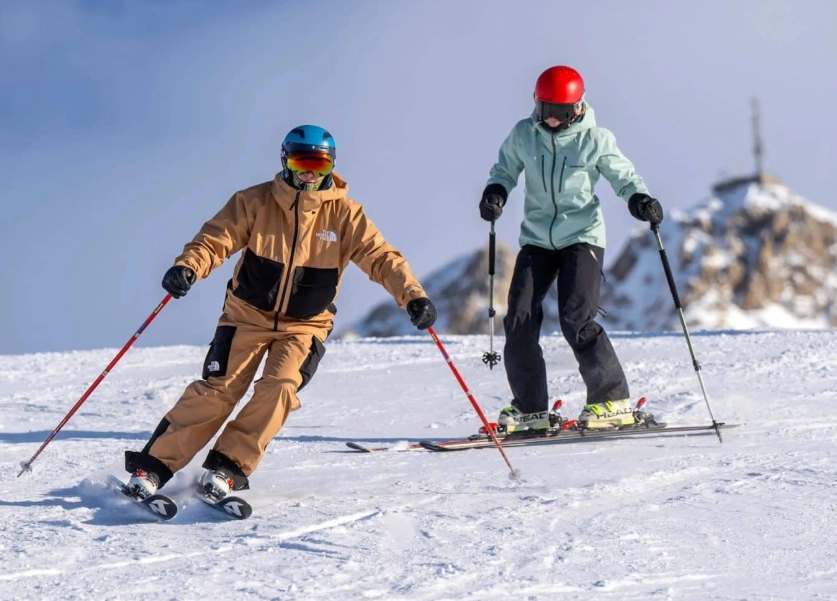
You don't steer skis with your upper body. To turn right, shift more weight onto your left foot (and vice versa). The ski you weight more will start to curve. Look where you want to go—your body will follow. It's a gentle weight shift, not a violent jerk.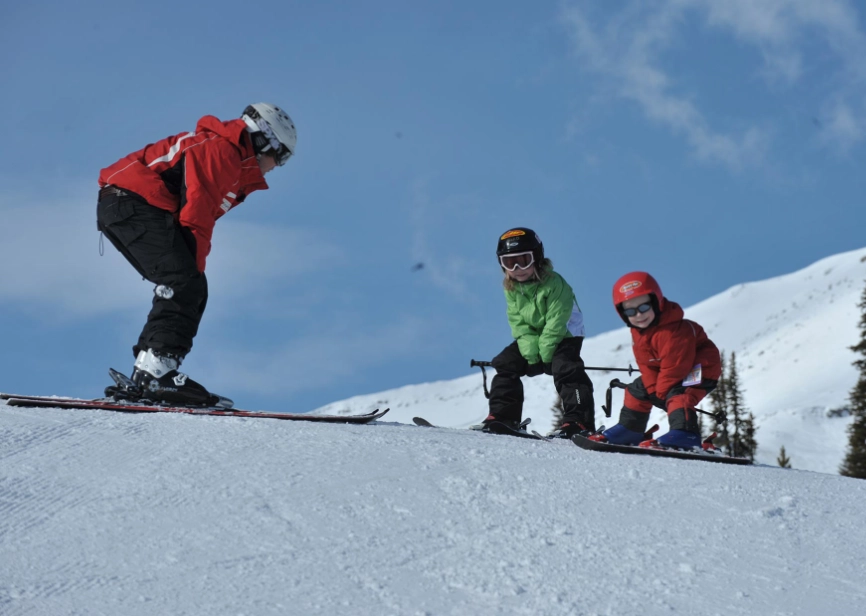
4. Getting On, Riding, and Getting Off the Lift
This causes more anxiety than the skiing itself. For a magic carpet (a moving conveyor belt), just step on and stand still. For a beginner chairlift, watch the people ahead of you. As the chair approaches, look back, grab the side, and sit down as it scoops you up. To get off, stand up as you near the top and simply ski straight down the gentle ramp. The lift attendants will slow it down for beginners.
The Gear You Actually Need (And What to Skip)
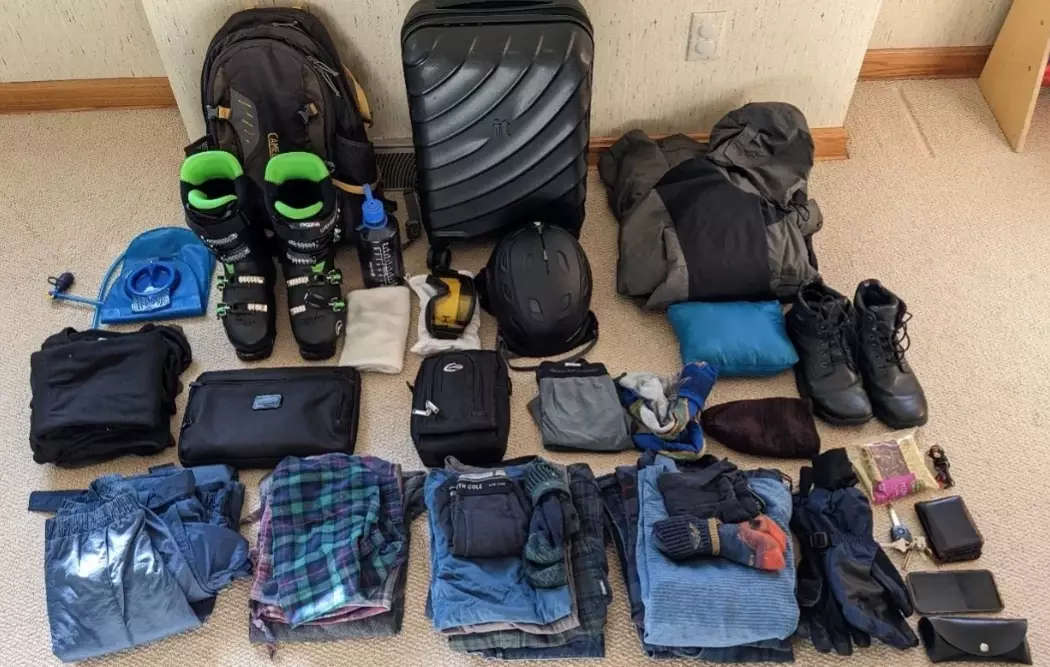
Rent everything from a reputable shop at the mountain base. Don't buy gear for day one.
- Ski Boots: This is the most important piece. They should be snug—your toes should touch the front when standing straight but pull back slightly when you flex your knees. They should not be painfully tight. A loose boot is your enemy.
- Skis: They'll give you short, soft skis designed for beginners. They're easier to turn.
- Poles: You often won't use them at all on day one. Don't even think about them until your instructor says so.
- Clothing (Bring Your Own): Wear layers. A moisture-wicking base layer, an insulating mid-layer (fleece), and a waterproof/windproof jacket and pants. No jeans. Ever.
- Helmet: Non-negotiable. Rent one if you don't have one.
- Goggles: Essential for visibility in snow or wind. Sunglasses can work on a sunny, calm day.
- Gloves: Waterproof ski gloves or mittens.
A Sample Timeline for Your Ski Day
Here’s how a successful 6-hour day might flow:
8:00 AM: Arrive at resort. Pick up pre-booked rental gear. Spend time getting boots right. Put on all your layers.
9:00 AM: Meet instructor for a 2-hour private or group lesson. Focus entirely on stance, the pizza, and weight shifting on the flattest possible terrain.
11:00 AM: Break. Hot chocolate. Rest your legs—they will burn.
11:30 AM: Practice on your own on the beginner slope. Repeat what you learned. Try linking 3-4 pizza turns. Fall. Get up. Repeat.
1:00 PM: Lunch. You've earned it.
2:00 PM: Another short, focused practice session. Don't overdo it. Tired muscles lead to poor form and frustration. Quality over quantity.
3:30 PM: Call it a day. Celebrate with a drink. Your brain and body have absorbed a huge amount.
Common First-Day Mistakes and How to Avoid Them
- Fighting the Fall: When you lose balance, just go down. Relax. Trying to save it often leads to twisted knees. To get up, position your skis across the hill (sideways), below you, and use your poles or hands to push up.
- Looking at Your Skis: Your body goes where your eyes go. Look 10-20 feet down the slope where you want to travel, not at your feet.
- Leaning Back: It feels safe but removes all steering control. Constually check: shins pressing boot tongues, hands forward.
- Taking on Too Much Slope: Stay on the beginner hill until it feels boring. Moving up too early ruins confidence and technique.