Quick Navigation
- Why Bother with Dryland Ski Drills? (The Real Benefits)
- The Foundation: Gear and Mindset for Home Drills
- The Drill Library: From Basics to Advanced
- Crafting Your Personal At-Home Ski Training Plan
- Common Mistakes & How to Spot Them (Even at Home)
- Answering Your Burning Questions About Ski Drills at Home
- Bringing It All Together Before You Hit the Slopes
Let’s be honest. The off-season is brutal. You scroll through old ski videos, stare longingly at your gear in the closet, and count the days until the first snowfall. What if I told you that feeling of losing your ski legs every November doesn’t have to happen? What if you could show up on day one feeling strong, balanced, and ready to rip?
It’s not magic. It’s about targeted, smart practice away from the mountain. I spent years doing random workouts, only to feel like I was starting from scratch each winter. Then I started focusing on specific ski technique drills at home, and the difference was night and day. My carving got cleaner, my legs stopped burning by 10 AM, and I finally felt in control on choppy snow.
This isn’t about getting jacked. It’s about building the right kind of strength and, more importantly, the muscle memory for skiing movements. The goal is to make those perfect turns feel automatic. And you can do it in your living room, garage, or backyard.
Why Bother with Dryland Ski Drills? (The Real Benefits)
Besides curing off-season blues? A lot. Think about the cost of a lift ticket, travel, gear. Spending a few minutes a day to maximize your fun and safety on the hill is a no-brainer.
First, it builds proprioception—your body’s sense of where it is in space. Skiing on a flat, unstable surface forces constant micro-adjustments. Doing skiing exercises for home that mimic this teaches your ankles, knees, and hips to communicate better. You’ll recover from those unexpected bumps way easier.
Second, it ingrains movement patterns. Skiing well is about a sequence of movements: flexion, extension, lateral movement, angulation. Repeating these slowly and correctly at home wires them into your nervous system. When you’re scared on a steep pitch, your body will default to the good habits you drilled, not the bad ones.
And honestly, it just makes you more confident. Walking onto the mountain knowing you’ve put in the work is a game-changer.
The Foundation: Gear and Mindset for Home Drills
You don’t need a fancy home gym. Seriously. Some of the best tools are simple.
- A Slidy Surface: This is the MVP. Socks on hardwood floor. Furniture sliders (the little discs you put under couch legs) on carpet. A balance board. The point is to reduce friction so your feet can move independently, like they do on skis.
- A Mirror or Camera: Feedback is crucial. Set up your phone to record yourself. You’ll see things you can’t feel—like if your upper body is twisting or if you’re not getting low enough.
- Motivation: Put on your ski boots sometimes. The clunkiness forces proper movement. Listen to a ski podcast or your favorite ski movie soundtrack. Make it fun.
The Drill Library: From Basics to Advanced
Let’s break these down by what they’re trying to fix. I’ve ranked them in a rough order of progression. Start at the top.
Category 1: Finding Your Stance & Balance (The Non-Negotiables)
If you get nothing else from this, work on these. A bad stance ruins everything else.
The Athletic Stance Hold: It sounds stupidly simple, but most people get it wrong. Feet hip-width apart, knees and ankles softly bent, hips back like you’re sitting in a tiny chair, chest up, hands forward. Hold it for 60 seconds. Feel the burn in your quads? Good. Now do it on your slidy surface. The instability forces your small stabilizer muscles to fire. This is the home base for all other ski technique drills at home.
Weight Shift Rolls: Stand on your slidies. Slowly roll your weight onto your right foot, then back to center, then onto your left. Not a lunge—a gentle, controlled roll. Your upper body should stay quiet, facing forward. This teaches you to initiate turns with your feet and legs, not your shoulders. Do this for 2-3 minutes while watching TV.
I used to think my stance was fine until I filmed myself. I was standing almost straight-legged. No wonder I got tossed around.
Category 2: Mastering the Turn Sequence (Where the Magic Happens)
This is the core of carving. We’re breaking down the turn into pieces you can practice in slow motion.
The J-Turn Drill (or Railroad Track Drill): On your slidies, get in your athletic stance. Push one foot forward and out to the side, drawing a “J” shape on the floor. The movement comes from rotating your leg in the hip socket. The goal is to keep the upper body facing down the “fall line” (straight ahead) while your lower body turns underneath. This is angulation in its simplest form. It feels weird at first. Do 10 reps per side, slowly.
Flexion-to-Extension (The Bouncy Turn): In your stance, sink down (flex). As you rise up (extend), push one foot out into the J-turn. The extension provides the power for the turn initiation. In a real turn, you extend to start the new turn, then flex to absorb terrain and finish it. This drill links the two. It’s a fundamental piece of the puzzle that most recreational skiers miss, and it’s perfect for dryland ski training.
Two-Footed Release & Re-engage: This is more advanced. On slidies, in a low stance, roll both ankles/knees inward (simulating a carved turn). Then, quickly roll them back to flat (releasing the edges), then immediately roll them inward the other way (engaging the new edges). It’s a quick, snappy movement. This teaches you the timing of edge change, which is critical for short, dynamic turns.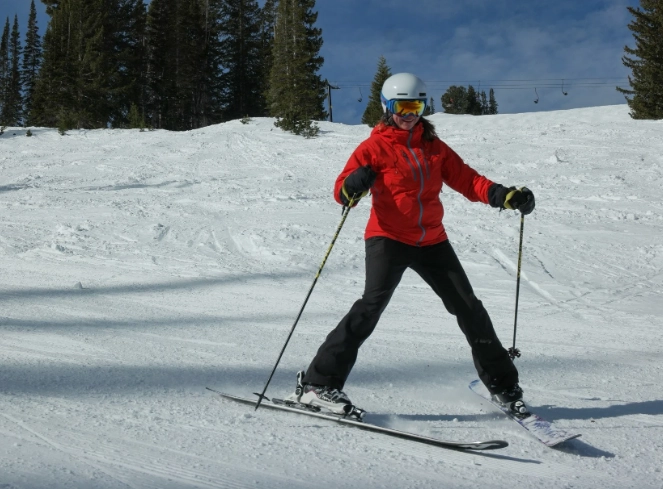
Category 3: Building Ski-Specific Strength & Endurance
Drills build skill, but you need the engine to run them all day.
Slidy Lateral Lunges: Stand on slidies. With control, slide one foot directly out to the side and sink into a deep lateral lunge. Push back to center. This murders your glutes and adductors (inner thighs)—the exact muscles that control your skis laterally. Do sets of 8-10 per side.
Isometric Holds in Turn Position: Get into a deep, angled J-turn position and hold it. For 30 seconds. Then switch sides. This builds the insane static strength needed to hold a carve on hardpack or through crud.
Plyometric Jumps with Stability: Simple squat jumps, but focus on a soft, quiet landing—knees bent, absorbing the impact. Skiing is thousands of tiny jumps. Landing stiffly is a ticket to knee town. Do these on a soft surface if you can.
Here’s a quick reference table to match drills with common skiing problems: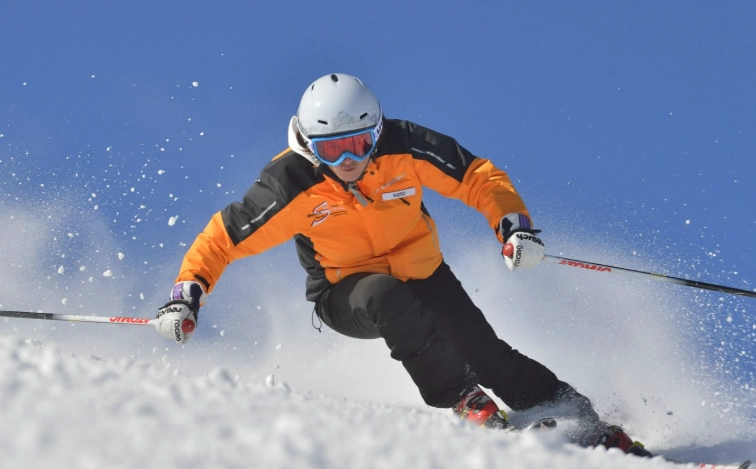
| What You Struggle With on Snow | The Best At-Home Drill to Fix It | Key Focus Point |
|---|---|---|
| Getting thrown off balance in bumps or variable snow | Athletic Stance Hold on Slidies / Weight Shift Rolls | Quiet upper body, active ankles & knees |
| Skidding your turns instead of carving | J-Turn (Railroad Track) Drill | Lower body rotation, upper-lower body separation |
| Legs burning out by lunchtime | Slidy Lateral Lunges / Isometric Holds | Building eccentric & static strength in ski muscles |
| Feeling stuck in your turns, can’t link them smoothly | Flexion-to-Extension Drill / Two-Footed Release | Timing of pressure and edge change |
| Backseat skiing (leaning back) | All drills, but performed with conscious pressure on shins | Imagine pushing your shins into the front of your boots |
Crafting Your Personal At-Home Ski Training Plan
Random drills once a month won’t cut it. You need a routine. But it doesn’t have to be complicated.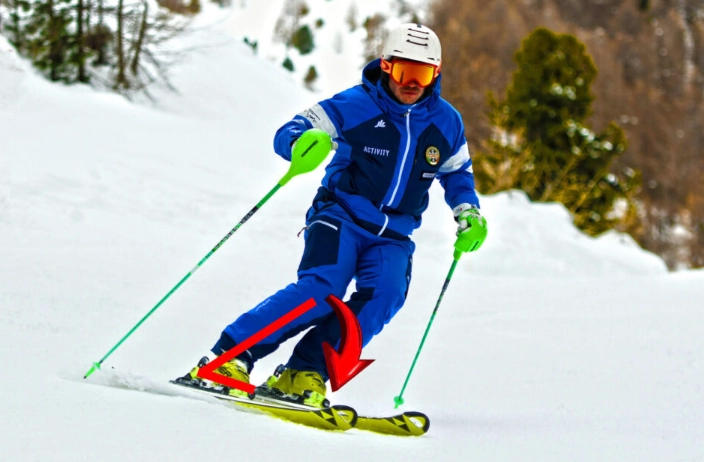
I recommend two types of sessions per week:
Session A: Skill & Technique Focus (20-30 mins)
- 5 min dynamic warm-up (leg swings, hip circles, bodyweight squats).
- 10-15 min of technique drills. Pick 2-3 from Category 1 & 2. Go SLOW. Use a mirror. Focus on perfect form. For example: Athletic Stance Hold (2 min) -> Weight Shift Rolls (3 min) -> J-Turn Drill (5 min/side).
- 5 min cool-down with light stretching for hips, quads, hamstrings.
Session B: Strength & Endurance Focus (30-40 mins)
- 5 min warm-up.
- 20-25 min of strength work. Integrate the strength drills from Category 3 into a circuit. Example: Slidy Lateral Lunges (10/side) -> Isometric Hold in Turn (30s/side) -> Plyometric Squat Jumps (10 reps) -> Rest 90 seconds. Repeat 3-4 times.
- 5-10 min cool-down and longer stretching.
Common Mistakes & How to Spot Them (Even at Home)
I’ve made all of these. The camera doesn’t lie.
- The Upper Body Twist: Your shoulders turn with your feet. The Fix: Hold a broomstick across your shoulders or grip the sides of your shirt. Keep that bar pointing straight ahead during all drills.
- The Static Hips: You’re just swinging your leg from the knee down. The Fix: Think about initiating the movement from the hip joint. Your whole leg should rotate.
- Insufficient Flexion: You’re not getting low enough in your stance. You look like you’re waiting for a bus, not ready to ski. The Fix: Drop your hips until you can just see your toes over your knees. Film from the side.
- Rushing: This is the big one. Speed hides flaws. The Fix: Perform every drill at half-speed. If you can’t do it slowly with control, you can’t do it correctly at speed.
Answering Your Burning Questions About Ski Drills at Home
Bringing It All Together Before You Hit the Slopes
The off-season doesn’t have to be a dead zone for your skiing. Treat it like a pilot’s flight simulator. You wouldn’t want a pilot who only flies once a year, right?
Start small. This week, just get the slidies (or wear socks on a smooth floor) and practice the Athletic Stance Hold and Weight Shift Rolls for 10 minutes. Feel the muscles wake up. Next week, add the J-Turn drill.
The beauty of these ski technique drills at home is that they connect you to the sport you love, even when the grass is green. They turn anticipation into preparation.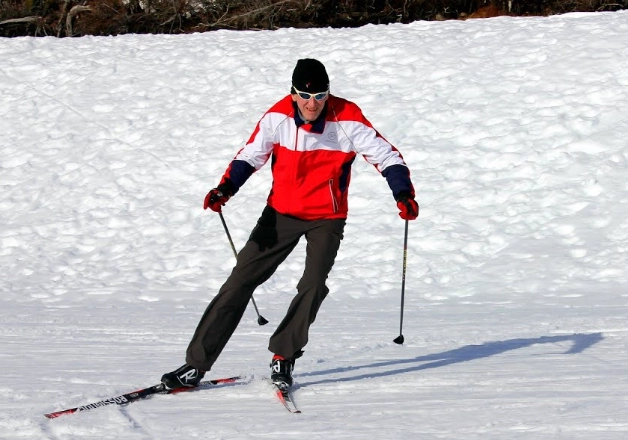
When you finally click into your bindings on that first crisp morning, your body will remember. Those turns will feel more familiar, your legs will feel more alive, and you’ll spend less time surviving and more time thriving. And really, isn’t that the whole point?
Now go clear some space in the living room. Your next best ski day starts today.