Let's be honest. When you're buying skis, boots, and bindings, ski poles feel like an afterthought. You grab a pair that looks about right, maybe swing them around the shop once, and call it a day. Big mistake. The wrong poles can throw off your balance, tire you out faster, and even hold back your technique. I've seen it for years—skiers investing thousands in their setup, then crippling it with a $50 pair of ill-fitting poles.
Picking the right ski poles isn't about finding the flashiest graphics. It's a functional decision that hinges on your height, skiing style, and the terrain you love. Get it right, and they become an extension of your arms, providing rhythm, stability, and power. Get it wrong, and they're just dead weight you're dragging around the mountain.
Your Quick Navigation
The #1 Rule: Getting the Length Right
Forget the old "upside down under the armpit" trick. That's for your grandfather's wooden poles. Modern technique, especially with shaped skis, demands a more precise fit.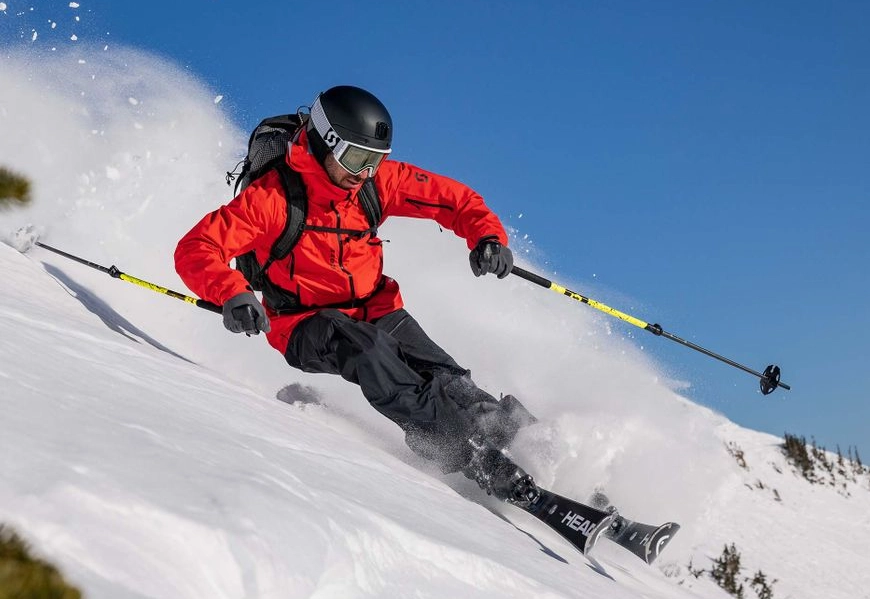
Here’s the method I use with every client: Stand in your socks on a flat surface. Hold the pole upside down, gripping the pole just under the basket. Your forearm should be parallel to the floor, forming a perfect 90-degree angle at your elbow. That's your gold standard length for all-mountain alpine skiing.
Pro Tip: If you're between sizes, go shorter for more aggressive, carved turns and quicker pole plants in bumps or trees. Go longer if you spend more time cruising groomers or skiing deep powder, where you need that extra reach.
What about height charts? They're a starting point, but your skiing style matters more. A 5'10" racer and a 5'10" beginner will likely need different pole lengths. The racer might go shorter for rapid pole plants, while the beginner might benefit from a slightly longer pole for more stability while skating on flats.
The Big Mistake Everyone Makes
People buy poles that are too long. They think it gives them more leverage. In reality, a pole that's even 5cm too long forces your body upright when you plant it, breaking your athletic, forward stance. It pulls you out of position for the next turn. Shorter poles promote a more dynamic, aggressive posture. When in doubt, err on the side of shorter.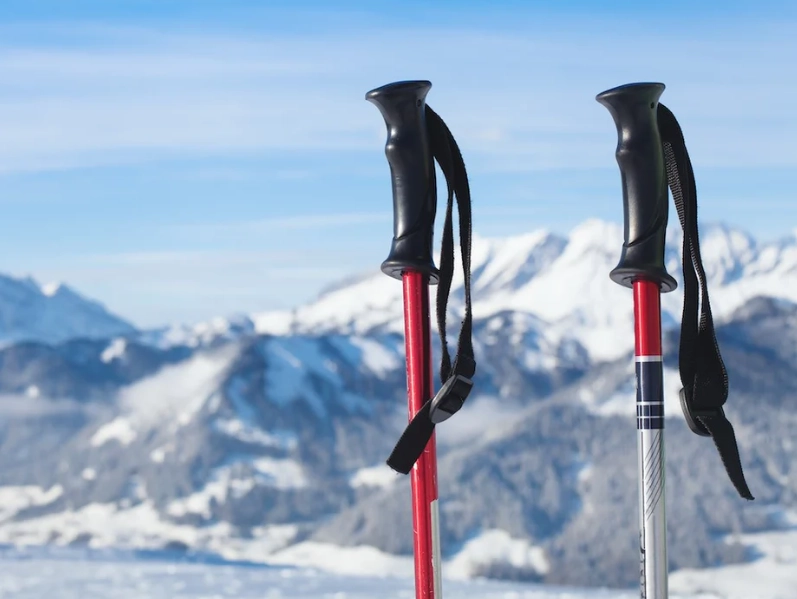
Beyond Length: Material, Grip, and Basket
Once length is sorted, these three elements define how the pole feels and performs.
Shaft Material: Aluminum vs. Carbon
Aluminum (7075 or 7071 alloy): This is the workhorse. Durable, affordable, and has a predictable flex. If you bend an aluminum pole, you can often straighten it out on the mountain. It's heavier, which some skiers actually prefer for a solid, planted feel. Perfect for most recreational skiers, park skiers, and anyone who isn't gentle on gear.
Carbon Composite: Lighter and stiffer. The reduced weight is noticeable over a long day, reducing arm fatigue. The stiffness provides a very direct, vibration-free feel on pole plants. The downside? Price. And if you hit a rock wrong, carbon tends to snap rather than bend. I recommend carbon for advanced skiers who prioritize weight and precision, or for ski tourers where every gram counts.
There are also hybrid shafts (carbon wrapped around aluminum) that try to offer the best of both worlds.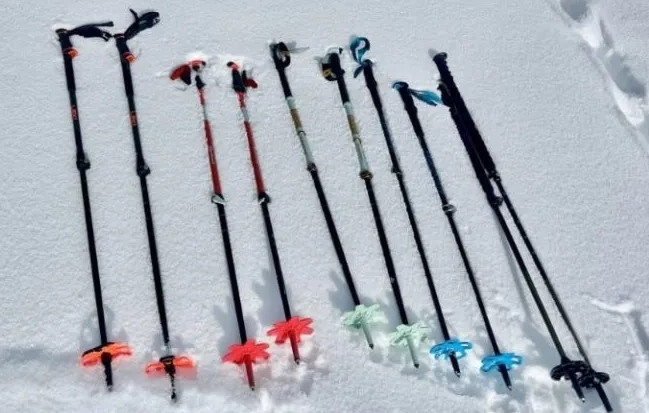
The Grip: Your Connection Point
This is where comfort is king. You'll be gripping it all day.
- Standard Rubber/Plastic: The most common. Look for ergonomic shaping that fits your hand. A good one will have finger contours.
- Cork: My personal favorite for cold, dry climates. Cork wicks away moisture (sweat) and stays warmer to the touch than plastic. It also molds to your hand over time.
- Foam: Extremely light and warm, often found on high-end touring poles. Less durable than rubber or cork.
Check the strap. A wide, padded, adjustable strap is essential. The modern "speed strap" that's easy to click in and out of is a game-changer for getting on and off lifts.
Baskets (Snow Baskets): Not All Are Created Equal
The basket prevents the pole from sinking too deep into the snow. Size matters, and most stock poles come with a basket that's too small for anything but hardpack.
| Basket Type | Size (Approx. Diameter) | Best For | Worst For |
|---|---|---|---|
| Powder Basket | Large (100mm+) | Deep snow, backcountry skiing | Hardpack, ice, moguls (can catch) |
| All-Mountain Basket | Medium (80-95mm) | Most in-bounds skiing, mixed conditions | Extreme deep powder |
| Racing/Slalom Basket | Small (60mm or less) | Hard-packed groomers, gates | Any soft snow (sinks instantly) |
Here's the insider move: Buy poles with interchangeable baskets. Many models from brands like Leki, Black Diamond, or Scott allow you to swap baskets in seconds. Start with a medium all-mountain basket. Then, for a deep day, screw on your giant powder baskets. Heading to the East Coast for an icy trip? Pop on the small ones. It's the most cost-effective upgrade you can make.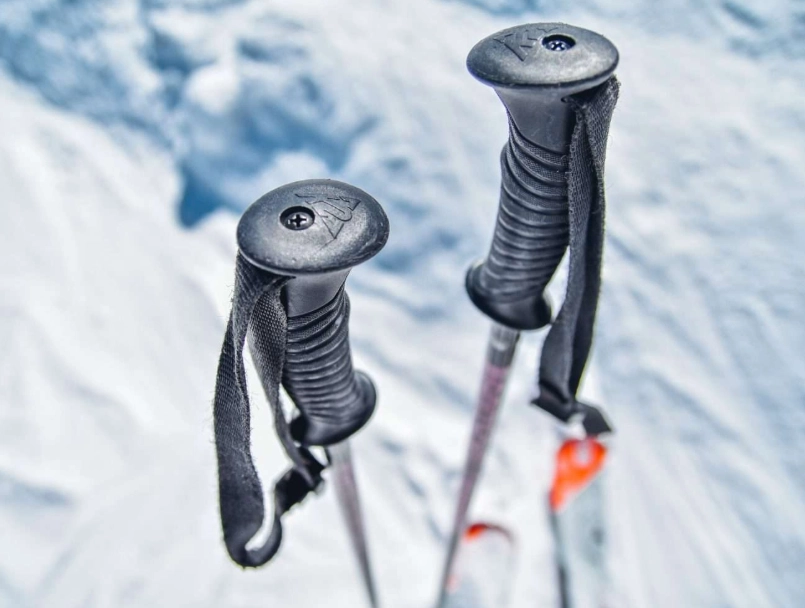
Picking Poles for Your Terrain and Discipline
Your favorite runs should dictate your final choice.
For the Groomer Cruiser & Carver: You want a responsive, direct pole. Focus on a comfortable grip and a medium to small basket. Carbon or aluminum is fine. Length should be spot-on for that 90-degree elbow angle. Consider a slightly longer pole if you do a lot of flat-trail skating.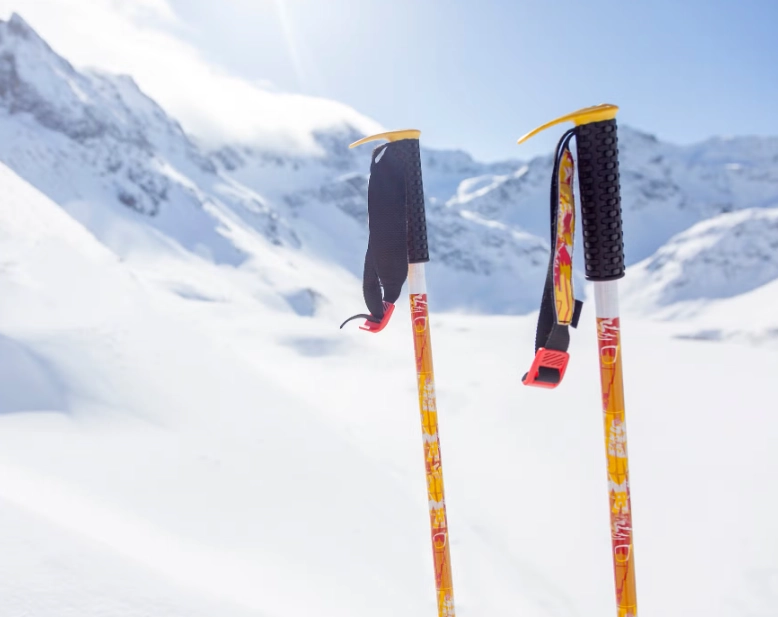
For the Mogul & Tree Skiing Fanatic: Speed and clearance are key. Choose a pole on the shorter end of your range. This lets you plant quicker and keeps the poles from getting tangled in the bumps or branches. Durable aluminum is a smart choice here—you'll be hitting things. A medium, sturdy basket is ideal.
For the Powder Hound: This is where most stock poles fail. You need a longer pole and a much larger basket. When you're in waist-deep snow, a standard basket offers zero resistance. Your pole sinks to the grip, and you lose all leverage. Go for the largest powder baskets you can find. Some backcountry-specific poles are also adjustable in length, which is brilliant for transitions between skinning and descending.
For the Park & Pipe Skier: Durability is everything. You will land on these, bend them, and abuse them. 7075 aluminum is your friend. Simpler grips and straps are better—fewer parts to break. Some park skiers even prefer shorter poles for spins and grabs.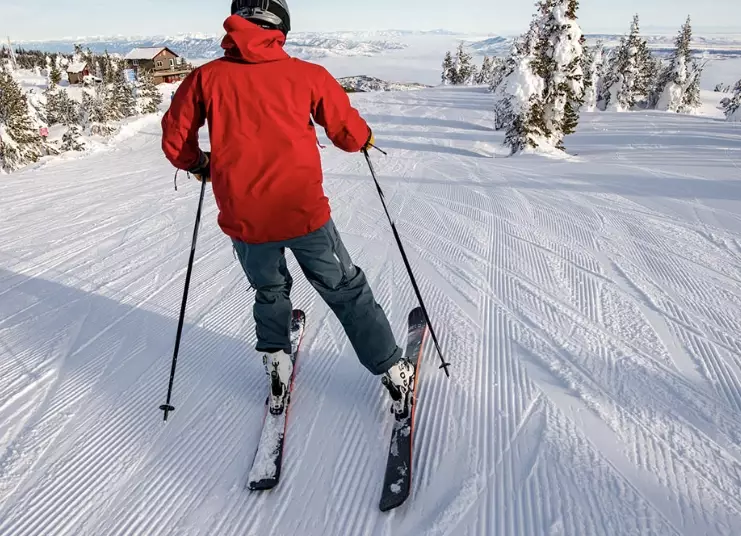
A Word on Price: Don't overspend, but don't cheap out. A $30 pole from a big-box store will likely have a flimsy shaft, a terrible strap, and a useless basket. Aim for the $60-$120 range for a quality aluminum pole that will last years. Carbon poles start around $150. That extra money buys you better materials, design, and, crucially, replaceable parts.