Quick Navigation
Okay, let's be real for a second. We all love skiing and snowboarding. The rush, the views, the fresh air. But sometimes, the part that's supposed to just get you up the hill—the ski lift—feels like the main event, and not in a good way. It can be a pure adrenaline shot of fear. So, what is the scariest type of ski lift? Ask ten skiers, and you might get ten different answers, but after years of riding them (and sometimes white-knuckling it), I've got some strong opinions.
The short answer? For the vast majority of people, from beginners to seasoned experts, the humble T-bar lift takes the crown for sheer, consistent terror. But that's just the start of the conversation. Fear is personal. What makes one person sweat might be a non-issue for another. So we need to break this down, lift by lift, fear by fear.
The Top Contenders: A Lift-by-Lift Fear Analysis
Let's look at the usual suspects. We'll rank them not just on a generic "scary scale," but on different types of fear they trigger. Because the fear of falling from a great height is different from the fear of looking like a fool in front of a full chairlift queue.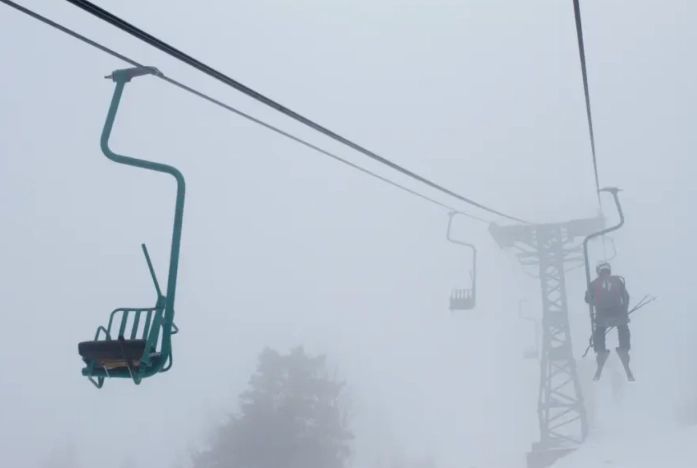
| Lift Type | The Primary Fear It Triggers | Intensity (1-10) | Who's Most Scared? | Why It's Nerve-Wracking |
|---|---|---|---|---|
| T-Bar / J-Bar / Platter (Poma) | Loss of Control & Embarrassment | 9 | Beginners, Snowboarders | Unstable standing position, requires balance, easy to fall and drag others down. |
| Old, High, 2-Person Chairlift | Fear of Heights & Exposure | 8.5 | Anyone with acrophobia | Minimal enclosure, high above ground, often sways in wind, may have no safety bar. |
| Rope Tow | Physical Strain & Wipeout | 7.5 | Kids, First-timers | Constant pulling, burns gloves/hands, sudden stops cause pile-ups. |
| Gondola / Cable Car | Enclosed Panic & Stuck Anxiety | 6 (but spikes to 10 if stuck) | Those with claustrophobia | Feeling trapped, anxiety about mechanical failure mid-air. |
| Modern High-Speed Detachable Chair | Loading/Unloading Pressure | 5 | New Skiers | Fast-moving chair, fear of missing the load or falling at the dismount. |
| Funicular / Tram (Big Cabin) | Scale & Crowding | 4 | Very few; generally least scary | Feels like a building moving, very stable, but size can be intimidating. |
See? It's not a simple question. But if we're talking about the lift that causes the most widespread, gut-churning dread for the average person hitting the slopes, the surface lift family (T-bars, etc.) is public enemy number one.
Quick Take: If you've ever googled "what is the scariest type of ski lift?" because you wiped out on a T-bar last weekend, you're not alone. It's the most common culprit for that specific mix of physical struggle and social humiliation.
Why the T-Bar is the Undisputed King of Terror
Let's dive deeper into why this simple piece of equipment causes so many nightmares. It's not about height or speed, really. It's about physics and psychology.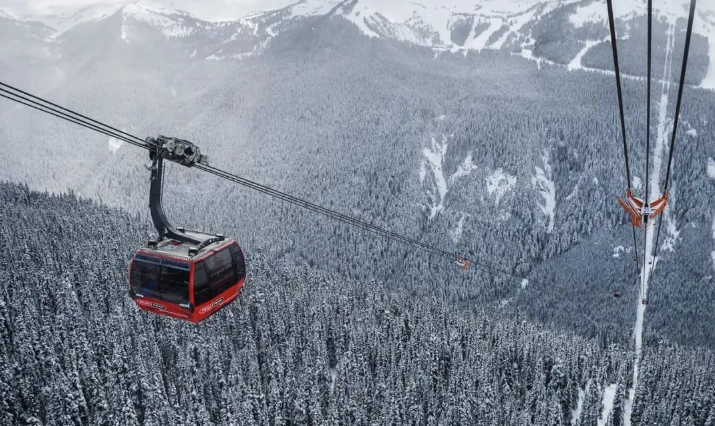
First, the design is inherently unstable for a human on slippery planks. You're standing sideways to the direction of travel, with a thin bar trying to push you forward from behind. Your skis or board want to go straight, but you're being pulled. It's a constant, subtle battle for balance that you don't get sitting in a chair. One small muscle twitch, one patch of sticky snow, and you're off.
Second, it's often a social contract. You're usually paired with someone else. Now your fear isn't just personal; it's the fear of taking down your friend, your date, or a complete stranger who will definitely judge you. The pressure is immense. I've seen couples bicker all the way up because one person can't keep it together.
Third, the consequences of failure are uniquely annoying. On a chairlift, if you fall getting on, the chair just goes without you. Embarrassing, but quick. On a T-bar, if you fall, you're now a tangled mess in the middle of the track, trying to scramble out of the way while the lift operator yells and stops the whole line. Everyone in the queue is watching. It's a spectacle.
Snowboarders have it even worse. Standing sideways is their natural stance, but having the T-bar hit the back of one leg forces an awkward, half-twisted posture. It's a core workout from hell. Many resorts have specific "snowboarder" T-bars with a different attachment for this reason, but they're not everywhere.
So yeah, when pondering what is the scariest type of ski lift, the T-bar's combination of physical difficulty and high social stakes makes it a top contender.
The Silent Horror: Old, Exposed Chairlifts
Now, for me personally, there's a different kind of fear that sometimes beats the T-bar. It's the old-school, two-person chairlift that climbs up a steep, rocky gorge. You know the ones. They're often painted a fading, cheerful color that completely belies their nature.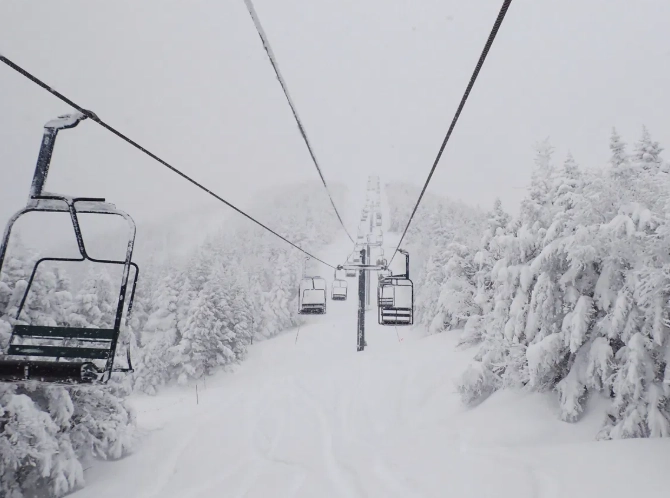
These lifts are scary for the opposite reason. It's not about doing something wrong. It's about passive vulnerability. You're just sitting there, but you're 50 feet in the air on a chair that feels like it's made of lawn furniture. The safety bar is a flimsy piece of metal, if it exists at all. The chair sways and creaks in the wind. You can see straight down between your skis to the jagged terrain below.
There's no distraction, no balance to focus on. Just you, your thoughts, and the vast, empty space below. If you have any tendency toward acrophobia (fear of heights), this is your nightmare. The exposure is total. I once rode one in the Alps where the wind was so strong the chair was swinging in wide arcs. I didn't speak for ten minutes. My friend loved it. Goes to show how personal fear is.
A crucial note on safety: It's important to remember that these lifts, while feeling terrifying, are rigorously inspected and maintained. The perceived danger (the height, the age) is almost always far greater than the actual mechanical risk. Ski lift safety standards in North America and Europe, governed by bodies like the National Ski Patrol and various state/provincial regulations, are extremely high. The fear is real, but the lifts are statistically very safe. Still, knowing that doesn't always stop your palms from sweating.
Breaking Down the Fear: It's Not Just the Machine
When we ask "what is the scariest type of ski lift," we're really asking about our own brains. The lift is just the trigger. Let's look at the common fear factors.
Fear of Heights (Acrophobia)
This is the big one. It's primal. High, exposed chairlifts and gondolas with big windows are the main triggers. Your brain screams that you're not supposed to be up here without solid ground underfoot.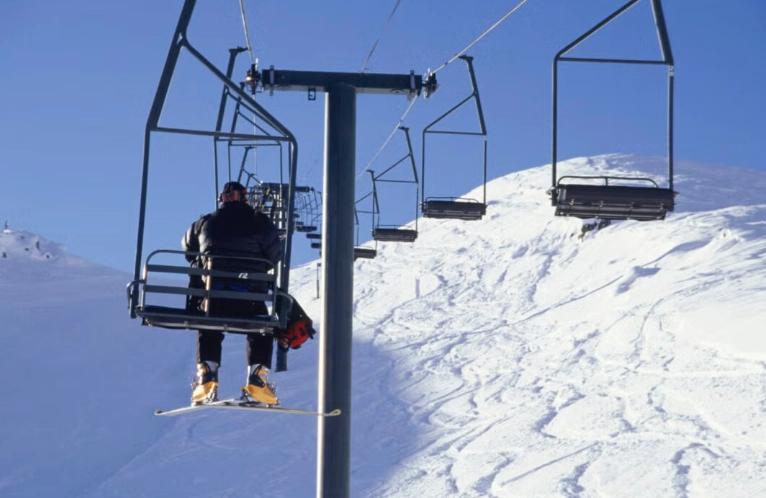
Fear of Falling (Specifically, Falling *Off*)
Related to heights, but distinct. This is the fear that you'll slip under the safety bar, or that the bar will fail. It's often worse on lifts without footrests or with a large gap between the seat and the bar.
Fear of Mechanical Failure
The "what if it stops" or "what if it breaks" fear. Gondolas and trams amplify this because you're enclosed and the thought of being stuck for hours is vivid. In reality, stoppages are almost always brief and for operational/safety reasons (loading issues, wind). Major failures are exceedingly rare, thanks to redundant safety systems.
Fear of Embarrassment (Social Anxiety)
This is HUGE, especially for beginners. The fear of failing in front of a line of people. It drives the terror of T-bars and the anxiety around loading a fast chairlift. You're on display. This fear can be more powerful than the fear of physical harm for many people.
Fear of Loss of Control
T-bars and rope tows are masters of this. You are not in charge; the machine is. It pulls you at its pace, and you must submit. For independent-minded people (or just anyone who likes to feel stable), this is deeply unsettling.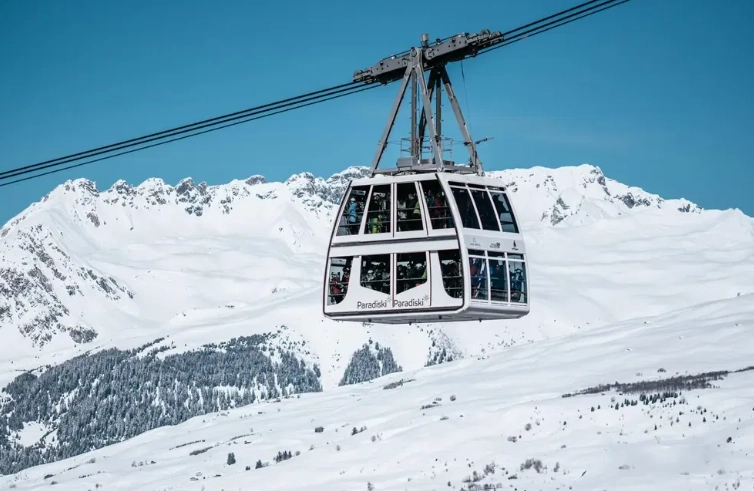
Pro Tip from a Former Scaredy-Cat: If social embarrassment is your main fear, go ski on a weekday, or during non-peak hours. Shorter lines mean fewer eyes on you when you're learning to load that tricky lift. It makes a world of difference.
How to Conquer Your Ski Lift Fear: Practical Strategies
Okay, so you've identified what is the scariest type of ski lift *for you*. Now what? You can't avoid them forever if you want to access the best terrain. Here are real, non-cliché strategies.
For T-Bars & Surface Lifts:
- Posture is Everything: Keep your skis straight ahead, shoulder-width apart. Don't look at the bar or your feet. Look up the hill where you're going. Distribute your weight evenly. For snowboarders, ask for a "disk" or special attachment if available, or be prepared to ride with your back foot unstrapped and placed ahead of your front foot.
- Go Solo if Possible: Many T-bars have single-rider positions. It's harder to balance, but there's no partner to let down. Sometimes less pressure.
- The "Let Go" Mantra: If you feel yourself falling, LET GO OF THE BAR IMMEDIATELY. Don't try to save it. Just bail to the side. The operator will stop the lift. It's less embarrassing than a slow-motion drag that blocks everyone.
For High, Exposed Chairlifts:
- Use the Safety Bar (and Footrest): Lower it as soon as it's safe. Use the footrest. It creates a psychological cage of safety. If there's no bar, keep your poles across your lap—it creates a subtle barrier.
- Control Your Gaze: Don't look straight down. Look at the horizon, the mountain across from you, or the tower ahead. Focus on your breathing.
- Engage in Conversation: Talk to your lift buddy. About anything. It distracts the primal part of your brain. If you're alone, name the types of trees you see or count the ski tracks below.
For Gondola Anxiety:
- Choose Your Seat: Sit near the door if you feel claustrophobic. The control panel is usually there, and you have a clearer exit view.
- Bring a Distraction: A podcast, music, or a snack. Make it a relaxing interlude, not a tense confinement.
- Remember the Stats: It is one of the safest forms of mountain transport. It feels enclosed, but it's engineered for immense stability.
The goal isn't to eliminate fear, but to manage it enough to enjoy the ride up so you can enjoy the ride down.
Answers to Your Burning Questions (FAQ)
The Final Verdict: What is the Scariest Type of Ski Lift?
So, after all this, what's the answer? If we're crowning a champion for widespread, accessible terror, it's the T-bar (and its surface lift cousins). Its unique blend of physical challenge and high-stakes social performance anxiety makes it a near-universal source of dread. It's the lift most likely to make a grown adult sigh and say, "Do we have to?"
But the true answer to "what is the scariest type of ski lift?" is deeply personal. For the acrophobic, it's the exposed old double chair. For the claustrophobic, it's the gondola. For the beginner terrified of looking foolish, it's the fast-moving loading zone of any chairlift.
The good news is that fear is manageable. Start with the easier lifts (gondolas, modern chairs), use the strategies above, and go at your own pace. The mountain will still be there when you're ready. And remember, every single person in that lift line, no matter how expert they look, has probably had a moment of sheer panic on a lift at some point. You're not alone. Now go out there, face your lift, and earn those turns.