Essential Insights
- The Foundation: What's Actually Happening in a Parallel Turn?
- The Step-by-Step Breakdown: How Do You Initiate a Parallel Turn?
- Why Do I Keep Stemming? Common Mistakes & Fixes
- Drills That Actually Work (No Gimmicks)
- Answering Your Burning Questions
- Gear Matters (But Not as Much as You Think)
- Putting It All Together: A Practice Plan
Let's be honest. You've probably watched a hundred YouTube videos, maybe even taken a lesson or two, and you're still standing at the top of a blue run, thinking... how do you actually initiate a parallel turn? The instructors make it look effortless, a simple roll of the ankles, and they're gracefully arcing down the mountain. You try it, and it feels like your skis have a mind of their own—either they don't turn at all, or they cross, or you end up doing that awkward "stem christie" move you thought you'd left behind.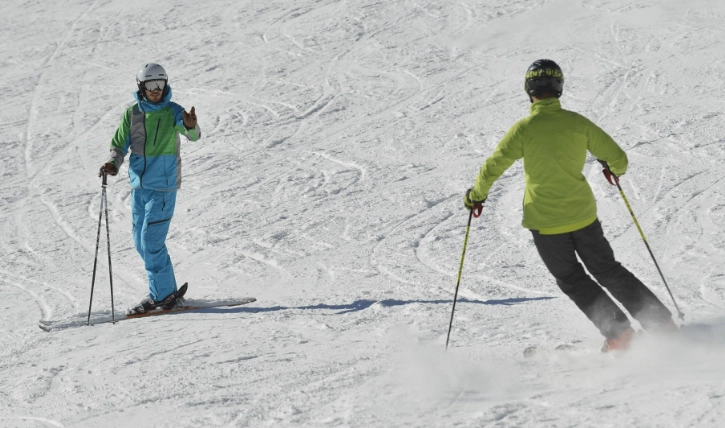
I've been there. I spent an entire season stuck in that frustrating middle ground. I could snowplow, I could sort-of-parallel on easy greens, but ask me to link turns confidently on a steeper pitch and my brain would freeze. The advice was often too vague: "just lean forward," "commit to the turn," "bend your knees." Not helpful when you're picking up speed and need to know exactly what to do with your body.
So let's cut through the noise. This isn't about fancy jargon or making it sound more complicated than it is. This is a practical, step-by-step breakdown of the mechanics. We'll talk about the feeling, the common pitfalls (I've made them all), and the simple drills that finally made it click for me.
The Foundation: What's Actually Happening in a Parallel Turn?
Before we get to the "how," let's understand the "what." A parallel turn is exactly what it sounds like: your skis stay parallel throughout the entire turn, from start to finish. No stemming, no pizza wedge to start. The goal is to use the edges of your skis to carve an arc, not just skid the tails around.
When you ask, "How do you initiate a parallel turn?" you're really asking about the transition phase. You're finishing one turn and need to start the next. This is the moment of truth. Most people think initiation is about turning their shoulders or throwing their hips. That's wrong, and it leads to a skidded, unstable turn.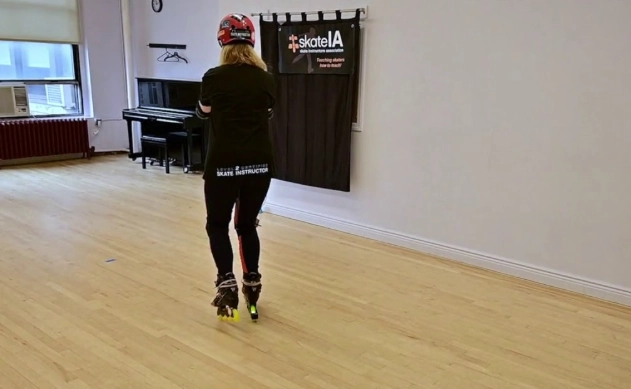
The real secret? It's all in the feet and ankles.
Think of your skis as extensions of your feet. To change direction, you change their angle on the snow. You do this by rolling your ankles and knees inward (for an edge change) and applying subtle pressure. The upper body? It mostly just follows along for the ride, staying quiet and facing downhill. This separation between a active lower body and a stable upper body is the holy grail of skiing.
The Step-by-Step Breakdown: How Do You Initiate a Parallel Turn?
Let's break it down into a sequence you can feel in your bones. Imagine you're in a turn to the left, finishing it. Your skis are pointing left across the hill, and you're ready to turn right.
Phase 1: The Finish & The Unweighting
As you complete your left turn, you should feel pressure on the outside ski (your right ski). This is your power source. To start the new turn, you need to momentarily lighten the load on your edges. You don't jump, but you make a small, upward extension of your legs. Some call it a "rebound." It's like you're letting the ski spring back. This unweights the skis just enough so they can be redirected.
Common mistake here? Doing a huge, dramatic hop. Don't. It's a subtle, smooth motion. If you're bouncing all over the place, you're trying too hard.
Phase 2: The Core Move – Rolling the Ankles and Knees
This is the absolute heart of the initiation. As your legs extend slightly and the skis become light, you simultaneously roll both your ankles and knees towards the new turn.
To turn right, you roll your ankles and knees to the right.
This simple, coordinated movement does two critical things: 1) It changes the edges of both skis at the same time (from the left edges to the right edges), and 2) It starts to tip the skis onto their new edges. This is how you initiate a parallel turn correctly—with an edge change driven from the feet up, not the shoulders down.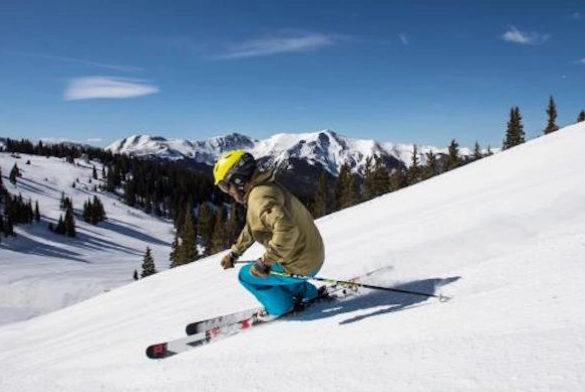
Phase 3: Steering and Pressure
Once your skis are on their new edges (right edges for a right turn), gravity and your forward momentum will naturally start to pull you into the arc. Your job now is to guide and pressure. As you begin the turn, focus on applying pressure to the new outside ski (your left ski, for a right turn).
Bend that ankle and knee, feeling the ski bend under you. This is called angulation—creating angles in your body to balance against the centrifugal force. Your shin should press into the front of your boot. This pressure makes the ski carve.
And just like that, you're in the new turn. Then you ride it out, feel the pressure build, and when you're ready to turn again, you repeat the cycle: finish, unweight subtly, roll ankles/knees to the new side, pressure the new outside ski.
Why Do I Keep Stemming? Common Mistakes & Fixes
We all revert to old habits under pressure. Here's a quick table to diagnose what's going wrong when your parallel turn initiation falls apart.
| What You're Doing | What It Looks/Feels Like | The Quick Fix |
|---|---|---|
| Stemming ("A-Framing") | Your new outside ski shoots out to the side before the turn. Skis form an ">A" shape. | Practice on a very gentle slope. Focus on keeping the ski tips level. Think "move both feet together" as you roll your ankles. |
| Leaning Back (Backseat) | You feel like you're sitting down. Your quads burn quickly, and you have no steering power. | Concentrate on keeping your shins pressed into your boot tongues all the time. Visualize pulling your feet back underneath you. |
| Rotating Shoulders | Your upper body twists wildly into the turn. You get crossed up and lose balance easily. | Hold your poles out in front, horizontal to the snow. Try to keep them pointing straight downhill as your legs turn underneath. |
| No Edge Engagement | Your turns are flat and skidded. You hear a scraping sound, not a slicing sound. | Exaggerate the ankle roll. On a easy slope, try to tip your skis so far you fall over (you won't). Feel the edge bite. |
My personal nemesis was the shoulder rotation. I'd wind up like a baseball pitcher. A coach finally had me ski with my hands on my hips. It felt ridiculous, but it forced my lower body to do the work. The difference was night and day.
Drills That Actually Work (No Gimmicks)
Reading is one thing, feeling is another. You need to program the muscle memory. These are the drills I still use when my technique gets sloppy.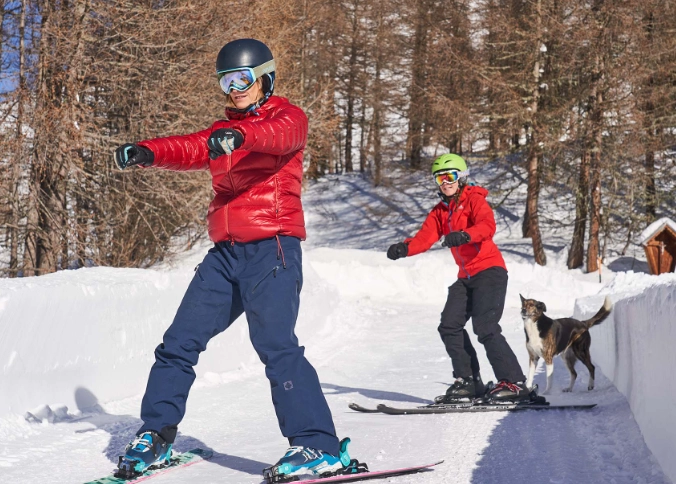
1. The Sideslip & Roll Drill
Find a moderately steep, groomed slope. Position yourself across the hill. Let your skis slip sideways down the fall line. Now, practice rolling your ankles and knees to set your edges and stop the slip. Then release them to slip again. This isolates the pure edge-change motion without the complication of turning. It teaches you how the edge bite feels. Do this for 5 minutes at the start of every session.
2. The Javelin Turn
This is brilliant for stopping the stem. As you ski, lift the tail of your new inside ski off the snow, keeping only the tip engaged. You are forced to initiate the turn entirely on your outside ski. It feels wobbly at first, but it proves you don't need that inside ski to start the turn. It builds huge confidence in your outside ski balance.
3. Pole Touch Timing
Your pole plant isn't for turning, it's for timing and rhythm. The pole should touch the snow just as you initiate the edge change. It's a signal, not a lever. Practice making gentle pole touches and synchronizing them with that ankle roll. A good rhythm makes everything smoother.
Honestly, the best drill is just repetition on an easy slope. Don't rush to steeper terrain. Get the movement ingrained where the consequences are low. Speed hides flaws, but it doesn't fix them.
Answering Your Burning Questions
You've got questions. I had them too. Let's tackle some specifics that most guides gloss over.
How do you initiate a parallel turn on steep terrain?
Fear makes us panic and revert to bad habits. On steeps, everything needs to be more aggressive and committed, but the fundamentals are the same. You must initiate the turn earlier. If you wait until you're pointed straight down, you're in trouble. Start the edge change while you're still firmly across the hill. Your movements need to be more decisive—a quicker, more powerful roll of the ankles and knees. And for heaven's sake, keep your weight forward. Leaning back on a steep slope is a one-way ticket to a loss of control.
How do you initiate a parallel turn in moguls?
Moguls are a different beast. The classic carved turn initiation is too slow. Here, you use a more pivoting, quick-steering motion. You still roll your ankles to change edges, but you might use a more pronounced "unweighting" (sometimes a small hop or retraction of the legs) to quickly swing the skis around in the trough or on top of the bump. Absorption and timing are key. It's less about carving a perfect arc and more about directing your skis precisely from one spot to the next.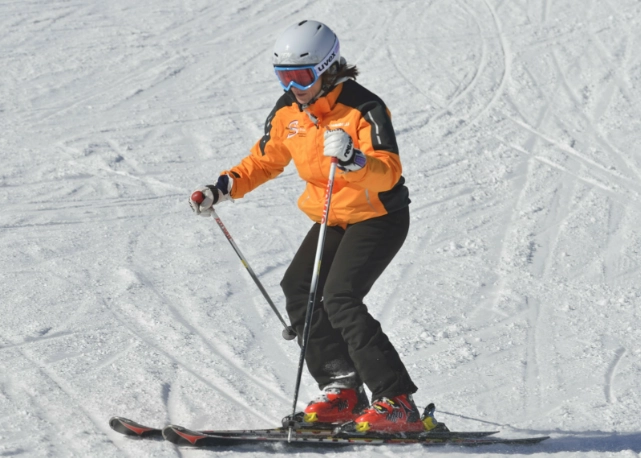
What's the difference between carving and skidding?
A pure carved turn leaves two pencil-thin lines in the snow. Your skis bend and follow their sidecut. A skidded turn leaves a wider, fan-shaped smear. Most recreational parallel turns are a blend—some carving, some skidding. The key to more carving is in the initiation: a clean, simultaneous edge change and patience in letting the ski do the work. If you rush to force the skis around, you'll skid. If you set the edge and let the pressure build, they'll carve. The International Ski Instructors Association (ISIA) has great resources on the technical model of skiing if you want to dive deeper into the mechanics.
Gear Matters (But Not as Much as You Think)
You can't learn to parallel turn on ancient, straight skis with floppy boots. Modern gear helps immensely. Shaped skis (parabolic skis) are designed to turn when you put them on edge—they literally do some of the work for you. A proper-fitting, stiff boot is non-negotiable. It's the interface that transmits your ankle movements directly to the ski. If your boot is too big or soft, you're trying to steer a car with a spongy steering wheel.
But don't fall into the trap of thinking new gear will magically fix your technique. I've seen people on the latest $1,500 skis still stemming because they haven't learned the proper movement. Gear is an enabler, not a replacement for skill. A reputable ski shop can get you set up correctly. For official safety and equipment standards, organizations like the Snowsports Industries America (SIA) provide guidelines.
Putting It All Together: A Practice Plan
Here's what I wish someone had told me to do on my first day trying to learn parallel turns.
- Warm-up: Do 5 minutes of sideslipping and edge rolls on a green run. Feel the edges engage and release.
- Focus Session: Pick ONE thing to work on for the next hour. Maybe it's "no stemming" or "quiet upper body." Don't try to fix everything at once.
- Drill Time: Spend 15-20 minutes on one of the drills mentioned above (Javelin turns are a game-changer).
- Free Ski & Feel: Go ski a comfortable blue run and just focus on the sensation. How does a good initiation feel? How does a bad one feel? Don't judge, just observe.
- Record Yourself: If you can, have a friend take a short video. What you feel and what you're doing are often completely different. It's the most humbling and useful feedback you can get.
Learning how do you initiate a parallel turn is a journey. Some days it clicks, some days it doesn't. The mountain always gives you feedback. The goal isn't perfection on day one. The goal is incremental progress, linking a few good turns, then a few more, until one day you're not thinking about it at all. You're just flowing down the mountain, your skis whispering on the snow, and that feeling is worth every frustrating fall along the way.
Now get out there and roll those ankles.