Quick Navigation
- Why Bother? The Real Benefits of Parallel Turning
- Building Blocks: The Step-by-Step Path to Your First Parallel Turn
- Your Parallel Turn Problem-Solver: Fixing Common Mistakes
- Beyond the Basics: From Skidded Parallel to Carved Turns
- Gear Talk: Does Your Equipment Help or Hinder?
- Answering Your Burning Questions (FAQs)
Let's be honest. You're here because you've seen those skiers gliding down the mountain, their skis locked together in perfect harmony, carving clean arcs in the snow. It looks effortless, right? Meanwhile, you might be stuck in a never-ending cycle of snowplow turns, feeling like you're fighting the mountain more than flowing with it. I've been there. I taught skiing for a decade, and the moment a student finally "gets" their first linked parallel turn is pure magic. Their whole face lights up. It's the moment you transition from a cautious visitor on the snow to a confident skier in control.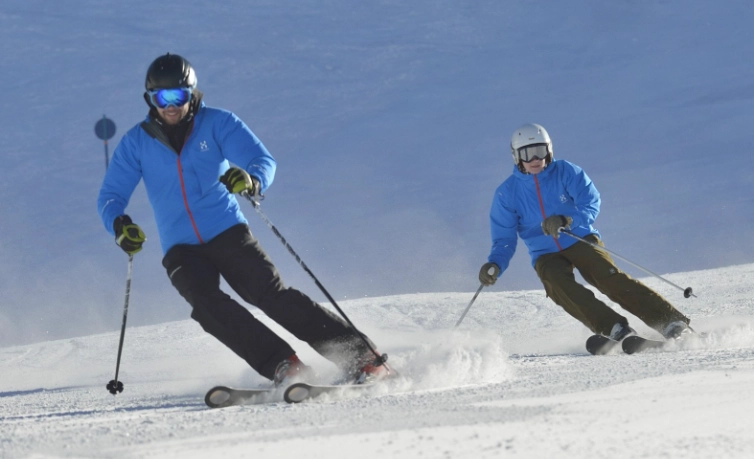
But here's the thing nobody tells you straight up: mastering parallel turns isn't just about looking cool (though that's a nice bonus). It's about efficiency, control, and opening up the entire mountain to you. It's the fundamental technique that unlocks steeper terrain, variable snow conditions, and genuine speed management. Without it, you're always working harder than you need to.
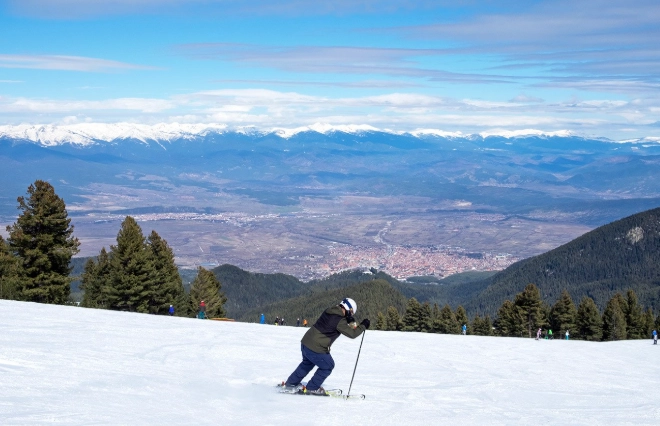
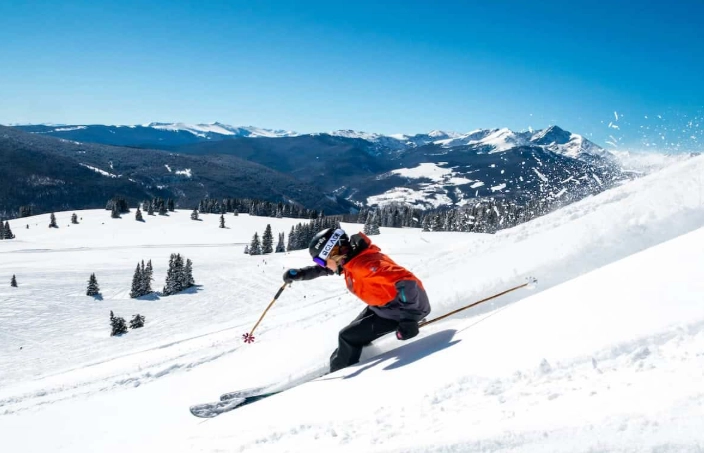
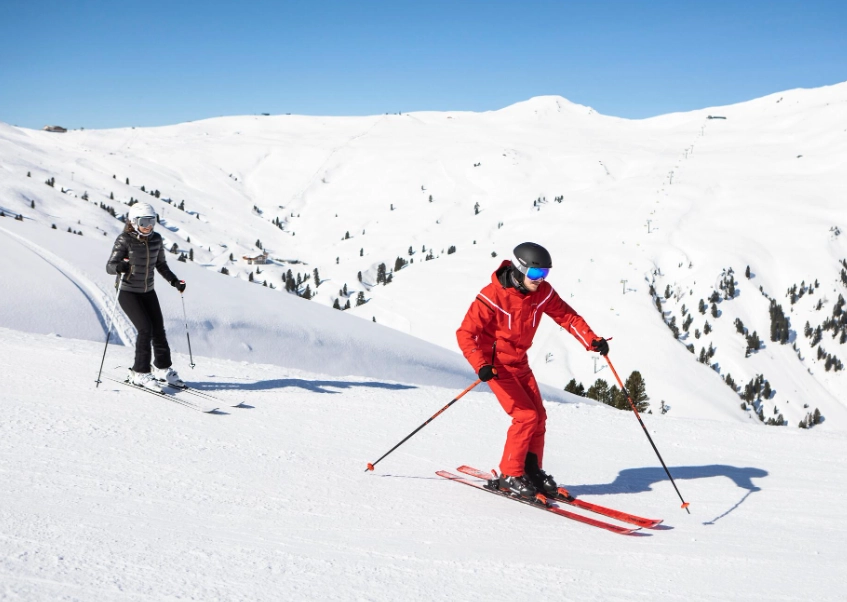
In its simplest form, a parallel turn is a skiing maneuver where both skis are kept parallel to each other throughout the entire turn—from initiation to completion. Unlike the wedge or snowplow, where your ski tips are apart, here your skis are a team, moving in unison. The goal is to use your edges and body position to steer, rather than muscling the skis around with your legs. When done right, it feels less like steering a truck and more like guiding a sports car.
Why Bother? The Real Benefits of Parallel Turning
You might wonder if you can just stick with the wedge forever. Technically, yes. But you'll be limiting yourself immensely. Let's break down why investing time in learning parallel turns is the single best thing you can do for your skiing.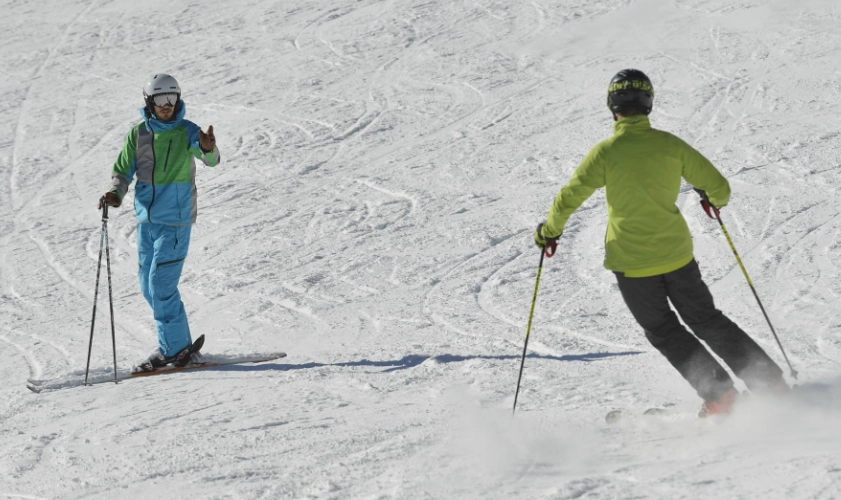
First, control. Real control. In a wedge, you're essentially using friction from the inside edges of both skis to slow down and turn. It's a braking maneuver. Parallel turns, however, let you use the skis' sidecut—that hourglass shape—to your advantage. You roll the skis onto their edges, and the shape does a lot of the turning for you. This means you can control your speed with the shape and size of your turn, not just by skidding and braking. On an icy patch or a steep run, that's the difference between feeling panicked and feeling prepared.
Second, efficiency. Linking parallel turns is far less physically taxing. You're not constantly fighting to hold a V-shape with your legs, which burns out your thigh muscles faster than anything. The motion becomes more of a rhythmic, flowing dance from one set of edges to the other. You conserve energy, which means you can ski longer and enjoy more runs.
Third, versatility. Once parallel turning becomes second nature, you can handle anything the mountain throws at you. Bumps, crud, powder, groomers—the core mechanics translate across all conditions. The International Ski Instructors Association (ISIA) emphasizes parallel technique as the cornerstone of all-alpine skiing progression for this very reason. It's the universal language of skiing.
I remember a student, Sarah, who was a solid wedge skier but terrified of any blue run. She'd tense up, her turns would become erratic, and she'd fatigue by lunch. We spent two days deconstructing the parallel turn, focusing just on the feeling of rolling her ankles. The breakthrough came on a gentle slope. She stopped thinking and just felt the skis carve. The smile didn't leave her face for the rest of the day. She wasn't just making turns; she was skiing. That's the power of this technique.
Building Blocks: The Step-by-Step Path to Your First Parallel Turn
This isn't a magic trick you learn in one go. It's a staircase. You have to step on each one. Rushing it is the fastest way to develop bad habits. Let's walk up those steps together.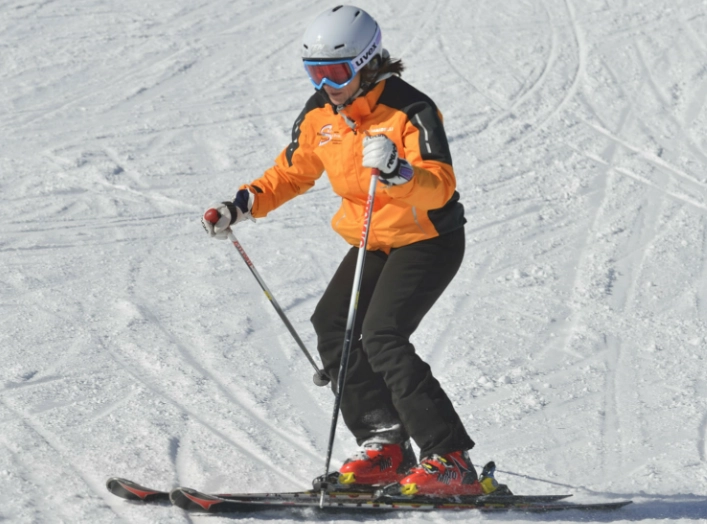
Step 1: Solidify Your Foundation (The Boring but Essential Part)
You can't build a house on sand. Before you even think about parallel skis, your basic stance needs to be automatic. Stand relaxed, ankles, knees, and hips slightly flexed. Your weight should be on the balls of your feet, not your heels. Your hands should be forward and in sight, like you're holding a lunch tray. This athletic, balanced position is your home base. Everything starts from here.
Step 2: The Gateway Move - The Stem Christie
This is the critical bridge from wedge to parallel. Don't skip it. You start the turn with a small, gentle stem (pushing one ski out slightly into a tiny wedge) to initiate, then you bring the other ski parallel to finish the turn. The goal is to make the stem smaller and smaller over time until it disappears. Focus on the feeling of finishing the turn with your skis parallel. This teaches your brain the end position you're aiming for.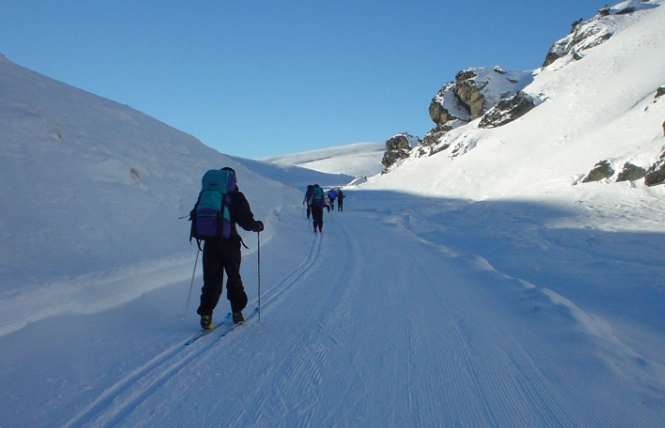
Drill Time: The "Follow the Leader" Game
On a very gentle green run, make a stem to start a turn. Once you're turning, consciously say "bring them together" and slide your outside ski (the one on the side you're turning towards) next to your inside ski. Finish the turn completely with skis parallel. Do this at the end of every turn. It's not about linking them yet; it's about practicing the finish.
Step 3: The Holy Trinity - Edging, Pressure, and Rotation
This is the core of the parallel turn. Forget about your skis for a second. Think about your body.
- Edging: You turn by rolling your knees and ankles slightly into the hill. To turn right, roll your left ankle/knee inward. This engages your left ski's edge. It's a subtle tilt, not a dramatic lean.
- Pressure Control: As you roll onto your edges, you need to pressure the outside ski (the one downhill). This is your primary steering ski. About 80% of your weight should be on it through the middle of the turn. A good cue is to feel your shin pressing against the front of your ski boot.
- Steering/Rotation: Finally, you guide the skis around with a gentle steering of your feet and legs. The key is that this is the *last* thing you do, not the first. Edge and pressure first, then steer. If you try to muscle the skis around with rotation alone, you'll just skid.
The Professional Ski Instructors of America (PSIA) breaks this down as the "skiing fundamentals," and their teaching materials are a fantastic resource for visualizing this interconnected movement. The sequence is everything: prepare (up and forward), then edge/pressure, then steer.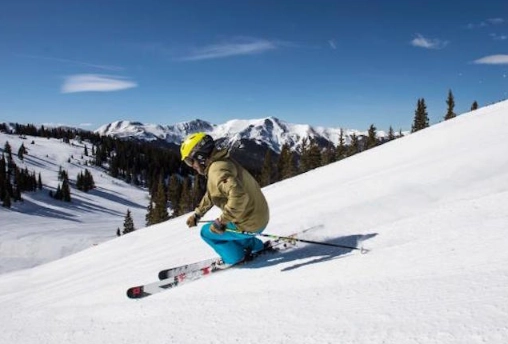
Common Pitfall Alert: The number one mistake I see? People try to jump their skis parallel. They unweight and kick their tails out. This creates a skidded, unstable mess. The movement should be a smooth, lateral roll of the joints, not an upward jump. The skis should come together because your body moved, not because you kicked your feet.
Step 4: Linking the Turns - Finding the Rhythm
Linking parallel turns is about managing the transition. As you finish one turn, you gradually release the edges, move your body across your skis to the new inside (a movement called "angulation"), and roll onto the new set of edges. It's a continuous, flowing motion. Think "down the hill and across." Your upper body should remain relatively quiet and facing downhill, while your legs work beneath you.
Your Parallel Turn Problem-Solver: Fixing Common Mistakes
We all hit plateaus. Here’s a quick diagnostic table for the most frequent issues I've corrected over hundreds of lessons.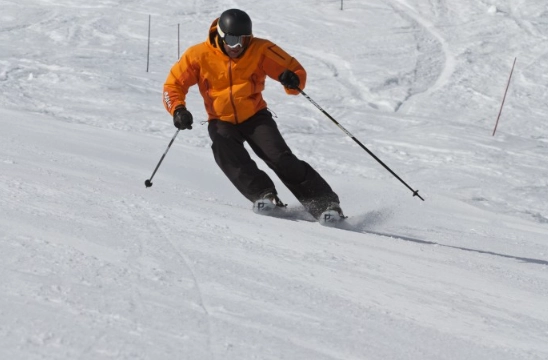
| What You're Feeling/Seeing | Likely Culprit | The Simple Fix |
|---|---|---|
| Skis constantly crossing or hitting each other | Over-rotation or trying to steer with the upper body. You're probably throwing your shoulders around. | Practice with poles held horizontally across your chest. Keep them pointed downhill. This locks your upper body and forces your legs to do the work. |
| Can't get off the old edges; feel stuck in the turn | Not actively releasing pressure and edges at the end of the turn. You're in the backseat (weight on heels). | Focus on a gentle, forward motion to start the new turn. Think "knees to boots." Make sure you're not leaning back. |
| Turning only with the lower body, skis skid out | Not committing pressure to the outside ski. You're likely standing too upright or centered. | On a gentle slope, lift your inside ski's tail slightly off the snow for the entire turn. This forces 100% commitment to the outside ski. It's a humbling but brilliant drill. |
| Feeling unstable, especially on steeper terrain | Insufficient angulation. Your body is leaning *into* the hill, putting you off-balance. | Imagine you have a headlight on your chest. On every turn, point that headlight across the hill, not down it. This creates the necessary body separation. |
Beyond the Basics: From Skidded Parallel to Carved Turns
Okay, so you're linking turns. Great! But there's a whole other world within the world of parallel turns: carving. A carved turn is the purest form, where the ski's edge literally cuts a rail in the snow with minimal skidding. It's faster, smoother, and incredibly efficient.
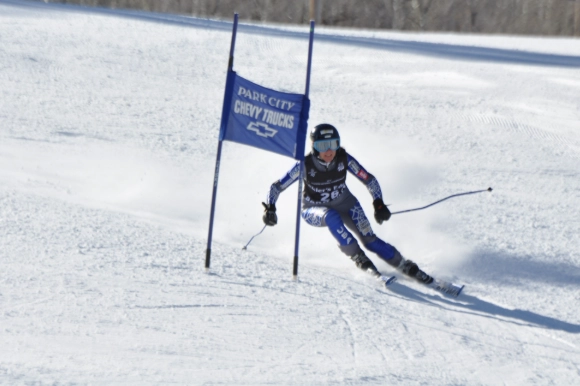
The difference is in the commitment. In a basic parallel turn, you're still steering and skidding a bit to control speed. In a carve, you commit fully to the arc of the ski's sidecut. It requires more edge angle (more knee and hip roll into the hill) and more patience to let the ski do its job. You'll feel a powerful "g-force" pulling you across the hill. It's addictive.
Resources like the International Ski Federation (FIS) website, while focused on elite racing, offer incredible slow-motion footage of World Cup skiers. Watch their body position—see how far they incline their bodies while keeping their heads level? That's the extreme end of the carving spectrum. You don't need to go that far, but it shows the principle.
Gear Talk: Does Your Equipment Help or Hinder?
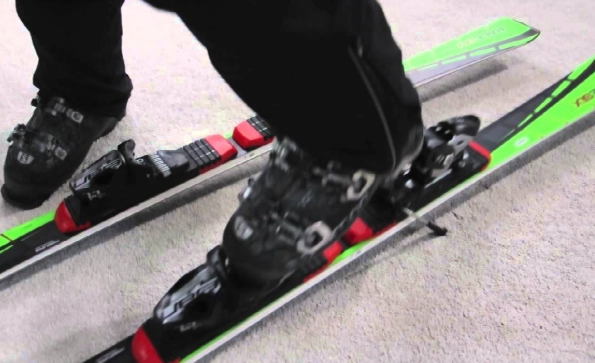
This is a touchy subject. Yes, you can learn parallel turns on any gear. But bad gear makes it infinitely harder. The most important piece is your boot. If it's too loose, you'll never have precise control over edging. Your boot should be snug—not painfully tight, but with no heel lift when you flex forward. A proper boot fitting is worth every penny.
Skis matter too. As a beginner/intermediate learning parallel turns, you want a ski that's forgiving and has a pronounced sidecut. Look for terms like "all-mountain frontside" or "carving ski." They're designed to make turning easier. Stay away from ultra-stiff racing skis or super-wide powder skis for now. They'll fight you.
A quick tip: If you've been renting, consider demoing a higher-performance ski once you're linking turns. The difference in stability and ease of turning can be night and day. Tell the shop you're working on parallel carving, and they'll set you up with something appropriate.
Answering Your Burning Questions (FAQs)
I've heard every question in the book. Here are the ones that come up again and again.
There's no single answer. It depends on your athleticism, how often you ski, and your willingness to practice drills. For an average adult skiing a week per season, going from a confident wedge to linked parallel turns might take a season or two of focused effort. Don't compare your chapter 1 to someone else's chapter 20.
I'm biased, but yes. A good instructor will see your movements from the outside and give you one or two cues that can save you months of frustration. They can also pick the right terrain and drills for you. It's an accelerator. Check out certified instructors through bodies like PSIA or their equivalents in other countries.
You can, but it's harder. You'll likely develop compensatory movements that you can't see. Videoing yourself on a phone can be a huge help if you're going solo. Compare your stance to photos of good skiers online.
Absolutely, and it's the most common mental block. Parallel turns actually give you more control, but your brain thinks the increased efficiency means you're going faster. The solution is to practice on a slope so easy it feels boring. Speed is irrelevant there. Build the muscle memory in a low-stakes environment until the movement is automatic. Then gradually increase the slope gradient.
All carved turns are parallel turns, but not all parallel turns are carved. Think of it as a spectrum. A basic parallel turn involves some skidding for speed control. A carved turn minimizes skidding and uses the ski's design to arc purely on its edge. Carving is the advanced application of parallel turning mechanics.
Final thought from someone who's been in the trenches: Be patient with yourself. Skiing is a complex skill. Some days it will click; other days it feels like you've forgotten everything. That's normal. Focus on one small element per run—maybe just the edge roll, or just the pressure on the outside ski. Celebrate the small wins. That feeling when you finally link a series of smooth, quiet parallel turns, the wind in your face, completely in sync with the mountain... that feeling is why we do this. It's worth every fall, every moment of frustration. Now get out there and give it a try.