Key Highlights
- Where Did Giant Slalom Come From? A Quick History Lesson
- Giant Slalom vs. The Others: What Makes GS Unique?
- Deconstructing the Turn: The Physics of Carving in GS
- The Tools of the Trade: GS Skis, Boots, and Bindings
- How the Pros Train: It's Not Just Skiing
- Your Giant Slalom Questions, Answered (FAQ)
- The Soul of the Sport
Let's be honest. For most people watching skiing on TV, the giant slalom just looks like a slightly slower, wider version of the slalom. A series of graceful, sweeping turns between red and blue poles. It seems... peaceful, almost. Until you try it yourself. Then you realize it's a brutal, beautiful dance with physics, where a tiny mistake gets magnified over the length of a 400-meter course, and the difference between first and tenth place can be a single, imperfect edge change.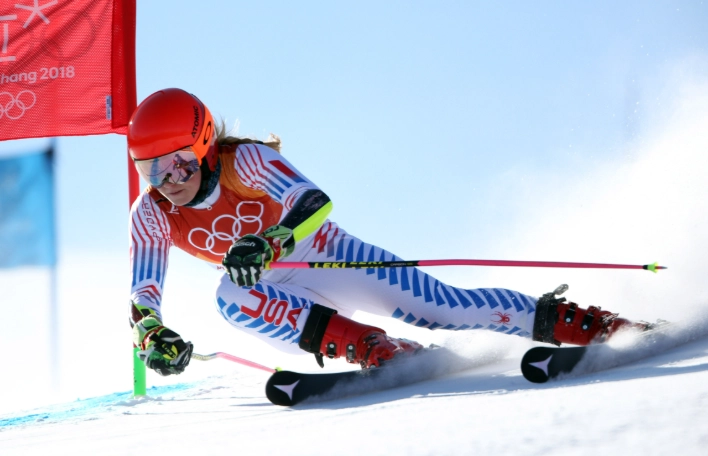
I remember my first real giant slalom race. I was 16, feeling confident after nailing slalom training. The GS course looked so inviting. Big, open gates. Plenty of space. I pushed out of the start, got into my first turn, and immediately felt like I was trying to steer a bus on an icy highway. The skis, so much longer and stiffer than my slalom boards, had a mind of their own. I was fighting them the whole way down, skidding turns, losing all my speed. It was humbling. That's the thing about giant slalom—it disguises its difficulty behind fluid, elegant lines.
At its core, giant slalom (everyone in the sport just calls it GS) is one of the five core disciplines of alpine ski racing, sitting right in the middle of the technical spectrum. It's not the quick-twitch, rapid-fire turns of slalom, and it's not the sheer, terrifying speed of downhill. It's a unique blend of precision, power, and flow. The gates are set farther apart than in slalom, but much closer than in Super-G, demanding a specific type of carved turn that generates immense pressure and G-force.
So, whether you're a weekend warrior looking to understand the event better, a young racer trying to crack the code, or just a fan who wants to know what you're really watching, this guide is for you. We're going to peel back the layers on everything giant slalom: its history, the physics that make it work, the gear that makes it possible, and the techniques that separate the good from the great. Forget the dry, textbook explanations. Let's talk about what it actually feels like.
Where Did Giant Slalom Come From? A Quick History Lesson
It might feel like a timeless event, but giant slalom is actually the baby of the alpine racing family. Downhill and slalom have roots going back to the early 1900s. GS? It was invented in the 1930s. The story goes that a bunch of European ski racers and officials wanted an event that blended the technical skill of slalom with more of the speed and flow of downhill. They were tired of the sometimes-jerky, always-grueling nature of traditional slalom. They wanted something that rewarded clean, powerful carving.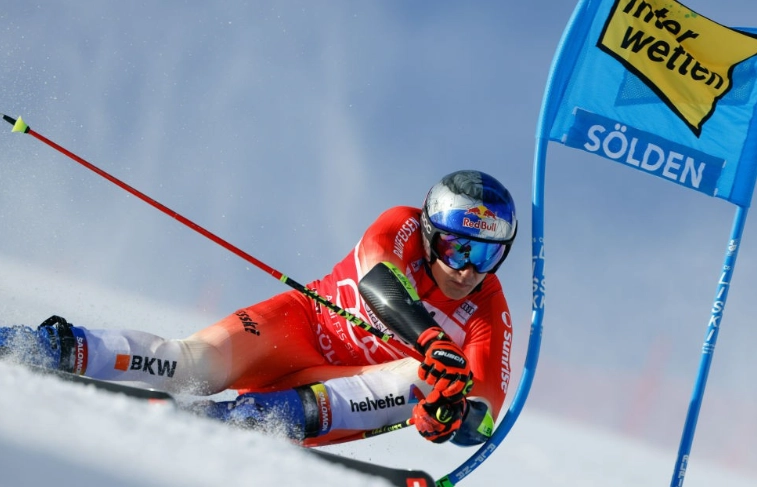
The first official giant slalom race is widely credited to being held in 1935 in Murren, Switzerland. The Fédération Internationale de Ski (FIS), the global governing body for skiing, recognized it as an official discipline in 1950, just in time for it to be included in the World Championships. Its Olympic debut came at the 1952 Oslo Games. It was an instant hit. For spectators, it was easier to follow than the blur of slalom. For racers, it was a new kind of challenge. You can read more about the fascinating evolution of alpine skiing rules and disciplines on the official FIS website—their historical archives are surprisingly detailed.
Over the decades, the giant slalom equipment and course setting evolved dramatically. Skis got longer, then shorter with the carve revolution of the 1990s, then longer again. The introduction of shaped skis in the mid-90s changed everything—suddenly, holding a clean, high-speed carve became more accessible, and the technique shifted from a skidded, defensive style to the aggressive, edge-locked carving we see today.
Giant Slalom vs. The Others: What Makes GS Unique?
This is where a lot of confusion lies. People see poles, they see turns, they think it's all the same. It's really, really not. Understanding the differences is key to appreciating the sport. Let's break it down in the simplest way possible.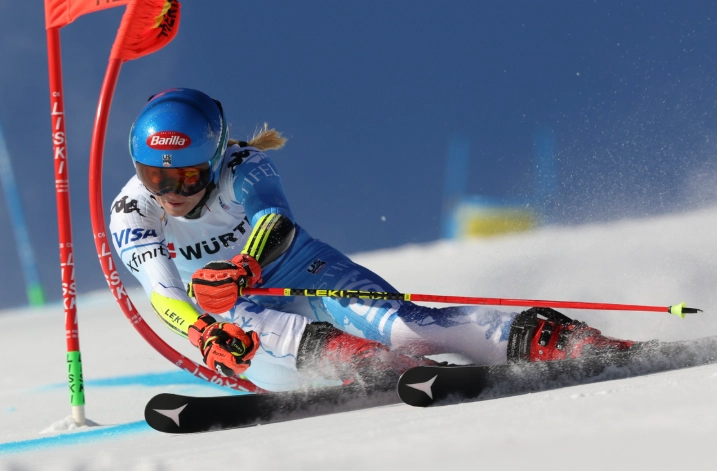
| Discipline | Turn Shape & Gate Spacing | Speed (Men's World Cup) | Key Mental Focus | "Feel" of the Run |
|---|---|---|---|---|
| Slalom | Very tight, rhythmic turns. Gates are close, requiring rapid direction changes. | 40-50 km/h (25-31 mph) | Quick reflexes, aggressive blocking, rapid recovery. | A frantic, precise dance. One mistake and you're out. |
| Giant Slalom | Long, sweeping, round turns. Gates are set in a flowing, rhythmic pattern. | 65-80 km/h (40-50 mph) | Patience, clean carving, maintaining pressure through the whole turn. | A powerful, physical flow state. Building momentum like a pendulum. |
| Super-G | Very long, gliding turns mixed with terrain features. More open. | 100-120 km/h (62-75 mph) | Reading terrain, committing to big lines, courage at high speed. | Like driving a high-performance car on a winding road. All about the line. |
| Downhill | Primarily straight, with a few critical turning sections. Minimal gates. | 130-150 km/h (80-93 mph) | Absolute commitment, aerodynamics, bravery. | Pure, raw speed. A controlled fall down a mountain. |
See the gap? The giant slalom occupies this perfect middle ground. You have time to think, but not too much. You need power, but also finesse. The rhythm is slower than slalom, but the consequences of missing that rhythm are just as severe—you lose all your speed generation. A slalom mistake might knock you out of the course. A GS mistake just makes you slow, which in a race is basically the same thing.
Here's my take: Slalom is jazz. It's improvisation, quick hits, and recovery. Downhill is heavy metal—pure power and noise. Giant slalom? That's classical music. It's about building themes, following a composed structure, and executing with power and precision. Every movement has a consequence three gates later.
Deconstructing the Turn: The Physics of Carving in GS
Alright, let's get a bit nerdy, but I promise to keep it relatable. The fundamental goal in a giant slalom turn is to create a pure carve. That means the ski is bent into an arc, and you're riding on its metal edge from tip to tail, leaving a clean, pencil-thin line in the snow. No skidding. Skidding is your enemy. It bleeds speed and control.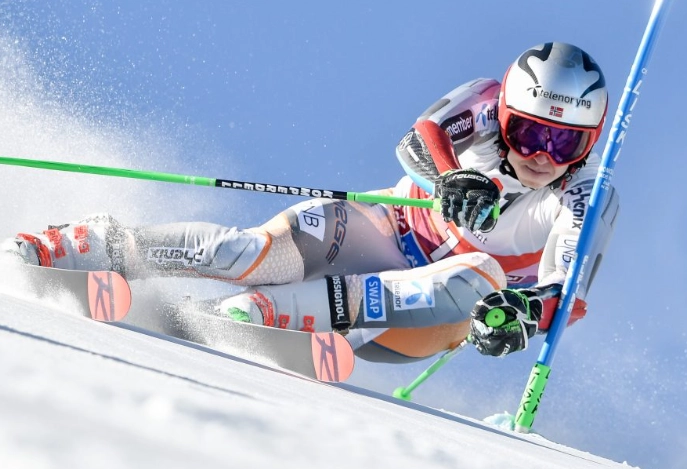
How do you do that? It's a chain reaction of body movements.
The Initiation: It Starts at the Feet
Forget about throwing your shoulders. The turn starts by rolling your knees and ankles laterally into the hill. You're tipping the skis onto their new edges. At the same time, you're applying forward pressure to bend the shovel of the ski. This combination—edge angle and forward pressure—makes the ski start to bend. It wants to turn. You just have to let it.
The Control Phase: Building the G's
This is where the magic happens. As the ski carves, it pushes back against you with centrifugal force. Your job is to resist that force with your skeleton. You create an angle between your outside ski (the one you're primarily on) and your body. The more you can lean your body inside the turn while keeping that outside ski pressured and edged, the tighter and more powerful the carve becomes.
Pro Tip: Think about pressing your outside knee down and into the hill. If you can see the top of your boot from the side, you're probably not angulating enough. You should feel it in your outside quad, burning like crazy.
This is where you're generating most of your speed in a giant slalom run. A powerful carve acts like a spring, storing energy and releasing it as you come out of the turn, propelling you to the next gate. A weak, skidded turn just kills momentum.
The Exit and Transition: The Make-or-Break Moment
This is the hardest part, and where most recreational skiers (and even some racers) lose time. You can't just stand up and go to the next turn. You have to release the pressure. You quickly reduce the edge angle, allow the ski to flatten for a split second, and then immediately roll into the new edges for the next turn. It's a subtle, quick un-weighting. Do it too early, and you lose the end of the carve. Do it too late, and you're stuck in the turn, forcing you to skid to make the next gate.
Common Mistake: The "up-down" motion. People think they need a big hop or leg extension to start a new turn. In modern GS, that's death. It's a lateral, rolling motion, not a vertical one. That big hop just puts you in the backseat and wastes energy.
The entire sequence happens in a blink, but each phase is distinct. Mastery of the giant slalom technique is about making this chain reaction as efficient and powerful as possible, over and over again.
The Tools of the Trade: GS Skis, Boots, and Bindings
You can't talk technique without talking gear. The equipment used in World Cup giant slalom is hyper-specialized, and it directly enables the technique we just described. It's also wildly different from what you rent at a ski resort.
GS Skis: Long, Stiff, and Full of Camber
- Length: For World Cup men, GS skis are at or near the FIS-mandated maximum of 193cm with a minimum radius of 30 meters. For women, it's 188cm. (Recreational "master" GS skis are much shorter, around 175-185cm). They're long for stability at high speed.
- Sidecut Radius: This is the big one. A GS ski has a large sidecut radius (typically 30m+ for FIS). That means it's designed to make a big, sweeping turn when up on edge. A slalom ski might have a 13m radius for quick hooks.
- Stiffness: They are very stiff, especially underfoot and in the tail. This stiffness allows them to hold a carve against enormous pressure without buckling or washing out. A soft ski would just chatter and skid.
- Camber: They have significant traditional camber (the arch in the middle when unweighted). This camber acts like a spring, helping to generate rebound energy out of the turn.
I made the mistake once of trying a friend's old FIS GS skis on a casual day. They were miserable. On the groomer, if you got them perfectly on edge, they felt like rails. But the moment you wanted to make a relaxed, skidded turn to slow down, they fought you every step of the way. They have one job: carve at high speed. They are terrible at everything else.
Boots and Bindings: The Connection
GS boots are stiff, often in the 130-150 flex index (a rental boot is maybe 70-90). This stiffness transmits every ounce of your movement directly to the ski. There's no lag, no slop. The bindings are also mounted with a plate system. This is a raised platform between the ski and the binding. It serves a few purposes: it dampens vibration for a smoother ride, it allows for fine-tuning the ski's flex pattern, and it elevates the heel for a more aggressive, forward-leaning stance.
How the Pros Train: It's Not Just Skiing
You don't get to be Mikaela Shiffrin or Marco Odermatt by just free-skiing all winter. The training for giant slalom is a year-round, brutal obsession. It breaks down into a few key areas.
- On-Snow Technical Drills: This is the bread and butter. Hours and hours of focused repetition. Drills like "outside ski only" runs, where you lift your inside ski entirely to force perfect balance. Or "garlands," where you initiate a turn, hold the carve for a moment, then slide sideways, focusing purely on the edge engagement and release. It's tedious, but it builds muscle memory.
- Gate Training: This is where technique meets reality. Running full courses, but also doing specific drills like "hairpin" sets (two gates extremely close together) to work on quick transitions, or "delay" sets where you have to be incredibly patient before initiating. The U.S. Ski & Snowboard team publishes insights into their training methodologies, showing how structured this all is. You can see some of their general athletic training philosophies on their official site.
- Dryland & Gym Work: GS is brutally physical. The G-forces in a turn are immense. Training focuses on:
- Explosive Leg Strength: Squats, box jumps, plyometrics.
- Eccentric Strength: The ability to absorb force. Think deep, slow squats or landing drills.
- Core Stability: Everything originates from a rock-solid core. It's not about sit-ups; it's about anti-rotation exercises like Pallof presses.
- Mobility & Flexibility: Especially in the hips and ankles, to achieve those extreme edge angles without injury.
Watching a World Cup skier in the gym is humbling. They're not just strong; they're powerful, agile, and have the balance of a gymnast. It's a full-body athletic pursuit.
Your Giant Slalom Questions, Answered (FAQ)
What's the hardest part of learning giant slalom?
Patience. Without a doubt. In slalom, things happen fast and you react. In GS, you have to set up the turn early, then wait for the ski to do its work. Our instinct is to rush, to force the turn. Learning to trust the ski's sidecut and let the turn develop is the biggest mental hurdle.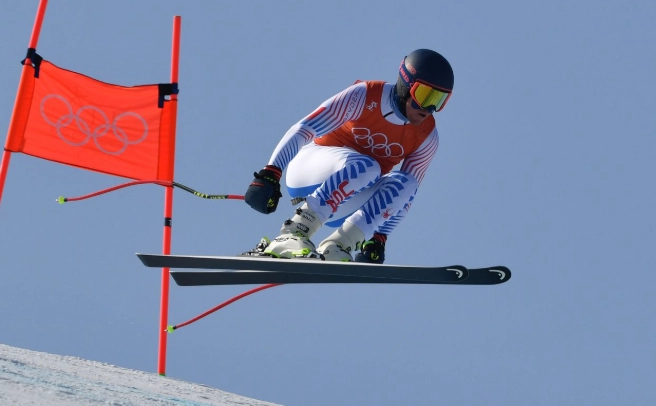
Can I try giant slalom on my all-mountain skis?
You can, but it'll feel limiting. All-mountain skis are softer and have a multi-radius sidecut designed to be forgiving and versatile. They won't hold a high-speed carve as well, and they'll chatter. You can learn the basic body movements, but to truly feel what a giant slalom turn is supposed to be, you need a proper GS ski. Look for a recreational "master's GS" ski—they're shorter and more forgiving than FIS skis but still capture the essence.
How dangerous is it compared to downhill?
Statistically, downhill has a higher risk of catastrophic injury due to the extreme speeds. However, giant slalom is no joke. Crashes at 50+ mph into hard, icy ruts or gate poles happen. Knee injuries (ACL, MCL) are very common due to the extreme twisting forces when a ski catches an edge. It's a high-impact, high-risk sport. Proper technique and conditioning are your best safety gear.
Why do some racers dominate GS but struggle in slalom, or vice versa?
It often comes down to physiology and mentality. GS favors taller, more powerful athletes who can generate and sustain pressure through long turns. Slalom favors shorter, quicker athletes with lightning-fast reflexes. Mentally, GS racers need a calmer, more rhythmic focus. Slalom racers thrive on controlled chaos. Some rare talents, like Mikaela Shiffrin, have the mental and physical toolkit to master both, but it's exceptionally rare.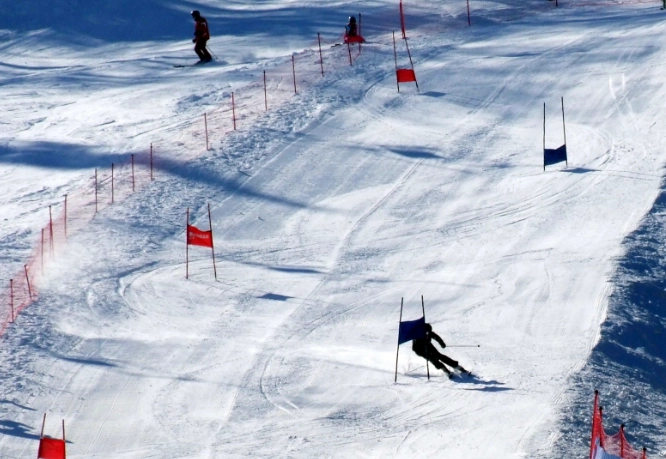
Where can I watch World Cup giant slalom races?
In the US, coverage is often on NBC Sports platforms or Peacock. In Europe, broadcasters like ORF (Austria) and RAI (Italy) have legendary coverage. The best source for schedules, results, and often live timing is the official FIS website. Their live timing data is incredibly detailed, showing you split times and where a racer won or lost a race.
The Soul of the Sport
At the end of the day, giant slalom is more than a timed run down a mountain. It's a puzzle where the pieces are your body, your skis, the snow, and the set of the course. There's a profound satisfaction in linking a series of perfect turns, feeling the acceleration build from one to the next, and crossing the finish line knowing you left nothing on the hill. It's a thinking person's speed event.
It's also incredibly demanding. It will test your fitness, your coordination, and your patience. You will have days where nothing clicks. But then you'll have that one run, maybe just a training run, where everything flows. Your edges hook up perfectly, your transitions are seamless, and you're not fighting the skis—you're working with them. In that moment, you understand why people dedicate their lives to this discipline.
So next time you're watching a World Cup giant slalom, look past the simple left and right. See the subtle weight shifts, the aggressive angulation, the patience in the turn initiation, and the explosive release. You're watching a masterpiece of applied physics and human will, one sweeping carve at a time.