Your Ski Slang Roadmap
I remember my first real ski trip out West. I was standing in a lift line, feeling pretty good about my gear, when I overheard a conversation that might as well have been in another language. "The corduroy on Broadway is absolute hero snow today," one guy said. His friend replied, "Yeah, but I heard there's some serious shark fins lurking off the knuckle of Corbet's. Saw a total Jerry have a full yard sale over there yesterday." I just nodded, pretending to understand, but inside I was completely lost. What were they even talking about?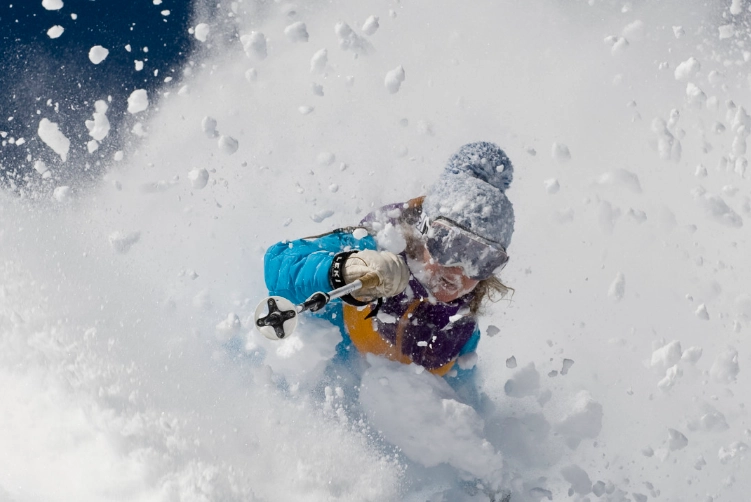
That's when it hit me. Knowing how to ski is one thing. Knowing how to talk about skiing is a whole different skill. The world of skiing has its own vibrant, quirky, and sometimes confusing vocabulary. Mastering these ski slang terms isn't about showing off (okay, maybe a little). It's about understanding the mountain culture, staying safe, and getting the most out of your day. It's the difference between being an outsider and feeling like you belong in the lodge.
This guide is the one I wish I'd had. We're going to break down the essential ski slang terms, from the basics you'll hear everywhere to the niche phrases that'll make you sound like a seasoned local. Forget dry dictionaries. This is about context, stories, and what these words really mean when you're up on the hill.
The Absolute Must-Know Ski Slang Dictionary
Let's start with the bread and butter. These are the ski slang terms you'll hear from Vermont to Verbier. If you only learn one section, make it this one.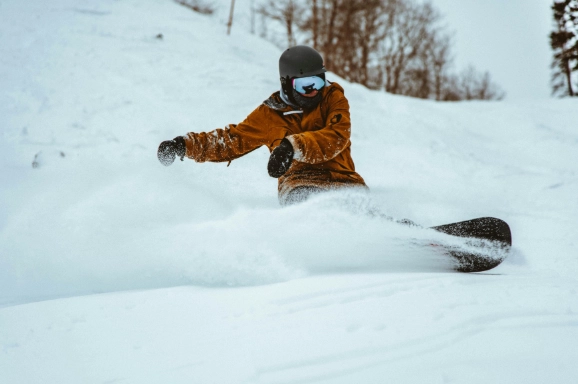
Conditions & Snow Talk
This is the most important category. The words used to describe the snow directly dictate where you should ski and what gear you might need.
- Pow / Pow Pow: Short for powder. The holy grail. Light, dry, deep snow that you float through. A "pow day" is a reason to call in sick to work. Nothing beats it.
- Groomers / Corduroy: These are the trails that have been smoothed over by snowcats, leaving behind a pattern that looks like corduroy fabric. It's predictable, fast, and great for carving. "Let's warm up on some groomers."
- Crud / Chop: Snow that has been skied over, churned up, and is now uneven, heavy, and challenging to ski. It often forms later in the day after fresh powder has been tracked out. It's a leg burner.
- Ice / Blue Ice / Firm: Exactly what it sounds like. Hard, often slick conditions. Resorts might politely call it "firm pack" or "granular," but we all know it's ice. Time to sharpen those edges.
- Hero Snow: My personal favorite term. This is snow that's perfectly grippy and forgiving, making you feel like an expert even if you're not. It's often slightly soft groomed snow or perfect corn snow. You take risks and usually pull them off. Everyone feels like a hero.
- Crust / Breakable Crust: A tricky layer of firm, frozen snow on top of softer snow. Your skis might break through it unpredictably. It's frustrating and can throw you off balance.
- Corn: Spring skiing magic. Granular, rounded snow crystals that form from repeated daily melting and nightly freezing. It's incredibly smooth and fun to ski, usually found in the sun on spring afternoons.
See? Already you're getting a clearer picture. Knowing it's "crusty" vs. "corn" tells you whether to sleep in or rush to the lifts.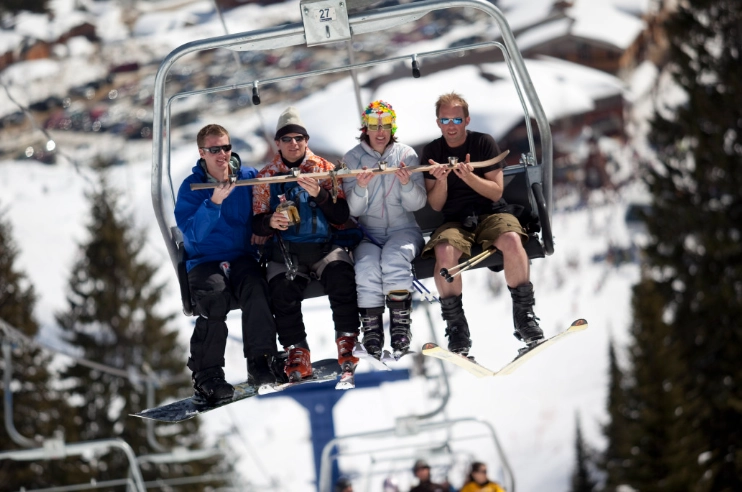
Terrain & Features
Mountains aren't just "steep" or "flat." The slang for terrain is descriptive and often visual.
- Whales: Massive, whale-shaped mounds of snow, usually created by snowmaking guns piling up snow before it's spread out. Sometimes they're left as fun jumps or pillows.
- Shark / Shark Fin: A rock or obstacle that's barely covered by thin snow, poking up like a shark's fin. A major hazard. Hitting one can ruin your skis (or your day). "Watch out for sharks on the skier's left."
- Bumps / Moguls: The formal term is moguls, but everyone calls them bumps. Those rhythmic bumps formed on steeper slopes by skiers making turns. Love them or hate them.
- Glades / Trees: Tree skiing. "The glades" refers to a forested area with trees spaced widely enough to ski through. It holds fresh powder longer and offers amazing, quiet runs.
- Chute / Couloir: A steep, narrow gully or passageway, often between rocks. They're committing and exciting. Pronounced "coo-loo-wahr" if you want the French flair.
- Knuckle: The top, often rounded or convex, part of a cliff or big drop before it turns vertical. Scoping the knuckle is key before dropping in.
- Apron: The wide, sloping area below a cliff or chute where you land and continue your run.
Skiers & Skiing Actions
This is where the culture comes alive, describing people and what they're doing (or failing to do).
- Jerry: The most iconic of all ski slang terms. A Jerry is an out-of-place, often clueless skier or snowboarder. The guy with the brand-new, tags-still-on gear who sits down in the middle of a run to adjust his boots. The one who scoots straight down the hill in a "pizza" wedge on a double-black diamond. It's not always mean-spirited; it's often used affectionately or to describe one's own past mistakes. "I was such a Jerry that first season."
- Gaper: Similar to a Jerry, but specifically refers to the gap between their goggles and helmet, often because they're wearing their gear incorrectly. The look defines the person.
- Local: Someone who lives in the mountain town and skis the resort regularly. They know the secret stashes and the best lunch spots.
- Yard Sale: A spectacular fall where a skier's equipment—skis, poles, gloves, goggles—goes flying and is scattered down the slope, as if items were laid out for sale. Everyone has had at least one.
- Face Shot: A glorious moment in deep powder where your turn throws snow up into your face. The deeper the powder, the better the face shot.
- Schralp / Send It: To ski aggressively and with style. "Schralp the gnar" means to rip through difficult terrain. "Send it" means to go for it, commit to a jump or line without hesitation.
- Biff / Eat It / Tombstone: All ways to say "fall." A tombstone is when one ski pops off and sticks upright in the snow after a fall.
- Hot Dogger / Freestyler: An old-school term for a skier who does aerials and tricks, dating back to the 70s and 80s. You'll still hear it sometimes.
I'll admit, the whole "Jerry" thing can feel a bit exclusive. But in a way, learning these ski slang terms is your ticket out of being one. It shows you're paying attention and respecting the mountain's vibe.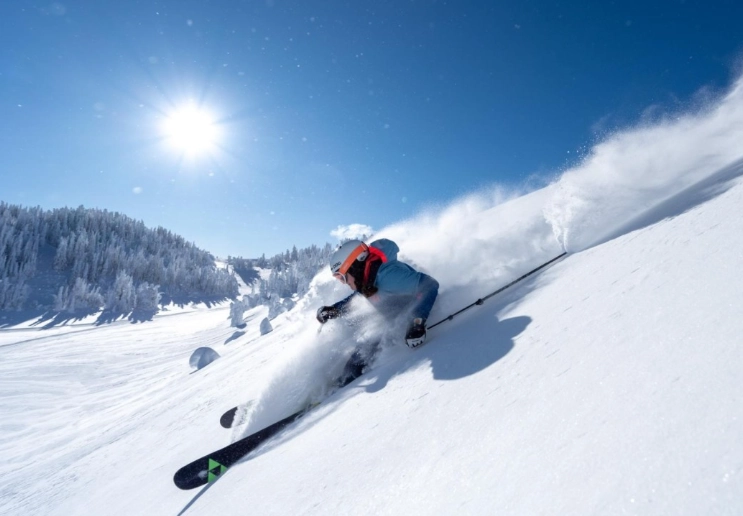
Level Up: Niche & Regional Ski Lingo
Once you've got the basics down, you'll start to hear more specific phrases. These often vary by region or skier subculture.
East Coast vs. West Coast Slang
There's a gentle rivalry, and the language reflects it.
- East Coast Ice Coast: A term of both pride and resignation for Eastern skiers, acknowledging the frequent hardpack and icy conditions. We learn to edge here.
- Sierra Cement / Cascade Concrete: West Coast terms for the heavy, wet snow common in the Pacific mountain ranges. It's dense and powerful, not the light Utah powder you see in movies.
- Champagne Powder®: Actually a registered trademark of Steamboat Ski Resort in Colorado, but used colloquially to describe the supremely light, dry snow found in parts of the Rockies.
- Back East: What West Coast locals call anywhere in the Eastern US. "You ski back east? How are the conditions?" they'll ask, often expecting a horror story about ice.
Park & Pipe Jargon
The terrain park has its own full lexicon. Here are a few crossover terms.
- Kicker: A jump.
- Rail / Box: A metal rail or plastic box to slide on.
- Butter: Pressing the tip or tail of your ski into the snow while sliding, a foundational trick.
- Jib: To slide or ride on any non-snow surface like a rail, box, or even a log.
The Dark Side: Snowboarder Slang Crossovers
We share the mountain, and we share some words. Skiers absolutely say these too now.
- Stoke / Stoked: Excitement, enthusiasm. "The stoke is high today!"
- Gnarly / Gnar: Extreme, difficult, intimidating. "That run was proper gnar."
- Sketchy: Dangerous, unreliable, or poorly executed. "The landing looked pretty sketchy."
Gear, Lifts & Après: The Full Mountain Vocabulary
The slang doesn't stop when you step off your skis. It covers every part of the mountain experience.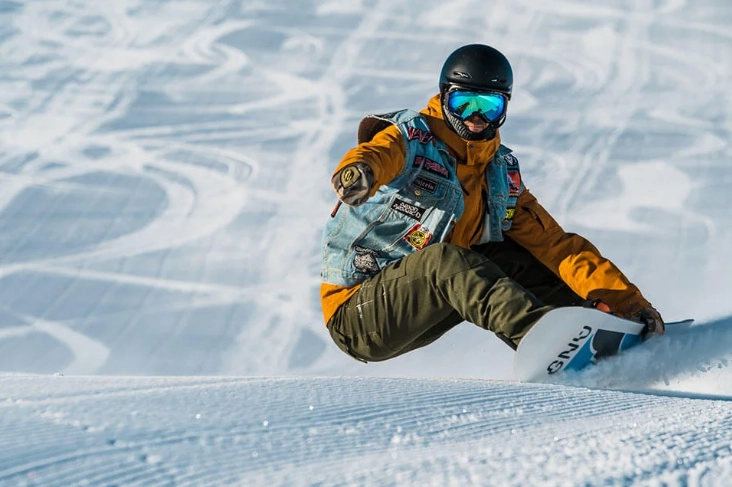
| Category | Term | Meaning & Context |
|---|---|---|
| Gear | Two-Planker / Stick | A skier (as opposed to a one-plank snowboarder). Sometimes used playfully by snowboarders. |
| DIN | The release setting on your ski bindings. A high DIN is for aggressive skiers. "He cranks his DIN to 12." Not something to mess with unless you know what you're doing. | |
| Core Shot | A deep gouge in your ski that reaches the core material, usually from hitting a rock. Expensive and a bummer. | |
| Lifts | Fixed-Grip / Double / Triple | An old-school, slower chairlift without a detachable cable. You have to be ready when it hits your knees. |
| Six-Pack / Bubble Chair / Gondi | Modern lift types. The bubble chair has a plastic dome that comes down for wind protection. | |
| Rope Drop | The moment a closed area of the mountain (marked by a rope) is opened for the first time, often for fresh tracks. | |
| Après & Lodge | Après | Short for après-ski, the social activities after skiing. Crucial to the culture. Can be a beer on the deck or a full party. |
| Boot Pack | 1) The walk from the parking lot in your ski boots (a rite of passage). 2) Hiking up a slope in your boots to access terrain. | |
| Goggle Tan / Raccoon Eyes | The distinctive white goggle-shaped tan line on a sunburned face. A badge of honor. |
That boot pack from the car? It's the worst. You look cool until you have to navigate an icy parking lot. Then you're just a penguin trying not to fall.
Putting It All Together: A Day in Slang
Let's see how these ski slang terms flow in a real conversation. Imagine two friends planning their day:
"Okay, the report says they got six inches of fresh on top of a firm base. Probably some sharks poking through in the usual spots. Let's start on the groomers off the six-pack to warm up—should be hero snow. Then we can dip into the glades off the backside before the Jerries track it all out."
"Sounds good. I heard they're doing a rope drop on The Cirque at 10:30. Might be some serious gnar up there, but the chute should be filled in. Just don't want to see you have a yard sale at the bottom."
"Ha! No promises. Après at the usual spot?"
See? It's a efficient, descriptive, and culturally rich way to communicate. Every sentence packs information about conditions, terrain, timing, and safety.
Your Burning Questions About Ski Slang, Answered
Your Burning Questions About Ski Slang, Answered
It depends entirely on tone and context. Among friends laughing at a minor mistake, it's usually fine. Yelling it at a struggling beginner from a chairlift is just being a jerk. The best policy? Don't call someone else a Jerry unless you're 100% sure they'll take it as the joke it's meant to be. It's safer to just laugh at yourself. I've been the Jerry plenty of times.
For a while, it felt like every other word was "gnarly." It lost its meaning. These days, I'd say "send it" is getting a workout. It's a great phrase, but it's on every sticker and hat now. It's lost a bit of its edge, pun intended.
Eavesdrop (politely) on lift lines and in the gondola. Listen to the ski patrollers and instructors when they talk to each other. Local trail names often have nicknames. The best resource is often the mountain's own community forum or social media pages, where locals discuss conditions in real, unfiltered slang. Sites like Snews (Skiing News) often capture the evolving language in their features and athlete interviews.
Many core terms like "powder" and "moguls" are universal. But there are differences. In Europe, you might hear "piste" instead of "trail" or "groomer," and "off-piste" instead of "backcountry" or "sidecountry." The culture is a bit more formal in many Alpine resorts, so the super-casual American slang might stand out more. But the spirit is the same.
Hands down, it's the terrain descriptions. Shark, cliff, exposure, thin cover, rocks. These aren't jokes. If you hear these terms about an area, it means you need to be extremely cautious, scout your line carefully, and have the appropriate skill level. Ignoring these warnings is a fast track to injury. The US Forest Service, which oversees much of the land US ski resorts operate on, publishes backcountry safety information that echoes the seriousness behind these informal terrain warnings.
Go Forth and Schralp
So there you have it. A living, breathing guide to the weird and wonderful world of ski slang terms. This isn't about memorizing a list. It's about tuning your ear to the rhythm of the mountain. Start with the big ones—pow, groomers, Jerry, yard sale. Let the rest soak in over time through conversations and experience.
The next time you're in a lift line and hear someone talking about chasing face shots in the glades before the crud sets in, you'll know exactly what they mean. More than that, you might just be able to jump into the conversation. You'll read snow reports with new understanding. You'll feel more connected to the entire experience.
That's the real point of all this slang. It's the secret handshake of a global tribe. It turns a sport into a culture. So get out there, find some hero snow, avoid the sharks, and for goodness' sake, try not to host a yard sale. See you on the hill.