Quick Guide to Piste Bashers
- Why the Piste Basher is the Heart of the Ski Resort
- Breaking Down the Beast: Types of Piste Bashers
- The Nuts and Bolts: What's on the Front and Back?
- Buying One: The Million-Dollar Question (Literally)
- A Day in the Life: Operation and That Crucial Maintenance
- Safety: It's Not Just About the Skiers
- The Future of the Piste Basher
- Your Piste Basher Questions, Answered
Let's talk about the unsung hero of every great ski holiday. You've seen them, those tank-like machines crawling across the mountain in the early hours or late at night, their headlights cutting through the darkness. Locals might call them snowcats or groomers, but across much of Europe, they're known by a name that perfectly captures their brute-force purpose: the piste basher. If you've ever carved a perfect turn on corduroy snow at 9 AM, you have one of these machines and its operator to thank.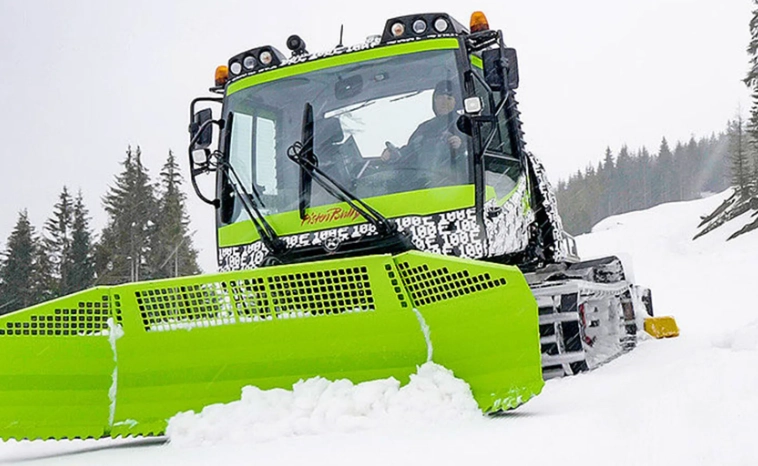
But what goes on behind the scenes? What does it actually take to run, maintain, and choose these behemoths? I remember the first time I got up close to one in the Alps. The sheer size was intimidating, a complex web of hydraulics, tracks, and a cabin that looked like the cockpit of a spaceship. The operator, a guy named Franz who'd been doing it for 25 winters, just shrugged. "It's just a big tractor for snow," he said. As I learned later, that's a massive understatement.
Why the Piste Basher is the Heart of the Ski Resort
Forget the flashy chairlifts or the cozy mountain restaurants for a second. Without effective snow grooming, a ski resort's operation grinds to a halt. A well-groomed piste isn't just a luxury; it's a safety requirement, a business imperative, and an art form. Poor snow conditions are one of the top complaints from visitors, and a single night of bad grooming can lead to a day of icy, dangerous slopes and unhappy customers. The piste basher addresses the core user pain point: inconsistent and unsafe snow surfaces.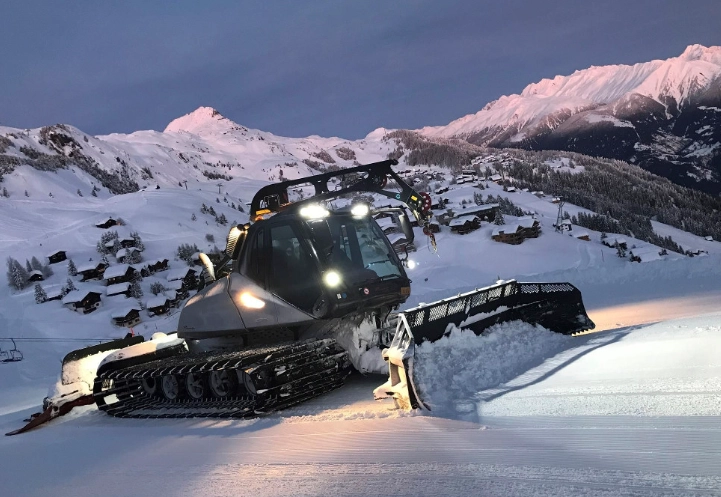
Think about it from the resort manager's perspective. You have a finite amount of snow, whether natural or man-made. Your job is to make it last, make it safe, and make it enjoyable for everyone from beginners to experts. The grooming snowcat is your primary tool for that. It redistributes snow from where the wind piled it up to where skiers scraped it away. It breaks down ice chunks and incorporates new snowfall. It creates those beginner-friendly green runs and the firm, fast surfaces racers demand.
I've spoken to resort managers who say the grooming budget is one of the last things they'll ever cut. Because when the grooming suffers, everything else falls apart.
Breaking Down the Beast: Types of Piste Bashers
Not all piste basher machines are created equal. Choosing the right one depends on terrain, snow conditions, and budget. The main split is between tracked and wheeled vehicles, and honestly, the debate between the two can get surprisingly heated among grooming crews.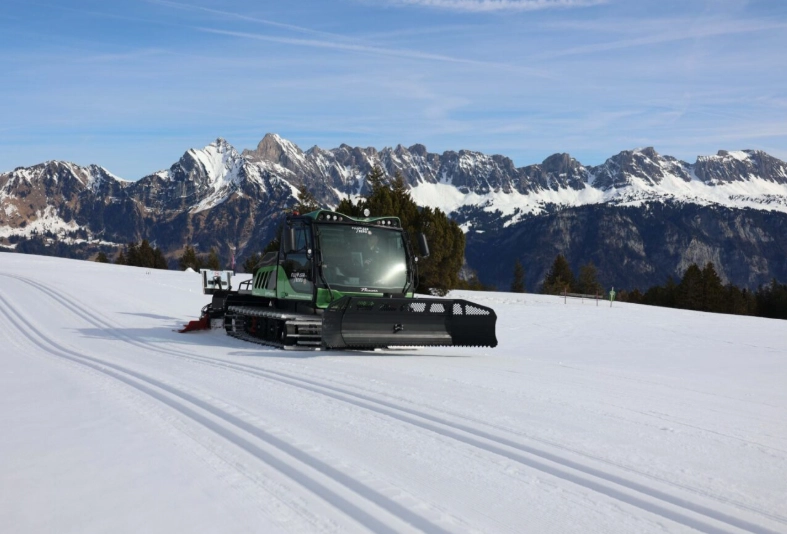
Tracked Piste Bashers (The Traditional Workhorse)
These are the classic images—the vehicles on continuous rubber or steel tracks. They offer incredible flotation on deep snow and exceptional traction on steep grades. For truly challenging, off-piste grooming or very deep snowpack, tracks are often the only option. Brands like PistenBully and Prinoth dominate this space. But they have downsides. They're slower on hardpack or long traverses, they can be harder on the underlying terrain (especially in low-snow conditions), and the tracks themselves require significant maintenance.
Wheeled Grooming Vehicles (The Agile All-Rounder)
Think of these as massive, heavy-duty tractors with giant, low-pressure tires. Companies like Kässbohrer (maker of the famous PistenBully) also offer wheeled versions. Their big advantage is speed and versatility. They can move quickly between slopes, handle variable surfaces better when snow is thin, and are generally more fuel-efficient. The ride for the operator is also often smoother. The trade-off? They can't handle the same extreme steepness or ultra-deep powder as a tracked machine. They need a firmer base to work on.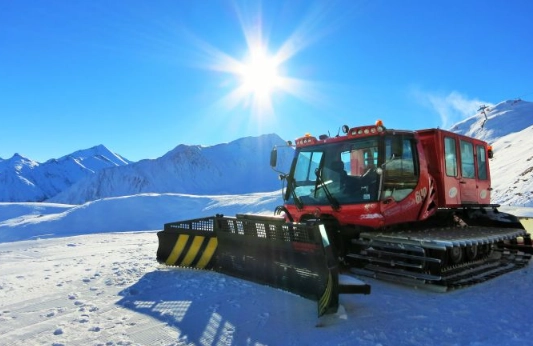
Here’s a quick comparison to help visualize the choice:
| Feature | Tracked Piste Basher | Wheeled Grooming Vehicle |
|---|---|---|
| Best Terrain | Steep slopes, deep powder, off-piste areas | Rolling terrain, interconnected trails, hardpack |
| Traction & Flotation | Superior. Distributes weight evenly. | Very good, but requires a base. Can compact more. |
| Travel Speed | Slower (max ~12-15 mph / 20-25 km/h) | Faster (can reach ~25 mph / 40 km/h+) |
| Ground Pressure | Very low (protects underlying vegetation) | Higher, but tires are designed to minimize impact |
| Typical Cost | Higher initial purchase and track maintenance | Often lower initial cost, tire replacement is a factor |
| Operator Comfort | Can be bumpy on hard surfaces | Generally smoother ride on packed snow |
Most large resorts run a mixed fleet. They'll use tracked beasts for the steep blacks and the powder stashes, and wheeled vehicles for the long, cruising blue and green runs that need frequent attention.
The Nuts and Bolts: What's on the Front and Back?
The vehicle itself is just the power unit. The magic happens with the implements it pushes or pulls. This is where the grooming part of "grooming snowcat" comes alive.
- The Tillers (The Culprits Behind Corduroy): Mounted on the rear, this is a rotating drum with dozens of hardened steel teeth or picks. It's the tiller that chews up the snow, breaks up ice, mixes in new snow, and leaves that perfect corduroy pattern. The operator can adjust the depth, speed, and angle of the tiller. A worn-out tiller makes for terrible snow.
- The Blade (The Dozer up Front): This is the primary shaping tool. It pushes snow, fills in ruts, cuts down bumps, and moves snow from where you don't need it to where you do. Modern blades are incredibly articulate, able to tilt, angle, and lift with hydraulic precision.
- The Winch (For the Seriously Steep Stuff): For slopes steeper than what the machine's tracks or tires can safely handle, a winch system is used. The piste basher anchors itself at the top of the slope with a giant ground anchor and uses a cable winch to lower itself down and pull itself back up, allowing it to groom near-vertical terrain safely.
- Track Packers & Drag Mats: Simpler tools used for initial compaction of man-made snow or for finishing touches to create a super-smooth surface.
An operator's skill isn't just in driving; it's in knowing which combination of tools to use, in what order, and with what settings for the specific snow conditions that night. It's part science, part feel.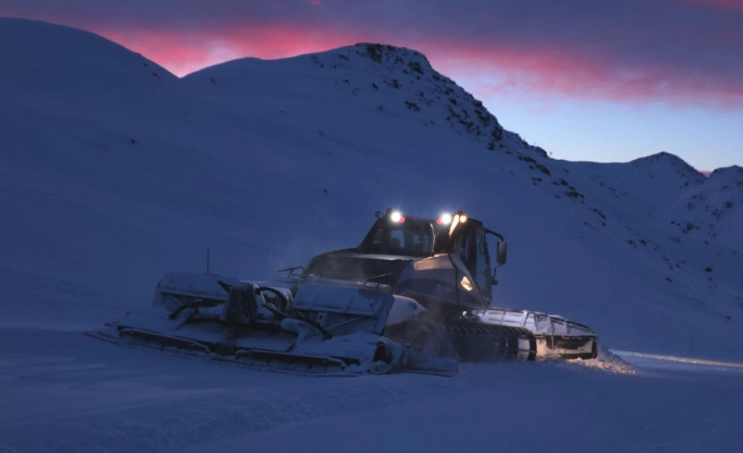
Buying One: The Million-Dollar Question (Literally)
This is the big one for resort owners or area managers. The financial commitment is staggering. A brand-new, fully-equipped piste basher machine from a major manufacturer can easily cost between €250,000 and €500,000. For a winch-cat setup for steep terrain, you're looking at well over €500,000.
So what are the options?
- Buy New: Maximum reliability, latest tech (like GPS grading and fuel-efficient engines), full warranty. But it requires massive capital.
- Buy Used: The most common path for growing resorts. The secondary market is active. You can find decent 5-10 year old machines for half or a third of the new price. The gamble is on its condition. A cheap used piste basher with hidden hydraulic problems can become a money pit overnight. Always get a full inspection by a third-party mechanic.
- Lease/Finance: Spreading the cost makes sense for cash flow. Many manufacturers have their own finance arms.
- Contract Grooming: Some smaller areas don't own machines at all. They hire a contractor with a fleet who comes in and does the work. Less control, but zero capital outlay and maintenance headaches.
Key factors in the decision beyond price? Dealer support proximity is HUGE. If your nearest qualified mechanic is a 6-hour drive away, downtime during a snowstorm can be catastrophic. Also consider parts availability and the technology in the cab. Older machines lack the modern computer systems that help with efficiency and precision grooming.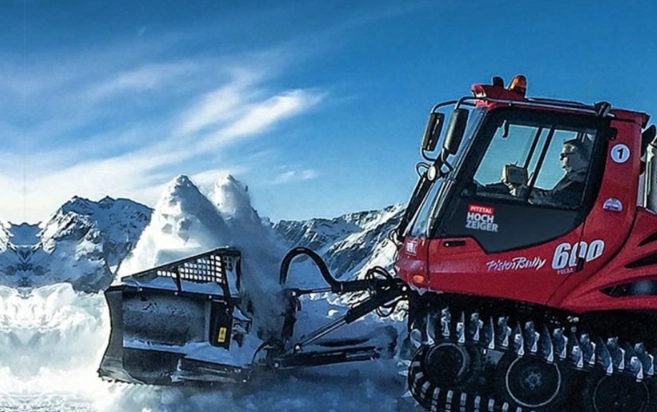
A Day in the Life: Operation and That Crucial Maintenance
The work happens when everyone else is asleep. A typical shift starts in the late afternoon and runs through the night. The operator gets a grooming plan—which runs need corduroy, which need snow moving, which need winching.
But before a single track is made, there's the pre-start check. This isn't just kicking the tires.
Operators need a specific skillset. Patience, spatial awareness, the ability to work alone for hours, and a deep understanding of snow physics. In many regions, it's a certified profession. Organizations like the National Ski Patrol or the International Ski Areas Association (ISAA) provide resources and guidelines for safe winter operations.
Maintenance is relentless. It's not just fixing what breaks; it's preventing breaks from happening.
- Daily/Weekly: Lubrication of all fittings, cleaning radiators and coolers of snow and debris, checking and tightening track components.
- Seasonal: Major overhauls. Rebuilding hydraulic cylinders, inspecting the undercarriage for wear, servicing the engine and transmission, repacking bearings.
- Off-Season: This is when the big work happens. Complete machine detailing, corrosion control, implementing any upgrades, and deep mechanical inspections.
Fuel consumption is another massive operating cost. A large piste basher working hard can burn 15-25 gallons (55-95 liters) of diesel per hour. Newer models with eco-modes and better engine management are trying to chip away at this number, but it's still a huge line item on the resort's budget.
Safety: It's Not Just About the Skiers
Operating a multi-ton machine on a dark, snowy mountainside is inherently risky. Safety protocols are non-negotiable.
For the operator: Roll-over protection (ROPS) cabs are standard. Seatbelts are mandatory. Understanding slope stability and avalanche risk is critical—a groomer can trigger a slide. Communication with base and other machines is constant.
For the public: This is why grooming mostly happens when the slopes are closed. Clear signage, designated closure areas, and good communication with night patrol are essential. There have been tragic incidents involving collisions with early-rising skiers or hikers, so resorts take this incredibly seriously.
Resources from the Occupational Safety and Health Administration (OSHA) and other national safety bodies often have guidelines for heavy equipment operation in winter environments that inform resort policies.
The Future of the Piste Basher
Where is this technology going? The buzz is all about efficiency and precision.
- Electrification & Hybrids: This is the big frontier. The idea of a silent, zero-emissions piste basher is incredibly appealing for environmental and operational reasons (no fumes in closed snowmaking areas). Companies are testing battery-electric and diesel-electric hybrid models. The challenge is the immense power requirement for 8-10 hours of heavy work in sub-zero temperatures. It's coming, but the technology for this specific duty cycle is still maturing.
- GPS and Automation: Many machines now have GPS grading systems. The operator can program a precise slope grade, and the system will automatically control the blade to achieve it, saving time and material (snow). The next step is semi-autonomous operation, where the machine follows a pre-set path for repetitive tasks, with the operator supervising. Full autonomy on complex, variable slopes is still a long way off, in my opinion.
- Data Integration: Modern groomers are data hubs. They log fuel use, ground speed, tiller load, slope angle. This data is fed back to managers to optimize grooming routes, predict maintenance, and control costs.
The core machine will look similar for decades. But its brain and its power source are on the cusp of major change.
Your Piste Basher Questions, Answered
Based on countless conversations, here are the things people really want to know.
How much snow does a piste basher need to work?
Ideally, a solid base of at least 12-18 inches (30-45 cm). With modern techniques, they can work with less, but it risks damaging the underlying terrain. For very thin cover, resorts might use a different piece of equipment altogether or simply close the trail.
Can you rent a piste basher for a private project?
It's possible, but not simple. You'd need to go through an equipment rental company that specializes in heavy winter machinery. You'd also need a highly qualified operator. It's not a DIY project—the insurance and liability alone are monumental.
What's the career path to become an operator?
Often, it starts within the resort—working in lift ops, snowmaking, or maintenance. Demonstrating mechanical aptitude, responsibility, and a good work ethic is key. Internal training is common, followed by mentoring with a senior operator. Formal certification programs exist in some countries. It's a respected, well-paid job within the ski industry.
How long does a piste basher last?
With obsessive maintenance, a major brand machine can have a service life of 10,000 to 15,000 operating hours, often spanning 15-20 seasons. The frame and cab last, but major components like the engine or transmission might be rebuilt or replaced during that life.
What's the biggest misconception about them?
That they "make" snow. They don't. Snowmaking guns make snow. The piste basher's job is to manage, move, and texture the snow that's already there. It's a distributor and finisher, not a producer.
Wrapping up, the world of the piste basher is one of brute force meeting delicate precision, of multi-million-dollar investments working in the silent, freezing dark. It's a world far removed from the sun-sohed skier enjoying its handiwork. But understanding it gives you a whole new appreciation for that perfect corduroy under your skis. It's not magic. It's engineering, diesel, hydraulics, and a whole lot of skill, all coming together in that iconic machine crawling across the mountain.