You're standing in a gear shop, or maybe scrolling online, looking at a wall of plastic and leather. They all look vaguely similar—bulky, technical, designed for cold. But picking the wrong one isn't just a style faux pas; it's the difference between a day of effortless carving and a day of miserable, foot-numbing struggle. I've seen too many beginners grab a pair of ski boots for their first snowboard lesson (and vice versa), and the result is always the same: frustration and a quick trip back to rental.
The truth is, snowboard boots and ski boots are engineered from opposite philosophies. One is built for connection and isolation, the other for unity and flexion. Understanding this core difference is the key to comfort, control, and ultimately, more fun on the mountain.
What's Inside This Guide
The Core Design Philosophy Clash
Think of it this way: a ski boot is a high-precision tool for operating two independent machines (your skis). A snowboard boot is a responsive interface for controlling one unified platform (your board). This fundamental goal dictates everything.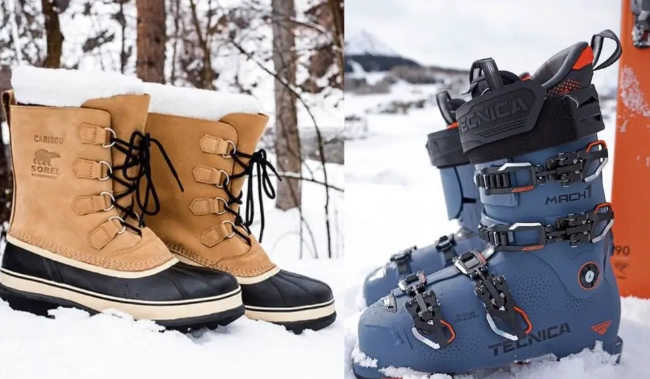
Quick Analogy: A ski boot is like a racing car's seat—it holds you in a specific, aggressive position to control pedals and steering wheel with isolated movements. A snowboard boot is more like the shoes of a skateboarder—they need to flex and feel the board as an extension of the body.
Here’s where most generic comparisons stop, but let's dig into the subtle, often overlooked details that actually matter when you're strapped in.
Forward Lean: The Hidden Deal-Breaker
This is a massive point of confusion. All ski boots have a built-in forward lean. It's not adjustable on many beginner models, but it's always there, pitching your shins toward the front of the boot. This is essential for driving the front of your skis. Without it, you'd be standing bolt upright, fighting for control.
Snowboard boots, in their neutral state, have zero forward lean. Your ankle is free to flex forward, backward, and side-to-side. You create forward lean by bending your knees and ankles on the board itself. If you put a ski boot on a snowboard, you're locked in a forward stance you can't escape, making it impossible to center your weight or ride switch (backwards).
How Do They Function on the Mountain?
Let's translate design into on-snow feel. This table breaks down the key performance differences.
| Feature | Ski Boots | Snowboard Boots |
|---|---|---|
| Primary Control Input | Lower leg rotation & forward pressure. You turn by rolling your knees and ankles inward/outward (edging) and pressing your shin forward. | Ankle flexion & whole-body movement. You turn primarily by flexing your ankles (toe-side) and extending them (heel-side), using your knees and hips to guide the board. |
| Flex Pattern | Stiff forward, minimal lateral flex. Designed to transmit energy from leg to ski edge with no lag. | Softer, more omnidirectional flex. Allows for absorption of bumps and tweaking grabs in the park. |
| Walking / Mobility | Notoriously awkward. The fixed sole and forward lean make a natural gait impossible. You'll do the "ski boot shuffle." | Relatively natural. Soft flex and often a treaded sole make walking to the lift or around the lodge much easier. |
| Binding Interaction | The boot toe and heel are clamped by the ski binding's front and rear pieces. The boot sole is standardized for release. | The boot rests inside the high-back of the binding. Strap systems (or step-in tech) secure the boot without clamping the sole. |
Comfort & Fit: Where the Real Battle Is
Here's the expert secret most blogs won't tell you: initial comfort is a trap.
Snowboard boots, especially softer ones, often feel like putting on a big, warm sneaker. They're cozy from minute one. This leads people to buy them too big. You think, "My toes aren't touching the end, perfect!" Wrong. After a few runs, your heel starts lifting inside the boot—a phenomenon called "heel lift." This kills control and causes blisters. A proper snowboard boot fit should be snug everywhere, with no pressure points, and your heel locked down like it's glued in place.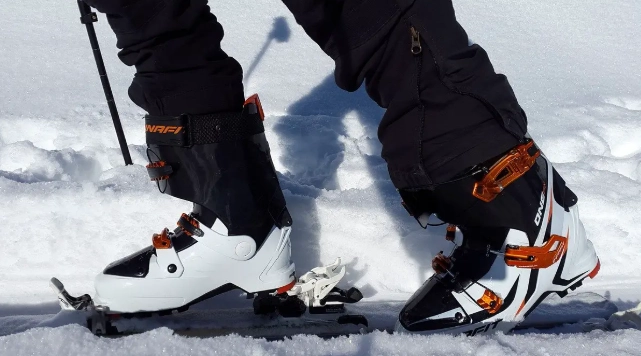
Ski boots are the opposite. They feel tight, rigid, and maybe even a bit painful when you first stand up in the shop. A good fitter isn't looking for "comfort," they're looking for even pressure distribution and direct energy transfer. Your toes should lightly brush the end when standing straight, and pull back slightly when you flex into your athletic stance. The liner (the soft inner part) will pack out by about 10-15% after a few days of riding. Buying a ski boot that's "comfy" in the store usually means it'll be sloppy and unresponsive on the hill.
The No-Nonsense Buying & Fitting Guide
Forget size charts. Your street shoe size is a terrible reference point. Follow these steps.
Step 1: Find a Certified Boot Fitter
Go to a dedicated ski or snowboard shop, not a general sporting goods store. Look for staff who ask about your ability level, riding style, and foot shape. A good fitter will measure your foot's length, width, and instep height. They might even use a digital scanner. Resources from organizations like the Professional Ski Instructors of America (PSIA) emphasize the critical role of proper boot fitting in skill development.
Step 2: The Critical Try-On Process
- Wear your riding socks. Not thick hiking socks. Thin, moisture-wicking ski/snowboard socks.
- For Ski Boots: Buckle them up snugly, stand up straight, then flex forward into a skiing posture. Your heel should stay planted, and pressure should even out across the top of your foot. Any sharp pain or numbness is a red flag.
- For Snowboard Boots: Lace/strap them up tight. Squat down low. Your toes shouldn't jam painfully into the end. Stand on the edge of a stair or slant to simulate a heel-side turn. Your heel must not lift.
- Spend at least 15 minutes walking around the shop in them. Don't rush.
Step 3: Understand Flex and Tech
Ski Boot Flex: Rated numerically (e.g., 70, 90, 120, 130). Higher number = stiffer. A beginner/intermediate woman might be in a 70-90 flex boot. An expert male racer might use 130+. Stiffer isn't better unless you have the strength and technique to bend it.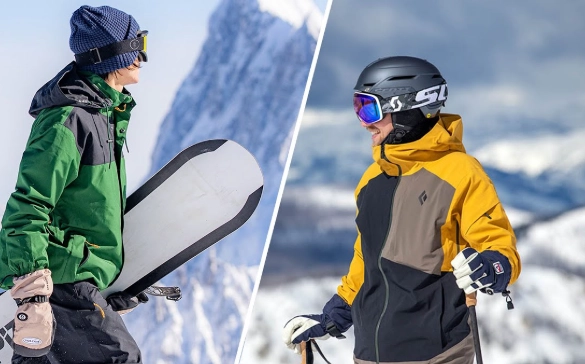
Snowboard Boot Flex: Often rated 1-10 (Soft to Stiff). Also consider closure: Traditional laces, quick-pull laces (Boa system), or hybrid. Boa is convenient but harder to fine-tune in specific zones. Laces offer more customization.
Final Verdict: Which One is For You?
It's not about which boot is "better." It's about which sport you're doing.
You need Ski Boots if: You are skiing. That's it. The design is so specialized there is zero crossover. Focus on finding the right flex for your ability and a fit that promises control, not initial couch-like comfort.
You need Snowboard Boots if: You are snowboarding. The flexibility and flat sole are non-negotiable. Prioritize heel hold and a flex that matches your riding style (softer for park, stiffer for carving).
The biggest takeaway? Invest in the fitting, not just the boot. A $300 boot professionally fitted will outperform a $500 boot bought online guessing your size, every single time.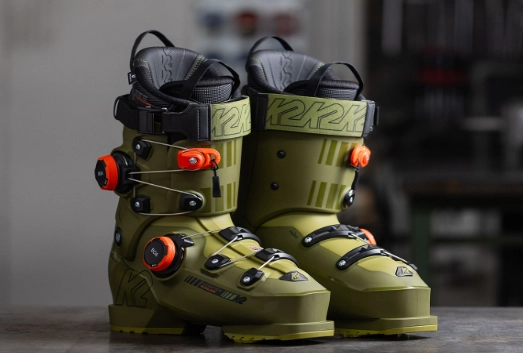
Your Boot Questions, Answered