You're halfway down a run you've done a hundred times. Suddenly, the light flattens. Shadows vanish. That innocuous little bump you never noticed becomes a launch ramp, and the gentle roll you love turns into a depth-perception nightmare. You squint, trying to force your eyes to see what you know is there. This isn't just annoying—it's dangerous. Finding ski goggles with the best visibility isn't a luxury; it's the difference between a reactive, hesitant day and one where you ski with confidence, reacting to the mountain as it truly is.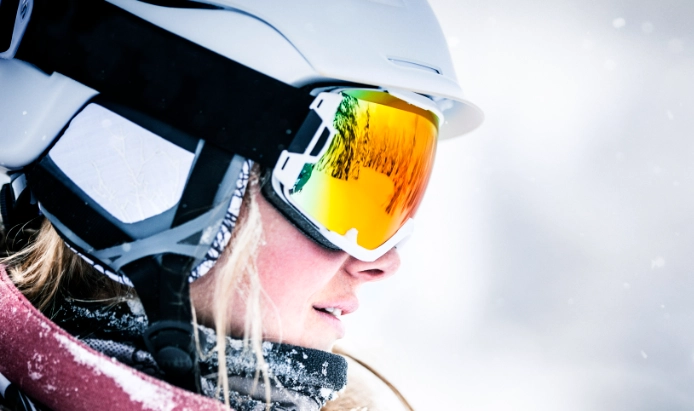
I've spent over a decade testing gear in every condition from the icy dawn of Vermont to the deep powder and blazing sun of the Rockies. The biggest mistake I see? Skiers think visibility is just about buying a lens for sunny days and one for cloudy days. It's so much more than that.
What You'll Learn
What Actually Determines Goggle Visibility?
Let's break this down. When we talk about "seeing well," we're talking about four interconnected things: clarity, field of view, contrast, and consistency. A goggle that nails one but fails the others will let you down.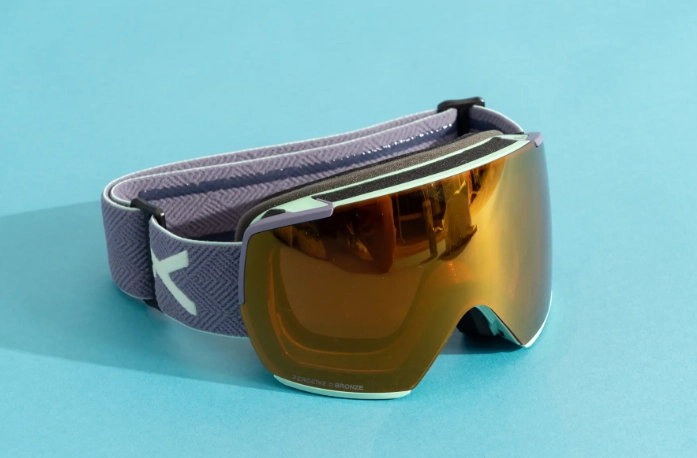
1. Lens Technology: The Brain Behind the Eye
This is where most discussions start and, unfortunately, where many stop.
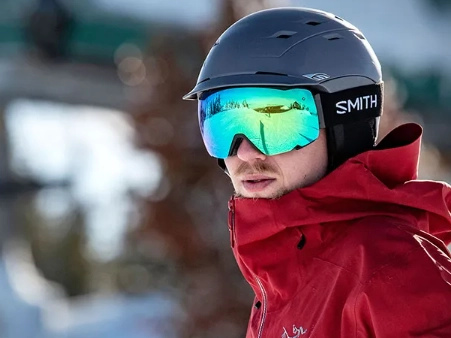
Photochromic (Light-Adaptive) Lenses: Tech like Smith's Chromapop with photochromic properties or Oakley's Prizm with low-light specific tints are game-changers. They actively adjust their tint based on UV exposure. On a day that swings from bright sun to thick clouds, you won't be caught with a lens that's too dark or too light. The visibility remains consistent. It's the closest thing to a "one-lens quiver" we have.
Polarized Lenses: Here's a non-consensus take: Polarization is fantastic for cutting glare off wet roads, but on snow, it can be a mixed bag. It kills reflective glare from the snow surface, which is great. But it can also mute the subtle contrast cues that help you read terrain, especially in flat light. I find them excellent for bright, sunny spring days but potentially a hindrance on overcast winter days. A report by The Optical Society on light polarization in snow environments suggests the effect is highly dependent on sun angle.
Fixed Tint Lenses: The workhorses. The key here is VLT (Visible Light Transmission). A low VLT (5-20%) for bright sun, a high VLT (50-80+%) for flat light and storms. Colors matter: rose/amber enhances contrast in flat light, while dark grey/green is for pure brightness protection.
2. Frame Design & Lens Shape: Your Window to the World
This is the most underrated factor. You can have the best lens tech in the world, but if it's looking through a small, distorted window, you've lost.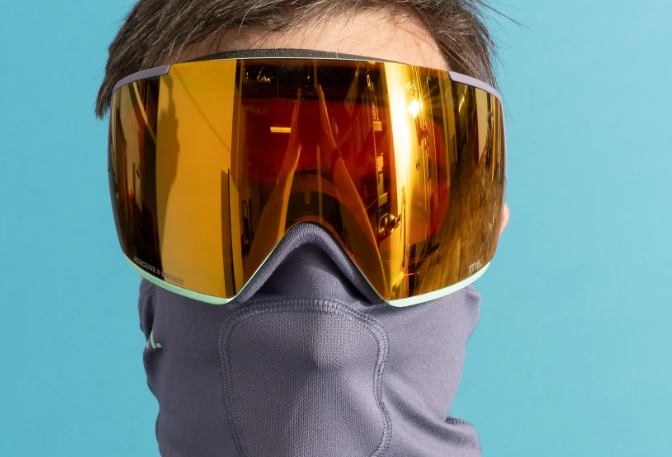
Spherical vs. Cylindrical Lenses: Spherical lenses curve horizontally and vertically, like a dome. This does two crucial things: it provides a wider, more panoramic field of view with less peripheral distortion, and it creates a space between the lens and your eye that improves airflow (reducing fog) and reduces optical distortion. Cylindrical lenses only curve horizontally. While often less expensive and sometimes lighter, they can feel more like looking through a slot. For pure, unimpeded visibility, spherical is the winner.
Peripheral Vision: How much can you see in your periphery without turning your head? A wide-frame goggle with a spherical lens is king here. It lets you spot that skier merging from your side or see the edge of a cat track without a head swivel. It feels more natural and safer.
3. The Fog Factor: The Ultimate Visibility Killer
It doesn't matter how clear your lens is if it's fogged. Visibility goes to zero. Anti-fog is a combination of science and user habit.
The lens has a permanent hydrophilic coating that pulls moisture into a thin, transparent layer. The ventilation system is critical—multiple, well-placed vents create airflow to carry moisture out. More expensive goggles often have more sophisticated, channeled venting. But here's the secret they don't tell you: the fit to your face is as important as the vents. A gap at the top foam will let in cold air and cause fogging no matter what.
How to Choose Goggles for Maximum Visibility
Okay, theory is great. Let's get practical. How do you translate this into a buying decision?
First, be honest about where and when you ski. Are you an East Coast skier battling icy, flat-light days? A high-VLT, contrast-enhancing lens is your #1 priority. A Utah powder hound? You need a lens that can handle blinding sun off snow but also perform in storm cycles. Maybe you need two lenses.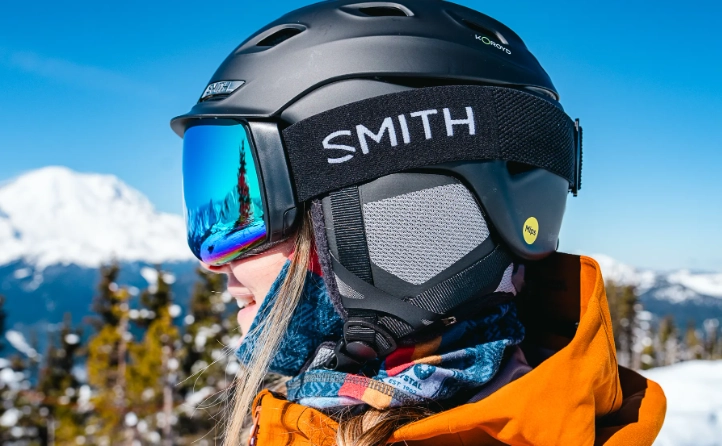
Second, try them on with your helmet. This is non-negotiable. The seal needs to be perfect. No gap at the top (the "gaper gap") where cold air can funnel in. The fit should be snug but not painful.
Here’s a look at how some top models stack up on key visibility features:
| Model | Lens Tech (Example) | Lens Shape | Key Visibility Feature | Best For |
|---|---|---|---|---|
| Smith 4D Mag | Chromapop Photochromic (VLT 25-65%) | Spherical | Massive field of view, excellent magnetic lens swap | All-mountain skiers who face changing light |
| Oakley Flight Tracker L | Prizm Snow (Various VLTs) | Spherical | Prizm color contrast tech, great peripheral vision | Riders prioritizing terrain contrast and clarity |
| Anon M4 Toric | Perceive Sonar (Photochromic) | Toric (Enhanced Cylindrical) | Magnetic lens swap with MFI face mask clip | Snowboarders and skiers wanting quick changes |
| Dragon X2 | Photochromic (VLT varies) | Spherical | Wide cylindrical-like style with spherical clarity | Style-conscious riders wanting a wider view |
My personal workhorse for the last two seasons has been a photochromic spherical goggle. The ability to ski from first chair under clouds into afternoon sun without a single stop to change lenses is a freedom I won't give up. It just works.
Putting It All Together: Real-World Testing
Before you commit, think about your own testing protocol.
If you can, try them on in a store. Look at a straight line (like a shelf edge) through the center of the lens, then move it to the very edge of your peripheral vision through the goggle. Does the line bend or distort? That's optical distortion.
Put them on with your helmet and beanie. Look up, look down, shake your head gently. Do they stay sealed? Now, the real test: wear them for 5-10 minutes in the store. Your body heat will start to warm them up. Do you feel any hint of fog starting at the bottom of the lens? That's a bad sign.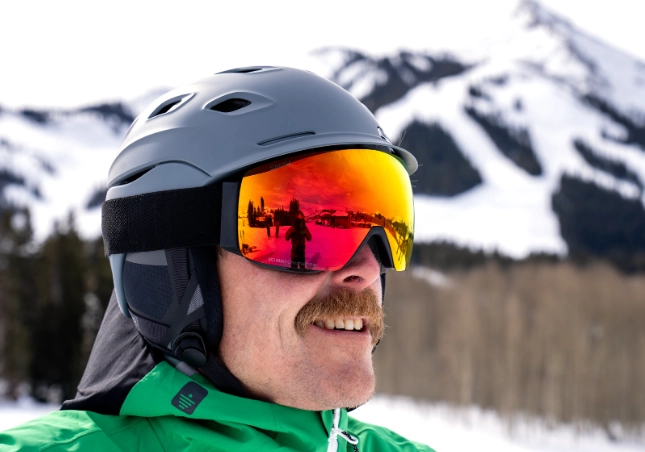
Remember, the goal is consistency. You want the mountain to look the same at 9 AM as it does at 2 PM, on a groomer as in the trees.