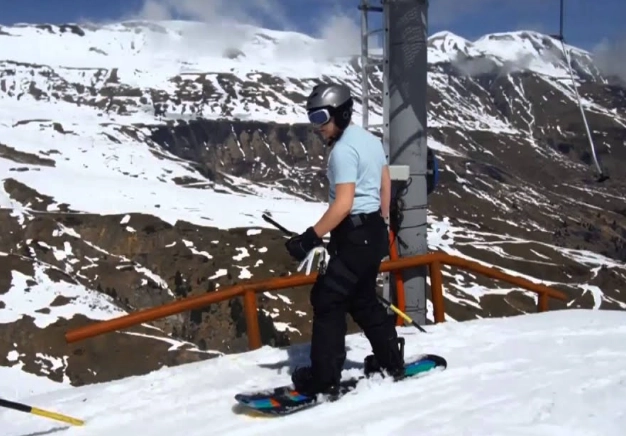
You see them occasionally, carving wide, elegant turns down the mountain on what looks like a single, fat ski. They have two boots facing forward, and they're using poles. It's not a snowboard. It's a monoski. For decades, it was a niche curiosity, a relic of the 80s. But now? It's having a serious comeback. I picked up my first monoski after a knee injury made parallel skiing agony, and it completely changed my relationship with the mountains. This isn't just a quirky alternative; for many, it's a more stable, forgiving, and incredibly fun way to ride.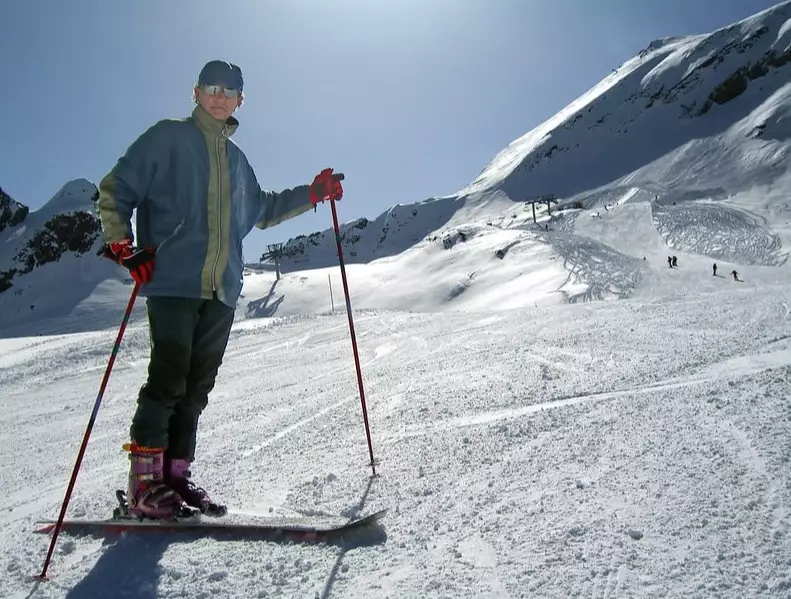
Your Monoski Journey Starts Here
What Exactly Is a Monoski?
A monoski is exactly what it sounds like: one wide ski. You stand on it with both feet facing forward, in bindings mounted side-by-side across the width of the board. You use standard ski poles. The stance is familiar to any skier, but the ride is a unique hybrid. It blends the edge-hold and precision of skiing with the surfy, floaty feel of a snowboard, especially in powder.
Its history is fun. It peaked in popularity in the late 80s and early 90s, featured in cheesy ski movies and seen as a bit of a fad. But the core enthusiasts never left. Today, the revival is driven by a few key factors. Modern monoski design is light-years ahead—lighter, more responsive, with advanced sidecuts and rocker profiles. They're also gaining a reputation as a fantastic tool for skiers with knee issues, as the symmetrical stance and wide platform reduce the twisting forces that can wreck ligaments.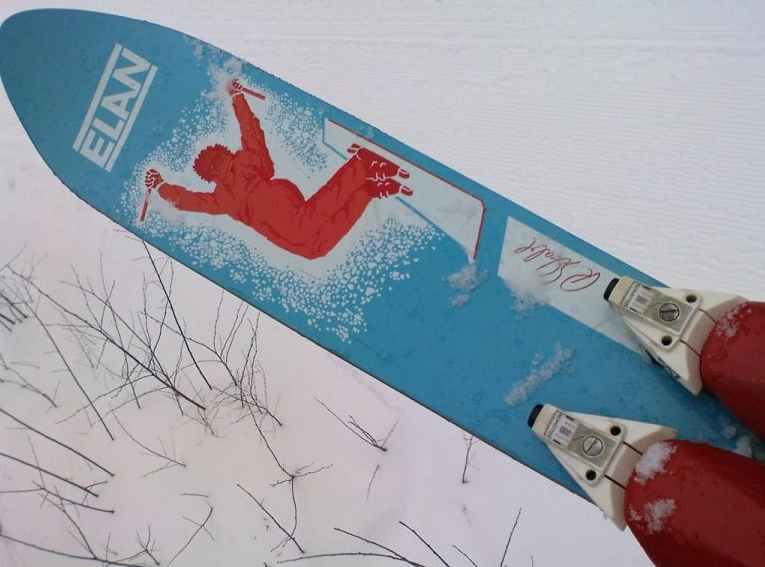
I was skeptical too. My first run felt clumsy. But by the third run, I was linking turns without thinking. The feeling of stability was incredible.
The Non-Negotiable Monoski Gear Guide
You can't just strap two skis together. Monoskiing requires specific, dedicated equipment. Getting this wrong is the number one reason beginners have a bad time.
Here’s the breakdown of what you actually need:
| Gear Component | What to Look For & Why It Matters | Top Brands/Models to Research |
|---|---|---|
| The Monoski Board | Width is key (130-150mm underfoot). Look for a pronounced sidecut for easy turning, and early-rise tip rocker for float in powder. Length is typically 10-20cm shorter than your height. A softer flex is more forgiving for learning. | Duret (the iconic brand), Faction (Agent 3.0), K2 (Marksman, modified), Zag. |
| Bindings | You need specific mono bindings. They are wider to accommodate two boots side-by-side and have a different mounting pattern. Most are based on alpine ski binding mechanics (e.g., Look Pivot, Tyrolia Attack). | Look Pivot Mono (gold standard for retention), Tyrolia Attack Mono, Salomon/Atomic Warden MNC (with mono plates). |
| Boots | This is the most important part. Must be monoblock or mono-specific. They have a flat, often rockered sole designed for the binding. They provide crucial lateral stiffness. Expect to buy these new or from a dedicated seller. | Dalbello Mono (purpose-built), Lange Mono, older Raichle or Koflach models (vintage market). |
| Poles | Standard ski poles work fine. Some prefer slightly longer poles for the wider stance and to help with balance during the learning phase. | Any reliable brand (Leki, Black Diamond). |
Finding this gear is part of the adventure. Major retailers rarely stock it. You'll be looking at specialist online shops in Europe (like monoski.shop or dedicated sections on European ski sites) or the vibrant second-hand market on Facebook groups like "Monoski Worldwide." Be prepared to hunt.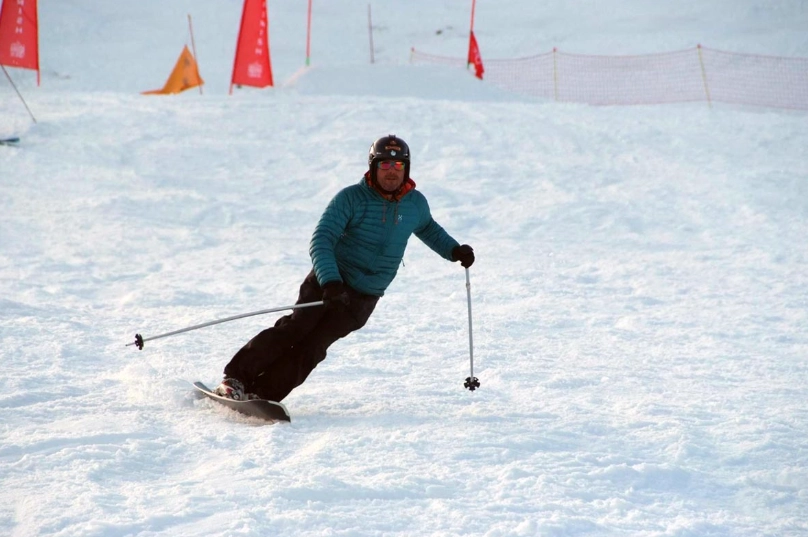
How to Monoski: A Beginner's Technique Breakdown
If you can ski parallel, you have a huge head start. The basic body mechanics are similar. But there are crucial differences. The most common mistake I see? People try to steer the monoski with their upper body. It doesn't work. You drive it with your feet and knees.
Getting Started: The First Hour
Find a wide, gentle green slope. Seriously, don't be a hero. Strap in on flat ground first. Feel the width. Your stance will be slightly wider than shoulder-width. Practice shuffling, getting a feel for the balance. It feels like standing on a short, wide paddleboard.
Now, for your first descent. Don't try to turn immediately. Point it straight down the fall line, in a wide snowplow/pizza shape. Use your poles for balance. This gets you used to the glide and stability. The monoski wants to stay flat and stable—that's its nature.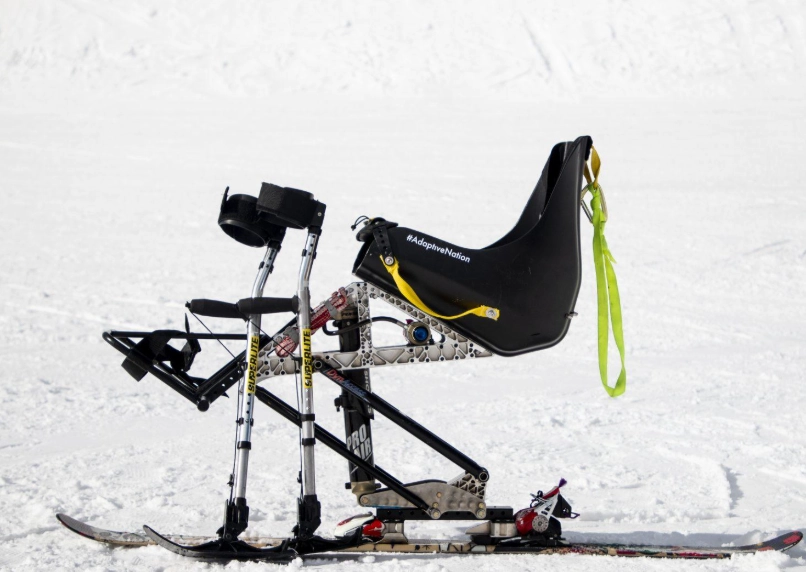
Making Your First Turns
Forget everything you know about weighting one ski. You weight the edge. To initiate a turn, think about driving your knees laterally in the direction you want to go. Want to go left? Push both knees to the left. The board will tilt onto its left edge and start to carve. Look where you want to go, and let your lower body follow.
It's a more subtle, lower-body movement than skiing. You're not throwing your hips; you're gently persuading the board with knee pressure. Linking turns comes from shifting that knee pressure from one side to the other. It feels less like zig-zagging and more like drawing smooth, linked "S" shapes in the snow.
Where to Go: The Best Resorts for Monoskiing
You can monoski anywhere, but some places have terrain, community, and even rental support that makes the experience perfect. These spots have embraced the mono culture.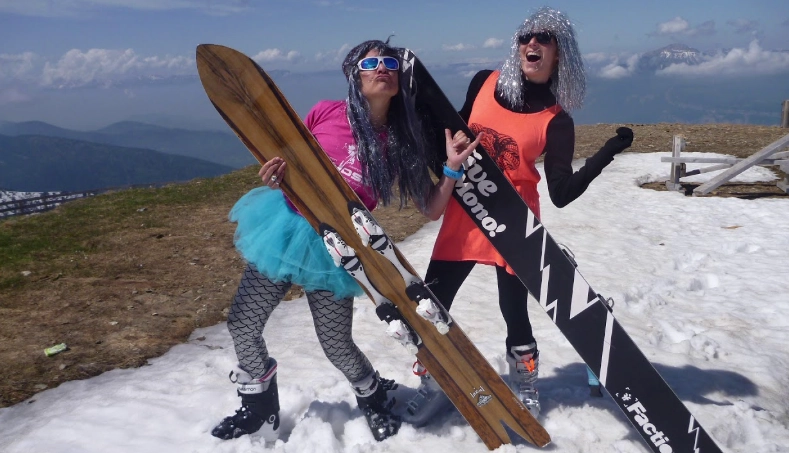
- La Plagne, France (Address: La Plagne, 73210 Aime, France). This is the undisputed monoski capital of the world. The vast, rolling slopes of the Paradiski area are ideal. The community is huge here. Check out the shop "Monoski Rental" right in the resort—they rent gear and can give pointers. The annual "Monoski World Cup" is held here (usually March), a wild festival of mono-enthusiasts.
- Verbier, Switzerland (Address: Verbier, 1936 Bagnes, Switzerland). For the advanced monoskier. Verbier's legendary off-piste and steep couloirs are a proving ground. The local monoski tribe is tight-knit and expert-level. Don't expect beginner hand-holding here, but for epic lines, it's unmatched. The resort is generally mono-friendly.
- Mayrhofen, Austria (Address: Mayrhofen, 6290 Austria). Austria has a strong monoski scene, and Mayrhofen is a hub. The Penken area offers great varied terrain. The ski school has instructors familiar with monoskiing, which is a rarity. Look for the shop "Funky Snow"—they often have monoski demos and are a great source of local beta.
When planning your trip, a quick search for "[Resort Name] monoski" on Facebook or Instagram will often connect you with local riders. The community is incredibly welcoming.
Monoski Questions Answered
 What's harder to learn, monoski or snowboard?
 So, is monoskiing for you? If you're curious, have knee concerns, love powder, or just want to experience the mountain from a completely new perspective, it's worth a serious look. It's not better than skiing or snowboarding—it's different. And that difference is where the fun is. The community is small but passionate, the gear hunt is part of the lore, and the feeling of carving a perfect turn on a single board is something uniquely satisfying. See you on the wide side.