What You'll Find in This Guide
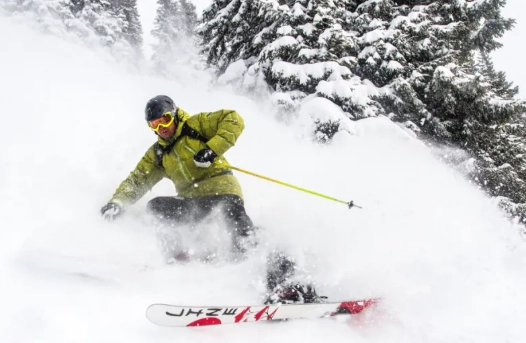
Skiing in powder snow feels like nothing else. It's quiet, you float, and every turn feels like you're carving through clouds. But if you're used to groomers, powder can be intimidating. It's different. The techniques that work on hardpack often fail in deep snow.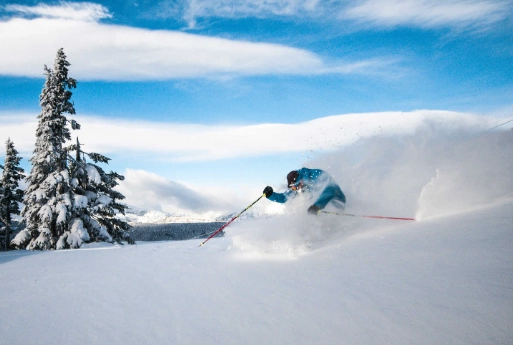
I remember my first real powder day. I was in Japan, and it had snowed nearly two feet overnight. I stepped off the lift, looked down the run, and felt a surge of panic. Everything looked soft, featureless, and slow. My usual carved turns just made me sink. I spent the morning wrestling with my skis, feeling frustrated and exhausted.
That experience taught me more than any lesson on packed snow. Powder skiing isn't just harder; it's a different sport. And learning how to ski powder snow is a skill that unlocks the most magical experiences in skiing.
Essential Powder Skiing Equipment
Let's get one thing out of the way: you can't ski powder well on the wrong gear. It's like trying to run a marathon in flip-flops. The equipment makes a difference, but there's a common misconception that you need the widest, most specialized skis from day one. Not true.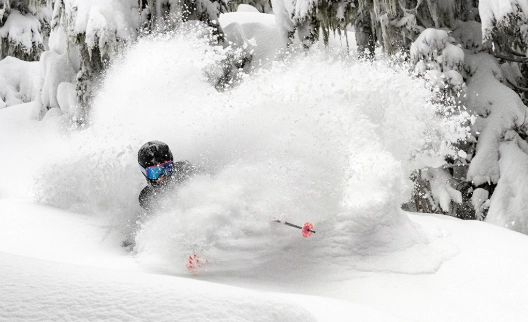
If you're just starting to explore powder, your all-mountain skis can work. But as you get more into it, you'll want something designed for it. Here's what really matters:
- Skis: Look for skis with a wider waist (underfoot width). A good starting point is 100mm or more for men, 90mm or more for women. This extra width helps you float on top of the snow rather than sink. Rocker profile (the curve at the tip and tail) is also crucial. More rocker means easier turn initiation in deep snow.
- Boots: Softer flexing boots are generally better for powder. They allow more natural movement and help you stay balanced. If your boots are too stiff, they can transmit too much force and make you feel rigid.
- Poles: Longer poles are often recommended for powder skiing. They help with balance and pushing yourself up after a fall. But honestly, if you're just trying it out, your regular poles will work. Don't overthink this one.
Here's a non-consensus point: many skiers obsess over the latest gear but neglect their bindings. In powder, you might fall more often, and your bindings need to release properly to prevent injury. A binding that's too old or not adjusted for your weight and skill level is a safety hazard. I've seen too many people ignore this.
Mastering the Powder Turn
The powder turn is the fundamental skill. Forget everything you know about turning on hard snow. In powder, you need to unlearn the habit of aggressively digging your edges in.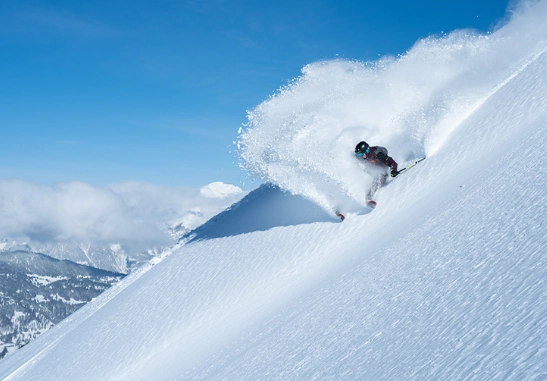
Instead, think of it as a gentle, flowing motion. You're not cutting through the snow; you're guiding your skis on top of it. Here's the step-by-step breakdown that most guides gloss over:
Body Position: The Silent Foundation
Stand tall. Really tall. Imagine a string pulling you up from the top of your head. Keep your chest up and open, facing down the fall line. This upright posture keeps your weight centered and prevents you from leaning back, which is the number one cause of back-seat driving and loss of control.
Now, here's the subtle mistake: many skiers keep their hands too low. In powder, you want your hands forward, almost like you're pushing a shopping cart. This forward hand position naturally shifts your weight onto the front of your skis, initiating turns without you even thinking about it.
Turn Initiation: Forget the Carve
On packed snow, you initiate a turn by rolling your ankle and driving your knee into the turn. In powder, that aggressive movement will just make your skis dive. Instead, think of it as a smooth weight transfer.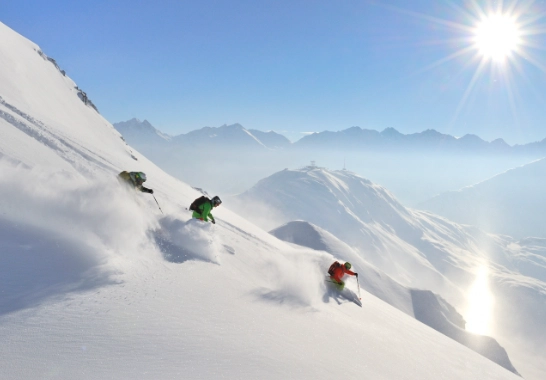
Start by gently shifting your weight to the inside ski of the foot you want to turn towards. Don't force it. Let the soft snow do the work. As you feel the ski start to engage, gradually increase the pressure and let the turn develop. It should feel fluid, not forced.
Here's a trick: look where you want to go, not at your skis. Your head and shoulders will naturally lead your body into the turn. If you stare at your ski tips, you'll end up rotating your upper body independently, which breaks your balance.
Finishing the Turn: The Float Zone
As you complete the turn, don't immediately try to snap back to a neutral position. In powder, there's a moment of float where your skis are planing on the surface. Maintain that balanced posture and let your skis drift slightly.
Then, gently guide them back under you by bringing your feet back together and recentering your weight. This prepares you for the next turn without wasting energy fighting the snow.
Practice this on gentle slopes first. Get a feel for how your skis respond in different snow conditions. Powder isn't uniform; it can be light and fluffy or heavy and wet. Adjust your technique accordingly.
The Right Mindset for Deep Snow
Fear is the biggest barrier. The unknown, the feeling of being out of control, the fear of getting stuck—it all feeds into anxiety. And that anxiety tenses your body, making everything harder.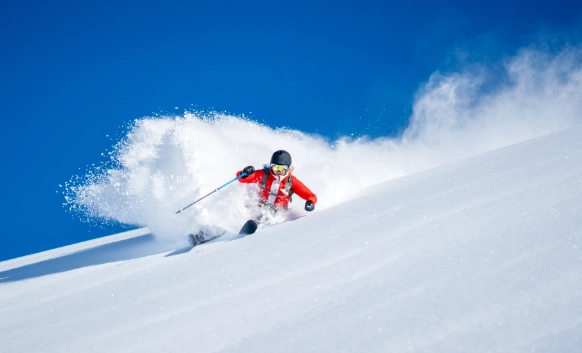
Here's the mindset shift that helped me: powder isn't your enemy; it's your playground. You're not fighting it; you're learning to dance with it. Every fall is a lesson, not a failure. And getting stuck is just part of the process of learning how to move in this new medium.
Embrace the unpredictability. See it as an opportunity to play, to experiment, to feel the snow in a new way. When you start to enjoy the sensation of floating and flowing, the fear melts away.
Common Mistakes to Avoid
I've seen countless skiers make the same mistakes when they first try powder. I made them too. Here are the ones that will hold you back the most:
- Leaning back: This is the instinctive reaction when you feel out of control. But leaning back lifts the tips of your skis out of the snow, reducing your control and making it harder to initiate turns. Fight the urge. Stay centered.
- Over-rotating your upper body: In an attempt to steer, many skiers twist their shoulders and hips. This creates a disconnect between your upper and lower body, wasting energy and reducing efficiency. Instead, keep your shoulders square to the fall line and let your legs do the turning.
- Not committing to the turn: Powder requires more decisive movements. If you hesitate halfway through a turn, you'll lose momentum and sink. Trust your skis and commit to the direction.
- Using too much edge: On hard snow, you dig your edges in to grip. In powder, that digging action will just make you sink. Use less edge angle, almost like you're smearing the turn rather than carving it.
Here's the secret no one talks about: powder skiing is actually less tiring than hard snow skiing once you get the hang of it. Because you're not constantly fighting for an edge grip, you use less energy to make each turn. The fatigue comes from the mental effort of adapting to a new technique, not from the physical exertion.
How to Choose the Right Skis for Your First Powder Day
If you're renting, tell the shop you'll be skiing powder. They'll set you up with appropriate gear. But if you're buying your first pair of powder skis, here's a non-consensus view: don't get the widest skis you can find. Get something that's versatile.
Look for skis that are 10-15mm wider than your all-mountain skis. This extra width provides better floatation without making the skis feel unmanageable. A ski that's too wide will be slow to respond and difficult to control, especially for lighter skiers.
Instead, focus on the rocker profile. A ski with more tip and tail rocker will be easier to turn in deep snow because it requires less effort to initiate the turn. But too much rocker can make the ski feel unstable at high speeds on firmer snow.
Here's a personal rule of thumb I've developed after years of skiing powder: if you can ski it on a medium-width all-mountain ski with good rocker, you can probably ski it on a dedicated powder ski. But the reverse isn't always true. A dedicated powder ski will feel amazing in deep snow but might struggle on hardpack.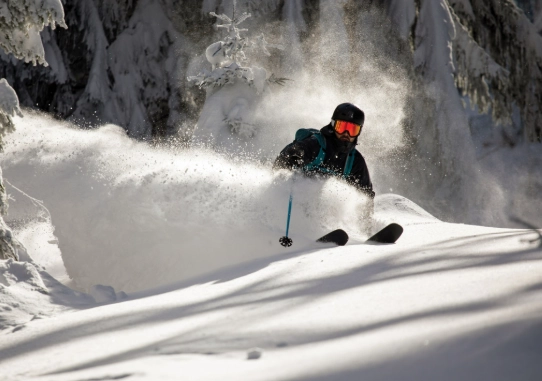
How to Adjust Your Skiing for Different Types of Powder
Powder isn't always the same. It can be light and fluffy (champagne powder) or heavy and wet (Sierra cement). Your technique needs to adjust accordingly.
For light powder, you can use a more aggressive, carving-inspired technique. The snow is supportive enough to hold an edge if you're gentle. But for heavy, wet powder, you need to be more patient and fluid. The snow is denser and requires more effort to move through.
Here's a trick: in heavy powder, think of your turns as a series of connected smears rather than distinct carved arcs. This keeps your momentum up and prevents you from getting bogged down.
And in very deep, light powder, you might need to adopt a more bouncy, playful style to stay on top. This isn't about power; it's about rhythm and timing.
What Are the Most Common Mistakes People Make When Learning to Ski Powder?
Everyone makes mistakes. I made them, and I see them repeated every season. Here are the ones that will hold you back the most:
- Not adjusting your bindings: This is critical. In powder, you might fall more often, and your bindings need to release properly to prevent injury. A binding that's too old or not adjusted for your weight and skill level is a safety hazard. I've seen too many people ignore this.
- Wearing too many layers: Powder skiing is a workout. You'll generate a lot of heat. Start with fewer layers than you think you need. You can always add a layer if you get cold, but it's harder to ski effectively when you're overheating and sweating.
- Skiing too close to others: This is a major safety issue. In powder, you need more space because your falls can be unpredictable and you might create a snow cloud that obscures vision for others behind you. Maintain at least twice the distance you would on a groomed run.
- Giving up too soon: Powder skiing has a steep learning curve. The first few runs will feel awkward and tiring. But once you break through that initial barrier, it becomes addictive. Don't give up before you've given yourself a chance to adapt.
Here's the secret: the first day is the hardest. Your body is using new muscles, and your brain is processing new sensory information. It's exhausting. But if you can push through that initial fatigue, the second day will feel easier. And by the third day, you'll start to find your rhythm and actually enjoy it.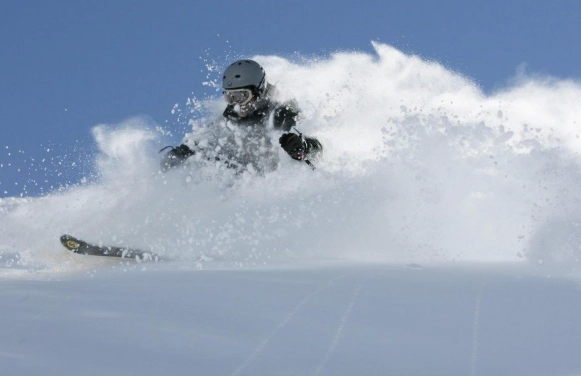
I wish someone had told me that on my first powder day. Instead, I spent the morning fighting my skis and feeling frustrated. But in the afternoon, something clicked. I stopped trying to force my skis to do what they do on hard snow and started letting them do what they do naturally in powder. And that's when the magic happened.
How to Practice Powder Skiing Without a Mountain of Snow
You don't need a foot of fresh powder to practice. You can simulate powder conditions on a groomed run by focusing on specific drills.
First, find a patch of soft, ungroomed snow on the side of a run. Even a few inches can make a difference. Practice your turns there. Focus on the feeling of floating and flowing rather than carving.
Second, practice on different types of snow. If you can ski on a variety of conditions (hardpack, slush, crud), you'll be better prepared for the unpredictability of powder. Powder isn't uniform; it can change throughout the day.
Third, and most importantly, practice falling. In powder, you will fall. It's part of the learning process. But learning how to fall safely (on your side, not on your back) and how to get back up quickly will save you energy and frustration.
Here's a drill I do every season: I find a gentle slope with soft snow and practice falling on purpose. I get used to the sensation of sinking into the snow and learn how to extricate myself efficiently. It builds confidence and reduces the fear of falling.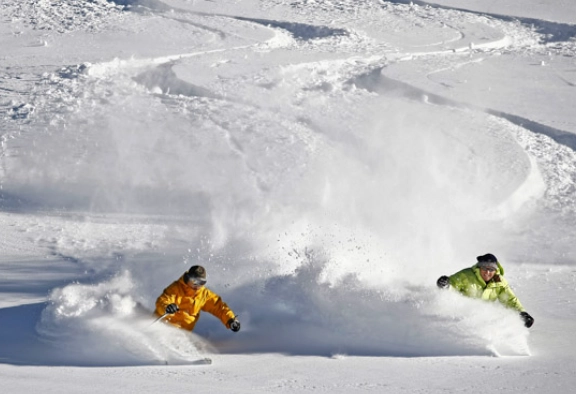
Frequently Asked Questions (FAQ)
This is a common misconception. Deep snow requires more gradual and controlled movements. You need to shift your weight more and use the skis to "push" the snow out of the way, rather than "cut" through it aggressively like on hardpack. This requires more effort but is more effective and safer.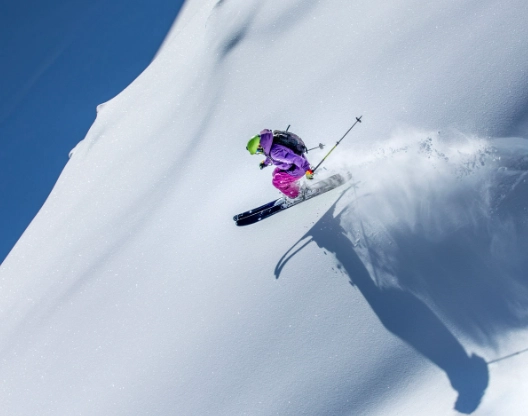
Conclusion
Powder skiing is a journey, not a destination. It's about learning to move with the snow, not against it. And it's about having fun, exploring new sensations, and creating memories that last a lifetime. So next time you see a forecast for fresh powder, don't hesitate. Embrace the opportunity to try something new, to challenge yourself, and to experience the pure joy of skiing in its most natural form.
I still remember the feeling of that first successful powder turn. It was quiet, effortless, and pure euphoria. I hope you get to experience it too.