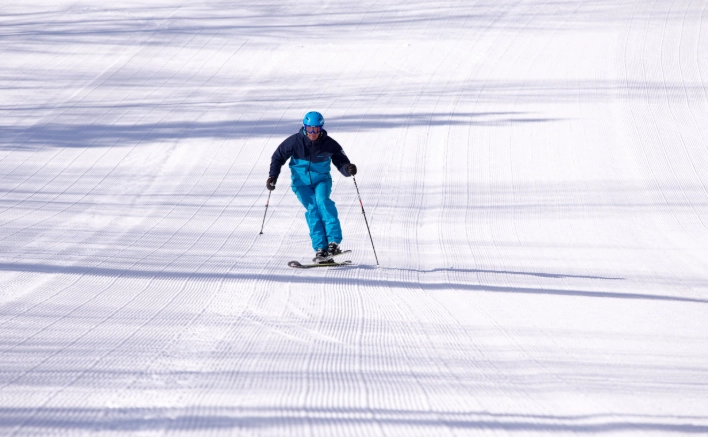
Let's cut to the chase. The quality of your entire ski run hinges on one critical moment: the initiation of each turn. Get it right, and you flow down the mountain with control and grace. Get it wrong, and you're fighting your skis, burning out your legs, and probably heading for a crash. This isn't just about pointing your toes; it's a full-body conversation with the snow. I've spent over a decade teaching this, and I see the same subtle mistakes trip up intermediates for years. We're going to fix that.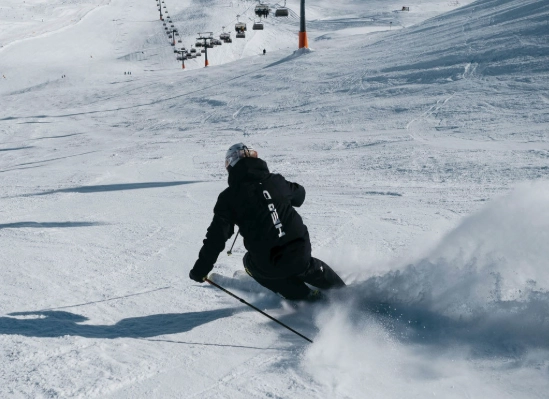
What's In This Guide?
What Exactly Is 'Initiating a Turn' in Skiing?
Think of it as the transition point. You're finishing one turn, skis across the hill, and you need to start the next one to go the other way. Initiation is the set of actions that gets the skis from that finishing edge onto their new edges to begin the new arc. It's not the turn itself—it's the doorway into the turn.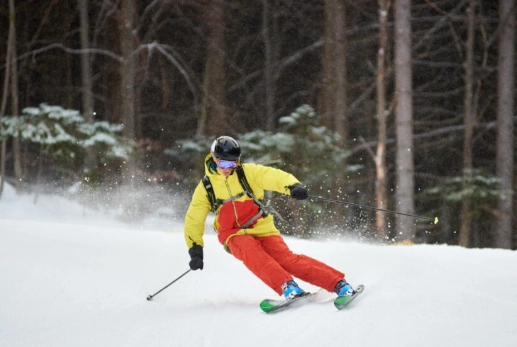
Most people think it's about turning their shoulders. It's not. It's about managing pressure and engaging edges, starting from the ground up. The Professional Ski Instructors of America (PSIA) breaks it down into fundamental concepts like edging, pressure control, and rotary movement. Initiation is where these concepts come together.
Here's the non-consensus bit everyone misses: a great turn initiation feels like less work, not more. If you're muscling it, you're doing it wrong.
How to Initiate a Parallel Ski Turn: The 4-Phase Breakdown
Let's walk through a standard parallel turn on a blue groomer. Forget the fancy terms for a second and feel the sequence.
Phase 1: The Preparation (The Set-Up)
You're in the finish of your last turn. Your skis are on their edges, carving an arc. Your body is balanced over the outside (downhill) ski. This is your stable platform. The preparation is about staying balanced here, not rushing. A quiet upper body facing downhill is your goal.
Phase 2: The Release & Transfer (The Magic Moment)
This is the core of the initiation. You need to un-weight the skis slightly to release the edges. How? By subtly extending your legs (standing up a tiny bit) and allowing your ankles and knees to flex back toward a neutral position. This flattens the skis on the snow.
Simultaneously, you begin to transfer your weight from the old outside ski to the new outside ski (the one that will be downhill in the new turn). This isn't a big jump; it's a smooth, lateral shift of your center of mass across your feet.
Phase 3: The Steering & Edging (The Commitment)
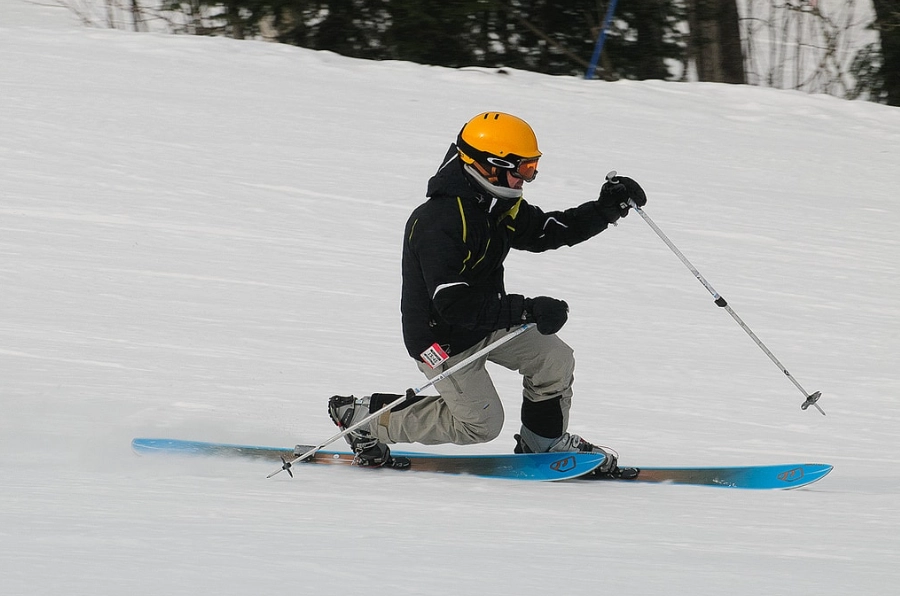
As your weight settles onto the new outside ski, you actively steer both feet. Imagine you're using the big toe edge of your new outside foot and the little toe edge of your new inside foot. This steering, driven from your feet and ankles, starts to roll the skis onto their new edges.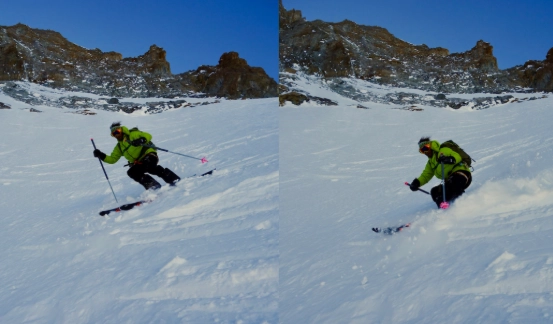
Your knees and hips follow this rolling motion inward. The ski's sidecut—its hourglass shape—now takes over. Once on edge, it wants to bend into an arc. You let it.
Phase 4: The Control & Pressure (The Payoff)
The turn is now initiated. Your job is to manage the pressure building on that outside ski as you carve through the arc. You flex your ankle and knee to absorb the force, maintaining contact and control. This pressure management sets you up perfectly for the next initiation.
Common Mistakes That Ruin Your Turn Initiation
I see these every single day on the mountain. Nail these, and you'll leap ahead.
A quick drill? On a gentle slope, practice making turns using only your ankles and knees. Keep your hands on your hips to lock your upper body still. It feels weird, but it rewires the correct movement pattern.
Advanced Tips and Terrain Considerations
Initiation changes when the snow and pitch do.
On Icy/Hardpack: You need more precision and earlier edge engagement. Be more aggressive with rolling your knees inward during Phase 3. A quicker, more decisive weight transfer is key—hesitation means you'll slide out.
In Bumps/Moguls: Timing is everything. You initiate the turn right at the top of the bump, using its shape to help un-weight your skis (the bump does the work of Phase 2 for you). Absorb the bump with your legs, then quickly steer and edge as you come off the crest. It's a much faster, more rhythmic sequence.
In Deep Powder: Forget the hard edge engagement. Initiation is a more rounded, surfy motion. You need a more centered stance to keep the tips up. The steering is gentler, and you often initiate with a slight upward-unweighting motion (like a hop or rebound from the last turn) to pivot the skis in the fluffy snow.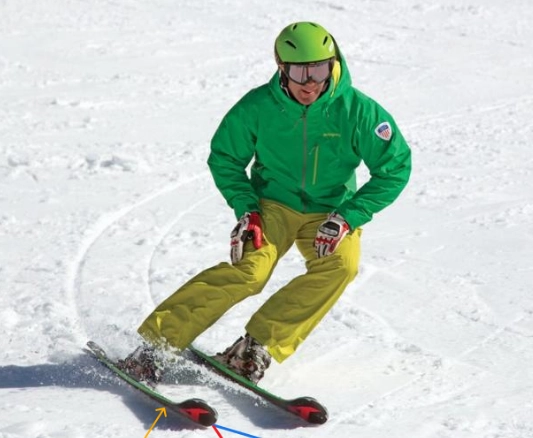
| Terrain Type | Key Initiation Focus | Common Pitfall |
|---|---|---|
| Groomed Corduroy | Smooth weight transfer, precise edging. | Over-rotation of the upper body. |
| Moguls | Timing with the bump shape, quick steering. | Initiating too late, in the trough. |
| Deep Powder | Centered stance, patient pivot. | Leaning forward and diving the tips. |
| Steep & Icy | Commitment forward, aggressive edge set. | Leaning back out of fear. |
Does Your Gear Affect Turn Initiation?
Absolutely. Dull edges won't grip for that critical early bite in Phase 3. If your boots are too loose, you lose all sensitivity and control in your ankles—the primary steering joints. A stiff, high-performance ski will initiate more abruptly and demand more precise input. A softer, more forgiving ski will be more lenient.
My take? Before you blame your technique on a bad day, get a ski tune. Sharp edges and a smooth base make practicing initiation infinitely easier. A proper boot fitting is more important than the latest ski model. Resources from ski community forums often stress this—good techs are worth their weight in gold.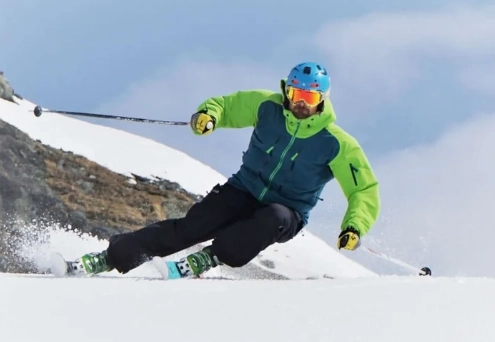
Your Burning Questions Answered
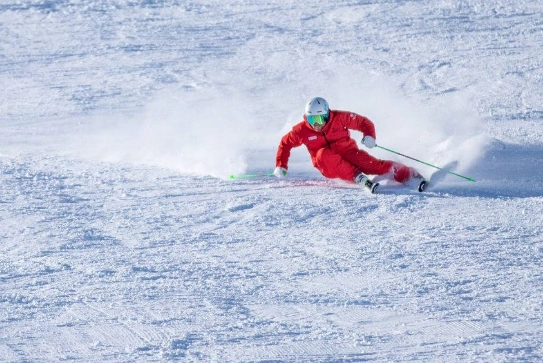
Mastering turn initiation isn't about learning one trick. It's about understanding a principle that adapts. It's the difference between surviving a run and owning it. Start with the basics on a gentle slope—feel that release and transfer. Be patient with yourself. When it clicks, you'll know. The mountain suddenly gets quieter, and the turns just flow.