Your Quick Trail Map
- First Things First: How to Even Start with Adaptive Skiing
- The Toolbox: Adaptive Skiing Equipment Demystified
- What Does a Lesson Look Like? From Bunny Hill to Blue Square
- Top Destinations for Adult Adaptive Skiing (Beyond the Hype)
- Answering the Real Questions You're Afraid to Ask
- Beyond the First Lesson: Building a New Winter Life
Let's get one thing straight right off the bat. If you think a life-changing injury, a progressive condition like MS, or just getting older means your days of feeling the crunch of snow underfoot and the wind in your face are over, you're probably wrong. Dead wrong. That feeling you're missing? That sense of pure, unadulterated freedom gliding down a mountain? It's not gone. It's just waiting for you to find a different path to it.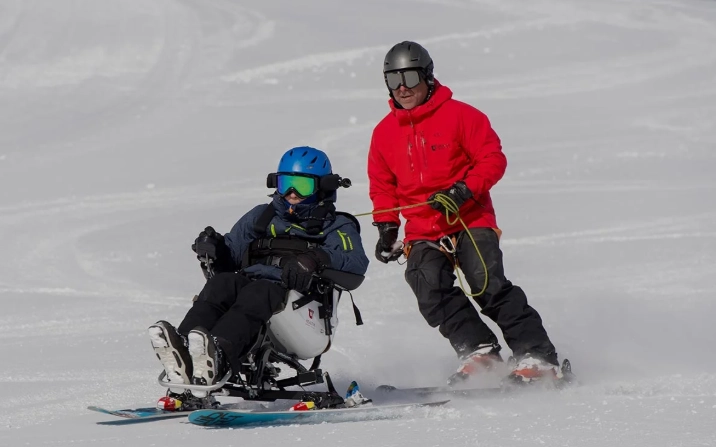
I remember talking to a guy named Mark a few years back. A former marathon runner, he'd had a biking accident that left him with limited leg mobility. He told me winter had become this depressing, closed-window season he just endured. Then he tried adaptive skiing. The way he described that first run down a beginner hill wasn't about the technique or the speed. It was about the grin he couldn't wipe off his face for days. "It wasn't about getting back to what I was," he said. "It was about discovering what I could still be." That stuck with me.
So, what exactly is adaptive skiing for adults? It's not some watered-down, cautious version of the real thing. It's the real thing, full stop. It's alpine skiing and snowboarding, modified with specialized equipment and teaching techniques so that people with physical, sensory, or cognitive disabilities can participate. We're talking veterans, accident survivors, people living with amputations, spinal cord injuries, cerebral palsy, visual impairments, you name it. The goal isn't pity or a participation trophy. The goal is the same as any skier: mastery, fun, and that addictive mountain high.
This guide is for the adult who's curious, skeptical, or maybe a little intimidated. We're going to skip the fluffy inspiration and dive into the gritty, practical details. What gear exists? How do you find a program that doesn't treat you like a child? What does it really cost? And where can you actually go? Consider this your first run down the mountain of information.
First Things First: How to Even Start with Adaptive Skiing
Thinking about adaptive skiing for adults can feel overwhelming. Do you need a doctor's note? Do you have to buy ten thousand dollars worth of gear? Where do you look? Let's break it down into steps that don't require a PhD in internet searching.
The Core Mindset Shift: This isn't about "overcoming" your disability to ski like an able-bodied person. It's about using different tools to achieve the same core experience. You're not less of a skier; you're a skier using different technology. Getting that straight in your head changes everything.
Step 1: The Honest Self-Assessment (No Sugarcoating)
Before you Google a thing, have a chat with yourself or your doctor about a few key points. This isn't about gatekeeping; it's about matching you with the right program and gear for safety and success.
- Physical Scope: What's your specific mobility picture? Can you bear weight on your legs? Do you have core trunk control? How's your balance? What's your range of motion? Be brutally honest. A good program will ask this anyway.
- Your Goals: Are you looking for a one-time bucket-list experience, or do you want to develop a new lifelong hobby? Your answer will steer you toward different types of resorts and programs.
- Your Fear Level: It's okay to be scared. Acknowledge it. Are you worried about falling? Looking foolish? Being stuck in a device you can't control? These are all valid concerns a quality instructor will want to address head-on.
Step 2: Finding the Right Program (Not All Are Created Equal)
This is where many adults get lost. You don't just show up at your local hill. You need a certified adaptive program. Here’s how to find a good one.
Look for programs affiliated with major organizations. In the U.S., the Disabled Sports USA chapter network is a gold standard. They have chapters across the country, and their instructors are specifically trained to work with adults. Another fantastic resource is Move United, which was formed by a merger of DSUSA and Adaptive Sports USA. Their site has a program locator tool that's actually useful.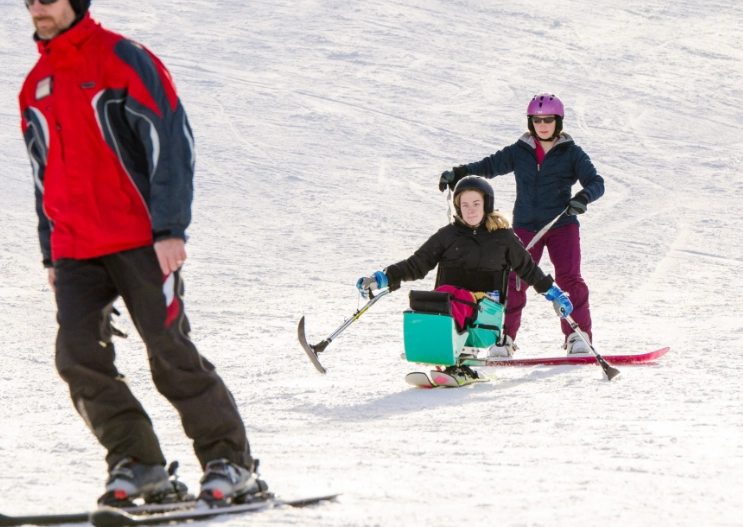
What to ask when you call or email:
- "Do you have experience working with adults with [your specific condition]?"
- "What level of certification do your adaptive ski instructors hold?" (Look for PSIA-AASI Adaptive certifications).
- "Can you describe the types of adaptive equipment you have available?"
- "What is the student-to-instructor ratio for a first-time lesson?" (You ideally want 1:1 or 2:1 for your first time).
Step 3: The Pre-Ski Consultation
A reputable program for adaptive skiing for adults will want to talk to you before you book. They might even ask for a note from your physician clearing you for moderate physical activity. This call isn't a test; it's a collaboration. They'll discuss your assessment, your goals, and start planning which equipment might work best. This is your chance to voice all those anxieties.
Okay, the planning is done. Now for the cool part: the gear.
The Toolbox: Adaptive Skiing Equipment Demystified
This is where engineering meets passion. The technology has advanced light-years from the clunky, scary-looking contraptions of the past. Today's gear is sleek, responsive, and designed for performance. The right equipment is chosen based on your unique physical abilities. Let's walk through the main categories.
For Standing Skiers
If you have some leg function, balance issues, or weakness, these tools can provide the stability and control you need.
- Outriggers: These are the most common. Imagine a cross between a ski pole and a mini-crutch. They have small ski tips or "baskets" on the bottom instead of points. They provide balance and turning leverage. Great for people with lower limb amputations, leg weakness, or balance disorders.
- Bislki/Bi-Ski: A wider, more stable ski that provides a more solid base. Sometimes used with outriggers for extra stability.
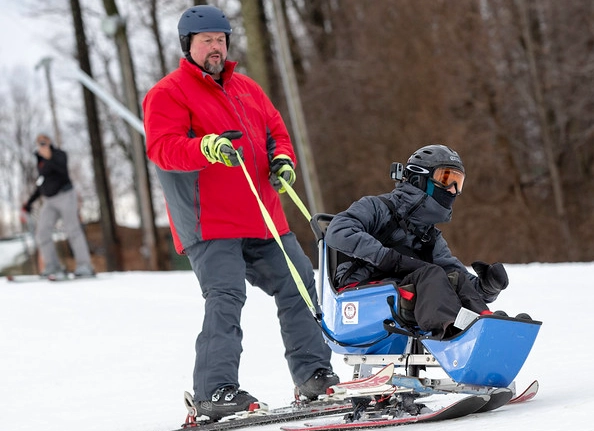
- Slider Bars / Tethers: For skiers with visual impairments or cognitive conditions. A trained guide skis behind or in front, using a bar or tethers to provide directional and speed input verbally and physically. It's a partnership of trust.
The Game-Changer: Sit-Skis (Mono-Skis and Bi-Skis)
This is what most people picture for adaptive skiing for adults with significant lower body mobility limitations. And let me tell you, these things are athletic.
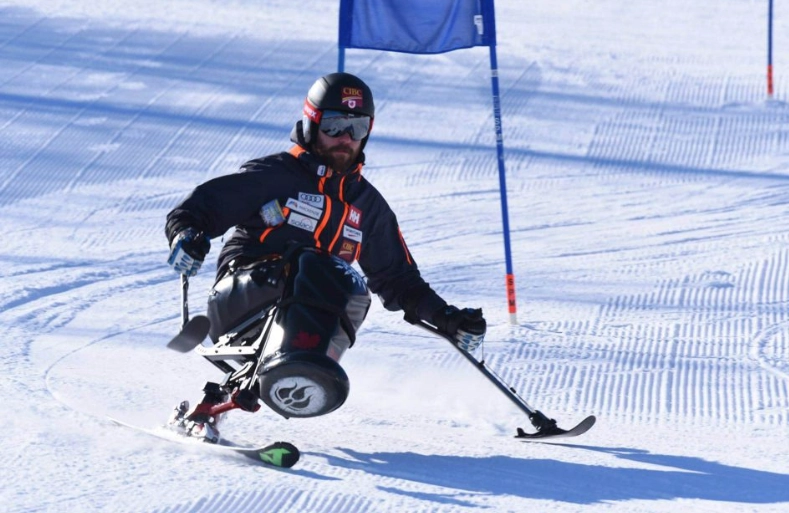
A sit-ski is essentially a molded bucket seat mounted on a single (mono-ski) or dual (bi-ski) ski. The skier is securely strapped in at the legs, waist, and often chest.
- Mono-Ski: The performance vehicle. It's on a single, carving ski. The skier uses their upper body and core to initiate turns by shifting their weight side-to-side. It's dynamic, fast, and requires good core strength and control. This is what you see Paralympians using.
- Bi-Ski: The stability champion. It sits on two skis, making it more stable and less tippy. It's often the starting point for new sit-skiers. Turns are initiated with outriggers. It feels more secure for the first-timer and is fantastic for building confidence.
The seat is connected to the ski(s) via a sophisticated suspension system—often a motorcycle or mountain bike shock absorber. This soaks up the bumps, making the ride smooth and controlled. It's not a sled; it's a precision vehicle.
A Quick Reality Check: Sit-skiing is a full-body workout. You're using your arms, shoulders, and core constantly. Don't underestimate it. You will be sore in places you forgot existed. But the good kind of sore.
What Does a Lesson Look Like? From Bunny Hill to Blue Square
You've found a program, you've discussed gear. Now it's lesson day. What should you expect? A typical first lesson for adaptive skiing for adults isn't about hitting black diamonds. It's about building a foundation of safety, control, and fun.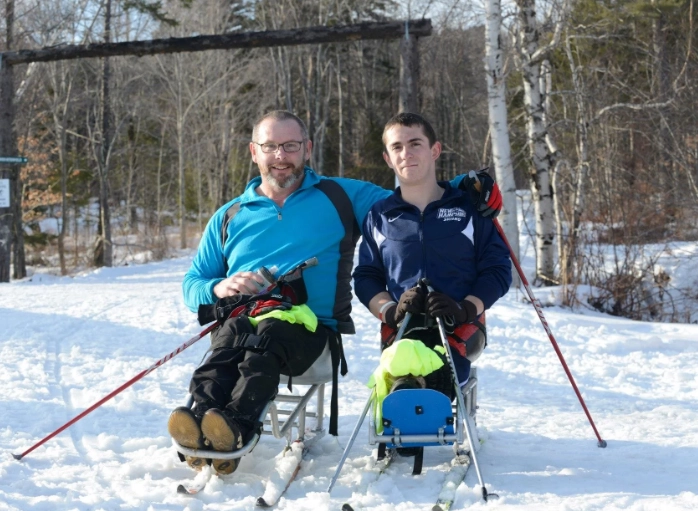
The instructor will start on flat ground, getting you familiar with the equipment. How do you balance? How do the edges feel? If you're in a sit-ski, how do you shift your weight? They'll teach you how to stop (the most important skill!). This might happen on a very gentle, roped-off slope or even a flat area.
Then comes the magic carpet or beginner lift. The instructor will be right with you, often tethered or holding a stabilization bar for the first few runs. They're not just there to catch you; they're giving you real-time feedback. "More weight on your left outrigger." "Feel how that edge bites when you lean?".
The progression varies wildly by individual. Some adults are linking turns by the end of the first day. Others need two or three lessons to feel truly in control. That's normal. There's no timeline. The instructor's job is to read your comfort level and push you just enough.
The best adaptive instructors I've seen don't just teach skiing. They teach problem-solving. They ask, "What did you feel when you started to slide?" and help you connect the physical sensation to the correction. It's empowering.
Top Destinations for Adult Adaptive Skiing (Beyond the Hype)
While many local mountains have great programs, some resorts have invested heavily in becoming world-class destinations for adaptive skiers. They have vast equipment fleets, highly trained full-time staff, and terrain for all levels. Here’s a breakdown of a few standout spots.
| Resort / Program | Location | What Makes It Great for Adults | Key Program Name / Contact |
|---|---|---|---|
| National Ability Center | Park City, Utah | Non-profit with an insane fleet of gear. Offers multi-day camps, veteran-specific programs, and access to Park City Mountain's vast terrain. Feels professional, not clinical. | NAC Ski & Snowboard Program. Book well in advance. |
| Breckenridge Outdoor Education Center (BOEC) | Breckenridge, Colorado | One of the oldest and most respected. Deep expertise, especially with cognitive/developmental disabilities. Great for adults wanting a thoughtful, progressive learning environment. | BOEC Adaptive Ski & Ride School. Integrated right at the base of Peak 9. |
| Winter Park Resort | Winter Park, Colorado | Home of the National Sports Center for the Disabled (NSCD). The largest program in the world. You name the disability, they have experience and equipment for it. Unmatched breadth. | NSCD at Winter Park. The gold standard for variety and expertise. |
| Tahoe Adaptive | North Lake Tahoe, CA | Services multiple resorts (Alpine Meadows, Palisades). Strong focus on community and getting people out regularly, not just one-off lessons. Great for building a new social circle. | Tahoe Adaptive Sports Center. Check which mountain they're operating from on your dates. |
| Maine Adaptive Sports & Recreation | Sugarloaf & Sunday River, Maine | The premier East Coast option. Fantastic, passionate volunteer instructors. Provides a more intimate, personalized feel compared to the massive Colorado operations. | Maine Adaptive. A gem if you're on the Atlantic side. |
Choosing a destination often comes down to logistics and the vibe you want. The mega-programs in Colorado have every tool imaginable. Smaller programs can offer a more personal touch. There's no wrong answer.
Answering the Real Questions You're Afraid to Ask
Let's cut through the marketing brochures. Here are the questions real adults have when considering adaptive skiing.
Beyond the First Lesson: Building a New Winter Life
Let's say you catch the bug. What then? Adaptive skiing for adults can become a central part of your winter identity.
Many programs offer multi-week seasonal packages or "development teams" for those who want to progress. You might start aiming for longer runs, steeper terrain, or even trying out different equipment (switching from a bi-ski to a mono-ski, for example).
For the competitively inclined, there is a whole pipeline of local, national, and international races. But for most adults, it's about the personal challenge and the community. You'll start recognizing people in the lodge, sharing tips, and planning ski trips together.
The logistics, the gear, the cost—it can seem like a lot.
But strip all that away, and it comes down to a simple choice. Do you want to watch winter from your window, or do you want to be out in it? The mountain doesn't care how you get down it. It just waits, silent and beautiful, for anyone brave enough to try.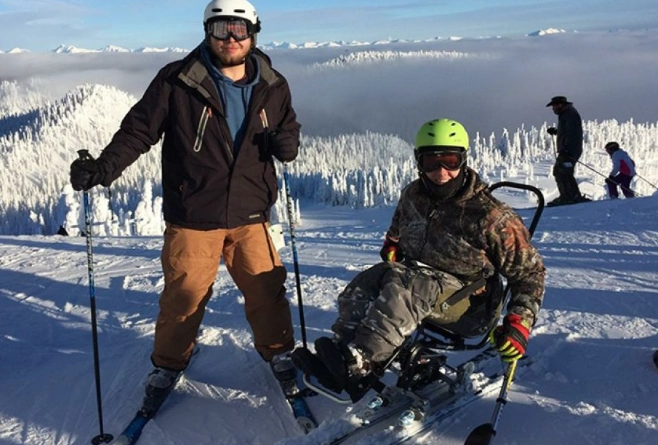
Your turn is next.