Your Skiing Journey: A Quick Guide
- Why Bother Making the Switch? It's More Than Just Looks
- The Core Difference: Skidding vs. Carving
- The Step-by-Step Progression: How to Actually Do It
- Gear and Terrain: Setting Yourself Up for Success
- Fixing Common Problems (You'll Probably Have One of These)
- Answering Your Real Questions (FAQ)
- Putting It All Together: The Mindset for Success
Let's be honest. That moment when you're stuck in a snow plough (or a "pizza slice" if you're being cute about it) while everyone else is gliding past with skis neatly parallel... it can feel a bit frustrating. You're working so hard, your thighs are burning, and you're wondering if you'll ever look as effortless as those other skiers. I remember that feeling vividly. My first real attempt to link my turns without the safety wedge ended with me sitting down more times than I care to admit.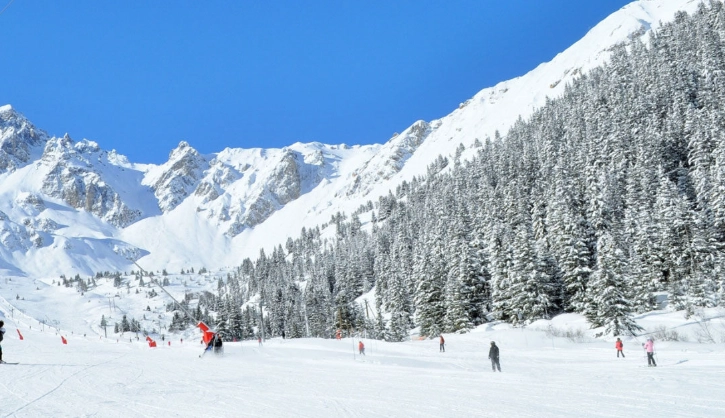
But here's the thing everyone forgets to tell you: the snow plough is your best friend. It's not a sign you're a bad skier. It's the rock-solid foundation for everything that comes after. Trying to jump straight to parallel skiing is like trying to run before you can walk—it just leads to a face full of snow. The transition from snow plough to parallel turns isn't about learning a brand new trick; it's about refining and connecting movements you already know. It's about trusting your edges and letting your skis do more of the work.
Why Bother Making the Switch? It's More Than Just Looks
Before we get into the "how," let's talk about the "why." Because if you don't see the point, you won't have the motivation to push through the awkward phase. And trust me, there is an awkward phase.
Staying in a permanent snow plough is exhausting. You're constantly fighting against your own skis, using muscular strength to brake and steer. Parallel skiing, once you get it, is more about balance and finesse. It's efficient. You'll be able to ski longer runs without feeling like your legs are made of jelly. It also gives you much more control at higher speeds and on steeper terrain. A proper parallel turn allows you to carve an arc, using the ski's sidecut to guide you, rather than just skidding the tails around.
I used to think it was just about style. Then I tried following a friend down a slightly icier blue. My plough was skidding all over the place, while his parallel turns held a clean edge. That was the day I realized this was a control issue, not a vanity project.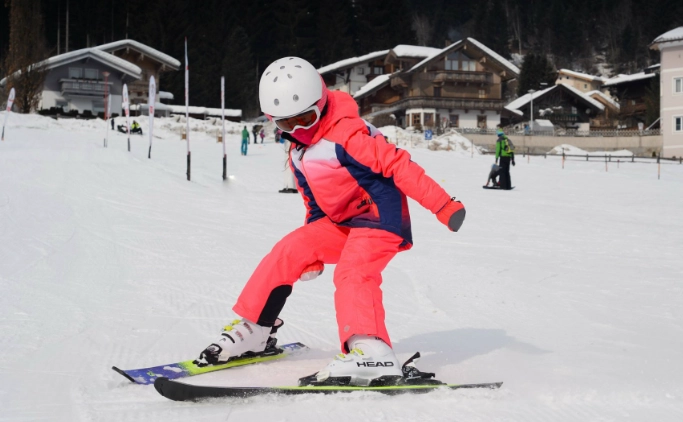
The Core Difference: Skidding vs. Carving
This is the heart of the matter. Understanding this mentally makes the physical part click faster.
In a snow plough turn, you're primarily skidding. You point your tips together, push the inside edge of your outside ski (the one you're turning away from) into the snow, and the back of your skis slide sideways to change direction. It's a braking, steering motion. It's super effective for control at low speeds.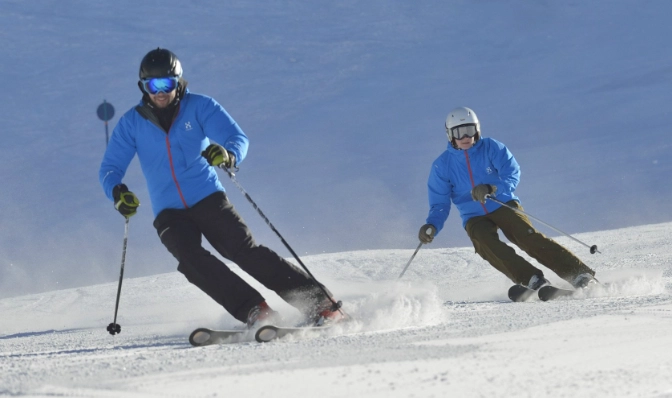
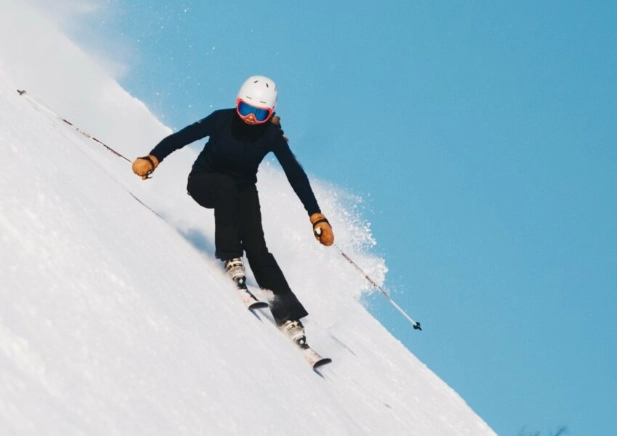
A parallel turn aims for carving. Here, both skis are kept parallel throughout the turn. You roll your knees and ankles to set both skis on their edges simultaneously. The shaped design of the ski then naturally follows a curved path in the snow—it carves an arc. There's less skidding, more flowing. The transition from snow plough to parallel is essentially the transition from a skidded turn to a carved turn.
The table below breaks down the key differences. Don't get overwhelmed by it; just use it as a reference to see where you are and where you're headed.
| Aspect | Snow Plough Turn | Parallel Turn |
|---|---|---|
| Stance | Tips together, tails apart (V-shape). | Skis parallel, hip-width apart. |
| Primary Movement | Pushing the back of the outside ski out to skid. | Rolling knees/ankles inward to set edges. |
| Force | Muscular, leg-steering force. | Balanced, using ski design and momentum. |
| Track in Snow | A skidded, brushed track. | A cleaner, thinner "rail" track (when carved). |
| Best For | Beginner slopes, speed control, stopping. | All blue runs, most red runs, efficiency, flow. |
| Energy Use | High (thigh burn is real!). | Lower (when done correctly). |
The Step-by-Step Progression: How to Actually Do It
Okay, theory time is over. Let's get you moving. This isn't a one-day process. Be patient with yourself. Go back a step if you need to. The mountain isn't going anywhere.
Step 1: Master the Feeling of "Up and Down"
This is the biggest secret nobody talks about enough. Parallel turning is all about vertical movement—flexing and extending your legs. In your plough, you're probably quite static, just leaning side to side.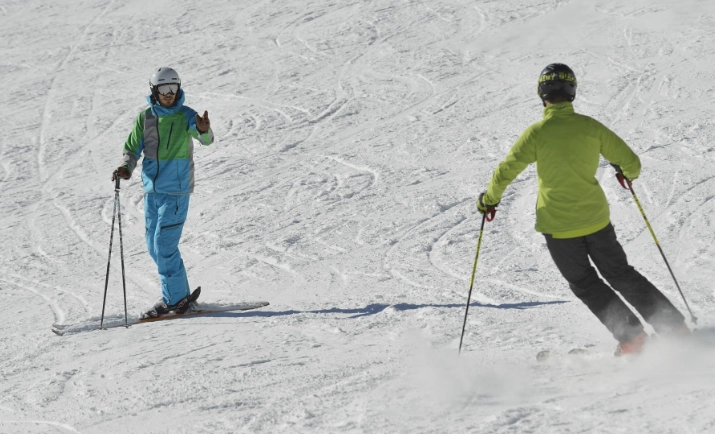
Find a very gentle, wide slope. Make some snow plough turns, but as you finish each turn and start the next one, try to stand up a little bit. Get taller. Then, as you initiate the new turn, sink down a little, bending your ankles, knees, and hips. This up-and-down motion is the beginning of unweighting your skis, which makes it easier to pivot them. Don't even think about bringing your skis parallel yet. Just feel the bounce.
Step 2: The "Fan" or "Javelin" Turn
This is the magic bridge exercise. It forces you to start the turn with your outside ski (crucial for parallel) while keeping a safety net.
Start traversing in a small snow plough. Now, to turn right, gently lift the tail of your LEFT ski off the snow. Just the tail. Your left ski tip stays in contact. Now, pivot that left ski around so it becomes parallel to your right ski. You'll find yourself turning right. You've just made a turn where you started with a plough and finished with both skis parallel! That's a snow plough turn to a parallel finish. Do this left and right until it feels less weird. It teaches you that the outside ski is the boss.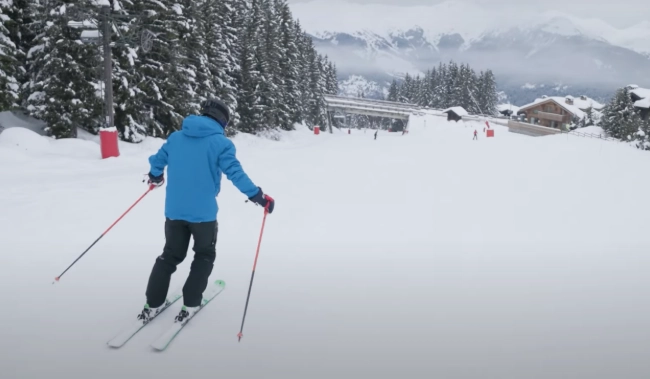
This felt ridiculous when I first tried it. I wobbled like a newborn giraffe. But after five tries, something clicked.
Step 3: The "Stem Christie" - Your New Best Friend
Don't let the fancy name scare you. A Stem Christie is simply a turn that starts with a small, quick stem (a tiny opening of the plough) and finishes with the skis parallel (the "Christie" part). It's the most natural, progressive way to learn.
Here's how: As you're about to start a turn, say to the right, you quickly and lightly push the tail of your new outside ski (the left ski) out just a few inches—a tiny, momentary stem. This initiates the turn. Then, immediately bring that left ski back parallel to the right ski as you complete the turn. The entire second half of the turn is done with skis parallel. You're not going from a full plough to parallel; you're going from a small, temporary stem to parallel.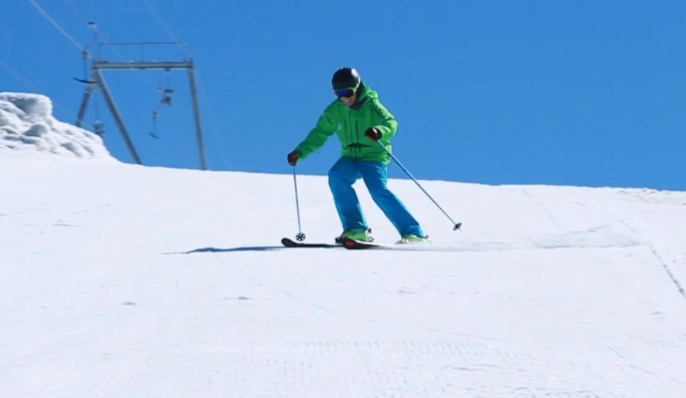
The key is to make the stem quick and light. It's a flick, not a shove. You're using it to point yourself in the new direction, then you ride the turn out with parallel skis. Practice this on a mellow blue. The sequence is: traverse, tiny stem, bring skis together, finish turn. Repeat.
Step 4: Linking Parallel Turns
Once your Stem Christies are smooth, the final step is to eliminate the stem altogether. How? By using that up-and-down motion from Step 1.
As you finish a parallel turn to the right, you'll be standing on your left (outside) ski, edges engaged. To start a turn to the left, you extend your legs (stand up). This "unweights" the skis, making them light. In that moment of lightness, you actively roll your knees and ankles to the left, setting your skis on their new left edges. Your skis will start to turn left. You then sink down into the new turn, maintaining pressure on the new outside ski (now your right ski).
The rhythm is: DOWN (finish turn) -> UP (unweight/transition) -> DOWN (into new turn). It's a smooth, continuous motion. The first few times you try this, you might find a tiny stem still sneaks in. That's fine. The goal is to make it smaller and smaller until it disappears.
Gear and Terrain: Setting Yourself Up for Success
You can make this harder or easier on yourself depending on where you practice and what you're wearing.
Skis: You don't need brand-new, expert-level skis. In fact, true carving skis can be hooky and difficult for this stage. A good all-mountain ski with some sidecut (that hourglass shape) is perfect. Make sure the edges are tuned and not rusted over. Dull edges will slide out and destroy your confidence. A good shop can give them a quick tune.
Boots: This is arguably more important. Your boots must be snug. Not painfully tight, but you should not be able to lift your heel inside the boot. If your heel lifts, you lose all control over your ski's edge. If you're serious about skiing, getting a proper boot fitting is the best money you can spend. The difference is night and day.
Terrain: Pick the right slope. A wide, groomed green or easy blue run is ideal. It should have a consistent pitch—not flat, not steep. Avoid icy patches or heavy, choppy snow for your first attempts. Perfect practice makes perfect. The Professional Ski Instructors of America (PSIA) consistently emphasizes the importance of terrain choice for skill development, and their educational resources are a treasure trove of progression-based advice.
I learned this the hard way. I tried practicing on a slope that was too steep out of impatience. All I did was reinforce bad habits and scare myself. Go back to the easy run. There's no shame in it.
Fixing Common Problems (You'll Probably Have One of These)
- Problem: "My inside ski crosses over my outside ski!"
Why: You're leaning into the hill (a very natural fear reaction). You're putting too much weight on your inside ski.
Fix: Consciously focus on keeping most of your weight on your outside ski. Touch the inside of your outside boot cuff with your knee. Feel your shin pressing into the front of that boot. - Problem: "I can't get my skis to come parallel at all. They just stay in a plough."
Why: You're initiating the turn by pushing the tail out too hard and for too long.
Fix: Go back to the Fan/Javelin turn drill. It physically prevents you from keeping the plough. Also, think "knees together." Bringing your knees closer naturally brings your skis parallel. - Problem: "I'm going way too fast when I bring them together!"
Why: You're likely on terrain that's too steep for your current skill level, or you're not finishing your turns across the hill.
Fix: Go to a easier slope. Focus on making a complete "C" shaped turn. Start looking across the hill, turn, and finish with your skis pointing directly across the slope, not down it. This controls speed naturally.
Answering Your Real Questions (FAQ)
Putting It All Together: The Mindset for Success
Learning to transition from snow plough to parallel turns is a mental game as much as a physical one. You have to be willing to feel unstable for a bit. You have to trust that the ski will turn if you put it on its edge. You have to accept that you'll have good runs and bad runs.
Celebrate the small wins. The first time you link three Stem Christies in a row. The first time you feel your skis grip and carve instead of skid. The first blue run you do top-to-bottom without a survival wedge.
That feeling is worth every single fall.
Remember, the goal isn't perfection. The goal is flow, control, and more fun. The snow plough got you started. Now, let it help you take the next step. Go find a gentle slope, take a deep breath, and try that first Fan turn. You've got this.