Quick Guide
- Before You Even Think About Turning: The Snowplough Stance
- The Core Mechanics: How to Turn in a Snowplough, Step-by-Step
- Why Won't My Snowplough Turn Work? Common Mistakes & Fixes
- From Single Turns to Linked Turns: Finding Your Rhythm
- Gear That Actually Helps (And What Doesn't Matter)
- Your Mindset: The Invisible Tool
- Answering Your Burning Questions
- Taking It to the Next Level
Let's be honest here. Standing at the top of a gentle slope for the first time, those long planks attached to your feet feel less like tools for fun and more like a one-way ticket to the nearest first aid tent. Everyone else seems to be gliding and turning, and you're just... pointing straight. It's intimidating. I remember that feeling well—the cold sweat (and not just from the weather), the death grip on the poles. The single most important thing that changed everything for me was learning how to turn in a snowplough. It wasn't pretty at first, but it gave me control. And control is everything when you're starting out.
This isn't about looking cool (you won't, not yet). This is about getting down the hill safely, in one piece, and actually starting to enjoy yourself. The snowplough turn, sometimes called the wedge turn or the pizza turn, is the foundational block of skiing. It's how you learn to steer, control your speed, and build the confidence to tackle steeper terrain. If you can master how to turn in a snowplough, you've unlocked the door to the rest of the mountain.
Before You Even Think About Turning: The Snowplough Stance
You can't turn if you can't hold the shape. A lot of beginners rush this part and then wonder why their turns are wobbly or non-existent. The snowplough isn't just a position you flick into; it's a stable, active posture you need to maintain.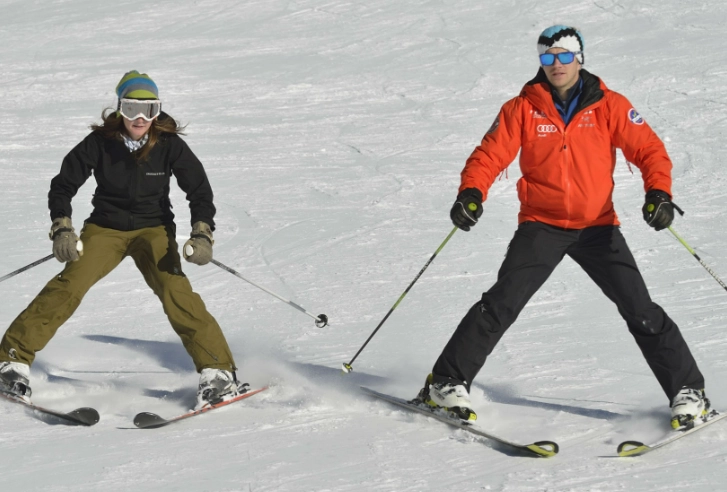
Find a flat, safe spot. Practice this until it feels less awkward. Stand with your skis parallel, then push your heels out and your knees in. Your ski tips should be about a fist's width apart, and the tails should be wide—forming a triangle or a slice of pizza. Your weight should be evenly distributed on both skis, maybe a tiny bit more on the inside edges (the edges closest to each other). Bend your ankles, knees, and hips. Don't lean back! If you can't see the front of your boots, you're probably in the backseat. This stance is your brake and your steering wheel.
The Core Mechanics: How to Turn in a Snowplough, Step-by-Step
Okay, you've got the wedge. You're on a gentle, wide beginner slope (green circle). You're sliding forward in your snowplough, controlling your speed. Now, how do you change direction?
It's All in the Weight Shift
This is the single biggest mental hurdle. To turn left, you don't steer your left ski. You put more pressure on your right ski. To turn right, you press down on your left ski. Your body follows the pressure. It feels counterintuitive at first. You're essentially making one side of your "pizza" bigger and more engaged.
Let's break down a turn to the left:
- Start in a Controlled Wedge: You're cruising down, skis in a solid V-shape, speed manageable.
- Initiate the Turn: Gently but deliberately shift more of your body weight onto your right foot. I mean really feel your right boot pressing into the tongue of your ski boot. Your left leg will lighten up a bit.
- Engage the Edge: As you press on the right ski, you'll naturally roll your right ankle and knee slightly more inward. This presses the inside edge of your right ski into the snow. This is the biting edge that starts the carve of the turn.
- Follow the Arc: Don't fight it. Your right ski, now more heavily weighted and edged, will start to pull you to the left. Your body and your left ski will follow. Keep looking where you want to go (left, down the slope).
- Control the Finish: As you complete the turn across the hill, you can ease the pressure to slow down or prepare to shift weight to the other foot to start a turn back to the right.
What Your Upper Body Should (and Shouldn't) Do
This is where people get weird. You might feel the urge to throw your shoulders or twist your hips to force the turn. Resist! Your upper body should remain relatively quiet and facing mostly down the fall line (the path a ball would roll down the hill). Your legs and feet do the work underneath you. A good drill is to hold your poles out in front of you, horizontal to the snow, and try to keep them pointing straight ahead as your legs turn you from side to side. It feels silly but it works.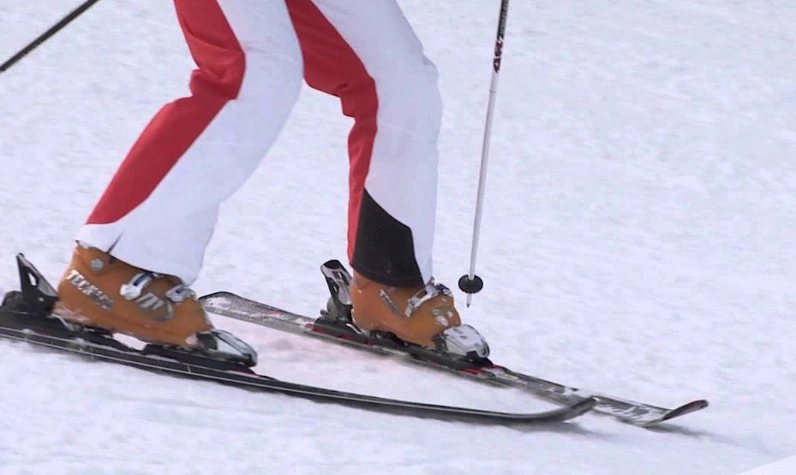
Why Won't My Snowplough Turn Work? Common Mistakes & Fixes
Everyone makes these errors. I made every single one. Recognizing them is half the battle.
| The Problem | What It Looks/Feels Like | The Likely Cause & How to Fix It |
|---|---|---|
| The Ineffective Wedge | Skis are almost parallel, no speed control, turns are skiddy. | You're not committing to the shape. Practice static wedge holds on flat ground. Focus on pushing heels out, not just moving ski tails. |
| The Backseat Driver | Feeling out of control, skis feel "long" and hard to steer, quads burn fast. | Your weight is on your heels. This disengages the ski tips. Consciously press your shins into the front of your boots. It should feel athletic, like a ready stance. |
| The Upper Body Twist | You turn your shoulders first, your skis cross, and you fall. | You're steering with your arms, not your feet. Do the "pole hold" drill mentioned above. Keep your belly button pointing downhill. |
| The Weight-Shift Phobia | You lean your whole body inward instead of pressuring the outside ski. | You're afraid of putting weight on the "downhill" ski. On a gentle slope, practice lifting the inside (uphill) ski entirely off the snow while in a turn. You'll be shocked that you can balance on the outside ski alone. |
| The Death Grip & Stare | You're rigid, looking at your ski tips, and exhausted. | Tension is the enemy. Look ahead where you want to go, not down. Keep your hands forward and relaxed. Breathe! |
From Single Turns to Linked Turns: Finding Your Rhythm
Making one turn is a victory. Stringing them together is where the real fun begins. Linking snowplough turns is simply about smoothly transferring your weight from one outside ski to the other at the end of each turn.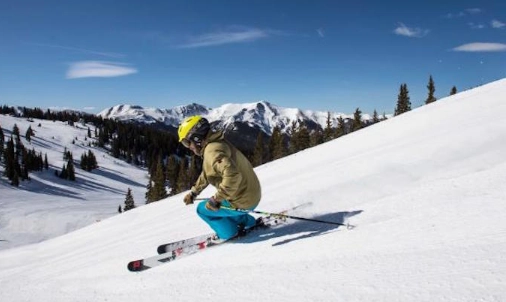
You finish a turn left. You're across the slope, slowed down. Now, to go right, you gradually shift your weight off your (now) right ski and onto your left ski. As you press on the left ski and edge it, you'll begin to arc back to the right. The goal is to avoid going straight down the fall line at high speed between turns. Think of drawing a smooth "S" shape down the mountain. This rhythm—weight, turn, transfer, weight, turn—is the heartbeat of skiing.
Honestly, my first linked turns were more like a series of desperate stops than graceful curves. But that's okay. The goal is control, not style points. As you get more comfortable, your wedge will naturally become smaller and your turns will become more rounded.
Gear That Actually Helps (And What Doesn't Matter)
You don't need the latest $1000 skis to learn. In fact, super advanced skis can be harder for beginners. What you do need is gear that's set up correctly and doesn't fight you.
- Skis: Beginner skis are softer and more forgiving. They have a pronounced sidecut (the hourglass shape) that makes initiating a turn easier. Rent from a reputable shop and tell them you're a first-timer learning the snowplough.
- Boots: This is the most important piece. They must fit snugly without painful pressure points. A loose boot means you can't effectively transfer weight and pressure to your skis. Spend time in the rental shop getting this right.
- Bindings: The rental tech will set your DIN (release setting) based on your weight and skill level. This is a critical safety feature. Don't mess with it.
- Poles: For your very first day, you might not even use them. When you do, they are for rhythm and timing, not for braking or steering. Hold them correctly—straps on the outside of your wrist, not dangling.
Your Mindset: The Invisible Tool
Skiing is physical, but it's massively mental. Fear makes you tense up, and tension ruins every technique we just talked about.
Set tiny goals. "Today, I will make three controlled snowplough turns to the left on this specific gentle slope." Celebrate that. Falling is not failing; it's learning what your balance limits are. Everyone falls. I still fall, usually when I'm not paying attention. The best skiers on the mountain are the ones who learned how to fall safely and get back up with a laugh.
Answering Your Burning Questions
Taking It to the Next Level
Once you own your snowplough turns, the mountain opens up. You can start exploring easier blue runs. You'll learn to adjust the size of your wedge for different conditions—a wider wedge for ice or steeper pitches, a narrower one for softer snow. You'll start feeling how the ski works, which is the first step toward true carving.
Remember, the goal of learning how to turn in a snowplough isn't to do it forever. The goal is to build the muscle memory, balance, and edge awareness that becomes the unconscious foundation for everything else. It teaches you how skis interact with snow. That's priceless.
So get out there. Find a gentle slope. Make that wedge. Feel the edges bite. Shift your weight. And turn. It might be clumsy, it might be slow, but it will be yours. And that feeling of guiding yourself down the mountain, under your own power and control, is what skiing is all about. Everything else is just a refinement of that first, beautiful, pizza-shaped turn.