Let's be honest. Most people hate buying ski boots. It's confusing, often painful, and you're making a $400+ decision based on feelings you don't fully understand. I've been through it, and I've watched hundreds of skiers in rental shops and specialty stores make the same costly mistakes. The good news? Getting it right isn't magic. It's a process. This guide cuts through the jargon and walks you through the exact steps a professional boot fitter uses, so you can either work confidently with one or know what to demand if you're on your own.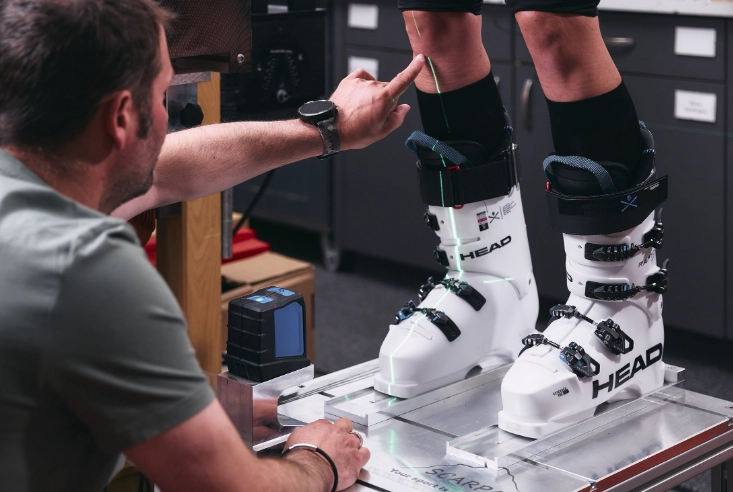
The goal isn't just a boot that doesn't hurt. It's a boot that disappears, becoming a direct connection between your intention and the edge of your ski. When that happens, skiing gets easier, more fun, and way less exhausting.
What You'll Learn
How to Measure Your Foot for Ski Boots
Forget your shoe size. Seriously. Throw that number out the window. Ski boots use the Mondopoint system, which is simply the length of your foot in centimeters. A US Men's 10.5 could be a 28.5 or a 29.5 depending on the brand and your actual foot. This is the single most important number.
Here's how to get it right at home:
- Stand on a piece of paper against a wall, bearing your full weight.
- Have someone mark the very back of your heel and the very tip of your longest toe.
- Measure the distance in centimeters. Do this for both feet—they're often different. Use the larger measurement.
That's your starting Mondopoint. If your foot is 27.8cm long, you'll likely be looking at a 27.5 or 28.5 shell. But length is only half the story.
Understanding Boot Last & Foot Shape
This is where most off-the-rack purchases fail. Last is the width of the boot at its widest point, typically around the ball of your foot, measured in millimeters. A 98mm last is narrower than a 102mm last.
But it's not just a width. It's a three-dimensional shape. Brands have distinct fits:
| Brand Tendency | Typical Last (mm) | Best For Foot Shape | Note |
|---|---|---|---|
| Lange / Rossignol | 97-100 | Low-volume, narrow heels, athletic feet | Legendary heel hold. Can be brutal on wide forefeet. |
| Salomon / Atomic | 100-102 | Medium volume, "average" shaped feet | The Toyota Camry of fits. Reliable starting point. |
| Tecnica / Dalbello | 101-103 | Medium to slightly higher volume, roomier forefoot | Often better for wider feet or taller insteps. |
| K2 / Full Tilt | 102+ | High volume, wide feet, taller insteps | Known for comfort-first designs. |
I have a high instep. For years, I crammed my foot into low-volume race boots because I thought that's what good skiers used. I lost feeling in my toes by 10 AM. Switching to a brand with a higher instep volume changed my skiing life. Match the shape, not just the size.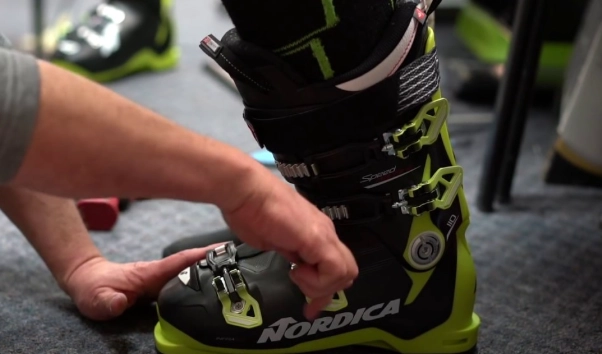
What is Ski Boot Flex and Why Does It Matter?
The flex index (70, 90, 110, 130) is about resistance, not comfort. Think of it as the stiffness of the boot's cuff. A higher number is stiffer.
Here’s the non-consensus part: most recreational skiers buy boots that are too soft. They pick an 80 flex because it's easy to walk in and feels less intimidating. But on the snow, a boot that's too soft forces your legs to overwork to initiate a turn. You fight the boot, not work with it.
A Rough Flex Guideline
Flex 50-70: Beginners or very lightweight skiers. Focus is on comfort and easy forward flex.
Flex 80-100: Intermediate skiers (confident on blue runs). The most common range, but I'd push most adult men toward the 90-100 end of this.
Flex 100-120: Advanced skiers (all-mountain, off-piste, aggressive carving). This is the sweet spot for serious recreational skiers who want performance.
Flex 130+: Experts and racers. Stiff, demanding, and unforgiving if your technique isn't there.
Flex is also temperature dependent. That 120 flex boot feels like a 140 on a -20°C day and a 100 on a warm spring afternoon. Manufacturers don't have a universal standard, so a Salomon 100 might feel different from a Nordica 100. You must try them on.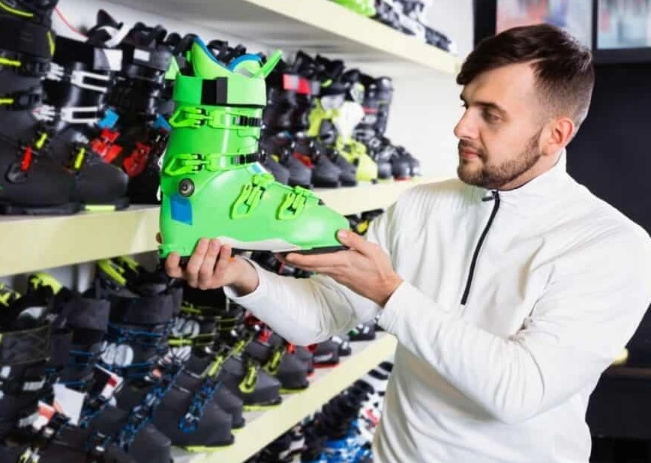
The 5-Step Boot Fitting Process
Let's walk through what should happen in a good boot fitting session. Imagine you're at a reputable shop like Surefoot, Boot Doctors, or a local specialist with strong reviews.
1. The Interview
A good fitter will ask you questions for 10 minutes before touching a boot. Where do you ski? How many days a year? What's your ability level? What are your goals? What hurt in your old boots? This isn't small talk. It dictates everything from flex to sole type (Alpine vs. GripWalk).
2. The Foot Analysis
They'll measure your foot manually and visually assess its shape—looking at arch height, bone structure, and any peculiarities like bunions or hammer toes. Some use digital scanners. This data pairs with the interview to select 2-3 potential shell models.
3. The Shell Fit
This is the most critical test, and you can do it yourself. Remove the liner from the boot. Slide your foot, in a thin ski sock, into the empty plastic shell. Push your foot all the way forward so your toes just touch the front.
One finger (10-15mm): Ideal performance fit. This space is what the liner will fill and eventually pack into.
Two or more fingers (20mm+): The shell is too big. You'll swim in it once the liner breaks in. Size down.
No space / Heel jammed: The shell is too small. Your toes will be crushed.
4. The Liner Fit & Customization
With the liner back in, buckle the boot snugly on the second or third notch (not cranked). Stand in a skiing stance, knees bent. Your toes should curl and just touch the end. As you flex forward, they should pull back slightly. The heel must be locked down—no lift. Pressure should be even, not focused on one painful point.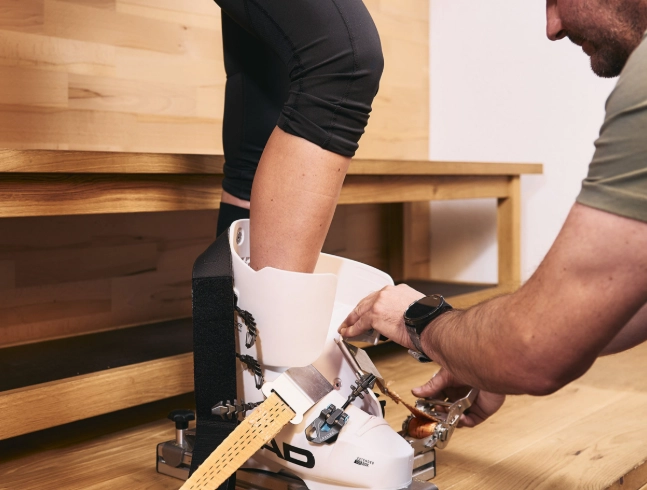
Most quality boots now have thermo-moldable liners. The fitter heats them in an oven, you put the boots on for 10-15 minutes, and the foam molds to your exact contours. It's not a cure-all for a bad shell fit, but it's fantastic for fine-tuning.
5. The Fine-Tuning & Follow-up
Almost no boot fits perfectly out of the box. A good shop includes minor adjustments. This might involve punching (stretching a specific spot of the plastic shell with a heated tool to relieve a pressure point) or adding a custom footbed. A proper footbed supports your arch, stabilizes your foot, and often solves more fit issues than any other single tweak.
They should also tell you to come back after a day or two on snow. The liner packs out, and new pressure points emerge. That's when the real fine-tuning happens.
Solving Common Boot Fitting Problems
Even after a professional fit, you might feel something off. Here's the quick fix dictionary:
"My toes are numb." This is often from buckling too tightly over the instep, cutting off circulation. Try loosening the bottom two buckles and tightening the top two more. If it's just the big toe, the shell might need a punch at the toe box.
"My heel lifts." The number one performance killer. First, ensure you have a good footbed. A J-bar (a foam pad placed behind your ankle bone) or a thicker aftermarket liner like a ZipFit can fill volume and lock the heel down without crushing the forefoot.
"I have a burning pain on the ball of my foot." This is often Metatarsalgia. A metatarsal pad (a small dome-shaped pad stuck to your footbed just behind the ball of your foot) can redistribute pressure and provide instant relief. It's a $5 fix that feels like magic.
"My shins are bruised." You're likely buckling the top cuff too tight before flexing forward. Buckle the lower part first, flex into your skiing stance, then secure the top buckle. Also, consider a boot with a softer forward flex.
Your Boot Fitting Questions Answered
The right boot fit is a journey, not a one-time purchase. It requires patience, a bit of investment, and a willingness to go back for tweaks. But the payoff is immense: more control, less fatigue, and the pure joy of skiing where your equipment supports you instead of holding you back. Don't just buy a boot. Invest in a fitting.
If you remember nothing else, remember this: find a reputable boot fitter, trust their process more than your initial comfort sensation, and always, always start with the shell check.