Most skiers treat ski poles as an afterthought. They grab whatever pair is cheap, looks cool, or feels "about right." That's a mistake I see every season. The right poles aren't just for pushing yourself around on flat ground. They're a fundamental part of your balance, timing, and rhythm. Get them wrong, and you're fighting your own gear. Get them right, and your entire skiing feels more connected.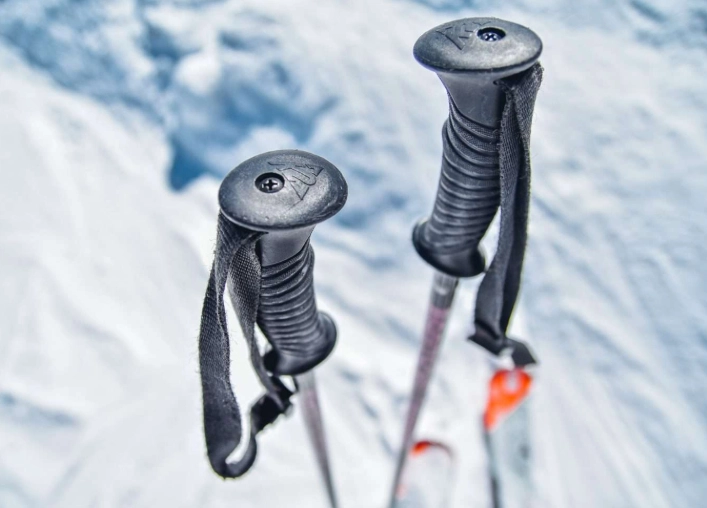
After a decade of coaching and testing gear, I can tell you the perfect ski pole doesn't exist. But the perfect pole for you absolutely does. It comes down to three things: length, material, and the details of the grip and strap. Forget the marketing fluff. Let's break it down so you can make a choice you won't regret.
What You'll Learn in This Guide
Why Your Poles Matter More Than You Think
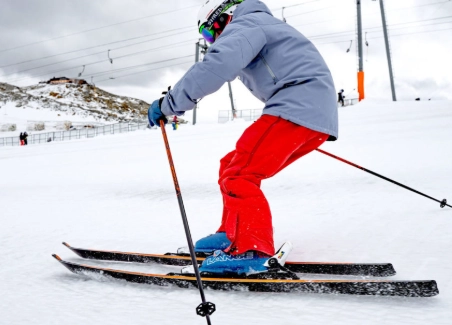
Think of your poles as extensions of your arms. Their job is to provide a precise, stable point of contact with the snow to initiate turns, maintain rhythm in bumps, and propel you forward. If they're too long, you'll be reaching awkwardly, throwing off your center of mass. Too short, and you'll be hunched over, unable to generate power for pole plants.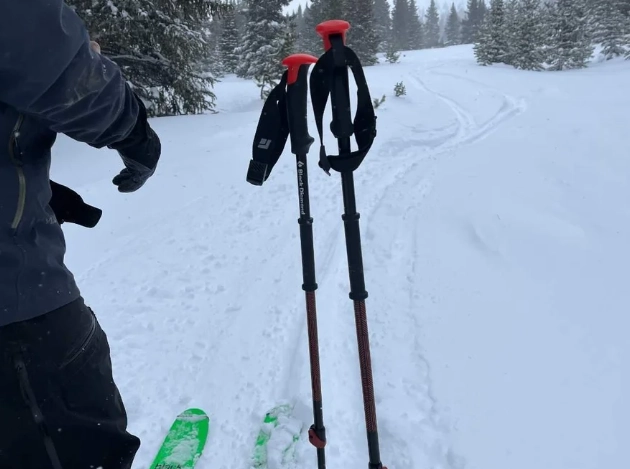
I once watched an advanced skier struggle all day in moguls. His technique was solid, but his timing was off. He was using poles 10cm too long for his style. We swapped for a shorter pair from the rental shop, and within two runs, he was flowing down the line. The change was instant. That's the impact of proper gear.
How to Choose the Correct Ski Pole Length
This is the most critical step. Forget the old "elbow at 90 degrees" trick with the pole upside down. It's outdated and doesn't account for modern skiing stances or boot height.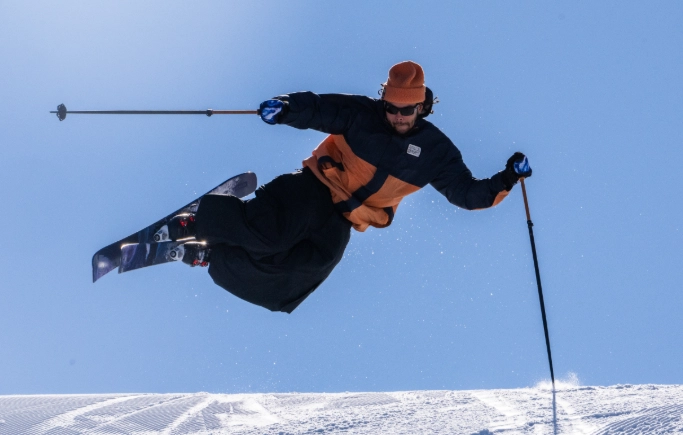
Here's the method I teach all my students:
- Put on your ski boots. This is non-negotiable. Boots add several centimeters.
- Stand normally on a flat, hard surface.
- Flip the pole upside down and grip it directly under the basket.
- Your forearm should be parallel to the floor, with your elbow at a true 90-degree angle.
If your elbow is pointed down, the pole is too long. If it's pointed up, it's too short. You want that clean L-shape in your arm.
Factoring in Your Skiing Style
The basic fit is just a starting point. Your preferred terrain tweaks the ideal length.
- Carvers & Groomer Lovers: Stick with the standard fit. A proper length helps with aggressive pole plants to initiate high-speed turns.
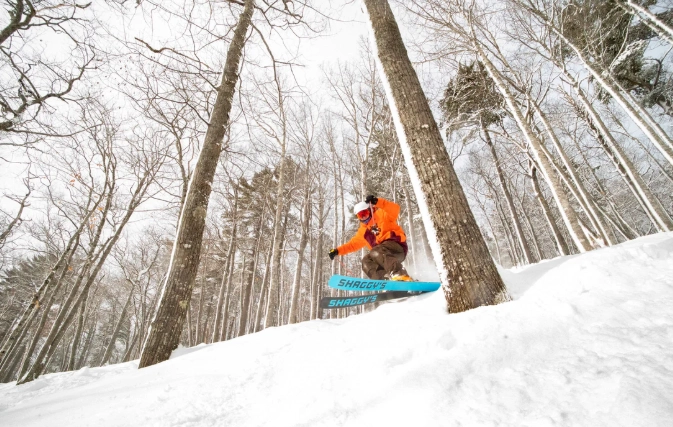
- Mogul Skiers & Freestylers: Go 2-5 cm shorter. A shorter pole is quicker to plant and less likely to get caught when you're absorbing bumps or in the air. It encourages a more compact, athletic stance.
- Powder & All-Mountain Explorers: Consider going 2-3 cm shorter than standard. In deep snow, your skis sink, effectively raising you up. A slightly shorter pole prevents you from having to reach down awkwardly.
- Backcountry Tourers: This is the one case for adjustable poles. You'll want them longer for skinning uphill and shorter for the descent. Look for reliable mechanisms from brands like Black Diamond or LEKI.
| Skier Height (in boots) | Suggested Pole Length (cm) | Style Notes |
|---|---|---|
| Under 5'2" (157 cm) | 100 - 110 | Often need to seek out specific short sizes. |
| 5'3" - 5'7" (160-170 cm) | 110 - 120 | The most common range. Fine-tune within it based on style. |
| 5'8" - 6'0" (173-183 cm) | 120 - 130 | Standard fit works for most here. |
| Over 6'0" (183 cm) | 130 - 135+ | May require extended length poles. |
Picking the Right Materials and Features
Once length is sorted, material determines feel, weight, and durability.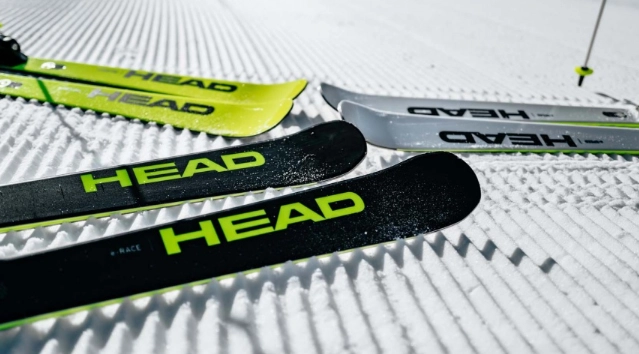
Aluminum (7075 or 7075-T6 is best)
The workhorse. Durable, affordable, and has a slight flex that can absorb shock. If you bend one on a lift tower or in a fall, you can sometimes straighten it. The weight is noticeable if you're used to carbon, but for 95% of recreational skiers, aluminum is the smart, no-regrets choice. Don't cheap out on super-thin, flimsy aluminum, though.
Carbon Fiber
Lighter and stiffer. The stiffness provides a super-direct, immediate feel on pole plants—no flex or lag. Advanced skiers often prefer this for precise timing in gates or bumps. The downside? It's more expensive and can fail catastrophically (snap) under lateral stress. If you're rough on gear or often find yourself in chaotic lift lines, carbon might give you anxiety.
Baskets and Tips
Small, hard plastic baskets are for hardpack and racing. Larger, round "powder baskets" are essential for soft snow—they prevent the pole from plunging too deep. Most all-mountain poles come with a medium-sized basket that's a good compromise.
The tip is usually steel. Make sure it's sharp and replaceable. A dull tip skates off hard snow when you try to plant it.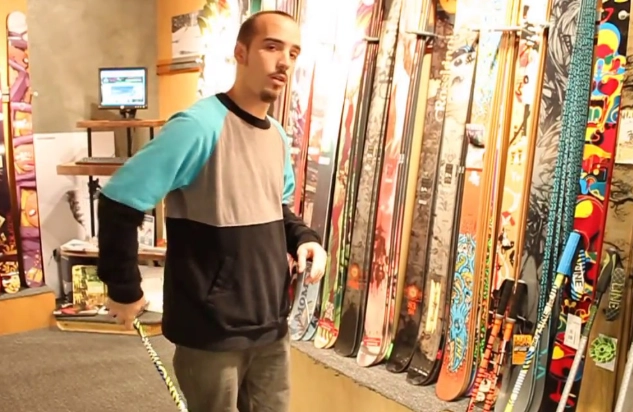
Grip and Strap: The Make-or-Break Details
This is where cheap poles really show their flaws. A bad grip ruins the experience.
Grip Shape & Material: Ergonomic grips that fit your hand are a game-changer. Look for contours for your fingers. Rubberized or textured foam provides warmth and grip even with gloves on. Avoid hard, slick plastic.
The Strap (or Lack Thereof): The modern trend is toward strap-free systems like LEKI's Trigger or Marker's Squeeze Lock. You click your hand in, and a release mechanism detaches in a fall. They're fantastic for safety and convenience. Traditional straps require proper use: put your hand up through the loop from below, then grab the grip. The strap should cradle the back of your hand, not be cinched tight around your wrist.
A poorly adjusted traditional strap is a common culprit for wrist fatigue and even injury.
Matching Poles to Your Skiing Style
Let's get specific. What should you actually look for?
The All-Mountain Cruiser
You ski a bit of everything. Look for a fixed-length 7075 aluminum pole in your correct length. A medium-sized basket, an ergonomic rubber/foam grip, and a comfortable strap or a simple strap-free system. This is your do-everything, reliable tool. Brands like K2, Head, and Scott make excellent models in this category.
The Backcountry Tourer
Adjustable poles are mandatory. Look for a reliable flick-lock or speed-lock mechanism (I trust flick-locks more in freezing conditions). They should collapse small enough to strap to your pack. Weight matters more here, so carbon or carbon-aluminum mixes are popular. A large powder basket that's easily removable for hardpack tours is key.
The Park & Freestyle Skier
Durability is king. You'll slam these into rails and ice. Go for a burly aluminum pole, often slightly shorter. Many park skiers prefer smaller "low-profile" grips or even cut the straps off entirely to avoid catching on anything during spins. Flexibility isn't a bad thing here—it can prevent bending on impact.
The Aggressive Carver/Racer
Precision is everything. Stiff carbon or high-grade aluminum poles transmit energy instantly. The grips are often slim and designed for a firm, precise hold. Baskets are small and hard ("racing discs") to minimize swing weight and drag. Length is critical and often on the longer side of the spectrum for powerful pole plants.
Choosing ski poles isn't rocket science, but it does require a bit of thought. Ignore the fancy graphics. Focus on the fit in your hand, the length relative to your body and boots, and the durability you need for your style. Get those right, and you'll stop thinking about your poles altogether—they'll just become a natural, helpful part of how you ski.
And if you're ever in doubt between two lengths? Go with the shorter one. It's easier to adapt to a slightly short pole than to constantly fight one that's too long.